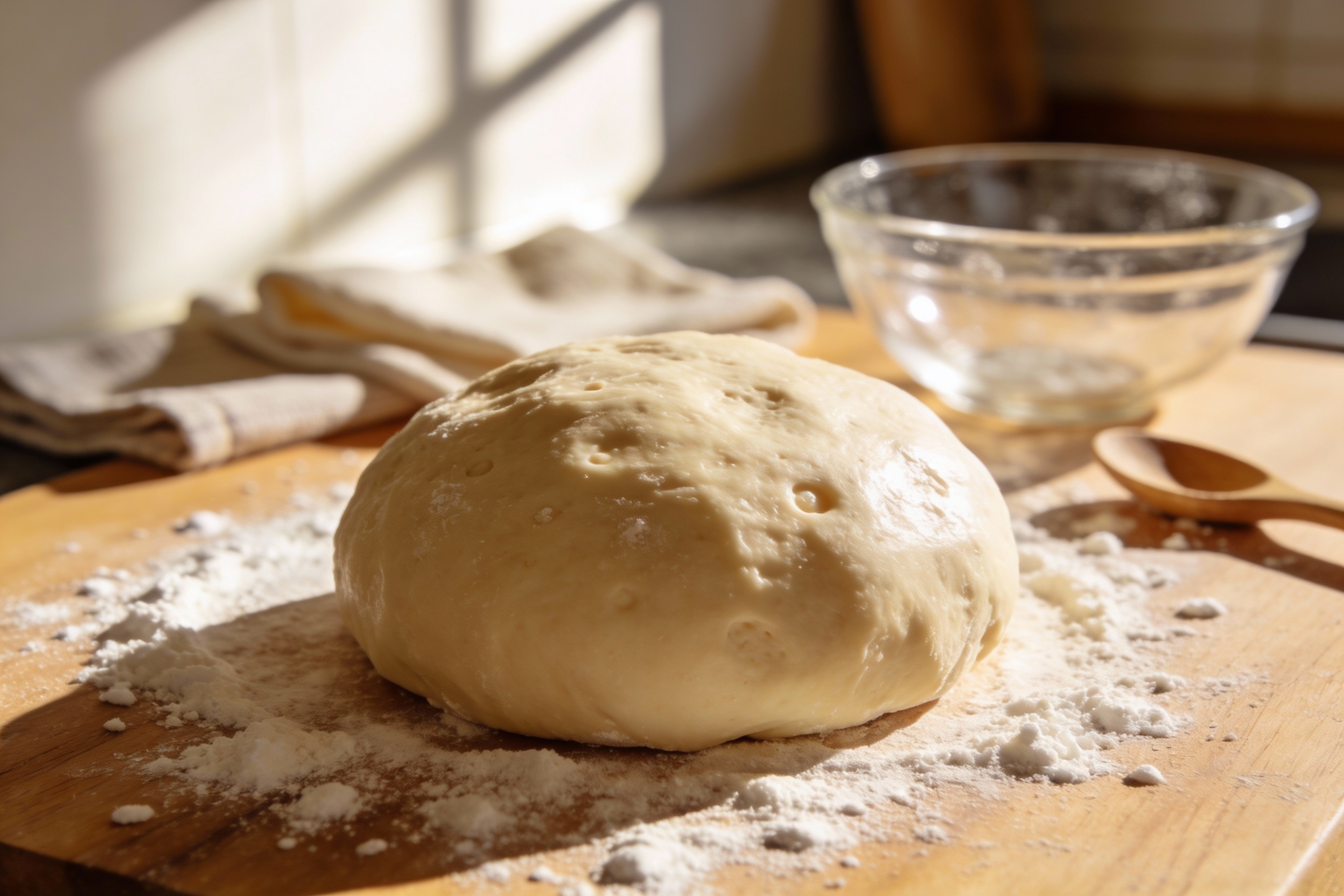
Pizza dough doesn’t need to be complicated or mystical. You want crisp edges, a chewy center, and enough flavor to taste great even with just tomatoes and basil. That’s the goal here. We’ll keep it simple, we’ll let time do the heavy lifting, and we’ll end up with dough that makes your kitchen smell like a little corner of Naples.
What Makes Italian Pizza Dough Different?
Italian-style dough keeps the ingredient list short and the technique focused. You don’t drown it in sugar or oil. You rely on fermentation for flavor and texture, not a bunch of add-ins.
Here’s the vibe:
- Simple ingredients: flour, water, yeast, salt
- Long rise for deep flavor
- Gentle handling to protect air bubbles
- High heat for crispy, leopard-spotted crust
You can tweak a few details and still stay “Italian,” but the backbone never changes: minimalism, patience, and heat. IMO, nothing beats this formula.
Ingredients: Quality Over Quantity
You only need four things. So make them count.
- Flour: Type 00 flour for a soft, elastic dough and tender bite. Can’t find it? Use bread flour for more chew. All-purpose works too in a pinch.
- Water: Cool to room temp. Aim for about 60–65% hydration for easy handling.
- Yeast: Instant yeast keeps things simple. Fresh yeast works too if you have it.
- Salt: Fine sea salt. It controls fermentation and lifts flavor.
Base Formula (for 4 pizzas, ~250 g each)
- 600 g flour (00 or bread flour)
- 380–400 g water (start with 380, add more if dough feels stiff)
- 2 g instant yeast (about 1/2 tsp)
- 14 g fine sea salt (about 2 1/4 tsp)
FYI: This low-yeast, long-rise approach builds great flavor without a sourdough starter. Patience = better pizza.
Mixing the Dough: Keep It Gentle
You don’t need a stand mixer (but use one if you like). Either way, don’t overwork it. We’re aiming for smooth and elastic, not tight and tough.
- Combine flour and yeast. In a large bowl, whisk flour and yeast together.
- Add water slowly. Pour in 80% of the water and mix until shaggy. Rest 10 minutes (autolyse-ish moment).
- Add salt and remaining water. Mix until incorporated. Dough should feel tacky, not sticky.
- Knead lightly. 3–5 minutes by hand, or 2–3 minutes on low in a mixer. Stop when the dough looks smooth and springs back.
Texture Check
- If it clings like glue, add 1–2 tbsp flour.
- If it tears when stretched, rest it for 10 minutes and try again.
Fermentation: The Flavor Maker
Time turns flour and water into something craveable. You’ve got two excellent options.
Same-Day (Good)
- Bulk rise at room temp until doubled, about 2–3 hours.
- Divide into 4 balls (about 250 g each), then rest 45–60 minutes before shaping.
Overnight (Better, IMO)
- After a short 30-minute rest, divide and ball the dough.
- Lightly oil containers, pop the balls in, and refrigerate 12–48 hours.
- Remove from the fridge 60–90 minutes before baking to warm up and relax.
Pro tip: Cold fermentation adds sweetness and complexity you just can’t fake.
Shaping Without Tears (Or Tears)
You’ve made lovely dough. Don’t beat it up now. No rolling pins. You want the air bubbles to stay intact.
- Flour your hands and the counter lightly. Too much flour makes sliding the pizza harder later.
- Flatten gently. Press the dough from the center out, leaving a thicker rim. Think “tiny trampoline.”
- Stretch over knuckles. Rotate as you stretch the dough to 10–12 inches. If it resists, rest 5 minutes and try again.
If It Rips
Pinch the tear closed and keep going. You’re fine. Sauce hides everything like a hero cape.
Heat: The Non-Negotiable
High heat creates that classic blistered crust. No, your oven probably doesn’t hit 900°F, but we can still get close.
- Pizza stone or steel: Preheat for at least 45 minutes at your oven’s max (500–550°F). A steel gives better browning.
- Broiler boost: Cook 4–6 minutes, then finish under the broiler for 1–2 minutes for char. Watch closely.
- Outdoor ovens: If you’ve got one (700–900°F), bake 60–120 seconds, turning often.
FYI: Hotter oven = faster bake = lighter crust. Science and deliciousness agree.
Classic Toppings (Restraint Wins)
You made Italian dough; dress it like Italian pizza. Minimal toppings let the crust shine.
Margherita
- Crushed San Marzano tomatoes (just salt and a drizzle of olive oil)
- Fresh mozzarella, torn
- Fresh basil after baking
- Extra-virgin olive oil
Marinara (No Cheese, Trust Me)
- Tomato sauce with garlic and oregano
- Olive oil and basil or parsley
Bianca (White Pie)
- Ricotta and mozzarella
- Garlic, black pepper, lemon zest
- Arugula after baking
Less is more. Your dough worked hard to taste great. Don’t bury it under a cheese mountain.
Step-by-Step: From Counter to Oven
- Preheat your stone/steel at 500–550°F for 45–60 minutes.
- Shape the dough to 10–12 inches on a lightly floured surface.
- Spread 2–3 tbsp sauce. Add cheese and a light drizzle of olive oil.
- Launch onto the hot stone/steel. Bake 6–8 minutes, rotating once. Broil 1 minute if needed.
- Top with basil, rest 1 minute, slice, and devour.
Troubleshooting: Real-World Fixes
- Dough snaps back: It’s too cold or tight. Rest 10 minutes and try again.
- Pale crust: Oven not hot enough or short preheat. Use a steel, or finish under broiler.
- Soggy middle: Too much sauce/toppings, or underbaked. Go lighter and bake longer.
- Sticks to the peel: Use a light dusting of semolina or flour. Work fast after topping.
- No flavor: Up your fermentation time. Salt matters, too.
FAQ
Can I use all-purpose flour?
Yes. It makes a slightly softer, less chewy crust, but still tasty. If you have a choice, 00 or bread flour gives better structure and browning, but all-purpose won’t ruin anything. Keep hydration around 60–62% for easier handling.
How far in advance can I make the dough?
You can cold-ferment dough for 2 days easily. Many bakers push to 72 hours with great results. Keep it covered, lightly oiled, and bring it to room temp before shaping. Longer ferment = deeper flavor, IMO.
Do I need sugar or oil in the dough?
No. Traditional Italian dough skips both. High heat browns the crust without sugar, and the dough stays lighter without oil. A tiny bit of oil won’t destroy anything, but it changes the texture from classic Neapolitan toward Roman or American styles.
Can I freeze the dough?
Yes. After the first 24-hour cold ferment, portion and ball the dough, lightly oil, and freeze in bags. Thaw overnight in the fridge, then let it sit at room temp for 1–2 hours before shaping. It won’t be identical to fresh, but it’s 90% there.
What if I don’t have a stone or steel?
Use an inverted baking sheet preheated in the oven. It won’t hold heat like a steel, but it beats a cold pan. Preheat longer, bake on the top rack, and broil at the end for color.
Why does my dough taste yeasty?
Too much yeast or too warm a rise. Use less yeast and extend the fermentation. Cooler, slower rises build flavor without the beer-breath vibe.
Conclusion
Great Italian pizza dough isn’t fancy—it’s disciplined. You use solid flour, give it time, shape it gently, and blast it with heat. Do that, and you’ll pull out pies with blistered rims, tender centers, and big flavor. Then you’ll wonder why you ever settled for delivery.