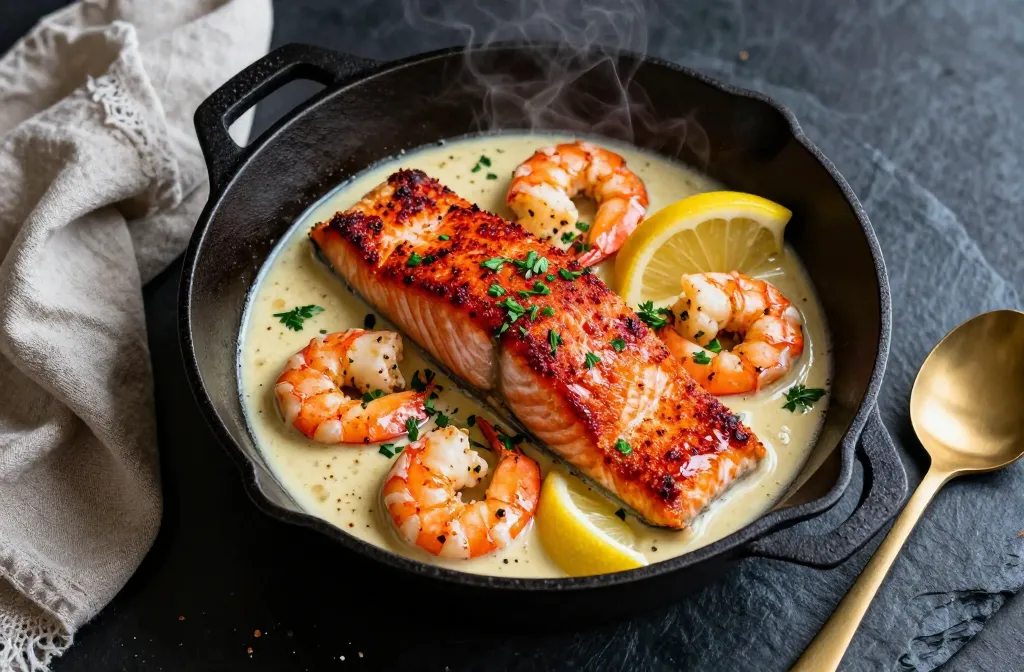
Cajun shrimp and salmon with garlic cream sauce hits like a culinary mic drop. It’s spicy, rich, and low-key fancy without making you cry over the sink. You sear, you simmer, you swirl in cream, and boom—restaurant vibes at your dinner table. Ready to flex a little?
Why This Combo Slaps
Cajun spice loves seafood, and shrimp + salmon bring different textures that keep every bite interesting. Shrimp soaks up bold flavors fast. Salmon stays silky and luxurious. Together? Total power couple.
We’re also talking about a sauce that tastes like it took an hour but comes together in minutes. Garlic, cream, a splash of stock, and a little lemon. You’ll spoon it over rice, pasta, or straight into your mouth—no judgment.
The Flavor Playbook
Let’s break down the main players and why they work so well:
- Cajun seasoning: Paprika, cayenne, garlic powder, onion powder, oregano, thyme, salt, pepper. Smoky heat meets herbal backbone.
- Garlic cream sauce: Butter + garlic + cream + stock + lemon = ultra-smooth, restaurant-level goodness.
- Salmon: Choose skin-on fillets for better searing and moisture. Medium-thick pieces cook evenly.
- Shrimp: Large or extra-large. They’re meaty, cook quickly, and don’t get lost in the sauce.
- Acid and freshness: Lemon juice and parsley lock in balance so the dish never feels heavy.
Heat Levels: Choose Your Adventure
– Mild: Use less cayenne and add more smoked paprika.
– Medium: Standard Cajun blend, a gentle kick.
– Spicy: A pinch of extra cayenne or a few dashes of hot sauce in the sauce. YOLO, right?
Ingredients You Actually Need
Here’s your tidy shopping list. Nothing weird. Nothing you’ll use once and forget in the back of the pantry.
- Seafood: 2 salmon fillets (6 oz each), 12–16 large shrimp (peeled, deveined), salt
- Cajun rub: 2 tsp smoked paprika, 1 tsp garlic powder, 1 tsp onion powder, 1/2 tsp dried thyme, 1/2 tsp dried oregano, 1/2 tsp black pepper, 1/4–1/2 tsp cayenne, 1 tsp kosher salt
- For searing: 2 tbsp neutral oil (avocado or canola), 1 tbsp butter
- Garlic cream sauce: 3 tbsp butter, 4–5 garlic cloves (minced), 1 cup heavy cream, 1/2 cup chicken or seafood stock, 1/2 cup grated Parmesan, juice of 1/2 lemon, 2 tbsp chopped parsley
- Optional add-ins: 1/2 tsp Dijon mustard, a pinch of red pepper flakes, zest of 1 lemon
Step-by-Step: From Skillet to Standing Ovation
You’ll cook the salmon and shrimp first, then build the sauce in the same pan. Less mess, more flavor.
- Pat dry and season: Dry the salmon and shrimp very well. Mix the Cajun blend and rub it all over both. Keep the shrimp chilled while you start the salmon.
- Heat the pan: Use a large skillet over medium-high heat. Add oil and a knob of butter. When it shimmers, you’re ready.
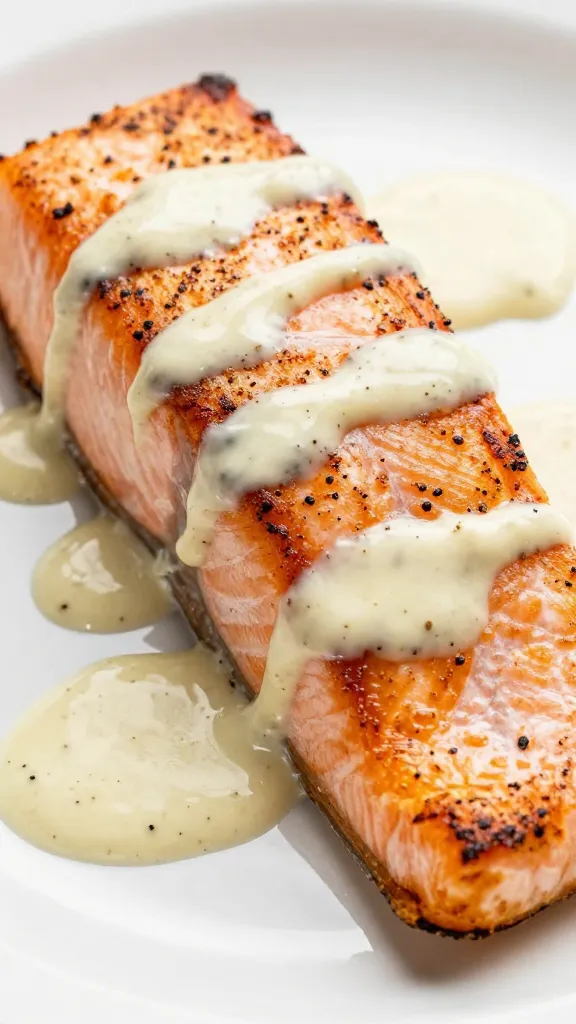
- Sear the salmon: Place salmon skin-side up first for a crisp top, 3–4 minutes. Flip, reduce heat slightly, cook 3–5 more minutes until medium and flaky. Remove to a plate.
- Sear the shrimp: Toss shrimp in the same pan, 1–2 minutes per side until just pink and curled. Don’t overdo it. Remove to the plate with salmon.
- Build the sauce: Lower heat to medium. Add butter, then garlic. Stir 30–45 seconds until fragrant. Add stock, scrape up the browned bits, and simmer 1 minute.
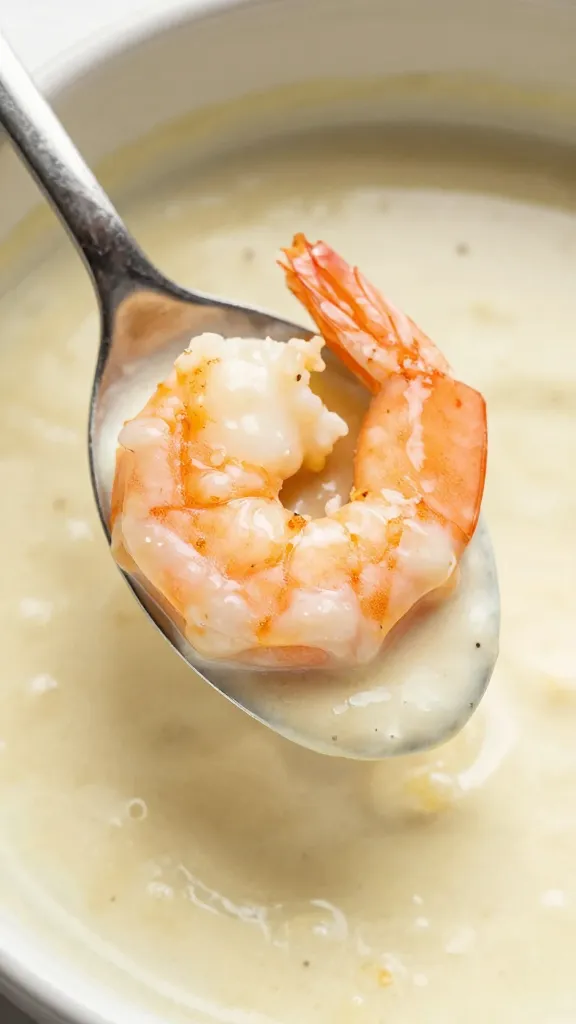
- Creamy goodness: Pour in cream. Simmer gently for 2–3 minutes until slightly thick. Stir in Parmesan until smooth. Add lemon juice, optional Dijon, and season to taste.
- Reunite the crew: Return salmon and shrimp to the pan and spoon sauce over them. Simmer 1 minute to warm through. Finish with parsley and lemon zest if you’re extra like that.
Texture Tips You’ll Brag About
– Keep heat moderate once cream goes in. Boiling breaks sauces.
– If sauce thickens too much, add a splash of stock.
– If it looks thin, let it simmer another minute or whisk in a tiny bit more cheese.
Smart Pairings and Sides
You want a base that catches the sauce. We’re swimming in flavor—let’s not waste it.
- Rice or orzo: Simple white rice or buttery orzo soaks up everything. IMO, orzo wins on texture.
- Mashed potatoes: If you crave cozy, this is your lane.
- Zoodles or spaghetti squash: Light, low-carb, and still satisfying. FYI, add extra lemon to balance.
- Veggies: Roast asparagus, blistered green beans, or sautéed spinach. Keep it crisp-tender.
- Bread: A crusty baguette for shameless dipping. We’re not wasting sauce here.
Wine and Drink Pairings
– White: Sauvignon Blanc or unoaked Chardonnay. Cuts the richness like a pro.
– Rosé: Dry, crisp, and fun. The summer vibe even in February.
– Beer: Pilsner or wheat beer complements the spice without overpowering it.
– NA: Sparkling water with lemon and a pinch of salt. Yes, a pinch—amplifies flavor.
Make-Ahead, Leftovers, and Reheating
You can’t meal-prep seared seafood the same way you do chicken, but you still have options.
- Prep ahead: Mix Cajun seasoning days in advance. Mince garlic and chop parsley. Portion salmon and shrimp.
- Leftovers: Store in an airtight container up to 2 days. Seafood ages like avocados—fast.
- Reheat: Low heat in a skillet with a splash of stock or cream, covered, until warmed. Microwaves work in 20–30 second bursts, but be gentle.
- Revive the sauce: If it separates, whisk in a teaspoon of cold cream off heat. Magic.
Swaps and Variations
We love range. Change it up without losing the soul.
- Protein swaps: Cod or halibut for salmon; scallops instead of shrimp (sear hard, short time).
- Dairy tweaks: Half-and-half works but thickens less—reduce longer. Coconut cream changes the vibe but tastes great with Cajun spice.
- Veg-packed version: Add sautéed bell peppers, cherry tomatoes, or spinach to the sauce.
- Extra smoky: Use andouille slices browned first, then cook seafood in the rendered fat. Not subtle, but wildly good.
DIY Cajun Seasoning (If Your Jar Looks Suspicious)
Mix: 2 tbsp smoked paprika, 1 tbsp garlic powder, 1 tbsp onion powder, 2 tsp dried thyme, 2 tsp dried oregano, 1–2 tsp black pepper, 1–2 tsp kosher salt, 1/2–1 tsp cayenne. Store airtight up to 6 months. Taste and adjust—your kitchen, your rules.
Common Mistakes (And How to Dodge Them)
– Overcooking seafood: Pull it early. Residual heat finishes the job.
– Boiling the cream: Gentle simmer only. You want silky, not grainy.
– Skipping acidity: Lemon keeps the sauce bright. Without it, the dish feels heavy.
– Under-seasoning: Taste the sauce at the end. Salt wakes up everything.
– Cold pan, sad sear: Heat first, then add seafood. You want that sizzle.
FAQ
Can I use frozen shrimp and salmon?
Absolutely. Thaw them properly in the fridge overnight, then pat very dry. Any extra moisture kills your sear and waters down the spice. FYI, quick-thaw shrimp under cold running water works in a pinch.
Is this spicy?
Mild to medium by default. You control the heat with the cayenne and any hot sauce. If you cook for spice-averse folks, go light and add heat at the table.
Can I make it gluten-free?
Yes, and it basically starts that way. Use gluten-free stock and double-check your Cajun blend and Parmesan. Serve over rice, potatoes, or gluten-free pasta and you’re golden.
What if I don’t have heavy cream?
Use half-and-half, but simmer longer to thicken. You can also whisk in a small knob of cream cheese at the end for body. Not traditional, but it works.
How do I know when the salmon is done?
Press gently—if it flakes easily and looks a little translucent in the center, you’re at medium. Aim for 125–130°F internally if you use a thermometer. IMO, medium keeps it juicy and perfect with the sauce.
Can I grill the salmon instead?
Totally. Grill it to your preferred doneness, then make the sauce on the stove and pour it over. The smoky char with creamy garlic sauce? Ridiculously good.
Conclusion
Cajun shrimp and salmon with garlic cream sauce tastes bold, looks fancy, and cooks fast enough for a weeknight. You get heat, richness, and a pop of lemon that keeps everything in balance. Make it once, and it’ll join your regular rotation—like that playlist you pretend you “just discovered.” Grab a skillet and go impress yourself.