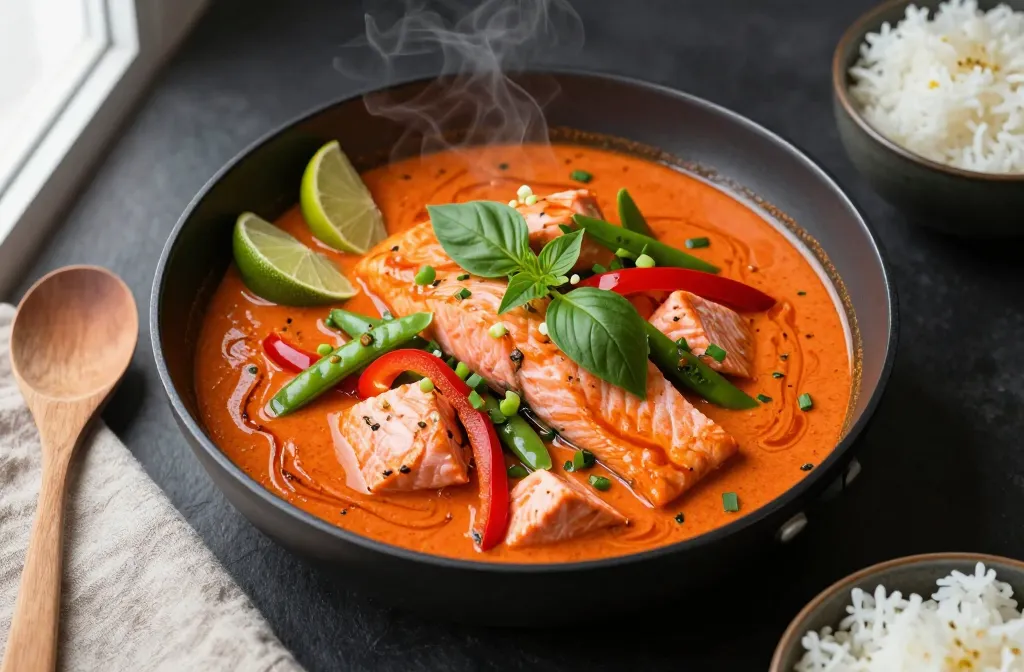
You want bold flavor on a Tuesday night without trashing your kitchen or your sanity? Meet 30-Minute Coconut Thai Salmon Curry—fast, silky, and wildly satisfying. It hits that rich-creamy-spicy sweet spot, and yes, you’ll spoon the sauce like soup. If your weeknight dinners feel stale, this one fixes it. No marinating, no fuss, just big payoff in one pan.
Why This Curry Slaps (And Saves Your Evening)
You get restaurant-level flavor with supermarket ingredients and a single skillet. The salmon poaches gently in coconut milk, so it stays silky and tender. Everything else comes from pantry MVPs: red curry paste, fish sauce, lime, and aromatics. It’s forgiving, so you can eyeball measurements and still win dinner.
The promise: 30 minutes, minimal chopping, maximum flavor. You’ll cook once, eat twice if you’re lucky—though leftovers tend to mysteriously vanish.
Ingredients You Actually Need
Let’s keep it tight. Here’s the core lineup:
- Salmon: 1 to 1.5 pounds, skinless filets, cut into big chunks
- Coconut milk: 1 can (full-fat for creaminess)
- Thai red curry paste: 2–3 tablespoons (adjust heat)
- Aromatics: 1 small onion or 2 shallots, 3 cloves garlic, 1-inch knob ginger
- Veg: 1 red bell pepper, a handful of snap peas or spinach (optional but recommended)
- Fish sauce: 1–2 tablespoons for savory depth
- Lime: Juice of 1, plus zest if you’re extra
- Brown sugar or palm sugar: 1 teaspoon to balance
- Oil: Neutral (avocado, canola)
- Herbs: Cilantro and/or Thai basil
- Rice or noodles: For serving
FYI: If you find kaffir lime leaves, toss in 2 for citrus perfume. If not, you’re still golden.
Ingredient Swaps That Still Taste Legit
- No salmon? Try cod, trout, or shrimp (add shrimp last, they cook in 3–4 minutes).
- No fish sauce? Use soy sauce plus a little extra lime. Not authentic, but it works.
- No red curry paste? Use yellow for milder heat or green for a spicier, herby vibe.
- Dairy-free and gluten-free? You’re already there—just check your curry paste label.
How to Make It (Fast, Hot, and Balanced)
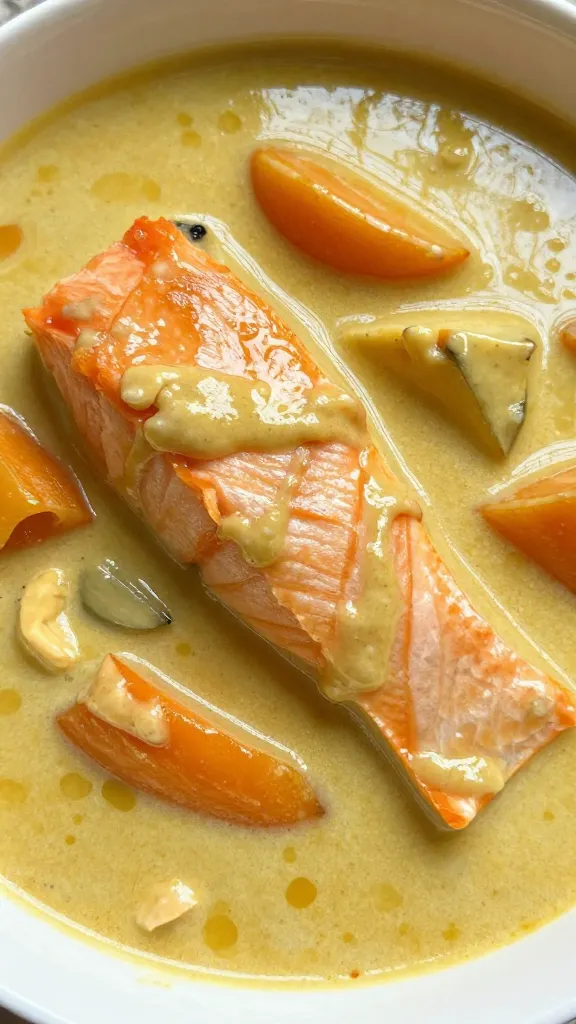
Here’s the play-by-play that gets dinner on the table in 30.
- Prep first: Chop onion, mince garlic and ginger, slice bell pepper. Cut salmon into 2-inch chunks and pat dry. Salt lightly.
- Sweat aromatics: Heat 1–2 tablespoons oil in a wide skillet over medium. Add onion, cook 3 minutes until glossy. Add garlic and ginger, cook 30 seconds.
- Bloom the curry paste: Stir in red curry paste. Cook 1 minute until fragrant. This step wakes up the spices—don’t skip it.
- Add coconut milk: Pour in the can and stir until smooth. Add bell pepper (and snap peas if using). Simmer 3–4 minutes.
- Season: Add fish sauce and sugar. Taste. Adjust salt and heat now.
- Poach the salmon: Nestle salmon pieces in the sauce. Simmer gently 5–7 minutes, turning once, until just cooked and flaky.
- Finish: Kill the heat. Squeeze in lime juice, toss in herbs, stir. Taste again—more lime or fish sauce if needed.
- Serve: Over hot jasmine rice or rice noodles. Spoon extra sauce because you deserve happiness.
Timing Tips to Actually Hit 30 Minutes
- Start rice first. Rice cooks while you chop.
- Use a wide skillet so the sauce reduces quickly and the salmon cooks evenly.
- Cut salmon into larger chunks so they don’t overcook while you fiddle with seasoning.
Flavor Balancing Like a Pro (Without Being Annoying)
Thai-inspired curry sings when you balance salty, sweet, sour, and heat. You don’t need a spreadsheet—just your tongue.
- Too salty? Add a splash of water and a squeeze of lime.
- Too flat? Add a pinch of sugar and more fish sauce.
- Too rich? Lime juice and fresh herbs brighten it instantly.
- Too spicy? More coconut milk, and serve with extra rice.
Heat Management 101
Not all curry pastes hit the same. Some breathe fire; some whisper.
- Start with 2 tablespoons paste if you’re unsure; add more after the coconut milk goes in.
- Stir in a little chili crisp or sliced fresnos at the end if you want extra kick without nuking the whole pot.
Textural Wins: Make It Creamy, Not Mushy
Nobody asked for salmon confetti. Keep it luscious with a few habits:
- Pat the salmon dry so it poaches instead of weeping moisture into the sauce.
- Gentle simmer—tiny bubbles only. A hard boil turns salmon tough.
- Add quick-cook veg at the end (spinach, peas, basil) so they stay vibrant.
- Don’t stir like a DJ—turn salmon once, maybe twice. Let it set.
Serving Ideas That Make It Feel Fancy
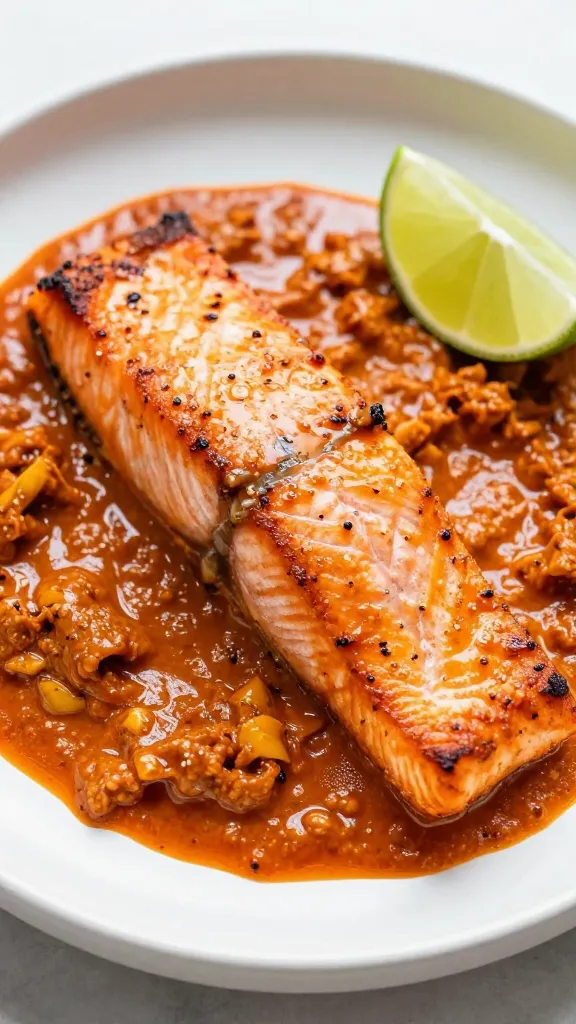
Yes, it’s a weeknight. No, you don’t need to serve it like a gremlin.
- Rice: Jasmine or coconut rice (cook rice with a splash of coconut milk—luxury unlocked).
- Noodles: Rice noodles tossed with a drizzle of sesame oil and lime zest.
- Crunch: Toasted peanuts or cashews, thinly sliced scallions, or crispy shallots.
- Herbs: Cilantro and Thai basil together taste like a tropical breeze.
- Side: Quick cucumber salad with rice vinegar, sugar, and chili flakes. Simple and perfect.
Make-Ahead Moves
You can prep aromatics and slice veg in the morning. Store them in the fridge, then just cook and assemble at night. IMO, cook the salmon fresh; reheated fish can sulk.
Common Mistakes (And How to Dodge Them)
- Boiling the salmon: Keep it at a gentle simmer. Boiling is where dreams go to die.
- Under-seasoning: Taste after adding coconut milk. It dilutes salt and spice—adjust accordingly.
- Skimping on acid: If the sauce tastes “meh,” it needs lime. Trust me.
- Using light coconut milk: It splits and tastes thin. Full-fat gives you that velvety finish.
FAQ
Can I use frozen salmon?
Absolutely. Thaw it fully in the fridge overnight or under cold running water. Pat it very dry so it doesn’t water down the sauce. Frozen salmon works great in curries because the sauce keeps everything moist.
How spicy is this curry?
Medium, if you start with 2 tablespoons of red curry paste. If you’re spice-shy, begin with 1 tablespoon and add later. If you love heat, go 3 tablespoons and toss in sliced chilies at the end—live your truth.
What’s the best curry paste to buy?
Mae Ploy and Maesri both deliver big flavor. Maesri tends to be punchier; Mae Ploy is a little sweeter, IMO. Check the label for shrimp paste if you keep it vegetarian in your house.
Can I make it dairy-free and gluten-free?
It’s naturally dairy-free. For gluten-free, make sure your fish sauce and curry paste don’t hide wheat or barley. Most don’t, but labels love surprises.
How do I store and reheat leftovers?
Cool, then refrigerate in an airtight container up to 2 days. Reheat gently on the stove over low heat until warm—avoid boiling or the salmon flakes apart. Add a squeeze of fresh lime to wake it up.
Can I bulk it up with more vegetables?
Totally. Add carrots (thinly sliced), zucchini, green beans, or baby corn. Harder veg go in earlier; leafy greens or peas go in at the end so they stay bright.
Conclusion
This 30-Minute Coconut Thai Salmon Curry hits that rare combo: low effort, high impact, and zero boredom. You’ll get silky fish, a sauce you could drink, and a dinner that makes weeknights feel a little fancy. Keep a can of coconut milk and a jar of curry paste on hand, and you’ve basically hacked dinner forever. FYI, leftovers make a great “chef’s snack” at 10 a.m.—not that I’d know.