Your dishwasher should smell like clean plates and victory—not a swamp. If funky odors, cloudy glasses, or mystery gunk are crashing your dish party, you’re overdue for a deep clean. The good news? You can fix most of it with stuff you already have at home and about an hour of light effort. Let’s get that machine sparkling so it actually makes things… you know, clean.
Start with a quick once-over (aka “stop feeding it gunk”)
You don’t need fancy cleaners yet. First, open the door and give the interior a sanity check. Any old food bits hanging out on the bottom? Scoop them up and toss them. It’s gross, but it’s also step one.
Key spots to check:
- Filter at the bottom (usually under the lower spray arm). If it looks like a graveyard for noodles, we’ve found the problem.
- Door gasket (the rubber seal). Wipe out the slime that loves to live there.
- Spray arms. If holes look clogged, we’ll fix that in a sec.
How to clean the filter without breaking anything
Most filters twist out counterclockwise. Rinse it under warm water and scrub with a soft brush. If it’s extra gross, soak it in warm, soapy water for 10–15 minutes. Reinstall it snugly—loose filters cause gritty dishes and mini heart attacks.
Do the big two: vinegar wash + baking soda refresh
This is the classic combo for a reason. Vinegar dissolves grease and mineral film. Baking soda tackles odors and lifts stains. Together? Chef’s kiss.
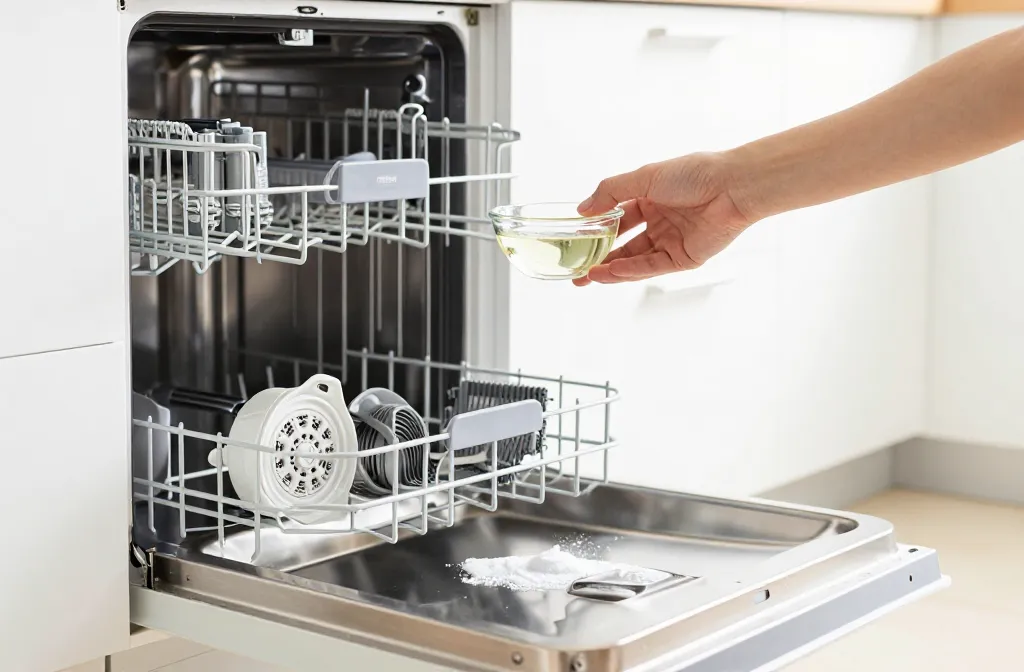
- Top rack vinegar bath: Place a dishwasher-safe cup filled with plain white vinegar on the top rack. Run a hot, empty cycle. Skip detergent.
- Bottom sprinkle of baking soda: After the vinegar cycle, sprinkle 1/2 cup baking soda on the bottom and run a short hot cycle. Still no detergent.
FYI: Don’t mix vinegar and baking soda in the same cycle unless you want a science fair in your dishwasher and not much cleaning power.
Attack the spray arms (because water can’t clean if it can’t spray)
Water pressure drops when the spray arm holes clog with mineral deposits or food mush. You’ll get sad, streaky dishes forever if you ignore this.
- Pop off the spray arms if your model allows it. Most pull straight down or twist off.
- Poke out clogged holes using a toothpick, paperclip, or a soft brush.
- Soak in warm vinegar for 20–30 minutes if you see white crust (that’s hard water buildup).
- Rinse and reinstall. Make sure they spin freely—give them a playful flick. Fun, right?
What if they don’t come off?
No biggie. Fill a spray bottle with vinegar and blast the holes. Let it sit 10 minutes, then wipe and run a hot rinse cycle.
Show the seals, racks, and detergent dispenser some love
Grease and detergent scum hide in unglamorous places. You’ll notice a huge difference once you clean these.
- Door gasket: Wipe with warm, soapy water and a microfiber cloth. Hit the bottom lip—grime parties there.
- Detergent and rinse aid compartments: Scrub away the crust. If the rinse aid window looks cloudy, a vinegar swab helps.
- Racks and tines: Check for chips. If metal peeks through, touch up with dishwasher rack repair paint to prevent rust flakes (yes, that’s a thing).
Stainless interior looking streaky?
Wipe with a soft cloth and vinegar, then dry. Avoid bleach or abrasive pads—unless you enjoy scratches and regret.
Hard water problems? Go pro with these tweaks
If you see white film on glasses, it’s probably hard water. Vinegar helps, but consistent fixes work better.
- Use rinse aid: It improves drying and stops spots. Set it to medium and adjust from there.
- Try a detergent with a built-in booster or add a teaspoon of citric acid powder monthly (run empty on hot).
- Run hot water at the sink first: Start your dishwasher with actually-hot water. It matters.
- Use the sanitize or high-temp wash when you can. Heat = fewer deposits and better cleaning.
When to use a commercial cleaner
If your dishwasher smells like a locker room even after a vinegar cycle, grab a dishwasher cleaner tablet (Affresh, Finish, etc.). Run it on the hottest empty cycle. IMO, once a month keeps things fresh with minimal effort.
Load smarter so you don’t sabotage yourself
You can clean your dishwasher perfectly and still get dirty dishes if you load like chaos reigns. Quick reminders:
- Face dirty surfaces toward the spray arms.
- Don’t nest bowls or stack spoons. They need space like introverts at a party.
- Keep tall items away from the detergent cup door so it can open fully.
- Leave a gap between plastics—they trap grime if they touch.
- Scrape, don’t pre-rinse. Modern detergents need a little grime to activate. Wild but true.
Set a simple cleaning schedule (aka future you will thank you)
You don’t need to deep clean every week. Build a quick routine and stick to it.
- After every run: Crack the door open for 30 minutes to vent steam. Moisture = funky smells.
- Weekly (5 minutes): Wipe the gasket and door edges. Rinse the filter if you cook a lot.
- Monthly (15–30 minutes): Do the vinegar wash, baking soda refresh, and check spray arms.
- Quarterly: Use a commercial cleaner or citric acid cycle if you’ve got hard water.
Smell still lurking?
Pull the bottom kick plate and vacuum dust and pet hair around the vent area. Also check the drain hose loop—make sure it forms a high loop so sink gunk can’t backflow. It’s a thing. It’s gross. Fix it.
Common mistakes that quietly wreck your dishwasher
Let’s save you from pain and repairs.
- Too much detergent: More doesn’t clean better; it leaves residue. Follow the line in the cup. It exists for a reason.
- Mixing bleach and vinegar: Never. Toxic fumes. Hard stop.
- Using hand dish soap: You’ll summon a bubble apocalypse. Only use dishwasher detergent.
- Skipping the filter clean: That’s like never emptying a lint trap. You know better.
- Blocking the spray arms: Oversized cutting boards on the bottom rack? They stop the top arm. Load them on the sides.
FAQ
How often should I clean my dishwasher?
Do a quick wipe weekly and a deeper clean monthly. If you cook daily or have hard water, bump the deep clean to every 3 weeks. If it smells weird or your glasses look cloudy, clean it now—your dishwasher is begging.
Can I use vinegar all the time?
Yes, but in moderation. A monthly vinegar cycle works great for buildup and odors. Don’t store vinegar in the rinse aid compartment, though—it can damage rubber parts over time.
Why do my dishes still come out dirty?
Three usual suspects: a clogged filter, blocked spray arms, or overloaded racks. Also check water temperature—it should hit at least 120°F. Run the sink hot first so the dishwasher starts strong.
Is a commercial cleaner better than DIY?
Not always. Vinegar and baking soda handle most messes. Commercial cleaners shine when you’ve got serious mineral buildup or lingering odor. IMO, use them monthly if your water is hard or your machine is older.
My dishwasher smells like rotten eggs. Help?
Clean the filter, run the vinegar cycle, and check the drain hose for kinks or low loops. Also peek into the garbage disposal if you have one—shared plumbing means smells can travel. A disposal clean can fix a “dishwasher” odor fast.
Do I need to pre-rinse dishes?
Nope. Scrape solids but leave some residue. Enzymatic detergents work better with a little grime to chew on. Over-rinsing wastes water and money, FYI.
Wrap-up: make it sparkle with minimal effort
You don’t need a whole weekend or a chemistry degree to clean your dishwasher. Tackle the filter, blast the spray arms, run the vinegar-and-baking-soda tag team, and keep a simple monthly rhythm. Your dishes will look better, your kitchen will smell fresher, and you’ll feel like a domestic wizard. Low effort, high payoff—my favorite combo.