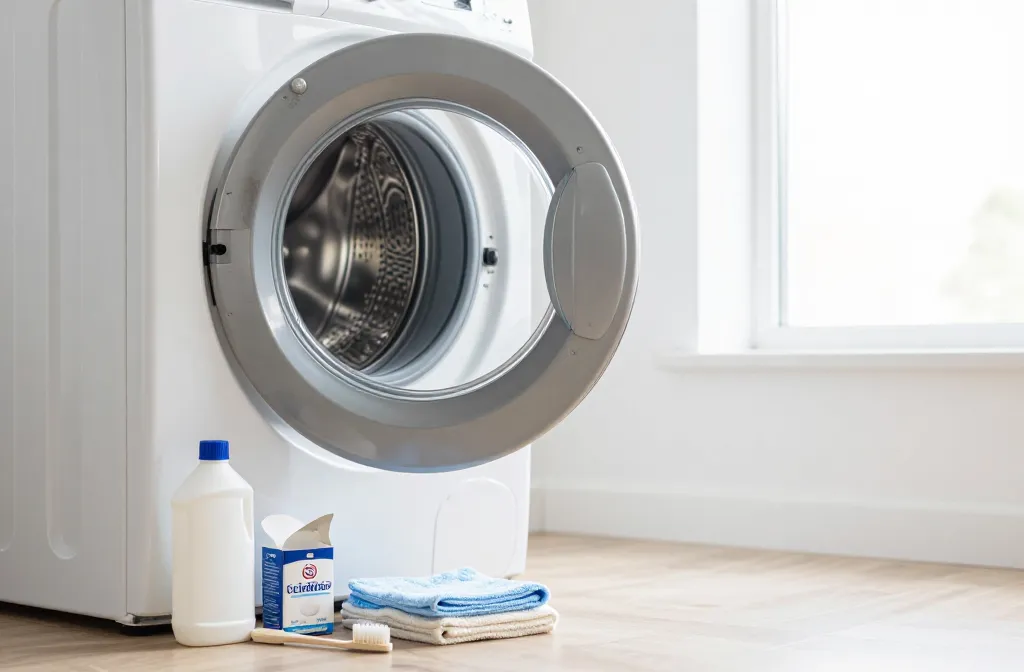
Your washing machine works hard, then silently judges you with a weird smell. Let’s fix that. You don’t need fancy products or a handyman on speed dial. With a few cheap basics and 30–60 minutes, you’ll kick the funk, stop residue build-up, and help your clothes smell like clothes again, not a damp basement. Ready to un-gross your washer?
Why your washer gets nasty (and how to spot it)
You throw in detergent, hit start, and assume the machine self-cleans. It doesn’t. Detergent residue, fabric softener gunk, mineral deposits, and lint team up with warm moisture to invite mold and mildew. Party’s over.
Warning signs you need to clean:
- Clothes smell musty right out of the wash
- Visible gunk or slime on the rubber gasket (front-loaders)
- Dispenser drawers look like a science experiment
- Water doesn’t drain well or the machine rattles more than usual
FYI: Front-loaders trap more moisture (thanks, door gasket), but top-loaders get gross too. No one’s immune.
What you’ll need (nothing fancy)
You don’t need ten specialty cleaners. Grab:
- White vinegar (distilled) – deodorizes and dissolves mineral deposits
- Baking soda – mild abrasive and deodorizer
- Microfiber cloths – for wipe-downs
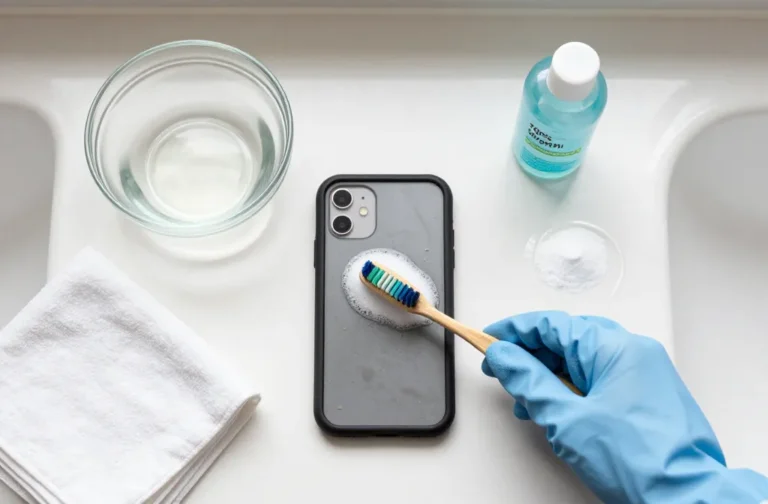
- Old toothbrush – for crevices and seals
- Dish soap – cuts greasy residue
- Optional: washing machine cleaner tablets, hydrogen peroxide, citric acid (for hard water), a small brush attachment
IMO, start simple: vinegar, baking soda, elbow grease. Add the extras if the smell fights back.
The quick-clean you should do monthly
You can knock this out while you scroll or make coffee. No excuses.
- Empty the washer. Obvious, but hey.
- Clean the gasket (front-loaders) or rim (top-loaders). Mix warm water + a few drops of dish soap. Dip your cloth and wipe the rubber seal/rim thoroughly. Pull back the gasket and clean inside. Use the toothbrush for grime. Dry with a clean cloth.
- Scrub the dispenser drawer. Pull it out. Rinse under hot water, scrub with dish soap and a toothbrush. Clean the housing too.
- Run a hot cycle with vinegar. Pour 2 cups white vinegar directly into the drum (front-loader) or tub (top-loader). Run the hottest, longest cycle.
- Deodorize with baking soda. Sprinkle 1/2 cup baking soda into the drum. Run a short hot cycle. This neutralizes lingering odors.
- Wipe it dry. Open the door/lid. Wipe the drum, door, and gasket dry. Leave it open to air out.Advertisement
Result: Smell neutralized, residue loosened, bacteria breakup initiated. Your machine just sighed with relief.
Deep-clean a seriously funky washer
If you’ve ignored your washer (no judgment… okay, a little), go deeper.
Front-loaders: the battle plan
- Gasket detox. Mix 1 cup vinegar + 1 cup warm water. If you see mold, add a splash of hydrogen peroxide. Soak a cloth, pack it into the gasket folds for 10 minutes. Scrub with a toothbrush. Wipe dry.
- Drain pump filter. Many front-loaders have a small access panel at the bottom-front. Put a tray or towel down. Twist open the cap slowly (water will spill). Remove lint, coins, rogue socks. Rinse the filter and reinstall.
- Dispenser drawer overhaul. Remove the drawer completely. Soak in hot water + dish soap for 10 minutes. Scrub every corner. Clean the housing with a toothbrush.
- Descale cycle. Hard water? Add 1–2 tablespoons citric acid to the drum (or use a machine-cleaner tablet). Run the hottest, longest cycle.
- Follow with vinegar or bleach (not both). If odors persist, run one more hot cycle with either 2 cups vinegar or 1/2 cup bleach. Choose one. Never mix.
Top-loaders: don’t forget the rim and agitator
- Soak cycle. Fill on hottest setting. Add 4 cups vinegar. Let agitate for 1 minute, then pause for 1 hour to soak. Scrub the rim and under the lid while you wait.
- Agitator TLC. If your agitator cap pops off, remove it and vacuum out lint and coins. Wipe inside with vinegar water.
- Finish the cycle. Resume and let it complete. Then run a short hot cycle with 1/2 cup baking soda.
Pro tip: If your washer smells swampy even after cleaning, run the drain and spin once more, then leave it open to dry for several hours.
Clean the parts everyone forgets
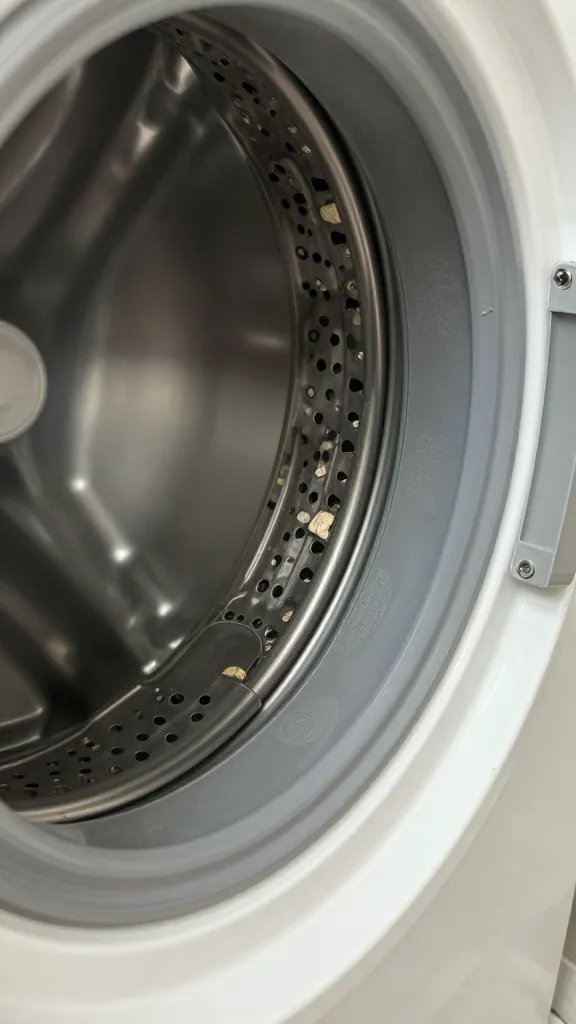
Small stuff = big stink if you ignore it.
- Rubber door seal (front-loaders): Wipe after every few loads. Keep it dry. Mold hates dryness.
- Detergent cap and softener cup: Soak and scrub monthly. Softener especially loves to create blue goo.
- Exterior: Spray and wipe with vinegar water. Dust and detergent splashes build grime.
- Hoses: Inspect for bulges, cracks, or leaks every 6 months. Replace if they look sketchy.
- Drain area and standpipe: If water backs up or drains slowly, call a plumber or snake the line. Your washer can’t fight physics.
Hard water hacks
If you see white film or crust, you’ve got mineral build-up.
- Add 1 tablespoon citric acid during monthly maintenance
- Use a water softener or detergent formulated for hard water
- Run an extra rinse to prevent residue on clothes
Daily habits that keep smells away
Think of these as tiny rituals that save you deep-clean time later.
- Leave the door or lid open after every wash so the drum dries out
- Use less detergent than you think—modern machines need less, and excess equals residue
- Skip liquid fabric softener or use it sparingly; it gunks everything up
- Remove wet clothes ASAP—mildew starts fast
- Wipe the gasket once a week with a dry cloth
- Run a hot maintenance cycle monthly (with vinegar or a cleaner tablet)
IMO, the “use less detergent” rule fixes half of people’s problems. More soap doesn’t mean cleaner clothes—it just means more sludge.
What to avoid (because TikTok said so)
Let’s skip the myths, shall we?
- Don’t mix bleach and vinegar or ammonia. That creates toxic fumes. One at a time, with a rinse in between.
- No abrasive powders on the glass or control panel. You’ll scratch it.
- Avoid boiling water unless your manual approves. Super-high temps can damage seals.
- Skip essential oils in the drum. They can stain and mess with rubber parts.
- Don’t ignore the manual. Some brands recommend specific cleaners for warranty reasons. Boring, but smart.
Maintenance schedule that actually works
If you like checklists, here’s a simple one that keeps your machine fresh.
- After every load: Door open, gasket wiped, clothes out
- Weekly: Quick wipe of gasket and exterior
- Monthly: Hot clean cycle with vinegar or cleaner tablet; scrub dispenser
- Quarterly: Deep-clean gasket, check hoses, clean drain pump filter (front-loaders)
- Annually: Replace hoses if worn; run a citric acid descale if you have hard water
FAQs
Can I use bleach instead of vinegar?
Yes, but not together. Use 1/2 cup bleach on a hot cycle to sanitize, then run an extra rinse. Vinegar dissolves mineral residue; bleach kills odors and bacteria. Choose based on your problem. If build-up looks chalky, go vinegar. If it smells like a locker room, go bleach.
How often should I clean my washing machine?
Do a light clean monthly and a deep clean every 3–4 months. If you run lots of cold washes, use fabric softener, or live in a humid climate, clean more often. Your nose will tell you when it’s time.
What if my washer still smells after cleaning?
Check the drain pump filter (front-loaders), the standpipe, and the gasket folds. Run a bleach cycle, then leave the door open for 24 hours. If the smell returns fast, you might have a drainage issue—time to inspect hoses or call a pro.
Can I toss baking soda in with every load?
Occasionally, sure. But frequent use can mess with detergent chemistry. Better approach: right dosage of detergent, occasional vinegar rinse cycles, and good airflow after each wash.
Do machine cleaner tablets work?
Yes. They simplify the process and smell nicer than vinegar. Use them monthly per the label. If your washer looks visibly grimy, pair tablets with manual scrubbing for best results.
Is vinegar safe for rubber seals?
In normal cleaning amounts, yes. Don’t soak rubber parts in straight vinegar for hours. Wipe, rinse, and dry—no marinating.
Conclusion
A clean washer doesn’t need to smell like a perfume counter—it just needs to not smell. Do a quick monthly routine, keep things dry, and don’t drown your machine in detergent. Your clothes will come out fresher, the drum will last longer, and you’ll avoid that “why does my laundry smell like wet dog?” moment. Easy wins, minimal effort. Now go make your washer proud.