Your dishwasher should smell like…nothing. If yours hits you with eau de funky leftovers, it’s begging for a clean. The good news? You can fix grime, slime, and mystery odors with a few simple steps and some pantry staples. Give me an hour and your machine will sparkle like it’s auditioning for a cleaning commercial.
Why your dishwasher needs cleaning (yes, really)
Food gunk, grease, and hard water minerals build up inside your machine. That buildup clogs spray arms, makes glasses cloudy, and turns your gasket into a science experiment. You’ll also notice longer cycles and worse results. Basically, a dirty dishwasher can’t do its job. Wild concept, right?
Bottom line: Clean it monthly to keep it fast, quiet, and stink-free. If you see slime or smell swamp, clean it now.
What you’ll need (nothing fancy)
Grab these basics:
- White vinegar (plain, not the fancy balsamic you save for salads)
- Baking soda
- Dish soap (a drop or two), warm water
- Soft brush or old toothbrush
- Microfiber cloth or sponge
- Toothpicks or a skewer (for spray arm holes)
- Optional: citric acid or dishwasher cleaner tablets for hard water
FYI: Skip bleach if your dishwasher has stainless steel inside. It can pit and damage the finish. Also avoid abrasive pads that scratch.
Step-by-step deep clean (the 45-minute refresh)
Let’s do the full reset. Do this once a month or whenever your nose says “help.”
- Empty the dishwasher. Remove the racks if they slide out easily. You’ll reach the grimy bits better.
- Clean the filter. It lives on the floor of the tub, under the spray arm. Twist and lift it out. Rinse under warm water and scrub with a soft brush. If it’s greasy, add a drop of dish soap. Reinstall snugly.
- Check the drain area. Scoop out any noodles, glass bits, or weird blobs near the filter. Don’t push debris farther down. You are not launching a drain rocket.
- Unclog spray arms. Pop them off if your model allows. Rinse and poke mineral bits out of the holes with a toothpick. Rinse again. Reattach firmly so they spin freely.
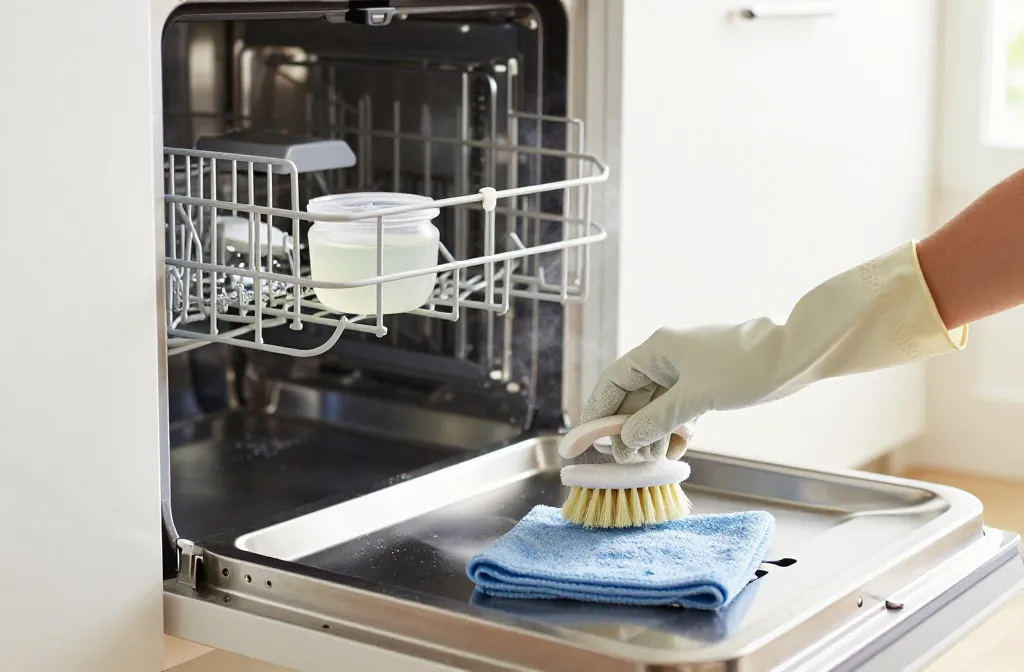
- Wipe the door and gasket. Mix equal parts vinegar and warm water. Wipe the door edges, the bottom lip, and especially the rubber seal. That gasket traps gunk like a pro. Dry with a cloth.
- De-grease the interior. Wipe the walls and racks with your vinegar solution. If you see chalky white film, you’ve got hard water. We’ll hit that next.
- Run a hot vinegar cycle. Place a dishwasher-safe bowl with 1–2 cups white vinegar on the top rack. Run a normal or heavy cycle with hot water. No detergent. This dissolves grease and neutralizes odors.
- Deodorize with baking soda. When the vinegar cycle finishes, sprinkle 1/2 cup baking soda across the bottom. Run a short, hot cycle. This freshens and brightens the tub.
Got stubborn white film?
That’s mineral scale from hard water. Use one of these:
- Citric acid wash: Add 1–2 tablespoons citric acid crystals to the detergent cup, run a hot cycle.
- Commercial cleaner tablets: Follow the label once a month if your water leaves heavy deposits.
IMO, citric acid works great and costs less.
Quick weekly habits that prevent the grossness
You don’t need a full spa day every week. Try these tiny moves:
- Rinse the filter for 20 seconds if you notice grit on cups.
- Wipe the gasket with a damp cloth after your last load on Sundays.
- Run hot water at the sink for 10–15 seconds before starting the dishwasher so it begins with hot water.
- Leave the door ajar after cycles. Airflow = no musty smell.
- Scrape, don’t pre-wash. Dishwashers like a little grime for enzymes to bite. But don’t send in half a casserole.
Target the stinky spots people forget
Some areas hide gunk even if you “cleaned.”
- Door bottom lip: Open the door fully and check the inner edge near the hinge. Wipe the slimy line. It’s always there. Always.
- Detergent dispenser: Pop it open and scrub residue. Sticky pods sometimes leave goo.
- Utensil basket: Remove it. Rinse out seeds and rice. Shake like a maraca over the sink.
- Rinse aid cap: Unscrew it and wipe the area. Spills get crusty fast.
What about the exterior?
Keep fingerprints and streaks in check:
- Stainless steel: Use a microfiber cloth and a tiny bit of dish soap, then buff with a dry cloth. Always go with the grain.
- Control panel: Lightly damp cloth only. Avoid spraying directly. Electronics don’t like showers.
Hard water and detergent drama
If your glasses look cloudy even after a clean, check two things:
- Water hardness: Hard water needs rinse aid and maybe a water softener setting (if your machine has one). Consider citric-acid monthly.
- Detergent type: Pods are convenient but sometimes too much for soft water. Powder lets you dial the dose. Liquid is my last pick; it can leave film.
Pro tip: Use the least detergent that still gets things clean. Too much soap = more residue and stink.
Heat matters more than you think
Dishwashers clean best at 120–140°F (49–60°C). If your water heater sits lower, grease won’t melt and detergent won’t activate. Set it to 120°F minimum, then run the hot tap before starting a load. Small change, big win.
When to call in backup
Sometimes the funk fights back. If you notice:
- Standing water after cycles (check clogs first, then consider a drain pump issue).
- Black mold behind the gasket that returns after cleaning (gasket may need replacing).
- Rust flakes on racks (use rack touch-up or replace to protect the tub and dishes).
- Burning smell or leaks (stop using and schedule a tech, obviously).
If your machine is older than your favorite hoodie and never got maintenance, a pro cleaning or deep descaling helps reset everything.
FAQs
Can I use bleach to clean my dishwasher?
If your tub is plastic, small amounts of diluted bleach can sanitize. But avoid bleach on stainless steel interiors or around metal parts because it can corrode. Vinegar and baking soda handle most issues without the risk, IMO.
Is vinegar safe for the rubber seals?
Yes, in reasonable amounts. A cup or two in a cleaning cycle won’t hurt the gasket. You shouldn’t soak seals in straight vinegar for hours, though. Wipe, rinse, done.
How often should I clean the filter?
Check it monthly. If you cook a lot or toss in saucy dishes, clean it every two weeks. A 60-second rinse prevents odors and keeps spray pressure strong.
My dishes smell weird after a cycle. What now?
Clean the filter, gasket, and drain area first. Then run the vinegar and baking soda cycles. Use rinse aid, leave the door ajar after runs, and switch to a different detergent if the smell lingers. Sometimes pods don’t dissolve fully in cooler water.
Why are my glasses cloudy after cleaning?
That’s either hard water scale or etching. Try citric acid or a descaling cleaner first. If the glass looks iridescent and rough, that’s etching—permanent. Use less detergent and more rinse aid to prevent it.
Do I need special dishwasher cleaners?
Not required, but they help with heavy mineral deposits. If you have well water or very hard city water, run a cleaner tablet monthly. Otherwise, vinegar + baking soda gets it done.
Wrap-up: give your dishwasher some love
A clean dishwasher cleans better, smells better, and lasts longer. Do the monthly deep clean, hit the filter and gasket regularly, and keep water hot. Sprinkle in rinse aid and smart detergent use, and your dishes will come out sparkling. Minimal effort, maximum payoff—FYI, your future self will thank you every time you open the door and don’t get a whiff of “leftovers, vintage 2023.”