Fingerprints on your fridge again? Stainless steel looks sleek until someone breathes near it. The good news: you can get that showroom shine without fancy products or a two-hour arm workout. Let’s clean smarter, not harder—and keep those pesky streaks away longer than a single afternoon.
Know Your Finish (It Matters More Than You Think)
Before you grab a cleaner, figure out what you’re working with. Stainless steel comes in different finishes, and yes, they behave differently when you clean them.
- Brushed/satin finishes show streaks fast but clean up beautifully if you wipe with the grain.
- Fingerprint-resistant “black” or coated stainless often needs milder cleaners—harsh stuff can dull the coating.
- Polished/mirror finishes can scratch if you sneeze too aggressively. Be gentle.
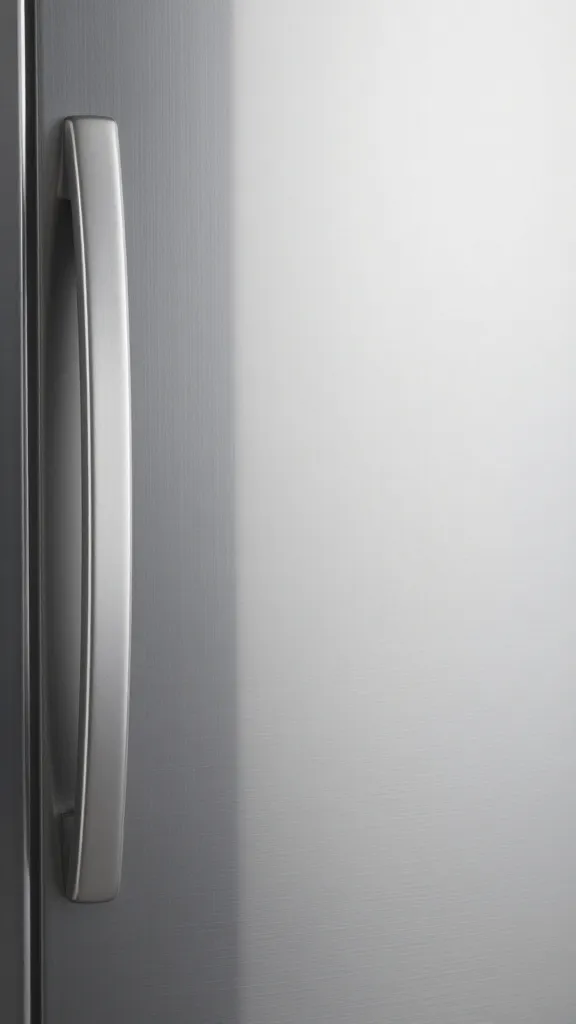
FYI: You can find the grain by looking closely—those tiny lines run either vertically or horizontally.
Gather Your Gear (No, You Don’t Need a Chemistry Set)
You probably own most of this already. Keep it simple:
- Microfiber cloths (two or three—one for cleaning, one for drying, one for buffing)
- Mild dish soap and warm water
- White vinegar (for greasy fingerprints and light disinfecting)
- Mineral oil or baby oil (optional, for shine—use sparingly)
- Spray bottle (for a vinegar solution, if you want to feel official)
Avoid:
- Bleach or chlorine—they pit and discolor stainless.
- Abrasive scrubbers—save those for cast iron prison duty.
- Baking soda slurries—tempting, but they can haze brushed steel if you scrub too hard.
Quick Daily Clean: The 2-Minute Reset
Let’s kill the smudges fast. This routine keeps your appliances looking clean without a whole production.
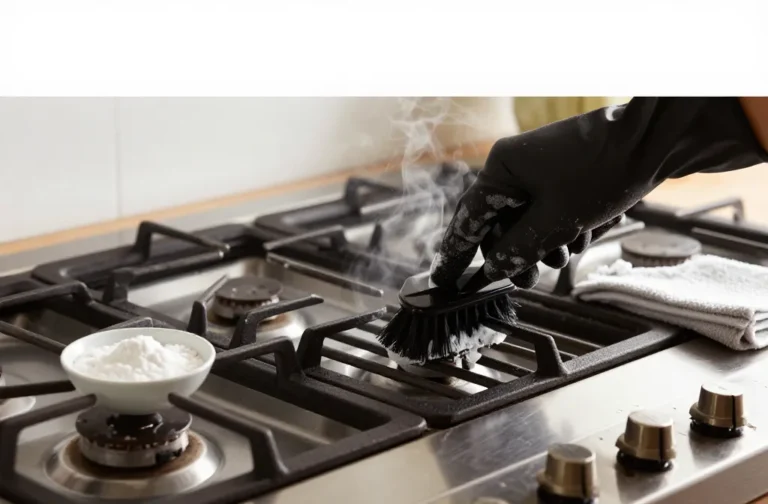
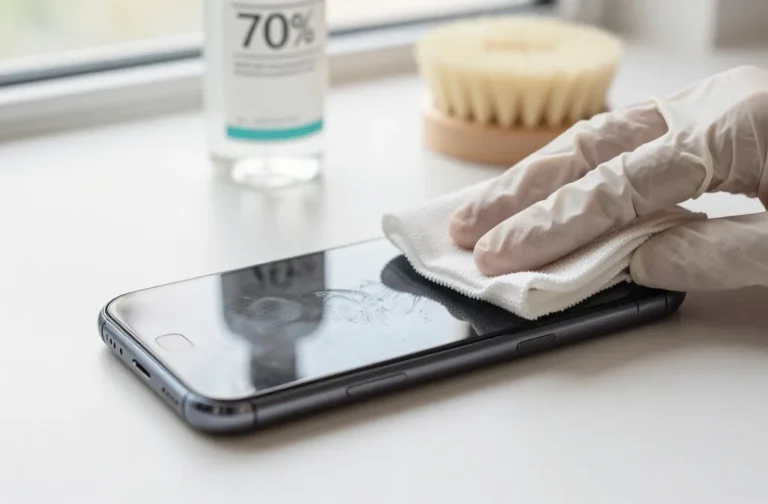
- Spritz with diluted vinegar (about 1:1 vinegar to water) or use a few drops of dish soap in warm water.
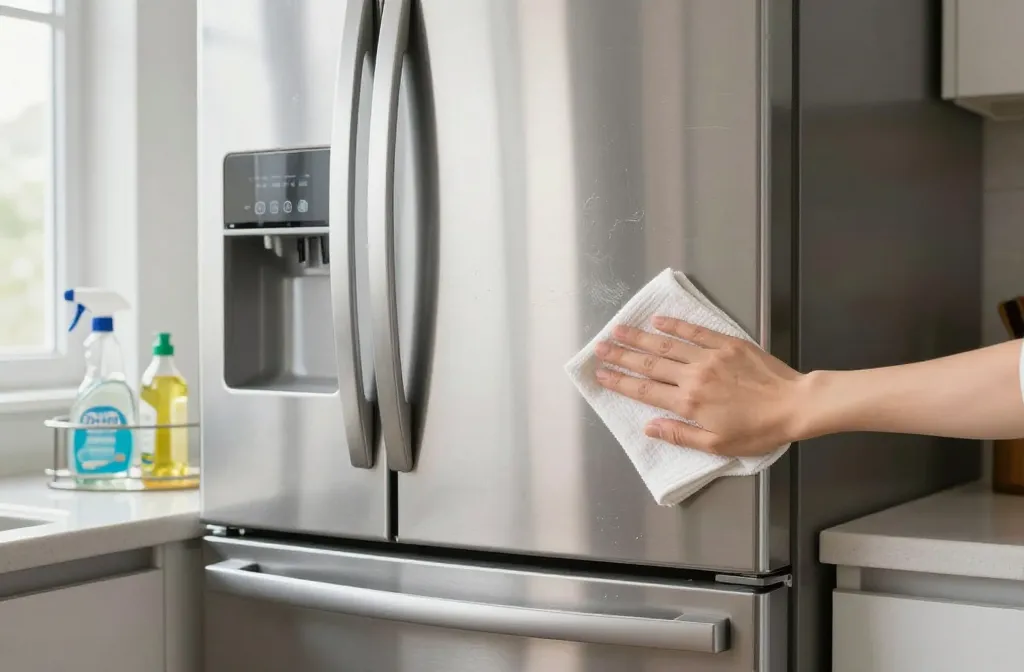
- Wipe with the grain using a damp microfiber cloth. Don’t do little circles—that just moves grime around.
- Dry immediately with a second clean cloth. Drying is the anti-streak magic, IMO.
Result: no streaks, no drama, no “what is this mystery drip?” stains.
Deep Clean: When the Fridge Looks Like a Crime Scene
When daily wipe-downs won’t cut it, break out the slightly bigger guns—still gentle, just more intentional.
- Degrease first. Spray vinegar solution or use a drop of dish soap on a damp cloth. Focus on handles and around the water dispenser—aka smudge central.
- Work top to bottom. Gravity exists. Don’t chase drips.
- Rinse the cloth often. Otherwise you just smear oils like a human butter knife.
- Hit edges and trim. Gunk hides in seams—fold your cloth into a tight edge and run it along the borders.
- Dry thoroughly. Use a fresh microfiber and buff with the grain until it gleams.
Sticky Residue, Tape Gunk, and Mystery Spots
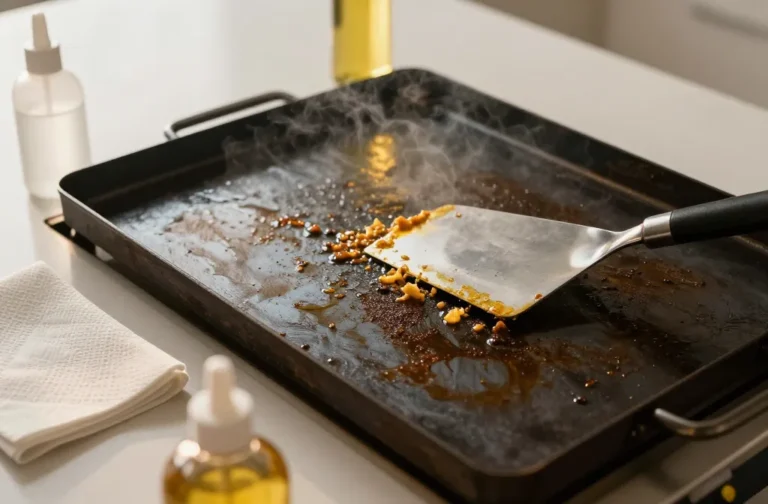
Try a dab of cooking oil on a cloth and gently rub the spot with the grain. The oil loosens adhesive without scratching. Then clean the area with soapy water or vinegar and dry. Boom—no sticky mess, no scratches.
Water Spots and Hard Mineral Lines
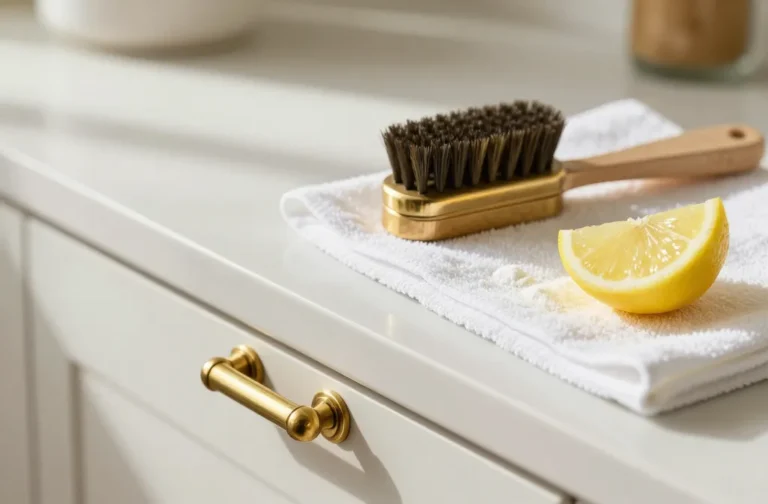
Use straight vinegar on a cloth and hold it on the spot for a minute. Wipe with the grain. Stubborn marks? Repeat and then dry thoroughly. If your water is super hard, consider a final distilled-water wipe to prevent new spots.
Shine Time: That Subtle “New Appliance” Glow
You don’t need to oil your appliances every time, but a tiny bit of mineral oil can make fingerprints less obvious and boost shine.
- Put a few drops on a soft cloth (not directly on the appliance).
- Buff lightly with the grain. Aim for a whisper of shine, not a greasy photo shoot.
- Polish with a dry cloth to remove excess. If your fridge looks slick, you used too much.
Prefer store-bought? Choose a stainless steel cleaner and follow the label. Some leave a protective layer; some just clean. Test in a corner first.
Common Mistakes That Ruin the Finish
We’ve all done at least one of these. Let’s retire them.
- Scrubbing against the grain. Instant micro-scratches. Always follow the lines.
- Letting cleaner air-dry. That’s a streak party. Always dry with a clean cloth.
- Using paper towels. They shed lint and can leave fine scratches over time.
- Spraying directly on control panels. Liquid creeps into buttons. Spray the cloth, not the panel.
- Using bleach or oven cleaner. The appliance will hold a grudge forever.
Kid Prints, Pet Noses, and Real-Life Maintenance
You can’t bubble-wrap your kitchen, so build a low-effort routine that actually sticks.
- Do a 30-second handle wipe daily. That’s where most grime lives.
- Deep clean weekly (or biweekly if your household isn’t a chaos factory).
- Keep a microfiber cloth on a hook nearby. If it’s easy, you’ll actually do it.
- Spot-buff with a tiny bit of oil before guests come over. Instant “wow,” minimal effort.
IMO, the best routine is the one you’ll actually follow—even if it’s not perfect.
FAQs
Can I use Windex or glass cleaner on stainless steel?
Sometimes, but choose ammonia-free formulas to avoid streaks and dulling. If you try it, spray on a cloth, not the surface, and always finish with a dry buff. For safer everyday use, vinegar solution works better.
What’s the safest cleaner for fingerprint-resistant stainless?
Use mild dish soap and water or a diluted vinegar solution. Avoid oils and polishes—coated finishes often don’t need them and can turn cloudy. Always check your manual if you still own it (miracles happen).
How do I remove scratches from stainless steel?
Light hairline scratches sometimes blend in if you polish gently with the grain using a dedicated stainless steel scratch repair kit. Deep scratches need professional attention. Don’t attack them with baking soda paste—you’ll just create more visible swirl marks.
Why do I still see streaks after cleaning?
You probably used too much cleaner or didn’t dry fully. Use less product, wipe with the grain, and buff with a dry microfiber. Also, switch to distilled water if your tap water leaves mineral residue.
Is vinegar safe for all stainless steel?
Yes, in moderation. Vinegar cuts grease and minerals without harming stainless. Don’t let it sit forever, and always rinse or wipe with clean water after, then dry.
Can I use olive oil for shine?
Technically yes, but it can go rancid and attract dust. Mineral oil stays stable and looks cleaner longer. If olive oil is all you have, use a tiny amount and clean it off within a day or two.
Conclusion
Stainless steel doesn’t need babysitting—just the right moves. Clean with the grain, dry immediately, and use gentle products you already have. When you want extra shine, buff lightly and resist the urge to drown your fridge in oil. Do that, and your appliances will look crisp, classy, and smugly fingerprint-free—at least until someone opens the door again.