Monsteras don’t ask for much, but they do have opinions—especially about what they live in and what you feed them. Get the soil and fertilizer right, and those iconic split leaves show up like magic. Get it wrong, and you’ll meet yellow leaves, stunted growth, and mushy roots.
Let’s set your Monstera up for lush, photogenic success.
Know Your Monstera’s Roots (Literally)
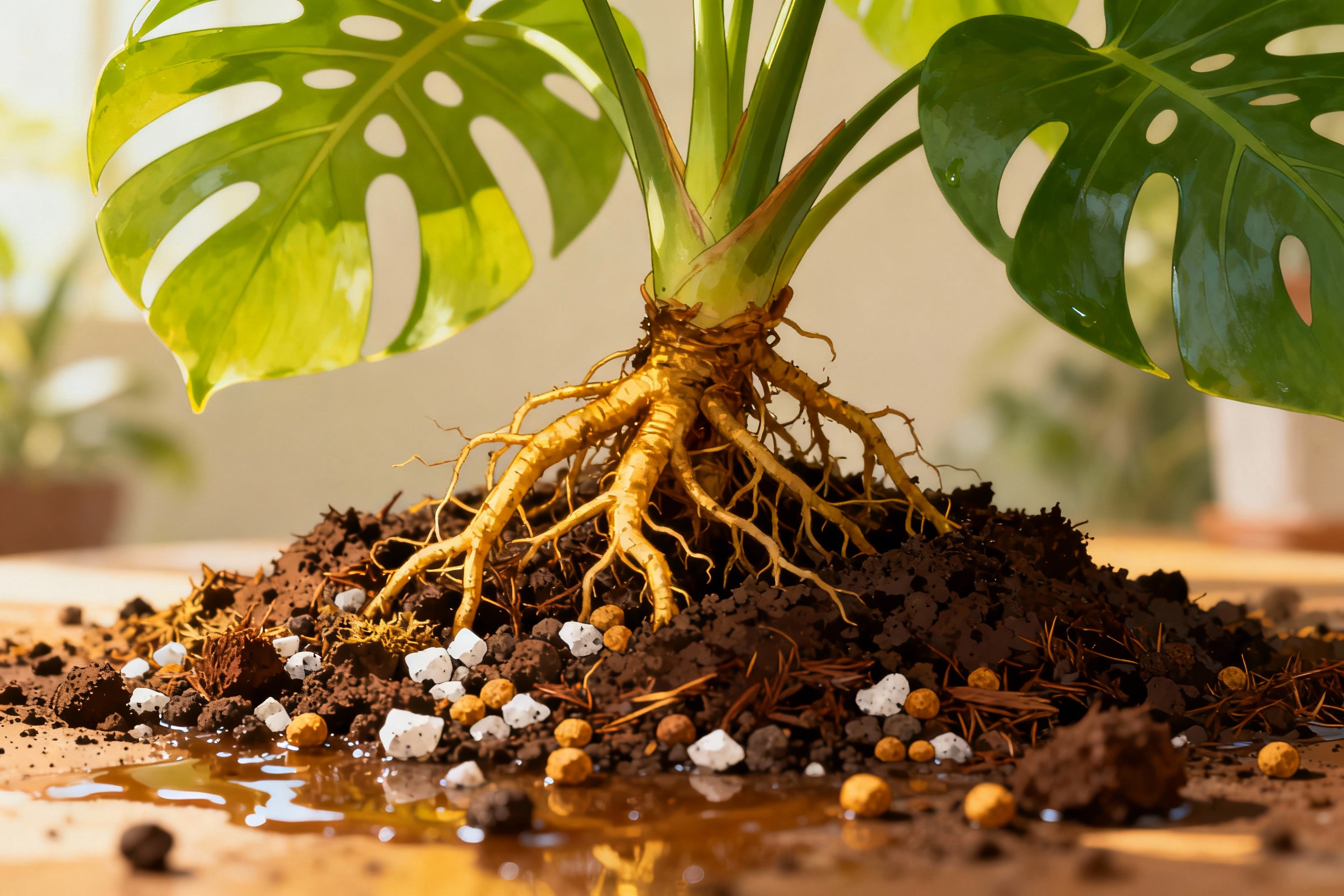
Monsteras are aroids, which means they grow in chunky, airy, well-draining substrates in nature. Their roots want oxygen and room to wander, not a dense, soggy swamp. Think “jungle tree climber,” not “potted potato.” Bottom line: you need a mix that holds moisture but never compacts into sludge.
If your soil feels heavy or stays wet for more than a few days, your Monstera is already side-eyeing you.
The Ideal Soil Mix: Chunky, Airy, and Slightly Moist
You can buy a good aroid mix, or you can DIY a great one. IMO, mixing it yourself gives you control—and it’s fun if you like plant nerdery.
My go-to DIY mix
- 40% high-quality potting soil (peat- or coco-based)
- 25% orchid bark (chunky pieces for airflow)
- 20% perlite or pumice (drainage and aeration)
- 10% coco coir (light moisture retention)
- 5% worm castings (gentle nutrition + microbe boost)
Optional upgrades:
- A pinch of horticultural charcoal to keep things fresh
- A sprinkle of slow-release fertilizer pellets if you want a “set-and-forget” vibe
Signs your mix works
- Water runs through quickly and doesn’t pool on top
- The pot feels lighter within 3–5 days after watering
- Roots look white/tan and firm, not brown and mushy
Watering Rhythm: The Soil’s Co-Star
You can build the perfect soil and still overwater. Let the top 2–3 inches dry out before watering again.
Stick a finger in the mix or use a moisture meter if you like gadgets. Pro tip: water thoroughly until liquid drains from the bottom. Then let it drain fully—no saucer baths. Root rot loves standing water like cats love knocking plants off shelves.
Seasonal tweaks
- Spring/Summer: your Monstera grows faster and drinks more—water slightly more often.
- Fall/Winter: growth slows—stretch the time between waterings and keep the soil extra airy.
Fertilizer Basics: Feed the Beast (Gently)
Monsteras aren’t heavy feeders, but they appreciate consistent snacks.
Think buffet, not powerlifting shakes. Best choice for most people: a balanced liquid fertilizer at half strength every 2–4 weeks during spring and summer.
What “balanced” actually means
Look for something around 10-10-10 or 3-1-2 (N-P-K). A 3-1-2 ratio mirrors leaf-heavy growth. If you already have a general houseplant fertilizer, it probably works fine—just dilute.
Organic vs. synthetic
- Organic (fish/seaweed, worm tea): forgiving, slow-release, great for soil life; smell can be… “earthy.”
- Synthetic liquid: precise, fast-acting, easy to measure; just don’t overdo it.
FYI: always water the plant first, then apply fertilizer to damp soil.
Feeding bone-dry roots increases burn risk. We don’t want crispy tips.
When and How Often to Feed
Monsteras follow light, not your calendar app. More light = more growth = more food.
- Spring/Summer: feed every 2–4 weeks at half strength.
- Fall: taper to once a month if growth slows.
- Winter: pause or feed every 6–8 weeks if the plant still pushes new leaves under grow lights.
Slow-release option: top-dress with a gentle, slow-release fertilizer every 3–4 months.
You can combine this with very light liquid feeds for consistent results.
Signs you need to adjust
- Underfeeding: smaller leaves, pale color, slow or stalled growth during bright months.
- Overfeeding: leaf tip burn, crusty white salt on soil, sudden droop after feeding. If this happens, flush the pot with plain water.
pH, Salts, and Other Nerdy But Useful Stuff
Monsteras prefer slightly acidic to neutral soil, roughly pH 5.5–7.0. Most commercial potting mixes land in that zone, so don’t spiral. Salt buildup happens from frequent fertilizing or hard water.
If you see white crust on the soil or pot rim, flush the pot with plenty of water every couple of months. It’s like a mini detox—no green juice required. Tap water notes:
IMO, only bother if you notice problems.
Repotting: Give Those Roots Some Real Estate
Repot every 1–2 years, or when you see roots circling, pushing out the drainage holes, or the soil dries in a day. Go up only one pot size (about 1–2 inches wider). Too big a pot = extra wet soil = sad roots.
Repot step-by-step
- Water lightly the day before so roots flex without snapping.
- Loosen the root ball and trim dead, mushy parts.
- Set the plant in fresh, chunky mix at the same depth as before.
- Backfill, tap to settle, and water thoroughly.
- Skip fertilizer for 2–4 weeks while roots re-establish.
Common Soil and Fertilizer Mistakes (And Fixes)
- Using straight potting soil: too dense.
Fix: add bark + perlite/pumice to open it up.
- Overwatering “just in case”: root rot city. Fix: wait for the top inches to dry, then soak thoroughly.
- Feeding a weak plant aggressively: fertilizer isn’t medicine. Fix: correct light and watering first, then feed.
- Never flushing the soil: salt buildup stunts growth.
Fix: flush every couple of months.
- Repotting into a giant pot “to save time”: more soil = more water retention. Fix: size up gradually.
FAQ
Can I use cactus soil for my Monstera?
Cactus soil drains fast but often lacks the chunky structure Monsteras love. You can use it as a base if you add orchid bark, coco coir, and a bit of worm castings.
Straight cactus mix dries too quickly and can leave roots thirsty.
Do Monsteras need fertilizer to fenestrate?
Fertilizer helps overall vigor, but light and maturity trigger fenestrations (the dramatic splits). Give your plant bright, indirect light, a moss pole or support, and steady feeding in growing season. The holes will follow.
What’s the best organic fertilizer for Monsteras?
Worm castings plus a liquid kelp/fish emulsion combo works beautifully.
Castings enrich the soil; kelp adds trace minerals and growth hormones. Apply liquids at half strength every 2–4 weeks in spring/summer.
Why are my leaves yellowing after I fertilized?
You likely overfed or fertilized dry soil. Flush the pot thoroughly with plain water, let it drain, and pause feeding for a few weeks.
Also check for overwatering—yellow leaves can signal soggy roots.
How do I know when to repot versus just refresh the topsoil?
If roots circle the pot or poke out the bottom, repot. If not, you can top-dress once or twice a year: scrape off the top inch or two, replace with fresh aroid mix and some castings. It perks up tired soil without the full repot drama.
Is slow-release fertilizer enough on its own?
Often, yes—especially for beginners.
A gentle, balanced slow-release pellet every 3–4 months keeps nutrients steady. If growth feels sluggish in high light, supplement with a very light liquid feed once a month. FYI, more isn’t better.
Conclusion
Give your Monstera a chunky, breathable mix and a steady, light feeding schedule, and it will reward you with bigger leaves and bold fenestrations.
Match water and fertilizer to light and season, keep salts in check, and repot before roots beg for mercy. Do that, and your plant won’t just survive—it’ll flex like the jungle royalty it is. IMO, that’s the sweet spot between effort and epic payoff.