You love the vibe of lush greenery, but you also live with a four-legged chaos agent who thinks leaves are salad. Good news: you can absolutely decorate with plants without turning your living room into a vet visit. The trick? Choose smart plants, set boundaries, and outwit your furry roommate. Let’s make your home look like an urban jungle without dog drama.
Start With Safe, Stylish Plant Choices
Not all plants play nice with dogs. Some look innocent but act shady. You don’t need a botany degree—just a shortlist you trust.
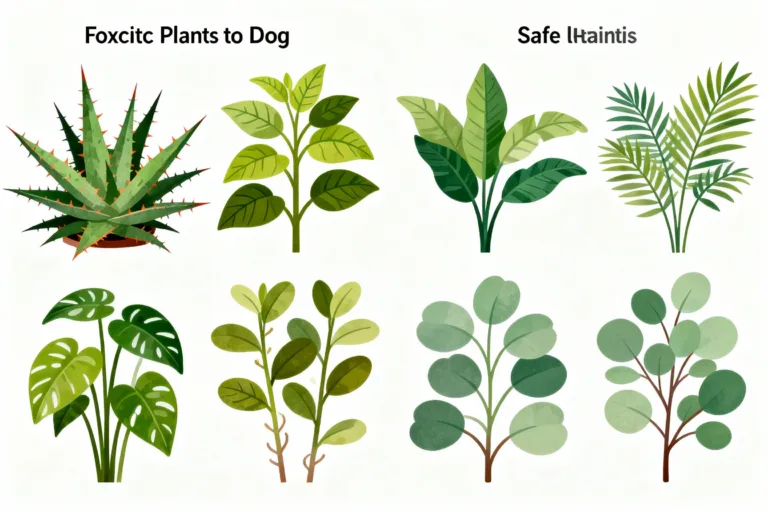
- Dog-safe winners: Calathea, Peperomia, Areca Palm, Parlor Palm, Spider Plant, Boston Fern, Prayer Plant, Cast Iron Plant.
- Proceed with caution: Pothos, Philodendron, ZZ Plant, Aloe, Sago Palm, Dieffenbachia, Snake Plant. Many of these look gorgeous but can be toxic if chewed.
You can still style with “caution” plants, FYI. Just keep them well out of reach and drop any falling leaves fast. If your dog munches anything, call your vet or the pet poison hotline. Better safe than “why is he drooling like a faucet?”
How to Vet a Plant Fast
Search the exact plant name + “toxic to dogs” before you buy. Cross-check on reputable sources. If a shop just says “pet-friendly,” ask for the Latin name. The internet loves a mislabeled plant.
Place Plants Where Dog Mouths Can’t Reach
Your dog can’t eat what your dog can’t reach. Gravity, however, loves a challenge.
- Go vertical: Wall-mounted shelves, ladder shelves, plant bookcases. Secure them to studs like you mean it.
- Hang them high: Ceiling hooks, macramé hangers, window rod planters. Keep cords short so they don’t become chew toys.
- Use tall planters: Pedestal pots and modern stands add height and style. Bonus: no wagging-tail leaf shrapnel.
- Create “no-go” corners: Use furniture to shield floor plants—between a console and a wall, behind a sofa, or inside a bay window nook.
Window Sills and Dog Logic
If your dog surveys the neighborhood from the window, don’t line that sill with temptations. Move plants to a different sill or switch to sturdy, non-toxic options like spider plants. Or just admit defeat and hang them.
Pick Pots That Survive Tail Whips
Cute is great. Unbreakable is better. Your dog will test everything at least once, IMO.
- Material matters: Fiberglass, resin, and lightweight concrete handle bumps. Terracotta chips. Glass? Bold choice.
- Weighted bases: Add gravel at the bottom to keep top-heavy plants upright.
- Tray strategy: Use tight-fitting saucers. No water sloshing equals no muddy paw art on your rug.
- Stabilize tall friends: Bamboo stakes or moss poles keep plants from flopping into playtime.
Soil and Mulch That Don’t Attract Dogs
Dogs investigate soil like it’s a buffet. Cover it.
- Top dressings: River rocks, polished pebbles, or LECA balls block digging.
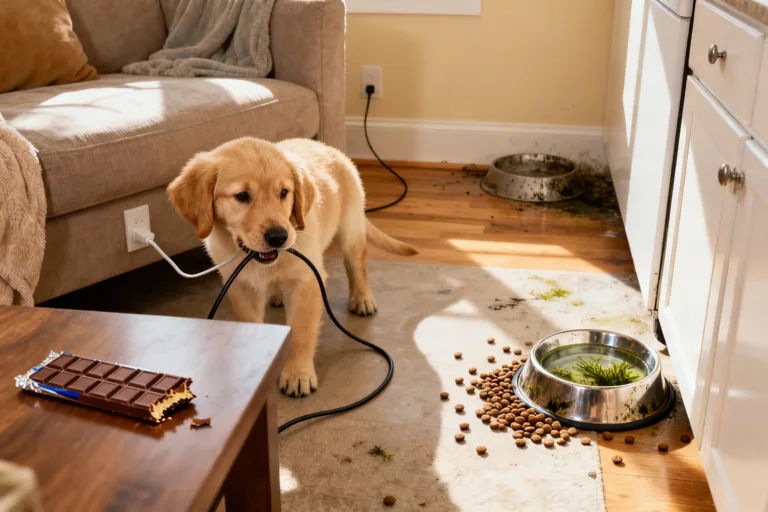
- Avoid: Cocoa mulch. It smells like chocolate and can be toxic. Hard pass.
Train Your Dog Like You Train Your Monstera
House rules beat constant stress. Your dog wants to please you—mostly.
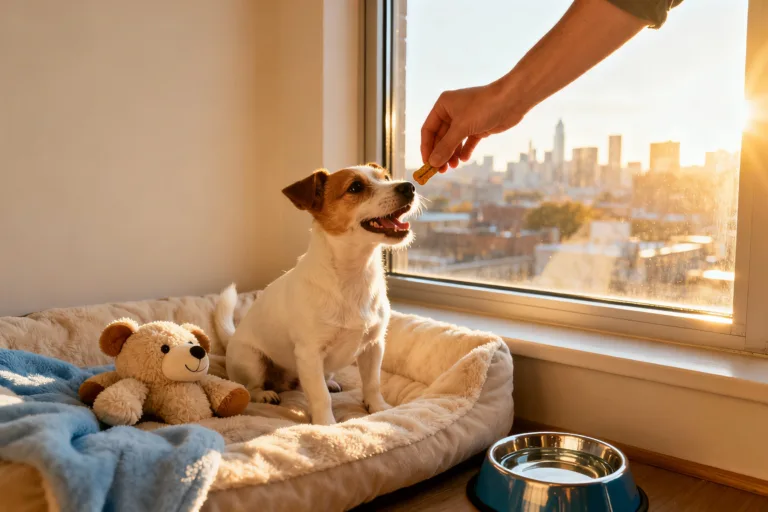
- Set a boundary word: “Leave it” or “Off.” Reward with praise and treats when they respect the plants.
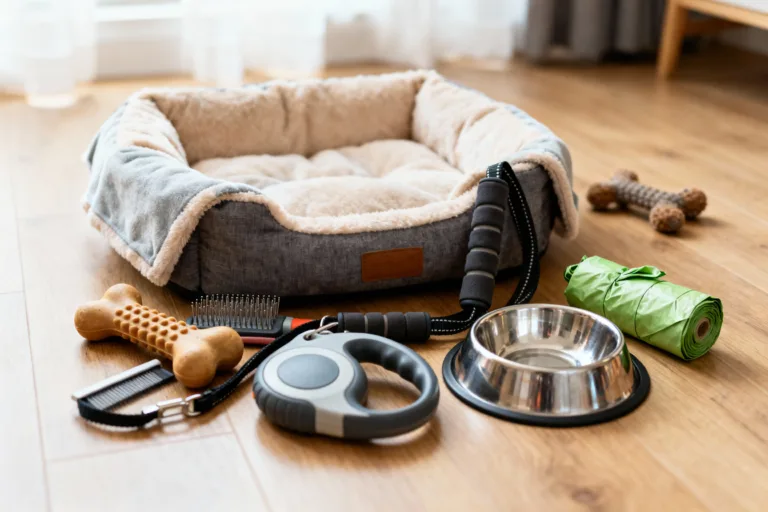
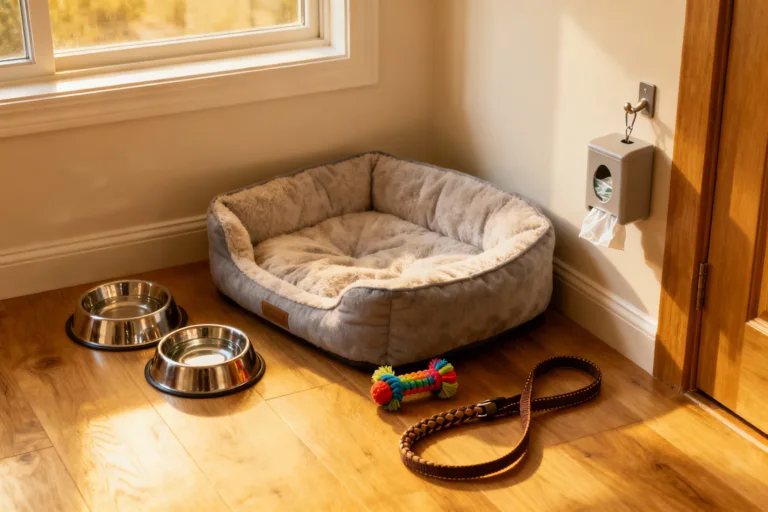
- Provide alternatives: Chew toys, puzzle feeders, and a comfy bed placed away from the plant zone.
- Use scent cues: Dogs dislike citrus and vinegar smells. Lightly mist planters (not leaves) with diluted citrus water as a deterrent.
- Supervise early on: For the first two weeks, play plant cop. You’ll learn your dog’s habits and adjust placements.
Barrier Hacks That Don’t Look Ugly
– Woven baskets as outer covers (with inner pots) hide soil and add structure.
– Acrylic or wood shields behind floor plants protect from tail swipes.
– Discreet baby gates keep plant rooms off-limits when you leave.
Create a Dog-Friendly Green Zone
You don’t need plants in every corner. Cluster them intentionally so your dog knows what’s off-limits.
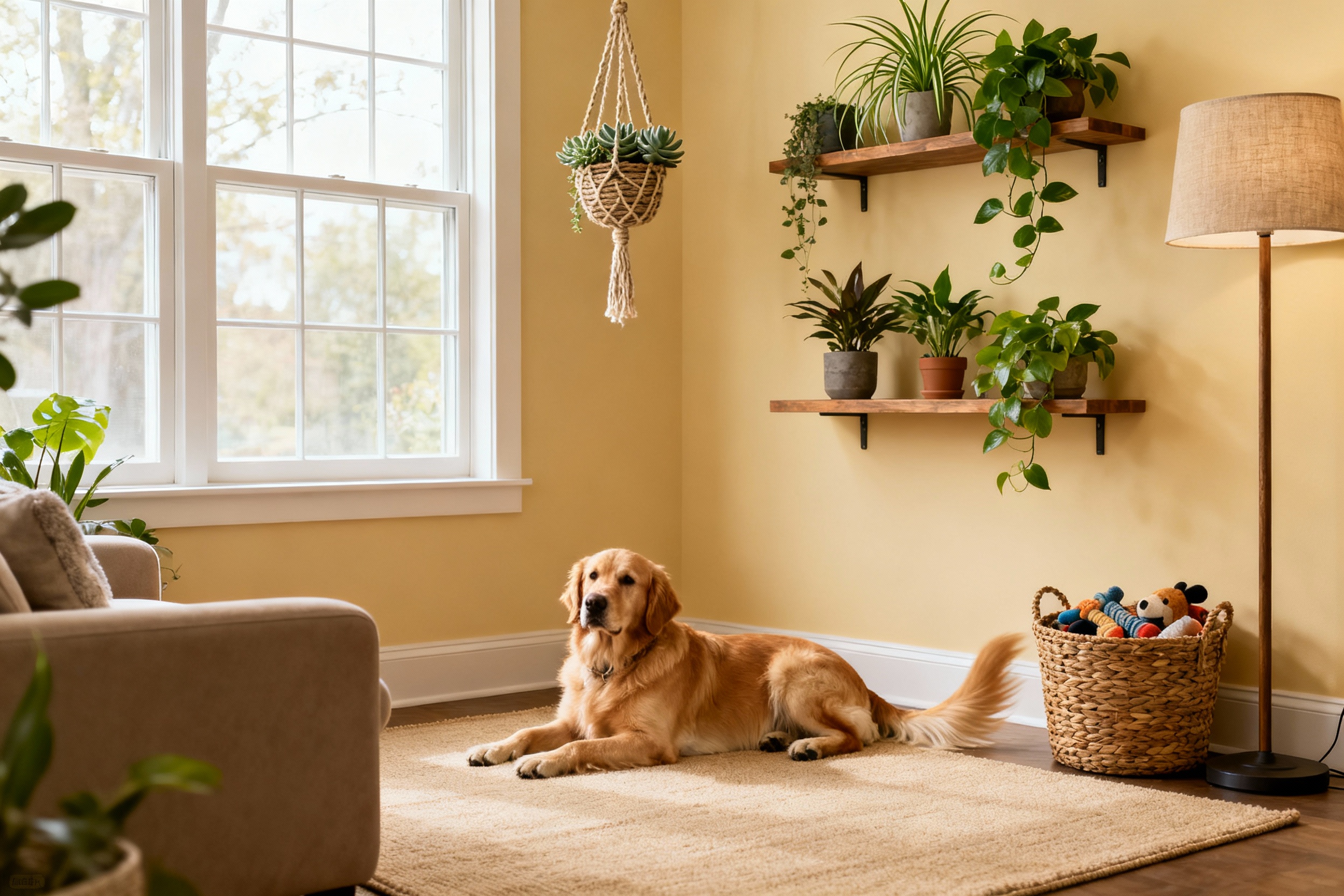
- Build a plant vignette: A corner with a tall floor plant, a mid-height stool plant, and a hanging plant draws the eye up and away from nose level.
- Use shelves with closed bases: No under-shelf zoom routes = fewer accidents.
- Light smart: Put grow lights on timers over plant zones so you don’t have to pull pots into prime dog territory.
Plants Your Dog Can Actually Enjoy
Want to share the green life? Add non-toxic, textured plants your dog can sniff without harm:
- Spider plants (great air movement)
- Areca palms (soft fronds)
- Cat grass or wheatgrass trays (if your vet approves a little nibbling)
Keep any edible greens fresh and clean. Moldy trays? Nope.
Watering Without Turning the Floor Into a Slip ’N Slide
Spilled water attracts dirt, which attracts paws, which equals muddy chaos. Water smart.
- Use a go-to watering station: Bathtub, sink, or balcony. Water there, let pots drain fully, then return them to their stands.
- Try bottom watering: Set nursery pots into cachepots. Pour water into the outer pot, let plants sip for 20 minutes, then pour off excess.
- Catch leaks: Waterproof trays under shelves and felt coasters under small pots save your floors and your sanity.
Fertilizer and Pest Control, But Make It Dog-Safe
– Fertilizer: Use diluted liquid fertilizers and store them high. Wipe drips. Bone meal and blood meal smell like snacks—avoid.
– Pest control: Start with physical removal, sticky traps, and insecticidal soap. Keep neem oil out of reach and off curious noses. Always follow labels.
Design Tips That Look Intentional (Not “I Live With a Tornado”)
You can kid-proof without killing the vibe, FYI.
- Repeat materials: Use the same pot color palette across the room for cohesion—white ceramic, matte black, or warm terracotta tones.
- Mix heights: Floor + stand + hanging = layered look. Keep the bottom third dog-safe only.
- Texture play: Pair glossy leaves (peperomia) with feathery fronds (fern) and big boys (parlor palm) for interest.
- Statement over scatter: One lush corner beats 12 precarious small pots begging for disaster.
Seasonal Switch-Ups
In winter, plants chase windows. Dogs chase sunbeams. Revisit placements every season so light and dog traffic don’t collide. Rotate stands and re-hang planters if your pup suddenly loves that exact warm spot.
FAQ
What plants are safe for dogs that still look stylish?
Calatheas, parlor and areca palms, peperomias, spider plants, cast iron plants, and Boston ferns all bring texture and drama without risking your pup’s health. Mix a tall palm with a trailing spider plant in a hanger and a patterned calathea on a stand for a designer look that’s dog-safe.
My dog keeps digging in pots. How do I stop it?
Cover the soil with river rocks or LECA, switch to taller planters, and redirect with a “leave it” cue plus a toy. Add a citrus-scented barrier on the pot rim and give your dog a designated dig space outdoors or a snuffle mat indoors. Tired dog = less mischief, IMO.
Can I keep mildly toxic plants if I’m careful?
Yes, with strict placement. Hang them high, mount them on secured shelves, and vacuum fallen leaves fast. If your dog counter-surfs or chews everything, skip the risk and stick to non-toxic stunners. Your nerves will thank you.
Are self-watering planters a good idea with dogs?
They’re great if the reservoir stays enclosed. Open troughs invite tongue baths. Choose models with sealed basins and check for condensation drips. No puddles, no problem.
What should I do if my dog chews a plant?
Remove any remaining plant bits from their mouth, check the plant’s toxicity, and call your vet if it’s unsafe or your dog shows symptoms (drooling, vomiting, lethargy). Keep the plant sample and name handy. Then adjust your setup—higher placement, different pot, or a safer species.
How do I keep plants alive without constant access to bright windows?
Use full-spectrum grow lights on timers over your plant cluster. They look clean, double as decor, and keep your foliage happy while you place plants away from busy dog zones. Aim for 10–12 hours daily for most houseplants.
Wrap-Up: Lush Home, Happy Dog
You don’t need to choose between greenery and your goofy best friend. Pick pet-safe plants where you can, place the “maybe” plants out of reach, and use smart pots, top dressings, and training to keep the peace. Cluster plants for style, water without mess, and tweak the setup as your dog’s habits change. Do that, and you’ll get a home that feels like a garden—with zero emergency vet vibes.