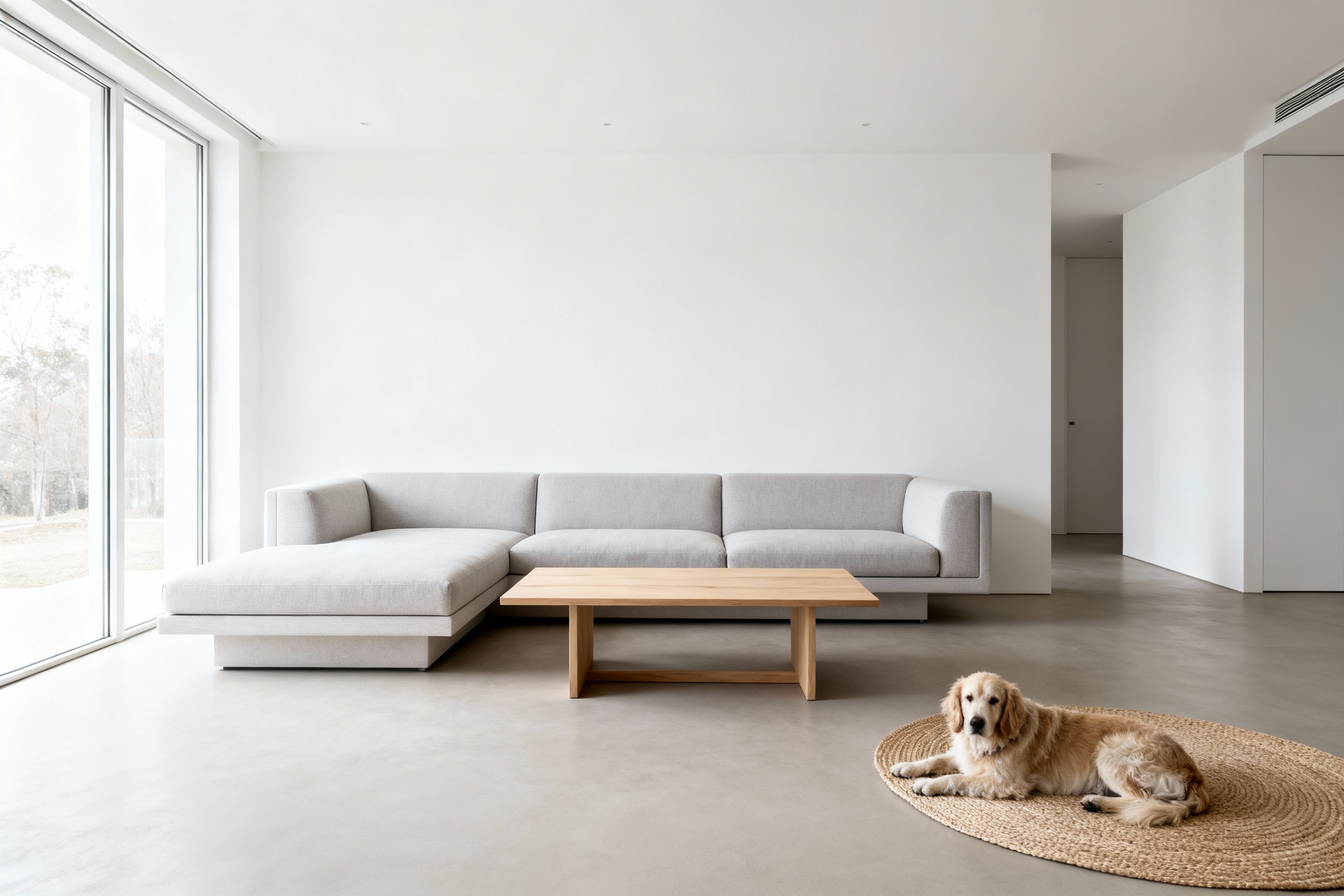
You love clean lines, empty surfaces, and the quiet joy of less. Your dog loves squeaky toys, shedding like it’s a side hustle, and zoomies at 7 a.m. Can a minimalist home and a dog actually coexist? Yes—if you focus on systems, not stuff. Let’s build a home that feels calm without turning your living room into a kennel showroom.
Minimalism With a Dog: What It Actually Means
Minimalism doesn’t mean living in a white box with a single succulent and judging throw pillows. It means you keep what you use, love, and can maintain. With a dog, that definition still works—you just design around a creature who thinks cardboard tastes gourmet.
Here’s the mindset shift: your home should support your life with your dog, not fight it. If your dog loves tug toys and naps on the couch, your minimalist plan should account for tug toys and couch naps. Sounds obvious, but IMO, this is where people mess up.
Design a Dog Zone (So the Rest Stays Minimal)
You don’t need a separate room. You need a clearly defined zone where dog life happens, so the chaos doesn’t creep into every corner.
- Pick a spot near the entry for leashes, wipes, and poop bags. Make the “coming and going” routine painless.
- Use closed storage—a cabinet, bench with baskets, or lidded bin—to hide toys, grooming tools, and meds.
- Set a limit for how much dog stuff you keep. One bin = enough. When it’s full, something goes. FYI, your dog does not need 17 rope toys.
What Goes in the Dog Zone?
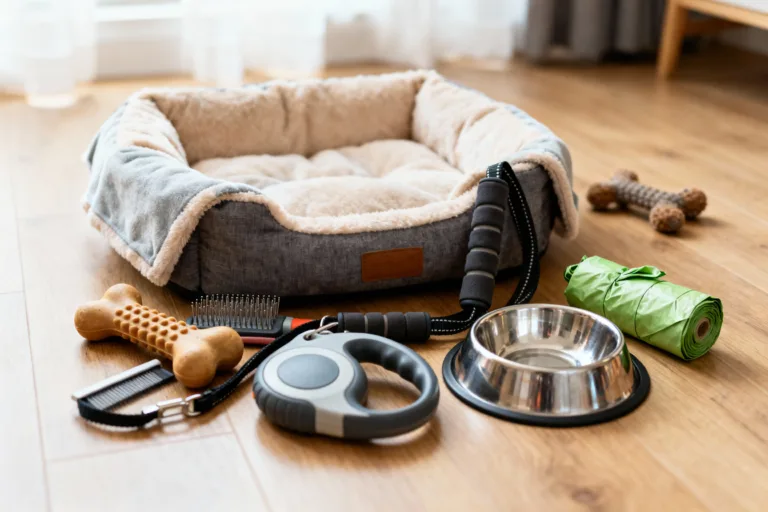
- Daily gear: leash, harness, poop bags, wipes
- Care basics: brush, flea meds, nail clippers
- Training treats in an airtight jar
- Two or three favorite toys—rotate the rest
Choose Materials That Don’t Fight You
You can keep things minimal when surfaces don’t need constant rescuing. Choose finishes that hide fur, handle dirt, and clean fast.
- Floors: sealed wood, luxury vinyl plank, tile. Skip high-pile rugs. Go flatweave or indoor/outdoor for easy vacuuming.
- Sofas: tight-weave fabrics, performance velvet, or leather with a patina. Removable, washable covers = chef’s kiss.
- Walls: scrubbable paint finishes (eggshell or satin). Magic erasers exist for a reason.
- Colors: mid-tones hide fur better than dark or white. Choose the shade that matches your dog’s fur, not your mood board.
Pet Gear That Looks Minimal (And Works)
You don’t need neon paw prints everywhere. Opt for:
- Elevated metal or wood feeders with stainless bowls
- Neutral beds with washable covers (cotton, linen blends)
- Simple, durable toys in muted colors
- Matching bins for gear—one for toys, one for care items
Declutter the Dog Stuff (Without Feeling Mean)
Dog stuff multiplies quietly—like bunnies, if bunnies squeaked. Keep it tight with quick, recurring edits.
- Gather everything—toys, collars, grooming bits, seasonal gear.
- Keep the essentials: current collar/harness, one backup, one leash, one long line if you use it.
- Apply the “two-categories rule” for toys: one chew, one fetch, one tug. Rotate weekly from a small backstock.
- Toss broken stuff (no one needs a half-eaten squeaker) and donate unopened items.
Consumables: Set a Cap
- Food: buy what you use in 4–6 weeks to avoid clutter and staleness.
- Treats: one jar for training, one for chews. If it doesn’t fit, you don’t buy it. IMO, treats expire and chaos doesn’t look cute.
Create Routines That Keep the House Zen
Minimalism fails without habits. The good news? Dog routines already run your life. Let them run your home too.
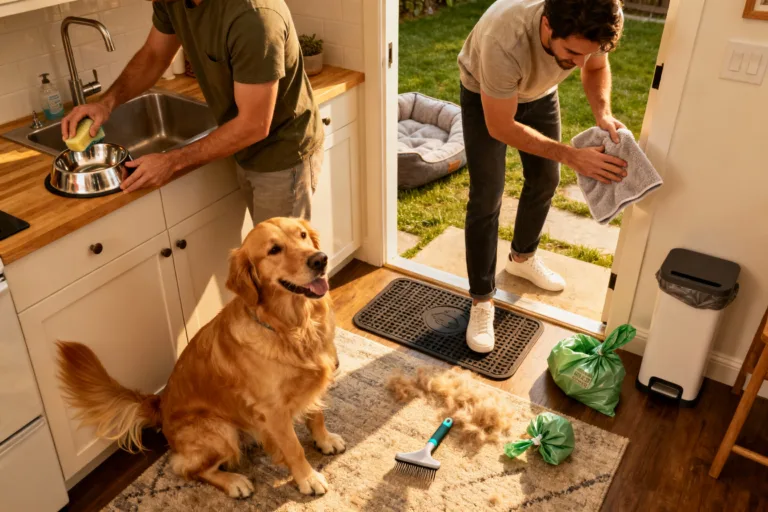
- Wipe paws at the door—a simple mat and pet-safe wipes or a small towel save your rugs.
- 5-minute reset: morning and night, toss toys in the bin, shake blankets, wipe bowls.
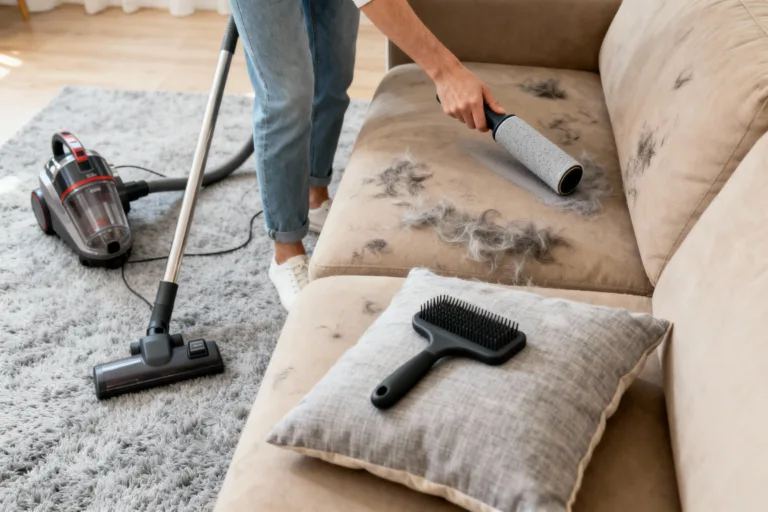
- Weekly clean: vacuum floors and baseboards, launder dog bed covers, wash food mats.
- Monthly grooming blitz: nail trim, brush session, wash collar. Less shedding, less dirt, less chaos.
Training That Makes Minimalism Easier
Yes, training counts as home design. A few behaviors protect your space and your sanity.
- Place/bed command: your dog chills on their bed when guests come or when you cook.
- Leave it/drop it: your socks will thank you.
- Wait at doors: fewer paw prints, fewer jailbreaks.
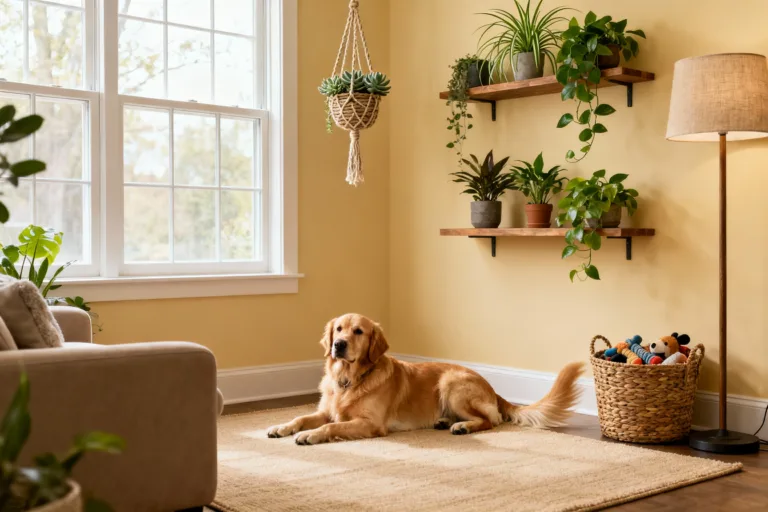
Style a Minimal Dog Corner (That You Actually Enjoy)
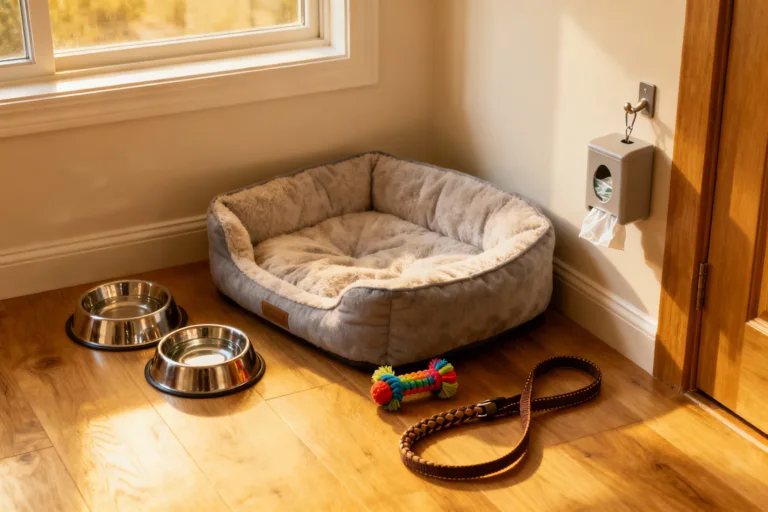
You want form and function. You can have both—promise. Build a corner that looks intentional, not like aisle 12 of a pet store.
- Low-profile bed in a neutral fabric with one accent throw.
- Narrow console or bench with hidden storage bins underneath.
- Wall hooks for leashes—keep it tidy and accessible.
- Small framed print or plant on the console for a finished look. Keep decor simple so the space breathes.
Food Station, But Cute
- Elevated feeder on a silicone mat to catch spills.
- Airtight bin for kibble tucked in a cabinet or closet.
- Compact water bowl away from rugs. Top up daily, wipe daily. Easy.
Travel, Guests, and Real Life
Life throws curveballs—pet sitters, dinner parties, muddy hikes. Plan for the mess so it doesn’t become your personality.
- Guest mode: quick toy edit to one basket, dog bed fluffed, lint-roll the sofa. Done in 10 minutes.
- Post-adventure protocol: towel by the door, rinse paws if needed, hang damp gear to dry, then store. Don’t leave it “for later.”
- Sitter kit: one folder or bin with vet info, meds, feeding notes. Minimalism = you find it in 2 seconds.
Common Minimalist Dog Mistakes (And Fixes)
We all blow it sometimes. Here’s how to course-correct fast.
- Buying “aesthetic” gear that doesn’t work: cute-but-useless equals clutter. Choose durable first, pretty second.
- Keeping every toy: rotate and store. Your dog gets novelty, you keep your floors.
- Skipping training: no amount of bins beats a solid “leave it.” Invest time up front.
- Ignoring maintenance: five minutes a day beats a Saturday lost to chaos.
FAQ
Can I have a white sofa with a dog?
Yes, if you choose performance fabric or a washable slipcover and accept regular maintenance. Add a throw where your dog lounges. Keep a lint roller handy. If your dog swims in mud for sport, consider mid-tone instead—your future self will high-five you.
How many toys should I keep out?
Keep two or three out and rotate weekly from a small stash. Dogs love novelty, and you love clear floors. Win-win. If your bin overflows, time to edit.
What’s the best dog bed for a minimalist home?
Look for a simple shape, neutral color, and a removable, washable cover. Foam or bolstered beds both work—pick what your dog actually uses. Place it where your dog naturally naps, not where you think it “should” go.
How do I handle the shedding without losing my mind?
Pick the right tools: a brush that matches your dog’s coat type, a decent vacuum, and washable textiles. Brush weekly (daily in shedding season), run the vacuum on a schedule, and choose fabrics that don’t trap fur. Also, match your rug to your dog’s fur color—sneaky but effective.
Is a crate anti-minimalist?
Not at all. A crate reduces chaos, protects your stuff, and gives your dog a safe den. Choose a clean-lined metal or furniture-style crate that fits your aesthetic. If your dog doesn’t need it long-term, collapse and store between uses.
What if my dog is high-energy?
Minimalism loves routines. Increase exercise and enrichment—sniff walks, flirt pole sessions, puzzle feeders. A tired brain equals a calmer home. Strong behaviors like “place” and “settle” make a huge difference.
Conclusion
Minimalist living with a dog isn’t about hiding every chew toy or banning fur. It’s about intentional choices, simple systems, and consistent habits. Build a dog zone, choose forgiving materials, and keep routines tight. You’ll enjoy the calm, your dog will enjoy the structure, and your home won’t look like a pet store exploded—IMO, that’s the sweet spot.