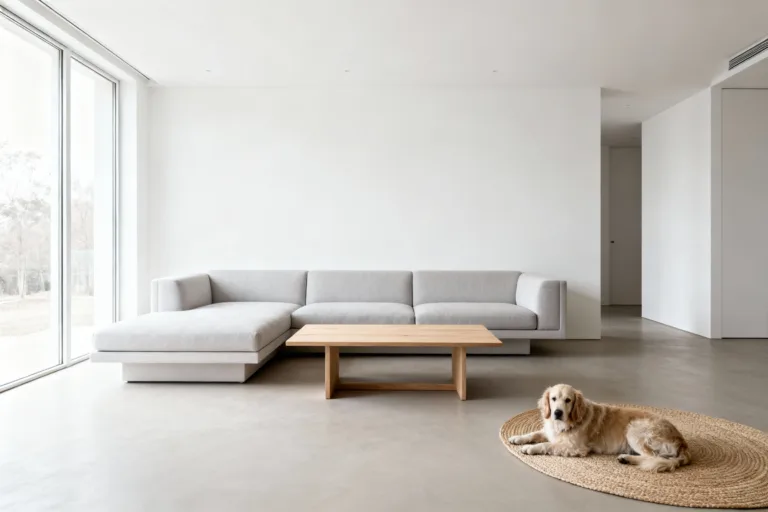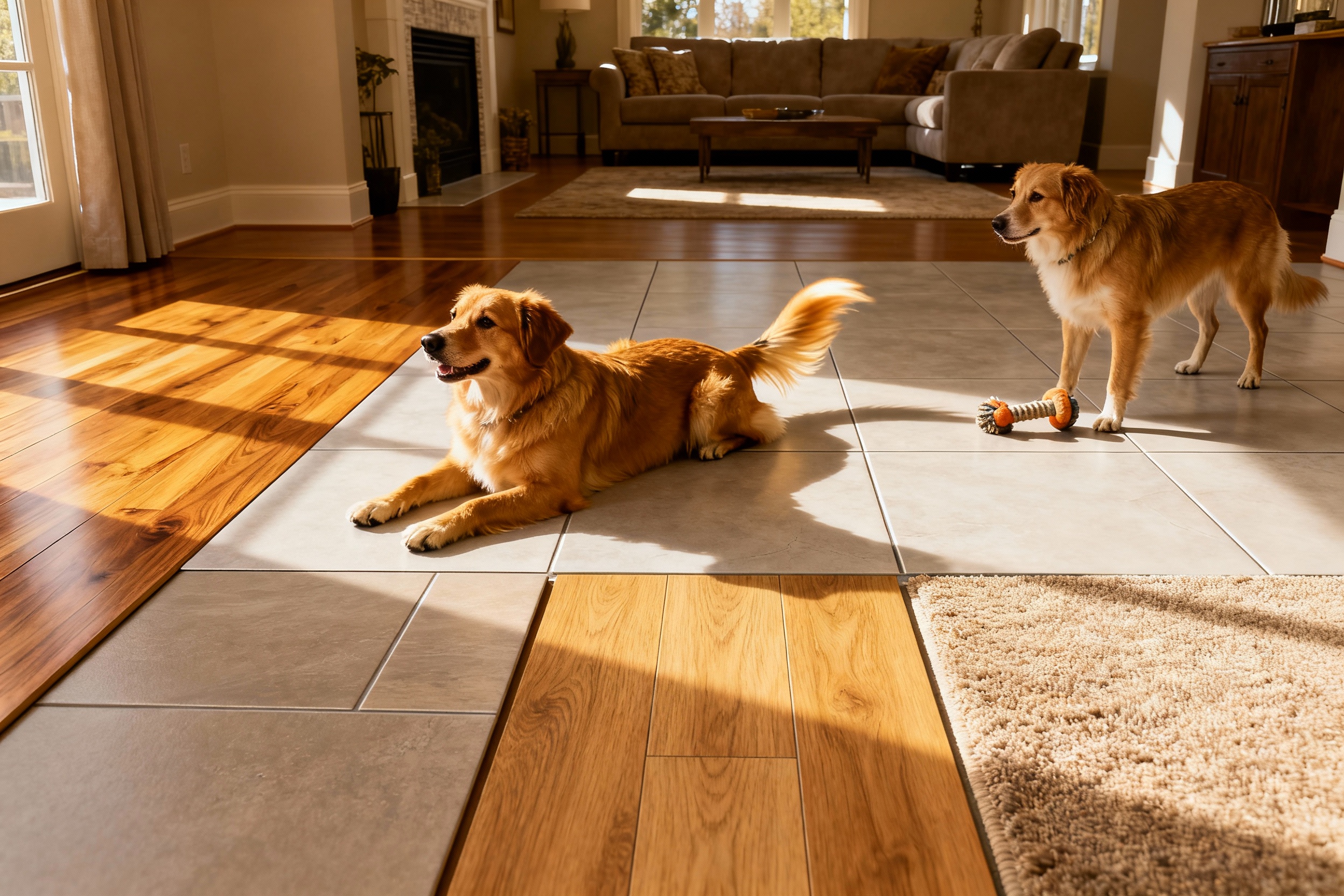
You love your dog. You also love your floors. Unfortunately, your dog does not care about your floors. Nails, zoomies, water bowls, muddy paws—your flooring sees it all. The good news? You can pick materials that survive the chaos and still look great. Let’s break down the best flooring options for dog-friendly homes, without the fluff (pun fully intended).
What Makes a Floor “Dog-Friendly”?
Dog-proof floors handle scratches, moisture, and dirt like a champ. They also clean up fast because you’ll mop more than you planned. Comfort matters too—hard floors plus high-energy pups equals slip-and-slide injuries.
Key things to look for:
- Scratch resistance: Claws happen. Pick a surface that hides or resists marks.
- Water resistance: Spills, drool, and “surprises” appear out of nowhere.
- Traction: Slippery floors = zoomie wipeouts.
- Ease of cleaning: Hair, dander, and dirt should never win.
- Comfort and warmth: Your pup sleeps on the floor—make it cozy.
Top Choice: Luxury Vinyl Plank (LVP) and Tile (LVT)
LVP/LVT pretty much nails the dog-friendly trifecta: waterproof, durable, and low-maintenance. It also mimics wood or stone without the drama—because IMO, real wood and dog claws? Stressful.
Why it works:
- Waterproof: No panic during bowl spills or rainy day shake-offs.
- Scratch resistant: Wear layers handle nails well.
- Comfortable and quiet: Softer underfoot than tile and way less click-clack noise.
What to look for in LVP/LVT
- Thicker wear layer: Aim for 12–20 mil for high-traffic homes.
- Textured/embossed finishes: Better traction for speedy paws.
- Quality core: SPC or WPC cores resist dents and moisture.
Ceramic and Porcelain Tile: Bombproof and Beautiful
Tile laughs at water, mud, and dirt. It won’t scratch easily, and it looks sharp in kitchens and entryways. Downside? It’s cold and hard. Great for hot climates, less great for naps unless you add area rugs.
Pros:
- Ultra durable and scratch proof: Nails don’t stand a chance.
- Waterproof: Perfect for bathrooms, mudrooms, and kitchens.
- Easy to clean: Wipe and go.
Cons (and fixes):
- Slippery when wet: Choose textured or matte tiles for traction.
- Hard and cold: Use rugs or consider radiant heat if you’re feeling fancy.
- Grout stains: Seal it, or use darker grout for sanity.
Tile alternatives: Porcelain wood-look planks
You get the look of hardwood with the durability of tile. It’s a clever hack for dog owners who love the wood aesthetic but also enjoy peace of mind.
Engineered Hardwood: Real Wood, Smarter Build
If you want real wood and you accept a little patina over time, engineered hardwood beats solid wood for dog households. It handles humidity better and can be more scratch-resistant with the right finish.
Tips to make it work with dogs:
- Go matte and textured: Wire-brushed or hand-scraped hides scratches.
- Choose harder species: White oak, hickory, or maple over pine.
- Strong finish: UV-cured aluminum oxide or hardwax oil helps.
Manage your expectations
Wood will scratch. Accept a lived-in look and you’ll love it more. FYI: Keep nails trimmed and use rugs in high-zoom areas.
Cork: Soft, Quiet, and Surprisingly Durable
Cork gives you comfort, warmth, and great sound absorption. It feels nice for joints—yours and your dog’s. It resists mold and has natural antimicrobial properties. But it needs proper sealing and can dent under heavy furniture.
Why dog owners like cork:
- Slip-resistant and quiet: No ice rink energy here.
- Warm and cushy: Great for older dogs with achy hips.
- Eco-friendly: Sustainably harvested—bonus points.
Watch-outs:
- Water sensitivity: Seal it well and clean spills quickly.
- Dents: Use furniture pads and rotate rugs.
Bamboo: The “Maybe” Option
Bamboo ranges from incredibly tough to frustratingly soft—depends on the product. Strand-woven bamboo can be very hard and scratch-resistant. But quality varies a lot, so buy from reputable manufacturers.
Before you commit:
- Check Janka hardness ratings: Strand-woven usually wins.
- Look for quality finishes: Strong topcoats matter.
- Confirm moisture resistance: Not all bamboo handles spills well.
Laminate: Better Than Before, Still Not Perfect
Modern laminate resists scratches well and costs less than real wood. But water can still be its nemesis—unless you choose a water-resistant or waterproof line. Traction can be iffy too.
If you go laminate:
- Choose water-resistant or waterproof options: Essential with pets.
- Pick textured surfaces: Helps paws grip.
- Use mats near bowls and doors: Save yourself the headache.
Carpet: Cozy But High Maintenance
Carpet feels amazing but holds hair, stains, and smells. If you want soft underfoot zones, pick carpet tiles or performance carpet in limited areas.
Best choices for dog zones:
- Carpet tiles: Replace single tiles after accidents. Genius.
- Solution-dyed fibers: Stain-resistant and colorfast.
- Low pile or loop: Easier to clean than plush.
Area rugs to the rescue
Use washable rugs on hard floors for traction and comfort. They also protect high-traffic paths (aka your dog’s favorite runway).
Setup and Maintenance Tips That Actually Help
You can make almost any floor more dog-friendly with a few smart moves. Think prevention and easy cleanup. Your future self will thank you.
Non-negotiables IMO:
- Trim nails regularly: Dremels or grinders > clippers for smooth tips.
- Add floor runners and rugs: Especially on stairs and hallways.
- Use felt pads on furniture: Accidents happen during chase mode.
- Put mats at entrances and under bowls: Trap dirt and splashes.
- Clean smart: Enzyme cleaners for accidents, microfiber mops for daily dust-up.
Budget and Aesthetic: Quick Picks
Not sure where to land? Use these fast matchups to narrow it down.
- Best overall: LVP/LVT for durability, price, and style variety.
- Best for water-prone areas: Porcelain tile.
- Best “real wood” vibe with less stress: Textured engineered hardwood.
- Best for comfort and quiet: Cork (properly sealed).
- Best on a tight budget: Quality LVP or waterproof laminate.
FAQs
Which flooring resists scratches from dogs the best?
Porcelain tile and quality LVP/LVT resist scratches the best. Tile barely shows wear, and LVP’s wear layers protect against nail marks. Textured matte finishes also hide minor scuffs better than glossy surfaces.
Can I keep hardwood with dogs?
Yes, if you pick engineered hardwood with a tough finish and a textured, matte surface. Choose harder species like white oak or hickory, keep nails short, and use rugs in busy areas. Accept some patina—it’s part of the charm.
Is laminate good for dogs?
Modern laminate can work if you choose waterproof or water-resistant lines and textured finishes. It’s budget friendly and scratch resistant. Just manage moisture carefully and use mats near water bowls and doors.
Do I need to seal grout if I choose tile?
Yes. Sealed grout resists stains from accidents and muddy paw prints. Consider darker grout for even less maintenance and fewer “why is the grout gray now?” moments.
What’s the easiest floor to clean with dogs?
LVP/LVT and tile clean up the fastest. A microfiber mop handles daily fur tumbleweeds, and enzyme cleaners take care of accidents without drama. Keep a small cordless vacuum handy for hair—game changer.
Will cork get ruined by pet accidents?
Cork can handle life with dogs if you properly seal it and wipe spills quickly. It offers traction, warmth, and comfort. Just don’t let puddles sit, and use mats in high-risk zones.
Conclusion
You don’t need to choose between your dream floors and your dream dog. Pick materials that laugh at scratches, shrug off water, and clean up fast—LVP/LVT and tile lead the pack, with engineered hardwood and cork as stylish contenders. Layer in good habits (nail trims, rugs, mats), and your floors will look great long after the next round of zoomies. FYI: mud season ends eventually. Probably.