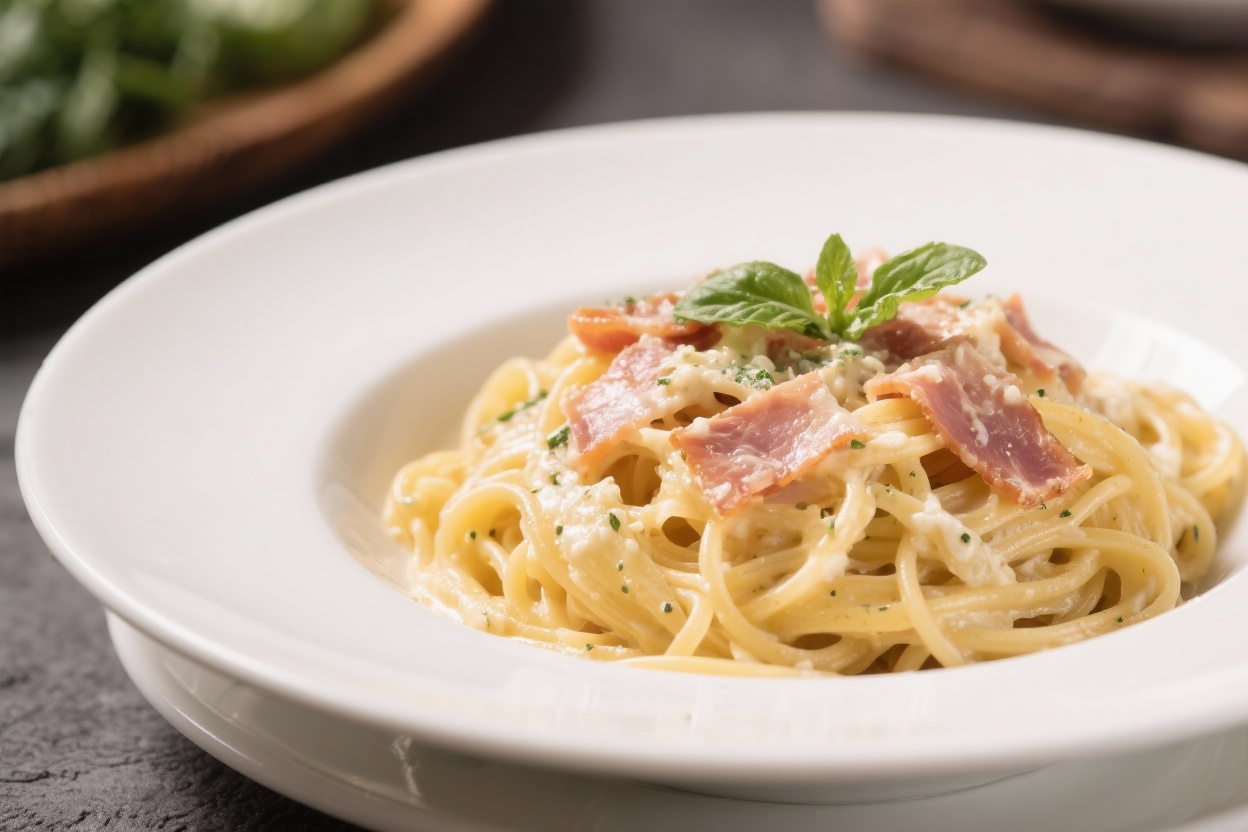
This is the dish people think requires cream, but pros know better: eggs, cheese, and a splash of pasta water create the velvet. Carbonara is fast, rich, and unapologetically satisfying—basically a cheat code for impressive cooking with minimal effort. In 20 minutes, you’ll plate up something restaurant-level without paying restaurant prices.
Warning: after this, you’ll judge most “carbonaras” on the internet. Hard.
What Makes This Special
Classic carbonara is a masterclass in simplicity: five core ingredients working in perfect sync. No cream, no garlic, no shortcuts—just technique.
The sauce forms when hot pasta meets an egg-and-cheese emulsion, thickened by starchy water and perfumed with crispy pork. The result? Silky, glossy, peppery pasta that tastes like Rome on a plate.
What Goes Into This Recipe – Ingredients
- 12 oz (340 g) spaghetti or rigatoni
- 4 oz (115 g) guanciale (or pancetta; bacon if you must)
- 3 large eggs (2 whole eggs + 1 yolk for extra richness)
- 1 cup (90 g) finely grated Pecorino Romano (or a 50/50 mix with Parmigiano-Reggiano)
- Freshly cracked black pepper, lots of it
- Kosher salt for the pasta water
- Reserved pasta water (about 1 cup)
Let’s Get Cooking – Instructions
- Prep the egg mixture: In a bowl, whisk 2 eggs + 1 yolk with the grated cheese until thick and paste-like. Add a generous amount of black pepper.
Set aside.
- Boil the pasta: Bring a large pot of salted water to a rolling boil. Cook spaghetti until just shy of al dente. Reserve at least 1 cup of pasta water.
- Crisp the pork: While pasta cooks, dice guanciale into small strips. Add to a cold skillet and cook over medium heat until fat renders and pieces turn golden and crisp, about 5–7 minutes.
Turn heat to low.
- Build the base: Add a splash (2–4 tablespoons) of pasta water to the pan to loosen the pork fond. Toss to emulsify the fat slightly. Turn off the heat.
- Combine with pasta: Transfer drained pasta directly into the pan with the pork.
Toss vigorously to coat in the rendered fat.
- Temper the eggs: Let the pasta cool for 30–45 seconds so it’s hot but not sizzling. Pour in the egg-cheese mixture while tossing constantly, adding warm pasta water little by little until the sauce becomes silky and glossy. You’re aiming for a creamy sheen that clings to the noodles.
- Adjust and serve: Add more pepper, a touch more cheese, and another spoonful of pasta water if needed.
Serve immediately with extra grated Pecorino. Boom.
Preservation Guide
- Short-term: Carbonara is best eaten fresh. If you must store, refrigerate in an airtight container for up to 1 day.
- Reheating: Rewarm gently in a skillet with a splash of water over low heat.
Don’t microwave unless you like scrambled eggs (you don’t).
- Freezing: Not recommended. The sauce texture won’t survive. FYI, the pork can be rendered in advance and refrigerated for 3–4 days.
Why This is Good for You
- Protein and satiety: Eggs and pork deliver protein and fats that keep you full longer.
- Calcium boost: Pecorino/Parmesan adds calcium and flavor density, so you need less.
- Smart carbs: Pasta provides energy; when paired with fat and protein, it’s slower to spike blood sugar.
- Minimal additives: Whole, simple ingredients.
No mystery sauces. Your grandma would approve.
Don’t Make These Errors
- Adding cream: It’s not authentic and dulls flavor. The creaminess should come from eggs, cheese, and pasta water.
- Scrambling the eggs: If the pan is too hot, you’ll get breakfast.
Kill the heat before adding the egg mixture and toss quickly.
- Using pre-shredded cheese: Anti-caking agents prevent emulsification. Grate fresh, and finely.
- Skipping pasta water: That starch is your sauce builder. Reserve more than you think you need.
- Under-peppering: Carbonara should be peppery.
Don’t be shy.
Variations You Can Try
- Half Pecorino, half Parmigiano: Slightly sweeter, nuttier profile.
- Bacon version: Use thick-cut bacon if guanciale/pancetta isn’t available. Add a pinch of black pepper and a hint of smoked salt to mimic depth.
- Rigatoni carbonara: Tubes catch sauce and pork nuggets like treasure chests. Fun and hearty.
- Green twist (not traditional, but tasty): Fold in a handful of peas at the end.
Purists will yell; your taste buds won’t.
- Extra yolk “lux”: Stir in one more yolk off heat for a richer finish. IMO, elite.
FAQ
Can I make this without pork?
Yes, but it becomes a different dish. Use sautéed mushrooms for umami and a splash of olive oil to replace rendered fat.
Season assertively.
Whole eggs or just yolks?
Both work. Whole eggs add lightness; extra yolks bring richness. The 2 whole + 1 yolk combo is a great balance for creaminess without heaviness.
Why is my sauce clumpy?
The pan was too hot, or the cheese wasn’t finely grated.
Remove from heat, add more warm pasta water, and toss aggressively to smooth it out.
Is Pecorino mandatory?
Traditional? Yes. Practical?
Use what you have. A 50/50 Pecorino–Parmigiano mix is common and delicious.
How salty should the pasta water be?
Like the sea—salty but not briny. The cheese and pork add salt, so err on the lighter side and adjust at the end.
Can I add garlic or onions?
Not in classic Roman carbonara.
If you love them, sauté a smashed garlic clove in the pork fat, then remove it before adding pasta. Compromise achieved.
Wrapping Up
Carbonara rewards precision and speed: hot pasta, cool pan, fast toss, silky sauce. Master this once, and you’ll have a showstopper dinner in your back pocket forever.
It’s affordable, authentic, and wildly satisfying—no cream needed, ever. Now go make Rome proud.