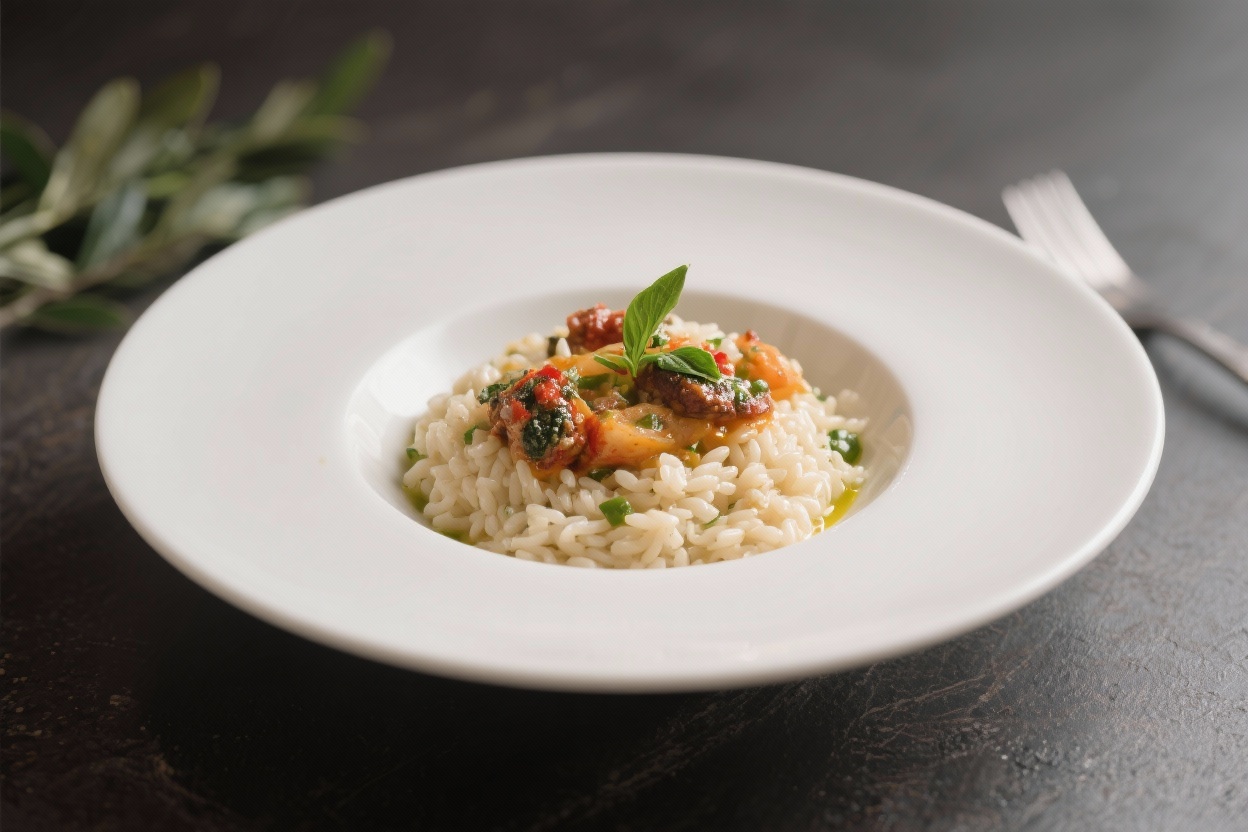
You don’t need a nonna or a Michelin star to nail a risotto that tastes like money. You need heat control, patience, and a wooden spoon. That’s it.
Most people overthink it, then panic-stir until it turns into rice pudding. Not you. You’ll build flavor, test doneness like a pro, and send that bowl out looking glossy enough to take a selfie.
Why This Recipe Works
Risotto is about controlled starch release.
Toasting the rice (“tostatura”) sets the structure, then warm stock gradually coaxes out creaminess without breaking the grains. A splash of white wine cleans the palate and adds acidity to balance the richness.
Finishing with butter and Parmigiano-Reggiano (the “mantecatura”) turns good risotto into velvet. The method below minimizes fuss, maximizes flavor, and keeps the rice al dente—creamy around the grains, not mush.
You’ll taste the difference in every bite.
What You’ll Need (Ingredients)
- 1 1/2 cups Arborio or Carnaroli rice (Carnaroli is slightly firmer, IMO the gold standard)
- 4–5 cups low-sodium chicken or vegetable stock, kept warm
- 1 small yellow onion, finely diced
- 2 tablespoons olive oil
- 3 tablespoons unsalted butter, divided
- 1/2 cup dry white wine (Pinot Grigio or Sauvignon Blanc)
- 3/4 cup freshly grated Parmigiano-Reggiano
- Salt and freshly ground black pepper, to taste
- Optional finish: lemon zest, chopped parsley, drizzle of good olive oil
Let’s Get Cooking – Instructions
- Heat the stock. In a saucepan, bring stock to a bare simmer and keep it warm over low heat. Cold stock shocks the rice—don’t do it.
- Sweat the onion. In a wide, heavy skillet or Dutch oven, warm olive oil and 1 tablespoon butter over medium heat. Add onion and a pinch of salt.
Cook until translucent, 4–5 minutes; no browning.
- Toast the rice. Stir in the rice and cook 2 minutes. Grains should look slightly translucent at the edges and smell nutty. This step sets the texture.
- Deglaze with wine. Pour in the white wine and stir until mostly absorbed.
The pan should whisper, not scream—medium heat, steady bubbles.
- Add stock, one ladle at a time. Add 1 ladle (about 1/2 cup) warm stock and stir occasionally, keeping the rice at a gentle simmer. When the liquid is nearly absorbed, add another ladle. Repeat for 16–20 minutes.
- Check doneness. Taste a grain: tender with a slight bite in the center.
If it’s chalky, keep going. If it’s pudding, we’re late—add stock more slowly next time.
- Mantecatura (the magic). Off the heat, stir in remaining 2 tablespoons butter and the Parmigiano-Reggiano. Beat it like you mean it for 20–30 seconds to emulsify.
Adjust salt and add black pepper.
- Adjust texture. Risotto should be all’onda—creamy, flowing like slow waves. If it’s too thick, add a splash of stock. Too loose?
Stir over heat for 30 seconds.
- Finish and serve. Optional: lemon zest, parsley, or a drizzle of olive oil. Plate immediately. Risotto waits for no one.
Keeping It Fresh
Risotto is best right away.
If you must hold it, keep it slightly loose and rest it covered for up to 5 minutes. Stir in a little hot stock to revive before serving.
Leftovers? Cool quickly, refrigerate up to 2 days.
Reheat gently with stock on the stove. Or better: make arancini (fried risotto balls). Waste nothing.
What’s Great About This
- Foolproof texture: The stock-by-ladle method gives control and creaminess.
- Balanced flavor: Wine + Parm + butter = rich but not heavy.
- Restaurant gloss: Emulsifying at the end makes it shiny and smooth.
Yes, that’s the trick.
- Flexible base: Add seasonal vegetables, seafood, or mushrooms without changing the core method.
Pitfalls to Watch Out For
- Cold stock: It stalls cooking and tightens starch. Keep it warm.
- Over-stirring: You’re making risotto, not cement. Stir occasionally to release starch—don’t abuse it.
- High heat: Boiling = blown-out grains and uneven doneness.
Gentle simmer wins.
- Skipping the rest: Mantecatura off heat is non-negotiable for creaminess.
- Too much salt early: Stock reduces, salt concentrates. Season thoughtfully at the end.
Recipe Variations
- Mushroom Risotto: Sauté mixed mushrooms in butter until browned; fold in with thyme at the end. Finish with a touch of truffle oil if you’re feeling extra.
- Lemon-Asparagus: Blanch asparagus tips; add in the last 3 minutes with lemon zest and a squeeze of juice.
- Saffron Milanese: Bloom a pinch of saffron in hot stock and use it throughout.
Classic, golden, perfumed.
- Shrimp + Pea: Pan-sear shrimp separately; stir peas into risotto in the last 2 minutes. Top with shrimp to avoid rubbery sadness.
- Roasted Pumpkin + Sage: Fold in roasted cubes of pumpkin and crispy sage. Nutty, cozy, weeknight luxury.
FAQ
Can I use long-grain rice?
No.
You need short-grain varieties like Arborio, Carnaroli, or Vialone Nano for the right starch. Long-grain won’t give you the creaminess—just disappointment.
Do I need wine?
It’s traditional and adds acidity that brightens the dish. If skipping, replace with a splash of stock plus 1 teaspoon lemon juice to balance richness.
How much should I stir?
Think “attentive, not frantic.” Stir every minute or so, more frequently after each ladle of stock.
The goal is gentle agitation, not an arm workout.
How do I scale the recipe?
Double everything but use a wider pan if possible. Risotto likes surface area for even absorption. Add a few extra minutes to the total time and taste often.
What’s the right texture?
Creamy and flowing, not a mound.
When you shake the pan, it should ripple. If it sits like a brick, add stock; if it runs like soup, cook 30–60 seconds more.
The Bottom Line
This Italian risotto recipe gives you control, confidence, and ridiculous flavor with simple ingredients. Master the heat, add stock patiently, and finish like a pro.
Do that, and you’ll serve bowls of silky, glossy, restaurant-level risotto—no reservation required. FYI, second helpings are practically guaranteed.