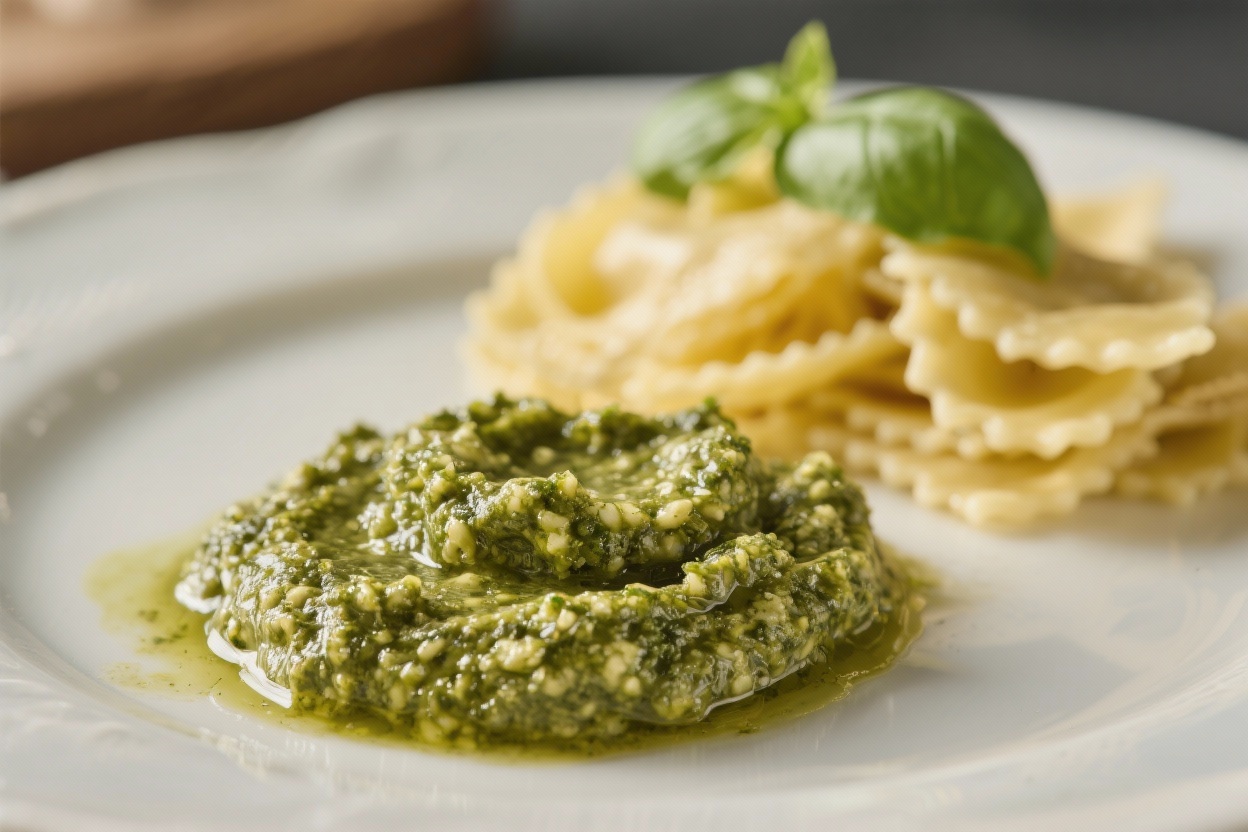
You want flavor that slaps? This Italian pesto sauce recipe turns a humble bowl of pasta—or literally anything—into something people think you paid for. No cooking, no drama, just raw, fresh, basil-powered goodness.
The secret isn’t complicated; it’s precision: great ingredients, quick technique, zero overthinking. Make this once, and you’ll start judging restaurant pesto like a snob. And honestly, you’ll be right.
What Makes This Recipe Awesome
- It’s fast. Five minutes from start to finish.
Your blender will barely warm up.
- Restaurant-level flavor. Balanced basil, sharp Parmigiano, buttery pine nuts, and real-deal olive oil.
- Versatile AF. Toss on pasta, drizzle on eggs, spread in sandwiches, or spoon over grilled chicken.
- No cooking required. Which means bright, fresh herb flavor that actually tastes like summer.
- Scales easily. Double it for a crowd or portion it for the week. Your future self says thanks.
What You’ll Need (Ingredients)
- 2 packed cups fresh basil leaves (sweet Genovese if you can)
- 1/3 cup pine nuts (or walnuts for a budget swap)
- 2–3 garlic cloves (small = sweeter, large = spicier)
- 1/2 cup freshly grated Parmigiano-Reggiano (or 1/3 Parm + 1/4 Pecorino for extra tang)
- 1/2 cup extra-virgin olive oil (peppery, good-quality EVOO only)
- 1/2 teaspoon kosher salt, plus more to taste
- Freshly ground black pepper, to taste
- Optional: squeeze of lemon (1–2 teaspoons) to brighten and slow oxidation
The Method – Instructions
- Prep your tools. If using a food processor, chill the bowl and blade in the fridge for 10 minutes. Heat and basil are frenemies.
- Toast the nuts (optional but recommended). Dry-toast pine nuts in a skillet over medium heat, 2–3 minutes, shaking often until just golden.
Cool completely.
- Grind the base. Add nuts and garlic to the processor. Pulse 5–6 times until finely chopped, not paste.
- Add basil and salt. Pile in the basil. Pulse in short bursts until it looks like confetti.
Keep it chunky; we’re not making baby food.
- Stream in olive oil. With the machine running, slowly pour in EVOO until the mixture turns glossy and loose. Scrape the bowl once.
- Cheese last. Add Parmigiano (and Pecorino if using). Pulse just to combine.
Overmixing = greasy, sad pesto.
- Taste and tweak. Add salt, black pepper, and lemon juice if you like a brighter finish. If too thick, add 1–2 tablespoons more oil.
- Serve smart. For pasta, loosen pesto with a ladle of hot, starchy pasta water to create a silky sauce that clings like a pro.
Keeping It Fresh
- Short-term storage: Transfer to a jar, press plastic wrap directly on the surface, and top with a thin film of olive oil. Refrigerate up to 5 days.
- Freeze it: Spoon into an ice cube tray, freeze, then store cubes in a bag.
Lasts 2–3 months. Add cheese after thawing for best texture, IMO.
- Oxidation hack: A tiny squeeze of lemon and minimizing air exposure keeps the color vibrant.
Benefits of This Recipe
- Nutrient-rich: Basil brings antioxidants; EVOO adds heart-healthy fats; nuts contribute protein and minerals.
- Budget-friendly luxury: Feels fancy, costs less than takeout, and stretches across multiple meals.
- Customizable: Adjust garlic, cheese, and nut types to match your vibe or dietary needs.
- Minimal dishes: One processor/blender, one spatula. Your sink is relieved.
Don’t Make These Errors
- Using bitter, cheap olive oil. It’ll hijack the flavor.
Get a decent EVOO with a clean finish.
- Overprocessing. Heat from long blending turns pesto dark and oily. Pulse. Rest.
Pulse again.
- Adding cheese too early. It clumps and breaks. Fold it in at the end.
- Skipping salt. Salt unlocks basil’s aroma and balances the nuttiness. Don’t fear it.
- Cooking the pesto. Never heat it directly in a pan.
Warm it with pasta water instead.
Mix It Up
- Nut swap: Walnuts for earthiness, almonds for sweetness, pistachios for luxe vibes.
- Herb remix: Half basil, half parsley or arugula for peppery punch. Cilantro? Sure, but then it’s not Italian—still tasty though.
- Dairy-free: Use nutritional yeast or mellow white miso for umami.
- Spicy edition: Add a pinch of red pepper flakes or a Calabrian chili for heat.
- Lemon-zing: Extra zest + juice for a brighter, lighter profile.
FAQ
Can I make pesto without a food processor?
Yes—use a mortar and pestle for the most traditional texture and incredible aroma.
It’s slower but crushes the basil fibers gently, giving a sweeter, silkier sauce.
Why did my pesto turn brown?
Oxidation. Work quickly, avoid overheating, and cover the surface with oil. A touch of lemon helps, FYI.
What pasta shapes work best?
Trofie, fusilli, or orecchiette.
Anything with twists or cups that hold sauce. Spaghetti is fine, but not elite.
Is Pecorino okay instead of Parmigiano?
Totally. Pecorino is saltier and sharper.
Many cooks blend both for depth.
How much pesto per serving of pasta?
About 1/4 cup pesto per 3–4 ounces dry pasta, thinned with pasta water until glossy.
In Conclusion
This Italian pesto sauce recipe is fast, bold, and wildly flexible. Use great basil, don’t overblend, and finish with cheese at the end—those three rules win every time. Spoon it on pasta, eggs, toast, or grilled veggies and pretend you’re in Liguria.
Your taste buds won’t argue.