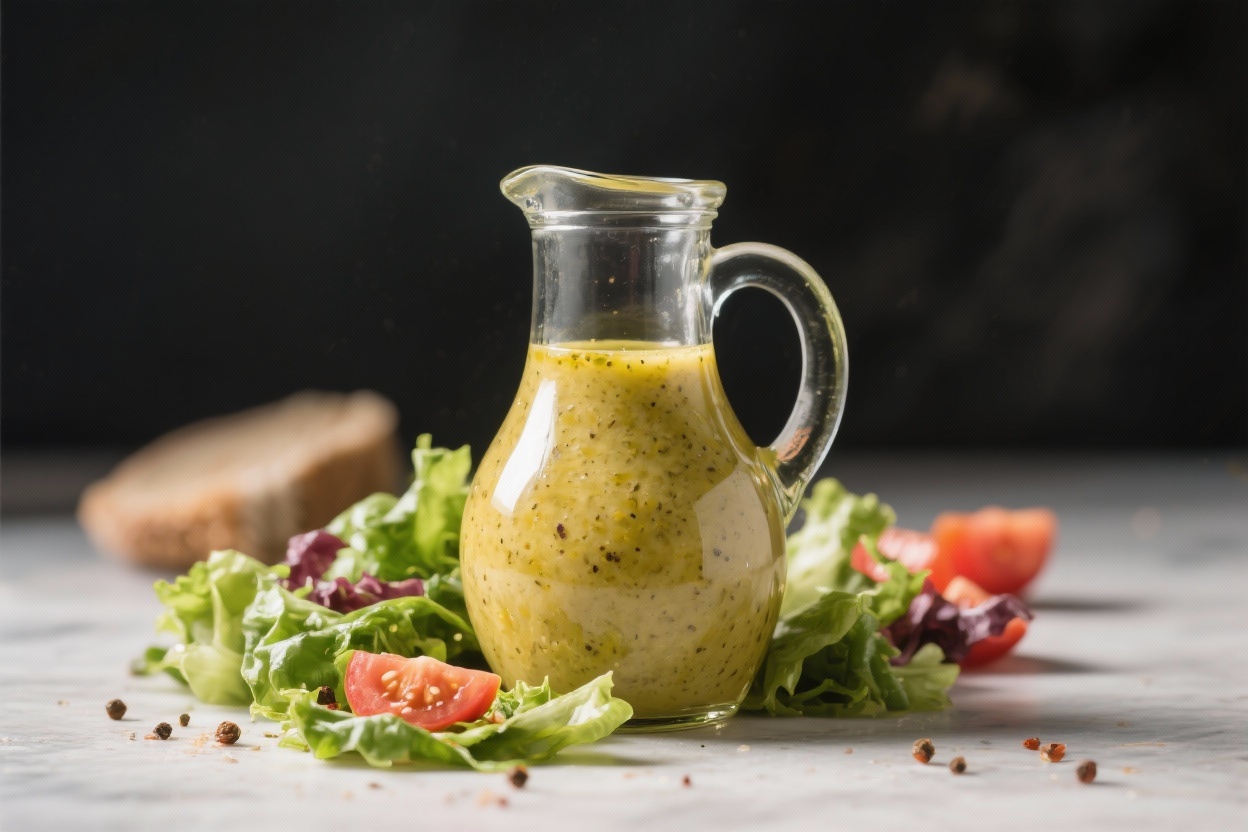
Forget the bottle. You can shake up a bright, zesty Italian Salad Dressing in five minutes that destroys anything with a barcode. It’s cheaper, cleaner, and tastes like you stole it from a Tuscan nonna—minus the guilt.
This is the kind of sauce that makes sad lettuce stand up straight and grilled chicken beg for a drizzle. Ready to turn basic salads into something your friends won’t shut up about? Let’s build flavor that hits hard and finishes clean.
What Makes This Special
Balance is everything. This dressing nails the sweet-acid-salty-umami ratio, so it’s bold without being bossy. Fresh aromatics (garlic, shallot) add punch, while oregano and basil bring that unmistakable Italian backbone.
Plus, we use two acids—red wine vinegar and lemon juice—for a layered tang that tastes restaurant-level on literally anything.
And yes, the Parmesan takes it from “nice” to “where has this been all my life?”
What You’ll Need (Ingredients)
- 1/2 cup extra-virgin olive oil
- 3 tablespoons red wine vinegar
- 1 tablespoon fresh lemon juice
- 1 teaspoon Dijon mustard
- 1 small garlic clove, finely grated
- 1 tablespoon finely minced shallot (optional but recommended)
- 1 teaspoon dried oregano
- 1/2 teaspoon dried basil
- 1/4 teaspoon crushed red pepper flakes (adjust to taste)
- 1/2 teaspoon honey (or sugar; balances acidity)
- 2 tablespoons finely grated Parmesan (optional, but elite)
- 1/2 teaspoon kosher salt, plus more to taste
- 1/4 teaspoon freshly ground black pepper
Step-by-Step Instructions
- Whisk the flavor base: In a medium bowl, combine vinegar, lemon juice, Dijon, garlic, shallot, oregano, basil, red pepper flakes, honey, salt, and pepper. Whisk until the salt dissolves.
- Emulsify like a pro: Slowly stream in the olive oil while whisking constantly until the dressing looks glossy and slightly thick. No whisk?
Shake vigorously in a sealed jar. Yes, arm day counts.
- Cheese it up: Stir in the Parmesan. It’ll add body and that savory edge you keep chasing in restaurant salads.
- Taste and adjust: Need more sharpness?
Add a splash of vinegar. Too intense? A bit more oil or a tiny extra honey. Dial it to your palate.
- Let it mingle: Rest 10 minutes so the herbs and aromatics bloom.
Then toss with greens, drizzle over roasted veg, or use as a marinade for chicken.
Preservation Guide
- Storage: Keep in a sealed jar in the fridge for up to 7 days. If it solidifies (olive oil does that when cold), let it sit at room temp 10–15 minutes and shake.
- Separation is normal: Oil rises. Give it a vigorous shake before using.
- Freshness check: If it smells off or looks cloudy beyond normal oil solidification, toss it.
Garlic and cheese accelerate spoilage—FYI.
- Meal prep tip: Make a double batch without Parmesan, store, and add cheese fresh to each serving for longer shelf life.
Health Benefits
- Heart-healthy fats: Extra-virgin olive oil provides monounsaturated fats and polyphenols that support cardiovascular health.
- Lower sugar, higher quality: Unlike many bottled dressings, this version keeps added sugars minimal and ingredients clean.
- Antioxidants and anti-inflammatory perks: Garlic, oregano, and basil bring micronutrients and phytochemicals that do your body favors.
- Portion control: Bold flavor means you need less to feel satisfied. Your macros will survive.
Don’t Make These Errors
- Using harsh, cheap oil: If your oil tastes bitter, your dressing will too. Choose decent EVOO.
Doesn’t need to be unicorn-tier, just not junk.
- Skipping the acid balance: Only vinegar = flat. Only lemon = thin. Use both for depth.
- Overdoing the garlic: One small clove goes far, especially raw.
Unless you like breathing fire in meetings.
- Forgetting to salt: Acidity without salt tastes shouty. A pinch makes flavors click.
- Adding cheese too early for long storage: Parmesan shortens shelf life. Add closer to serving if you’re batching.
Alternatives
- Vinegar swap: Use white wine vinegar for a lighter profile or sherry vinegar for a rounder, slightly sweet depth.
- Herb remix: Fresh basil/parsley instead of dried?
Use 1–2 tablespoons finely chopped and reduce dried herbs by half or omit.
- No mustard: Replace with 1 extra teaspoon Parmesan or 1 tablespoon mayo to help emulsify.
- Dairy-free: Skip Parmesan and add 1 teaspoon nutritional yeast for savory vibes.
- Low-FODMAP-ish: Omit garlic/shallot; infuse the olive oil with a smashed garlic clove for 20 minutes, then discard.
- Spicy version: Double red pepper flakes or add a dash of Calabrian chili paste.
FAQ
Can I use fresh herbs instead of dried?
Yes. Use 3x the amount of fresh herbs compared to dried, chop finely, and add them near the end to keep flavors bright.
What if my dressing won’t emulsify?
Whisk in 1/2 teaspoon more Dijon or a small spoon of mayo, then slowly add oil. Or use a blender for a foolproof emulsion.
Is apple cider vinegar okay here?
It works, but it leans fruity.
If you like that, go for it. For classic Italian flavor, red or white wine vinegar is ideal.
Can I use this as a marinade?
Absolutely. It’s perfect for chicken, shrimp, or veggies.
Marinate proteins 30–60 minutes; veggies 15–30 minutes. Don’t marinate seafood overnight—overkill, IMO.
How much dressing per salad?
Plan on 1–2 tablespoons per serving of greens. Start small, toss thoroughly, then add more if needed.
Soggy lettuce is a crime.
The Bottom Line
This Italian Salad Dressing Recipe delivers punchy acidity, silky texture, and real-deal flavor without the additives. It’s fast, customizable, and elevates everything from salads to grilled proteins. Make a jar, taste, tweak, and watch your weeknight meals suddenly feel expensive—in the best way.