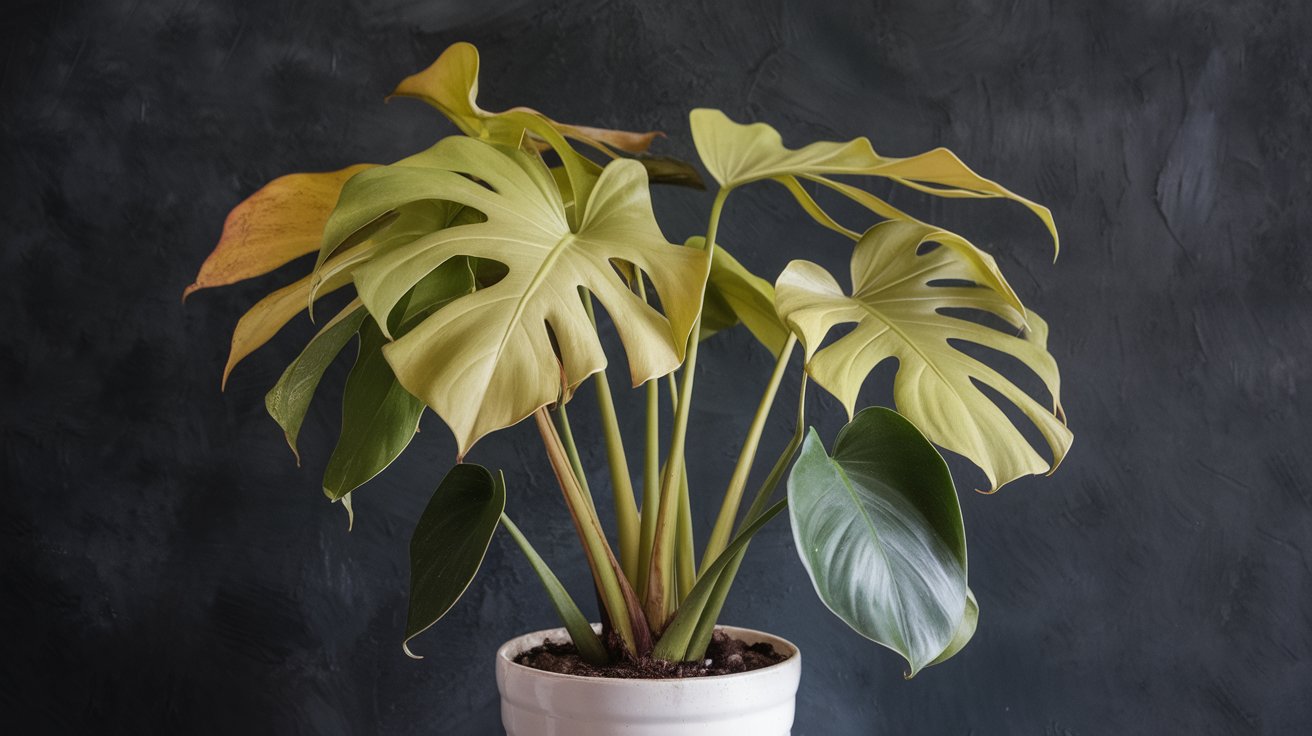
Monsteras look dramatic and easygoing… right up until they start throwing tantrums. Yellow leaves, brown tips, droopy stems—suddenly your “low-maintenance” plant feels high-drama. The good news?
Most Monstera problems have simple fixes once you know what you’re looking at. Let’s decode those leafy cries for help and get your plant back to glorious, jungle-vibe perfection.
Yellow Leaves: Is It Overwatering or Just Old Age?
Yellow leaves freak everyone out, but not every yellow leaf equals disaster. Monsteras regularly shed older leaves near the bottom.
That’s normal—like your plant’s version of spring cleaning. But if multiple leaves turn yellow at once? Time to inspect your watering routine.
- Overwatering signs: Yellow leaves + mushy stems + wet, heavy soil. Maybe a funky smell. Root rot might be brewing.
- Underwatering signs: Yellowing paired with crispy edges and bone-dry soil.
Leaves may feel papery.
How to fix overwatering
- Check drainage. Your pot needs a drainage hole (non-negotiable).
- Stick your finger 2 inches in the soil. If it’s wet, wait.
Water when the top 2-3 inches feel dry.
- Use a chunky mix: 60% quality potting soil + 20% perlite + 20% bark. Monsteras like air around their roots.
- If roots look brown and mushy, trim the rot and repot in fresh soil.
How to fix underwatering
- Water deeply until excess drains out, then let the top few inches dry.
- Set a reminder: most Monsteras want water every 7–10 days in summer, 10–14 in winter. Adjust for your space.
- Use a moisture meter if you love gadgets.
IMO, your finger works fine.
Brown Tips and Crispy Edges: The Dry-Air Drama
Brown, crispy tips often shout “low humidity” or “thirst.” Monsteras appreciate moisture, especially in heated or air-conditioned homes. Boost humidity without turning your living room into a rainforest:
- Group plants together to create a mini microclimate.
- Use a humidifier near the plant—game changer.
- Keep it away from heat vents and cold drafts.
- Check watering. Dry soil + brown tips = water more consistently.
What about water quality?
If you see brown edges plus weird spotting, your tap water might be high in minerals. Try filtered water or let tap water sit 24 hours before using.
FYI, you don’t need to baby it with distilled water unless your water is truly hard.
Dropsy Leaves: Why Is My Monstera Sulking?
Saggy, droopy leaves can mean lots of things, but it usually comes down to water, light, or temperature.
- Underwatering: Leaves droop and feel thin. Perk up after a good drink? That’s your answer.
- Overwatering: Leaves droop but soil stays wet.
Stems might feel soft. Let it dry and fix drainage.
- Low light: Petiole (leaf stem) stretches, leaves look smaller, plant leans.
Fix it fast:
- Give bright, indirect light—a few feet from a sunny window is perfect.
- Keep temps between 65–80°F (18–27°C). Monsteras hate sudden chills.
- Water smart (see above).
Consistency beats calendar watering.
No Fenestrations? Where Are My Fancy Holes?
Monsteras need the right conditions to produce those iconic split leaves. Young plants often start with solid leaves, so don’t panic if your baby looks plain. To encourage fenestrations:
- More light. Bright, indirect light fuels bigger, split leaves.
Near an east or south-facing window (filtered) works great.
- Feed lightly. During spring/summer, use a balanced fertilizer at half strength monthly.
- Provide support. A moss pole or coir pole helps the plant climb, which triggers larger, fenestrated leaves.
- Patience. Newer leaves show progress. Old ones won’t magically split later.
Pro tip: train the vines
Gently tie stems to a pole. Keep the pole slightly moist if it’s moss-based so aerial roots can latch on.
This is how you go from “cute houseplant” to “statement piece,” IMO.
Brown Spots and Patches: Sunburn or Something Spicier?
Not all brown marks are equal. Let’s play spot-the-spot.
- Sunburn: Large, tan or brown, dry patches on leaves that face the window. Often follows a move to a brighter spot.
- Fungal/bacterial issues: Irregular brown spots with yellow halos; may spread in damp, stagnant conditions.
- Edema: Tiny corky blisters from overwatering + low light.
Not fatal, just a sign to adjust care.
What to do:
- Move out of harsh direct sun. Filter with sheer curtains.
- Increase air circulation (small fan nearby) and avoid wet leaves at night.
- Remove heavily damaged leaves with sterilized scissors.
- If you suspect disease, isolate the plant, remove affected parts, and consider a copper-based fungicide. Follow the label.
Pests: The Tiny Villains
Monsteras don’t attract pests often, but when they do, it’s usually spider mites, thrips, mealybugs, or scale.
If your plant looks dusty, sticky, or speckled, grab a magnifying glass and channel your inner detective.
Common culprits
- Spider mites: Tiny dots, fine webbing, stippled leaves. Thrive in dry air.
- Thrips: Silvery streaks, black specks (poop), distorted new growth.
- Mealybugs: White cottony clumps in nooks and nodes.
- Scale: Brown shell-like bumps stuck to stems and leaves.
How to win the pest war
- Shower the plant to knock off freeloaders.
- Wipe leaves with a 5–10% alcohol solution for mealybugs/scale. Dab stubborn ones directly with a cotton swab.
- Use insecticidal soap or neem oil weekly for 3–4 weeks.
Repeat because eggs hatch later.
- Quarantine the plant away from others. Check nearby plants too.
- Boost humidity slightly and reduce stress—healthy Monsteras resist pests better.
Stunted Growth: When Your Monstera Hits Pause
If your plant hasn’t pushed out new leaves in months, something’s off—but it might just be winter. Monsteras slow down in cooler, darker months. If it’s growing season and still nothing:
- Light check: Move it closer to bright light or add a grow light for 10–12 hours daily.
- Pot check: If roots circle the bottom or poke out, repot up one size.
- Soil check: Compacted, soggy soil suffocates roots.
Refresh with a chunky mix.
- Food check: Feed monthly in spring/summer with balanced liquid fertilizer at half strength.
- Temperature: Keep it warm and steady. Cold nights = growth slowdown.
Propagation Troubles: Cuttings That Won’t Root
Propagating Monstera feels easy—until your cutting sits there doing nothing. Rooting success depends on where you cut and how you treat it. For best results:
- Cut below a node (the knobby bump).
No node = no roots, period.
- Remove lower leaves, keep one or two at most.
- Root in water or moist perlite/soil. Keep warm and bright, not sunny.
- Change water weekly if rooting in water. Add an air stone if you’re extra.
- Once roots reach 2–3 inches, pot into chunky soil and keep lightly moist.
FAQ
Should I cut off yellow or damaged leaves?
Yes.
Trim yellow, brown, or heavily damaged leaves with sterilized scissors. Removing them redirects energy to healthy growth and improves airflow. Just don’t remove more than a third of the plant at once.
How much light does a Monstera actually want?
Bright, indirect light is the sweet spot.
A few feet from an east window or a filtered south/west window works great. Direct midday sun can scorch leaves, but gentle morning sun is usually fine.
Do Monsteras need a moss pole?
Need? No.
Benefit? Absolutely. A pole gives the plant something to climb, which encourages bigger, more fenestrated leaves.
If you want that “designer jungle” look, give it support, IMO.
What’s the ideal watering schedule?
There’s no universal schedule because environments vary. Water when the top 2–3 inches of soil feel dry. Expect more frequent watering in summer and less in winter.
Use the plant and soil as your guide.
Can I bottom-water my Monstera?
Yes, occasionally. Bottom-watering helps saturate roots evenly, but don’t rely on it every time. Rotate with top-watering to flush salts and prevent buildup.
Why are my Monstera leaves curling?
Leaf curl usually signals underwatering, low humidity, or too much direct sun.
Check soil moisture first, then adjust light and humidity. If you recently repotted, mild curl can happen while roots reestablish.
Conclusion
Monsteras communicate clearly once you learn their language: yellow for water woes, brown for light or humidity issues, droop for general dissatisfaction. Tweak light, water, soil, and airflow, and they bounce back fast.
Keep it bright, keep it chunky (the soil, not you), and support that climb—your Monstera will repay you with giant, glossy leaves that make your space feel like a chic urban jungle.