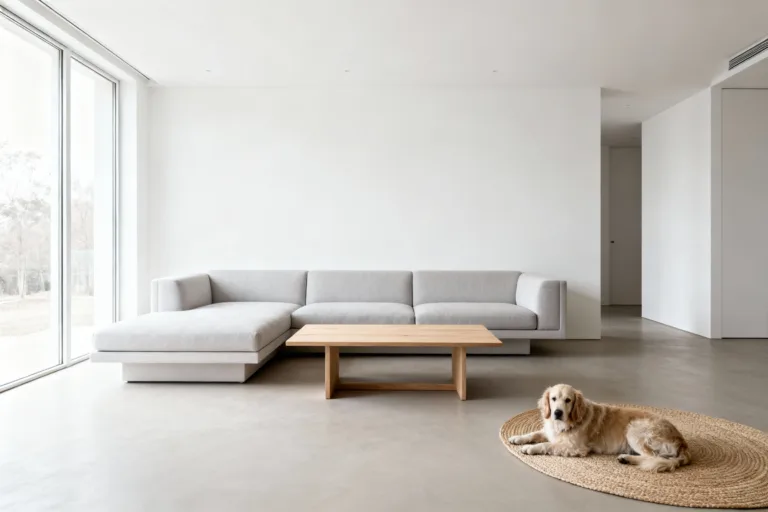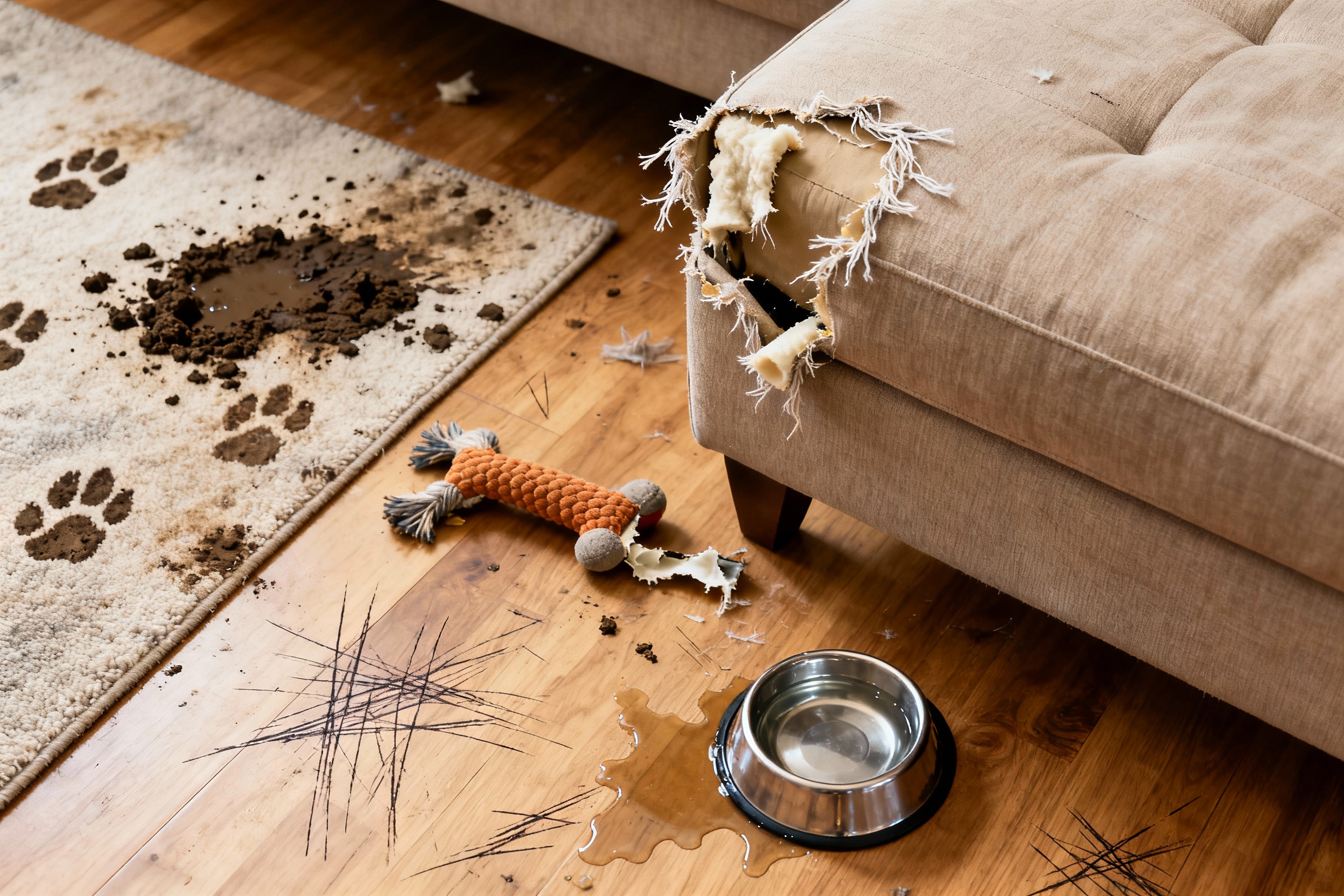
Your dog hasn’t declared war on your couch, promise. But a few everyday habits? They’re secretly wrecking your floors, furniture, and sanity. The good news: you can fix most of it with simple tweaks. Let’s talk about the dog-owner mistakes that torch your home—and how to stop the chaos fast.
You Skip Nail Trims (Your Floors Can Tell)
Long nails don’t just clickity-clack like tiny tap shoes—they scratch hardwood, snag rugs, and tear upholstery. Dogs also struggle to walk on slick floors with long nails, which means more sliding and scrambling. That equals more damage.
Fix it: Aim for nail trims every 2–4 weeks. If the nails touch the floor when your dog stands, they’re too long.
- Use a grinder for smoother edges (less scratch risk).
- Keep styptic powder on hand for quick clotting if you nick the quick.
- Ask your groomer to demo proper technique once. Worth it.
Bonus: Paw Pad Care
Cracked pads pick up grime and spread it all over your floors. Use a paw balm weekly and wipe paws after walks. FYI: this also helps with seasonal allergens that trigger itchiness (and more scratching on your furniture).
You Don’t Give Them a “Job” Indoors
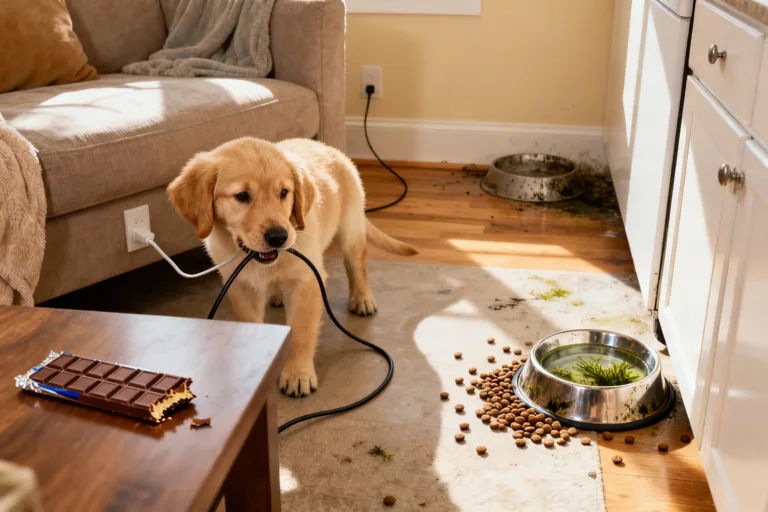
Bored dogs don’t meditate; they redecorate. Couch corners, baseboards, and door frames become chew toys when you don’t meet your dog’s mental and physical needs. That energy goes somewhere.
Fix it: Build a daily routine with outlets your dog actually enjoys:
- Morning movement: 20–40 minutes of brisk walking or fetch.
- Brain work: Snuffle mats, puzzle feeders, or frozen KONGs.
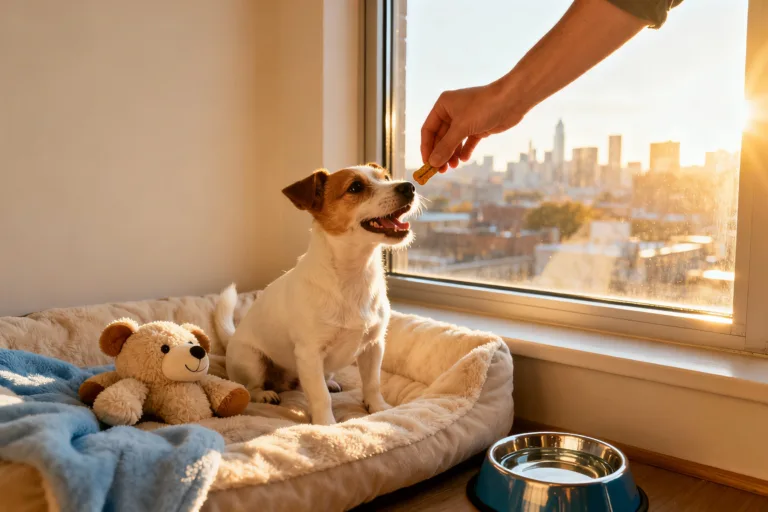
- Training reps: 5–10 minutes of “place,” “leave it,” and recall.
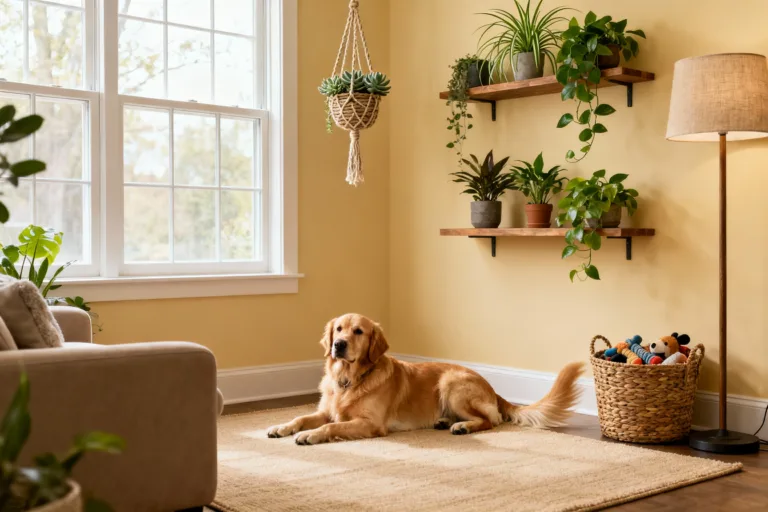
Set Up a “Yes Zone”
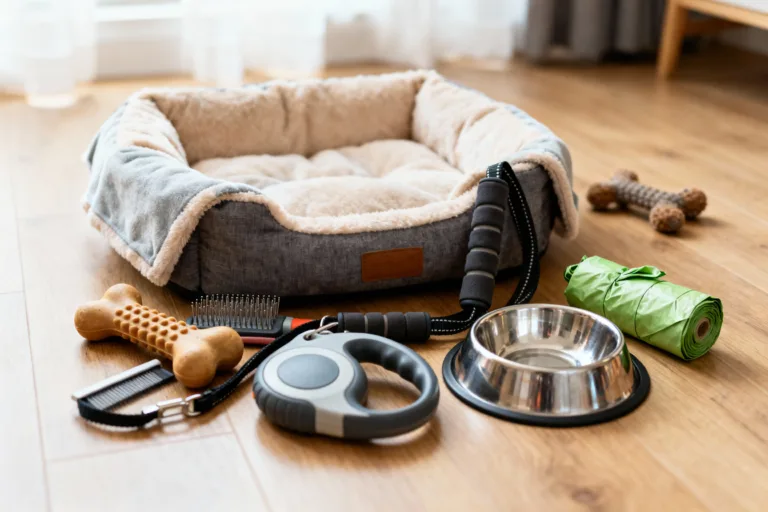
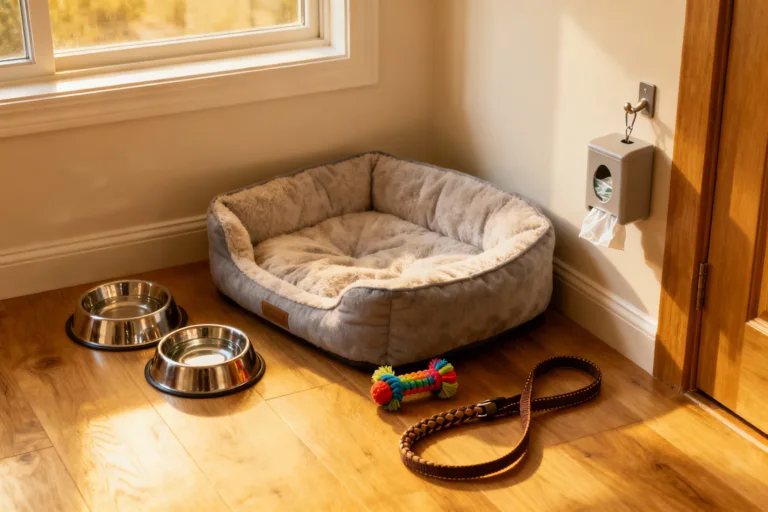
Create a dog-friendly area with chew-legal items:
- Durable rubber toys and rope chews
- A raised bed or comfy mat
- Rotating toys so novelty stays high
When they have acceptable targets, your throw pillows live to see another day.
Your Cleaning Routine Isn’t Dog-Proof
You scrub like a hero—but use the wrong products. Ammonia-based cleaners mimic the scent of urine. Your dog thinks you’re marking. He marks back. Cute loop, right?
Fix it:
- Use enzymatic cleaners for accidents. They break down the proteins that cause repeat marking.
- Vacuum with a HEPA filter twice a week. Hair and dander grind into fibers and make stains harder.
- Lint roll upholstery before you spot-clean—rubbing hair into fabric makes stains cling.
Protect Surfaces Before Disaster Strikes
Prevention beats scrubbing.
- Washable couch covers and removable slipcovers save expensive upholstery.
- Entryway runner + boot tray catch mud and puddles.
- Indoor-outdoor rugs handle wet paws like champs and dry fast.
You Free-Feed (Hello, Ants and Smells)
A bowl that sits out all day turns into a stink buffet. Kibble dust, drool, and crumbs invite pests and add mystery odors to your kitchen. Water bowls get slimy too—biofilm is real.
Fix it:
- Scheduled meals twice a day. Pick up leftovers after 20 minutes.
- Wash bowls daily with hot, soapy water. Toss in the dishwasher 2–3 times a week.
- Use silicone mats under bowls to catch splashes and kibble shrapnel.
Elevated Stands Save Floors
Raised bowls reduce drips across the floor and stop sliding bowls that scrape. They also help long-eared dogs avoid dunking their ears. Win-win.
You Skipped the Crate and Baby Gates
“Freedom” for an untrained dog equals chewed trim, ripped rugs, and mystery stains. IMO, a crate isn’t a dog jail—it’s a bedroom. Dogs love cozy dens when you introduce them right.
Fix it:
- Crate train in small steps with treats and quiet time; never use it as punishment.
- Use baby gates to block danger zones like formal rooms or carpet-heavy areas.
- Close doors (novel concept!) to rooms that attract mischief.
What Size Crate?
Big enough for your dog to stand, turn, and lie down comfortably—no bigger. Too roomy and potty training gets harder since they can pick a “bathroom corner.”
You Ignored Weather and Mud Protocol
Wet dog + carpet = a scent you never forget. Mud gets ground in fast, especially under rugs. You need a micro routine for pre-entry cleanup.
Fix it:
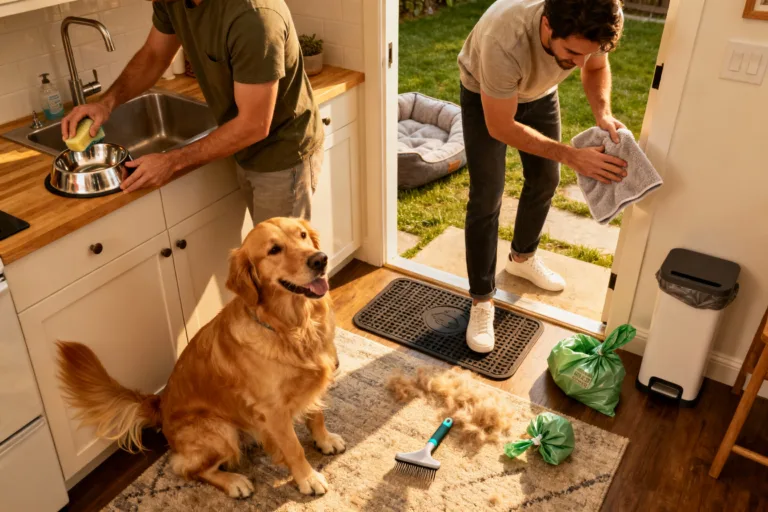
- Outdoor wipe station: Small bench, towels, paw wipes, and a shallow bin for muddy paws.
- Quick blow-dry: Keep a low-heat dryer or towel by the door.
- Seasonal trims: Shorten belly, paw, and feathering hair to reduce mud collection.
Paw Wipe Technique
Lift each paw, spread the toes, and wipe between pads. Most of the dirt hides there. Takes 30 seconds. Saves hours.
You Let Bad Bathroom Habits Slide
Indoor peeing isn’t always “being bad.” But if you shrug and clean it later, the smell trains your dog to repeat it. Carpets soak it up; subfloor keeps the memory forever.
Fix it:
- Interrupt gently if you catch them mid-pee, then hustle outside and reward like they won a medal.
- Stick to a potty schedule: First thing AM, after meals, after play, and before bed.
- Bell train or teach a clear “outside” cue.
When to See the Vet
Frequent accidents, especially in an adult dog, can signal UTIs, incontinence, or anxiety. Don’t assume spite—dogs don’t do petty bathroom revenge. Get a checkup.
You Chose the Wrong Fabric (or No Protection)
Some materials basically invite hair and stains to move in. Velvet, chenille, and high-pile rugs adore pet fur. Light linen shows everything. Dark micro-suede hides sins.
Fix it:
- Opt for performance fabrics: Crypton, microfiber, and treated polyester resist stains and odors.
- Pick low-pile rugs or flatweaves that vacuum easily.
- Use throws on favorite dog spots; wash weekly.
Protect the Bed (Yes, If They Sleep With You)
Use a waterproof mattress protector. You won’t feel glamorous buying it, but future-you will thank you after a surprise puke at 2 a.m. FYI: dogs get tummy bugs too.
FAQ
How do I stop my dog from scratching doors?
Teach a default “sit and wait” before exits, and reward calm behavior. Add a door guard or plexiglass panel to protect the area while you train. Give your dog a chew in a “place” spot when guests arrive so they don’t panic-scratch.
What’s the best cleaner for dog urine?
Use an enzymatic cleaner. Saturate the area, let it sit per instructions, then blot—don’t rub. If you have old stains, treat multiple times and consider a carpet extractor for deep fibers.
How often should I bathe my dog to reduce odor?
Every 4–8 weeks for most breeds, but brush weekly. Over-bathing strips oils and can cause more smell long-term. Target-prime the stinky zones—ears, paws, and undercarriage—with pet-safe wipes between baths.
What toys won’t destroy my furniture?
Look for durable rubber toys, braided ropes, and tough nylon chews sized for your dog’s jaw. Rotate toys weekly to keep interest high. Redirect immediately when they grab a pillow—then praise like crazy when they switch to the approved chew.
Can essential oils help with pet smell?
Careful. Many oils are unsafe for dogs. Open windows, use HEPA air purifiers, and wash textiles more often. If you diffuse, keep it minimal and choose pet-safe options after checking with your vet.
How do I keep hair off the couch?
Brush your dog regularly, use a washable throw, and keep a lint roller in the coffee table drawer. A quick 60-second brush before evening couch time makes a huge difference, IMO.
Conclusion
Your home doesn’t need to look like a chew toy graveyard. Trim the nails, create a “yes zone,” tighten your cleaning routine, and give your dog a job to do. Small, consistent changes protect your space—and your sanity—without cramping your dog’s vibe. You get a cleaner home; your dog gets structure and enrichment. That’s the real win.