You love your plants. You love your dog. Unfortunately, some of your leafy babies don’t love your pup back. A lot of popular houseplants can make dogs sick if they nibble, and dogs love to nibble. Let’s cut through the confusion and make your space both gorgeous and dog-safe (with a few jokes to keep you sane).
Why Some Plants Are Trouble for Dogs
Plants evolved to protect themselves, and many use natural chemicals that irritate or poison animals. Dogs don’t read care tags (rude), so they learn by tasting. That often ends with drooling, vomiting, or worse. Your job? Spot the risky plants and swap them for dog-friendly lookalikes.
Common Toxic Houseplants You’ll See Everywhere
Don’t panic if you own some of these. Just move them out of reach or swap them when you can.
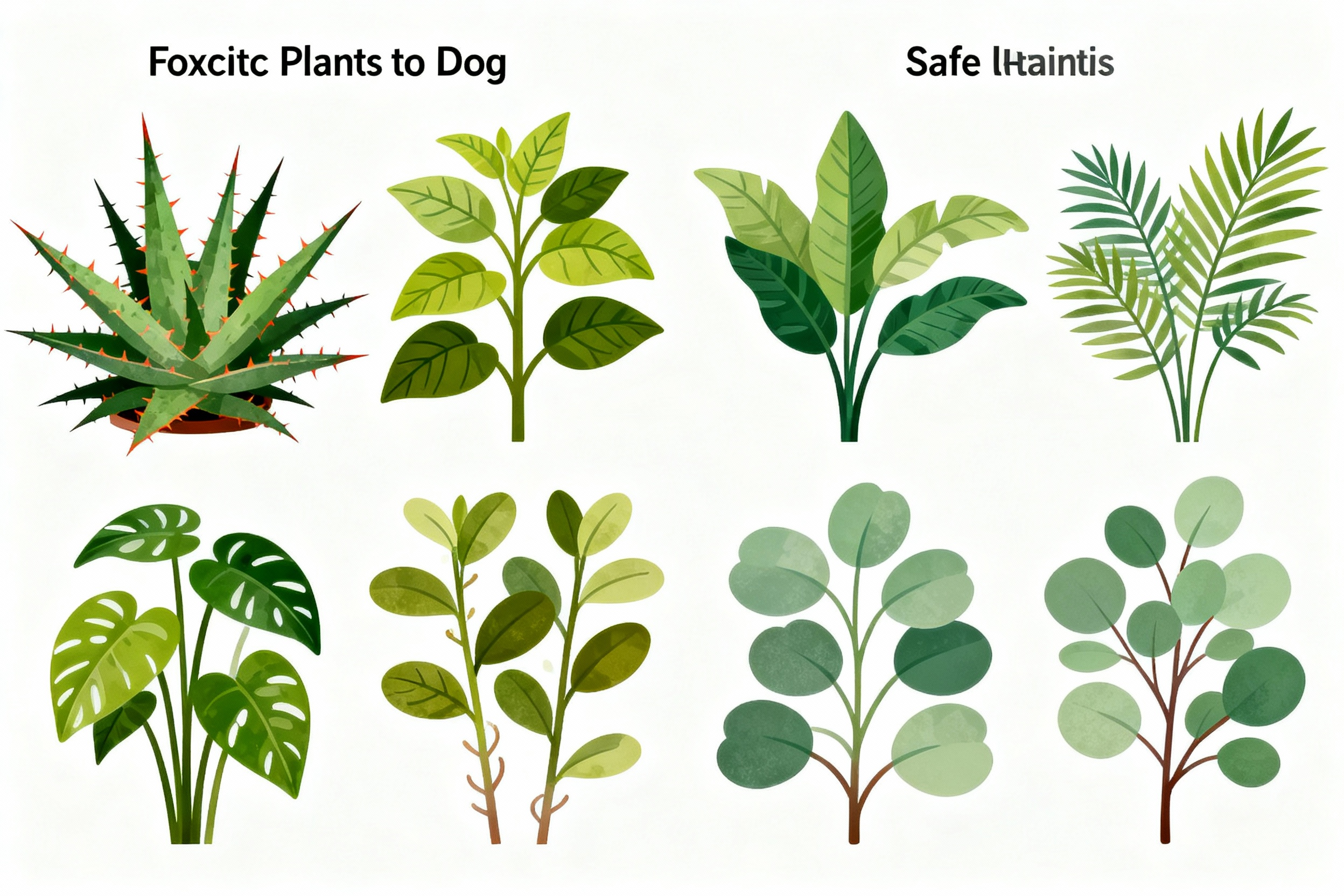
- Monstera (Swiss Cheese Plant) – Contains insoluble calcium oxalates. Dogs who chew it can get mouth pain, drooling, pawing at the face, and vomiting.
- Philodendron & Pothos – Also loaded with oxalates. Same deal: mouth irritation, drool city, upset stomach.
- Dieffenbachia (Dumb Cane) – Pretty but spicy. Causes oral burning, swelling, and drooling. Severe cases can affect breathing.
- Peace Lily – Not a true lily, but still not dog-friendly. Mouth pain, drooling, and vomiting after chewing.
- Sago Palm – The big villain. Seeds and leaves contain cycasin. Even a small amount can cause liver failure. Do not keep this with dogs—period.
- Aloe Vera – Great skincare, bad snack. Can cause vomiting, diarrhea, lethargy.
- Snake Plant (Sansevieria) – Low-maintenance, yes; low-toxicity, not really. Causes GI upset if chewed.
- ZZ Plant (Zamioculcas zamiifolia) – Contains oxalates. Irritates mouth and stomach.
What about “true lilies”?
True lilies (like Easter lily) are extremely toxic to cats but less dramatic for dogs. Still, many lily-adjacent plants cause GI issues for pups. IMO, skip them if your dog likes to sample.
Safe, Stylish Alternatives That Still Look Amazing
You can keep the aesthetic without risking your dog’s health. These plants bring the vibes and won’t send you into a panic if your pup takes a curious chomp.
- Spider Plant – Airy, striped, and safe. Dogs might bat the pups around like toys. Cute.
- Parlor Palm (Chamaedorea elegans) – Tropical look, no drama. Grows slowly, tolerates low light.
- Areca Palm – Bigger, beachier cousin. Non-toxic and lush.
- Calathea & Prayer Plants (Maranta) – Pattern queens with zero toxicity. Can be finicky with humidity, but worth it.
- Boston Fern – Classic, fluffy, and safe. Keep it humid and evenly moist.
- Hoya (Wax Plant) – Thick leaves, adorable blooms, safe for dogs. Likes bright, indirect light.
- Peperomia – Tons of varieties, compact, non-toxic, and easy.
- Pilea peperomioides (Chinese Money Plant) – Quirky and dog-friendly. Also makes great “pups” to share.
Monstera lookalike without the risk?
Try a split-leaf Philodendron lookalike vibe with a big Hoya or a large-leaf Calathea. Not identical, but you’ll still get drama without danger.
Spotting Trouble: Symptoms If Your Dog Chews a Toxic Plant
If your dog goes salad-bar mode, watch for:
- Mouth irritation: pawing at the mouth, drooling, whining
- GI upset: vomiting, diarrhea, loss of appetite
- Lethargy or wobbliness
- Swelling in mouth or tongue (especially with oxalate plants)
- Seizures or jaundice with serious toxins like sago palm
Call your vet ASAP if your dog chews sago palm or shows severe symptoms. For mild cases, you can rinse the mouth gently with water and monitor, but still call your vet for guidance. FYI: Keep the plant label or a photo handy for ID.
Where to Put Plants So Your Dog Doesn’t Snack
I get it—your dog can reach anything if properly motivated. Still, a few tricks help.
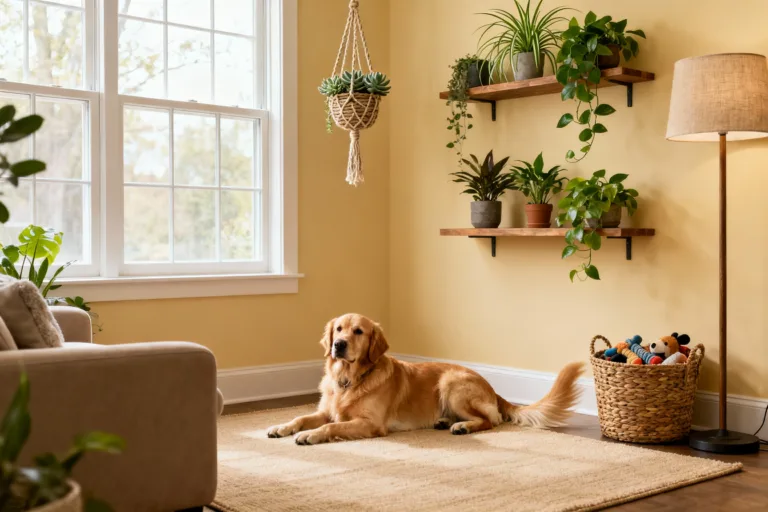
- Go vertical: tall shelves, wall planters, or hanging baskets.
- Use barriers: baby gates or closed-door plant rooms (yes, it’s a vibe).
- Choose big, heavy planters that won’t tip if nudged.
- Train “leave it” and reward heavily. It works, promise.
- Offer dog-safe distractions: chew toys, puzzle feeders, and outdoor sniff sessions.
Repellents: Do they work?
Citrus peels or pet-safe bitter sprays sometimes help, sometimes flop. IMO, combine training, placement, and enrichment instead of relying on sprays alone.
Create a Dog-Safe Jungle: Room-by-Room Picks
Let’s make it easy to plan your setup.
- Living room: Parlor palm, Hoya on a trellis, Spider plant in a hanger.
- Bedroom sanctuary: Calathea for pattern, Pilea on the nightstand, Peperomia for texture.
- Kitchen: Basil, parsley, thyme—edible and safe. Win-win for you and your pasta.
- Bathroom: Boston fern and Prayer plant love humidity. Spa vibes plus dog-safe.
- Bright window corner: Areca palm as a statement, assorted Peperomia below.
FAQ
What should I do immediately if my dog eats a toxic plant?
Remove any plant bits from their mouth, gently rinse their mouth with water, and keep them calm. Call your vet or a pet poison hotline right away and describe the plant and symptoms. If you suspect sago palm or see severe symptoms (vomiting, seizures, yellow gums), head to the emergency vet immediately.
Are all lilies toxic to dogs?
True lilies are far more dangerous to cats than dogs, but many lily-family or lily-named plants still cause GI upset in dogs. Peace lilies and calla lilies can irritate mouths and stomachs. If your dog likes to chew, skip lilies altogether to avoid risk.
Is pothos really that bad for dogs?
Pothos causes painful mouth irritation and vomiting, which is miserable but usually not life-threatening. The bigger issue is how much your dog ate and whether swelling affects breathing. Keep pothos out of reach or replace it with a peperomia if your dog is a serial snacker.
Can I keep toxic plants if my dog never chews plants?
You can, but dogs surprise us. New environments, stress, or boredom can trigger “I guess I’ll chew this leaf” behavior. If you keep toxic plants, place them high, train a strong “leave it,” and supervise. Personally, I prefer non-toxic plants for peace of mind.
Which palms are safe, and which are not?
Most decorative palms like parlor palm and areca palm are safe. Sago palm is not a true palm and is highly toxic. If a plant is labeled “cycas,” “sago,” or “cycad,” don’t bring it home with a dog around.
Are succulents safe for dogs?
Some are, some aren’t. Haworthia and many echeveria are fine, but jade plant (Crassula) and aloe can cause GI issues. Always check the specific genus/species before buying.
Final Thoughts: Green Home, Happy Dog
You don’t need to pick between a lush indoor jungle and your dog’s safety. Learn the red-flag plants, swap them for safe stunners, and set your space up so your pup can’t graze. Keep a shortlist of safe go-tos—spider plant, parlor palm, calathea, peperomia—and you’re golden. Bonus: fewer emergency vet visits, more time to brag about your thriving plant corner. IMO, that’s the best kind of glow-up.