Your glass stove top looked sleek and shiny when you bought it, right? Then life happened: pasta water boiled over, oil popped, and now it looks like modern art in burnt caramel. Good news: you can get it back to showroom shiny without scratching it or losing an afternoon. Let’s clean it the right way—fast, safe, and with minimal drama.
Know Your Enemy: What’s On That Surface?
You don’t clean every mess the same way. Different gunk needs different tactics. Quick scan time:
- Light dust and smears: Fingerprints, water spots, minor grease.
- Daily splatters: Sauce dots, oil mist, tiny food bits.
- Burnt-on crud: Boil-overs, sugary spills, scorched rings.
- Serious stains: Cloudy haze from hard water or cleaner residue.
FYI: Sugar-based spills (like caramel or jam) can etch when super hot. Tackle those ASAP once the surface cools enough to touch safely.
Gear Up: What You Actually Need
You don’t need a cabinet of chemicals. A few MVPs do the job:
- Microfiber cloths (2-3): Lint-free and gentle.
- Glass stove top cleaner or cream (non-abrasive): Designed for this surface.
- Baking soda: Mildly abrasive and cheap.
- White vinegar in a spray bottle: Cuts grease and haze.
- Razor scraper with a new blade: For baked-on crud. Use carefully.
- Soft sponge or non-scratch pad: Absolutely no steel wool.
- Paper towels or old t-shirt rags: For the messy parts.
Optional but nice: a polish cloth for the final buff and a little dish soap for greasy nights.
Safety First, Shiny Second
Don’t rush and melt your fingerprints off. Do this instead:
- Turn everything off and let the top cool completely.
- Unplug the range if you plan to use water generously.
- Test cleaners on a tiny corner the first time.
- Hold the razor flat at a low angle—think 10–15 degrees.
A scratch looks worse than a stain, IMO. Respect the glass.
The Quick Daily Clean (2–3 Minutes)
You cooked, you ate, now keep it easy tomorrow.
- Wipe crumbs and loose bits with a dry microfiber.
- Spritz vinegar lightly over the surface.
- Wipe in circles with a damp microfiber, then dry with a second cloth.
- Buff with a clean, dry cloth for that sparkle.
If it feels greasy, add one drop (seriously, one) of dish soap to your damp cloth. Rinse and buff.
The Deep Clean for Real-Life Messes
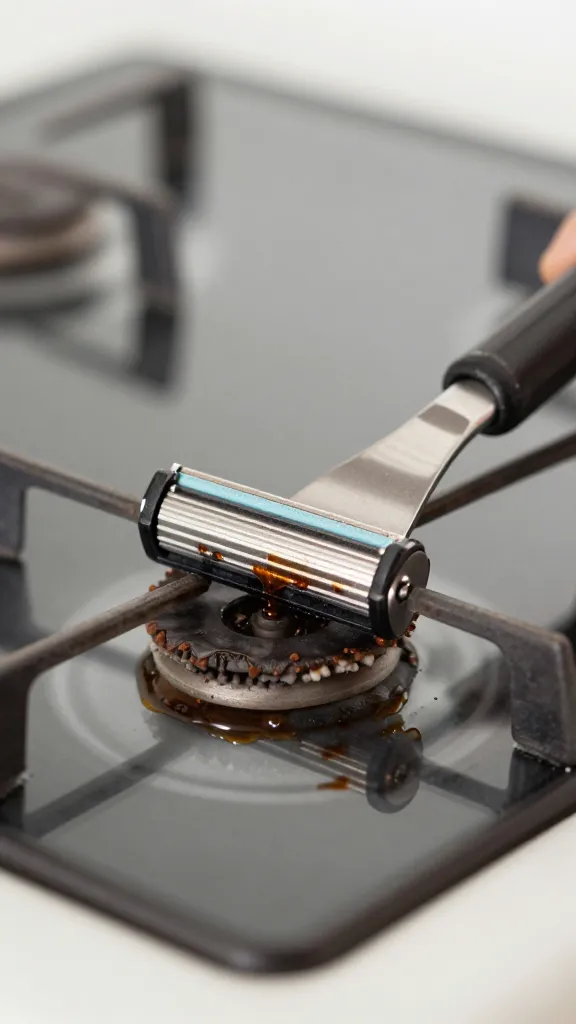
When you forgot the sauce on low and it turned into lava. Here’s your fix.
Step 1: Loosen the Mess
– Sprinkle baking soda over the worst spots.
– Lightly spray vinegar so it foams.
– Let it sit 5–10 minutes while you judge past-you’s cooking choices.
Step 2: Gentle Scrub
– Use a soft sponge or non-scratch pad to work the paste.
– Wipe away the sludge with paper towels.
– Repeat if needed. No shame—stuff bakes on like cement.
Step 3: Razor Rescue (for Burnt Rings)
– Dampen the area with vinegar or cleaner so the blade glides.
– Hold the razor nearly flat and push gently to lift the crust.
– Work in short passes. Wipe the blade often so you don’t drag grit.
– Follow with a quick wipe.
Step 4: Finish with a Cream Cleaner
– Dab on a nickel-sized amount of glass cooktop cleaner.
– Rub in small circles with a soft cloth for 30–60 seconds.
– Buff dry with a clean cloth until streak-free and smug.
Pro tip: Still cloudy? Do one more round with a pea-sized cleaner. A little goes a long way.
Troubleshooting Tricky Stains
Not all stains play nice. Here’s the cheat sheet.
White Haze or Rainbow Sheen
– Likely mineral or product residue.
– Wipe with a 1:1 vinegar-water mix, then buff dry.
– If it lingers, use a tiny bit of cream cleaner and polish longer.
Brown or Black Burn Marks
– Soften with a warm, damp towel laid on top for 10 minutes.
– Scrape carefully with the razor, then clean with baking soda + vinegar.
– Finish with cleaner and buff.
Sugar Spills (Caramel, Syrup, Jam)
– These can etch at high heat. As soon as it’s safe to touch, scrape gently with the razor while the residue is still warm-soft.
– Wipe, then clean with cream cleaner.
– If it etched, you can’t fix the glass, but you can minimize the look with polish.
Grease Film That Won’t Quit
– Add a drop of dish soap to a damp microfiber, wipe, then rinse.
– Follow with vinegar and a buff.
– Still slick? Repeat with a fresh cloth. Don’t over-soap—residue streaks.
What Not to Do (Because I Care About Your Stove)
– No abrasive powders or scouring pads that feel scratchy. If it feels like sandpaper, it is sandpaper.
– No ammonia-heavy window cleaners on hot surfaces—they can streak and smell like regret.
– No leaning on the glass or putting heavy pots down hard. Micro-cracks exist, and they gossip.
– No puddles near knobs or vents—avoid dripping liquid into electrical bits.
Keep It Clean with Minimal Effort
You don’t need a chore chart, just tiny habits:
- Wipe after cooking while the splatters are fresh (but not hot-hot).
- Use lids and splatter screens for frying or saucy chaos.
- Salt the pot rims? Kidding. Just wipe the bottoms before cooking to avoid grime rings.
- Do a 5-minute deep clean weekly. Calendar it if your brain lives in reminders, IMO.
FAQs
Can I use Magic Erasers on a glass stove top?
You can, but gently. Magic Erasers are micro-abrasive. Use light pressure on tough spots, then rinse and follow with a cream cleaner. If your manual nixes abrasives entirely, stick to baking soda and a razor.
Is a razor blade safe on glass?
Yes—if you use it right. Keep the blade nearly flat, work on a wet surface, and use a new blade. Don’t jab or pry at an angle. Think “shave” the residue, not “dig” it out.
What’s the best cleaner for a glass stove top?
A dedicated glass cooktop cream works best for shine and protection. For everyday, vinegar and a microfiber handle fingerprints and light grease like a champ.
How do I prevent those burned-on rings?
Wipe spills fast, keep pot bottoms clean, and match pan size to burner size. Also, turn down the heat once things get going—boil-overs start the ring life.
My stove top looks scratched. Can I fix it?
Light surface marks sometimes disguise as residue. Try a thorough clean and polish first. Real scratches won’t disappear, but a good buff with cooktop cleaner can make them less obvious.
Do I need to unplug the stove to clean it?
Not for simple wipe-downs. If you plan to use more water or you’re cleaning near knobs or vents, unplugging adds a safety margin. Always start with a cool surface either way.
Wrapping It Up
Glass stove tops look fancy, but they don’t need fussy routines. Keep a couple of tools on hand, wipe after you cook, and pull out the razor only when things get crunchy. Do that, and you’ll keep it glossy with way less effort than you think. Now go make something delicious—and maybe keep a lid nearby, just in case.