You know that weird gray fuzz stuck between the bristles of your hairbrush? That’s not a new species—it’s a mix of hair, oil, dust, and product buildup. Gross? A little. Fixable? Absolutely. Give me 10 minutes and I’ll show you how to make your brush look (and work) like new—no fancy tools, no drama.
Why Your Hairbrush Gets Gunky (And Why You Should Care)
Your brush collects hair, scalp oils, dry shampoo, and whatever else you sprayed this week. That grime doesn’t just look bad—it rubs right back into your clean hair. Translation: dull roots, greasy strands sooner, and occasional scalp irritation.
Clean brush, cleaner hair. Who knew the secret to better hair days could sit in your bathroom drawer?
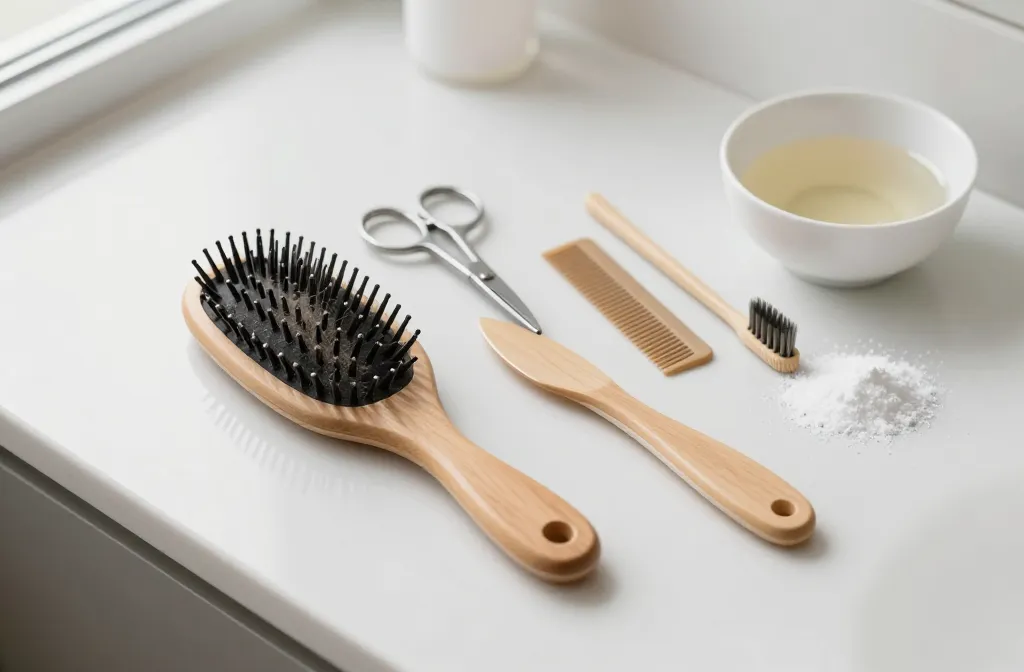
What You’ll Need (You Already Own Most of This)
Grab these basics:
- Comb or pointed tool (tail comb, pen cap, even a fork—no judgment)
- Scissors (for stubborn tangles)
- Mild shampoo or dish soap
- Baking soda (optional but clutch for buildup)
- Old toothbrush
- Bowl or sink with warm water
- Towel
- Rubbing alcohol or vinegar (for occasional disinfecting)
The Fast Clean: Your 5-Minute Weekly Routine
You don’t need a spa day for your brush. Do this quick refresh once a week:
- Pull the hair out. Use your fingers or a comb to lift and grab hair from the base. Cut through thick clumps with scissors, but don’t slice the bristles.
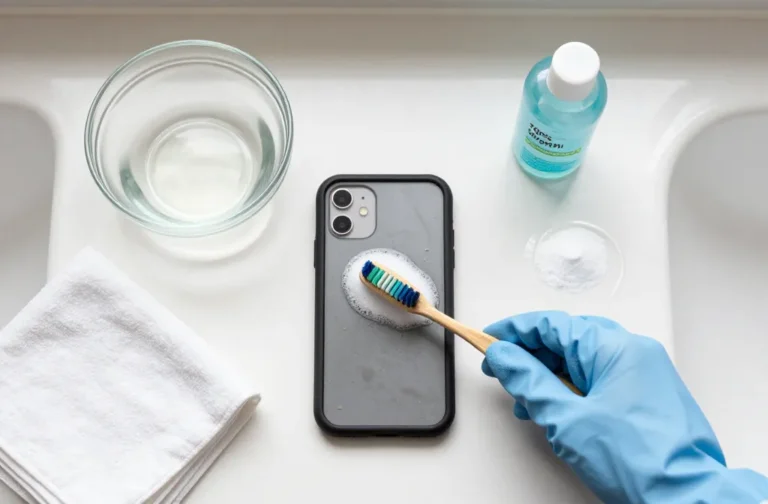
- Mix a mini wash. In a bowl or sink, add a few drops of shampoo to warm water. Swish for bubbles.
- Scrub the base. Dip your old toothbrush in the suds and scrub the bristle base and handle. Keep wooden handles mostly dry. FYI, don’t dunk a cushioned brush entirely.
- Rinse smart. Rinse under cool running water, bristles down, so water doesn’t flood the base.
- Dry like a pro. Shake off water and lay the brush bristle-side down on a towel. Let it air-dry completely.
How Often Should You Clean It?
Weekly: Quick clean for most brushes and hair types.
Every 2–4 weeks:
After illness: Do a disinfecting step (details below).
The Deep Clean: For Product Buildup and Sticky Residue
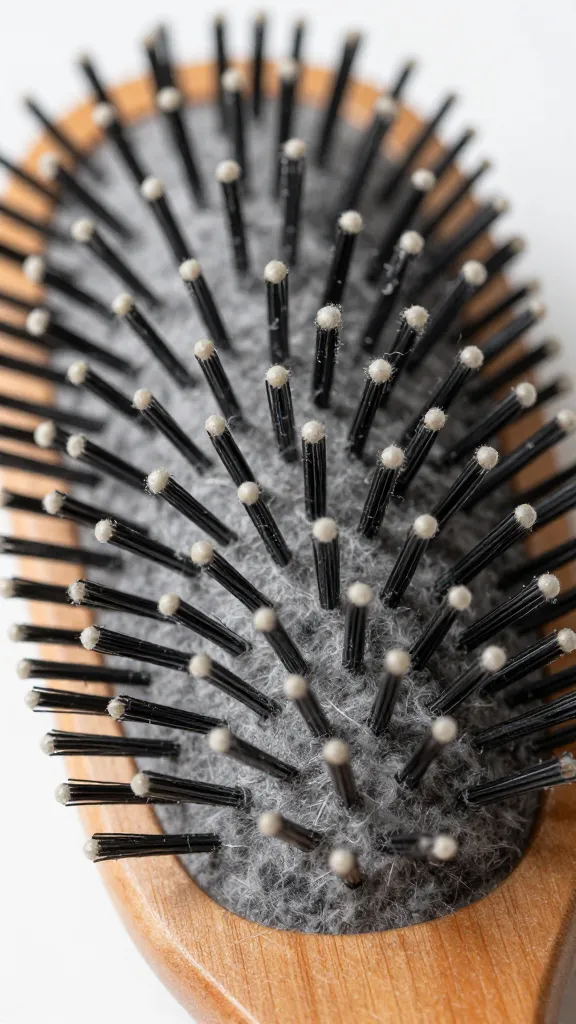
Feel like your brush crunches when you press the bristles? Time to go deeper.
- De-hair first. Remove as much hair as possible—this step matters or you’ll just swish fuzz around.
- Soak (if safe). For plastic brushes (no wood, no cushioned pads): soak in warm water with a teaspoon of shampoo and a teaspoon of baking soda for 10–15 minutes.
- Scrub the grime. Use the toothbrush to scrub between bristles and around the edges. Work in small circles—satisfying and effective.
- Rinse thoroughly. Soap residue attracts dust, so rinse until the water runs clear.
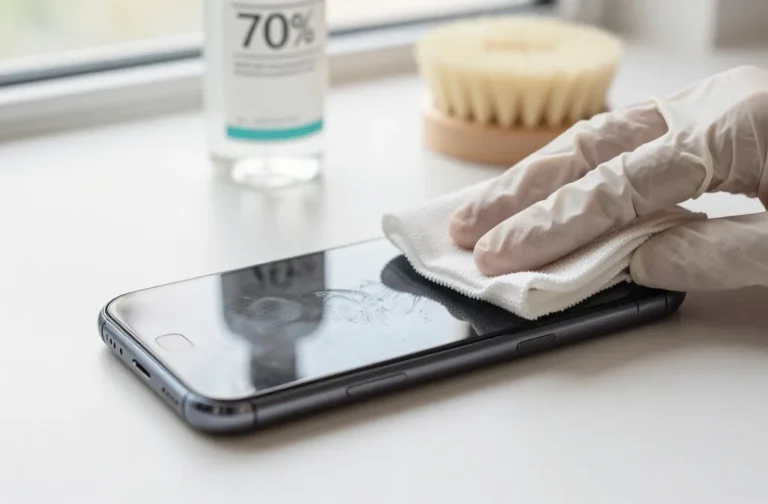
- Disinfect (optional but nice). Wipe bristles and handle with a cloth dipped in 70% rubbing alcohol, or do a quick 1:4 white vinegar-to-water rinse. Rinse with water afterward.
- Air-dry completely. Bristles down. No hair-dryer blasts—heat can warp bristles and loosen glue.
Special Cases: Cushion Pads and Mixed Bristles
– Cushion brushes: Don’t soak fully—water can seep inside and never leave. Dip just the bristles in your soapy water and scrub the pad lightly.
– Boar bristle or mixed bristle: Use a gentle shampoo, not dish soap. Boar bristle hates harsh degreasers.
– Round brushes with metal barrels: Clean as usual, but dry immediately to avoid rust around vents.
How To Clean Different Brush Types Without Ruining Them
Because not all brushes vibe with a bath.
Paddle and Vent Brushes (Plastic)
– These can handle soaking (unless cushioned).
– Great candidates for baking soda in your wash.
– Vent brushes dry fast—love that for us.
Wooden Handles
– Keep them mostly dry. Wipe with a damp cloth and a little shampoo.
– For bristles, dip just the tips in your sudsy water and scrub.
– Dry horizontally, bristles down, to protect the wood finish.
Detangling Brushes
– Remove hair gently; those flexible teeth can snap.
– Many can soak, but check the manufacturer if you’re fancy and still have the box (IMO, winging it usually works with a quick dip and scrub).
Pro Tips You’ll Actually Use
– Do the “grab-and-go” trick: Keep a comb in your bathroom drawer and yank hair out of your brush after you style. Takes 10 seconds, saves time later.
– Use a lint roller on the bristle tips for quick fuzz removal. Weirdly effective.
– Don’t share brushes. Scalp oils and flakes swap easily. Hard pass.
– Sunny windowsill? No thanks. UV and heat can warp plastic and fade wood.
– Replace when needed: If bristles bend, snap, or pads split, your brush stops doing its job. Most people can stretch 1–2 years with regular cleaning.
What If Your Brush Still Smells?
– Soak (if safe) with a teaspoon of baking soda and a few drops of tea tree oil for 10 minutes.
– Rinse really well. Odor usually = leftover gunk.
– If the smell lingers, the cushion might hold moisture—time for a new brush, sadly.
When Life Gets Messy: Post-Workout, Salon Days, and Illness
– After workouts: Sweat plus leftover hair product equals sticky buildup. Do the fast clean the same day if you can.
– After color or heavy styling: Clean ASAP so sprays and serums don’t cement on the base.
– After you’ve been sick: Wipe the handle and bristles with rubbing alcohol or a vinegar solution. R inse and dry. FYI, no need to sterilize like a hospital—just don’t ignore it.
FAQs
How often should I clean my hairbrush?
Weekly hair removal and a light wash works for most people. If you use lots of dry shampoo or styling products, do a deeper clean every 2–4 weeks. Oily scalp? Bump that schedule up a bit.
Can I put my brush in the dishwasher?
Short answer: please don’t. Heat and detergent can warp plastic, melt glue, and mangle bristles. Hand cleaning gives you control and takes five minutes. Worth it, IMO.
What’s the best cleaner—shampoo, dish soap, or vinegar?
Shampoo wins for general cleaning. Dish soap cuts heavy oil on plastic brushes. Vinegar works as a light disinfectant and deodorizer. Mix and match based on your brush and buildup.
Is it safe to soak boar bristle brushes?
Not fully. Dip the bristles in soapy water and scrub gently with a toothbrush, but keep the wooden parts dry. Rinse the bristles and dry bristle-side down.
Why does fuzz keep forming even when I remove hair?
That fuzz is product residue, lint, and skin cells binding together. You remove hair, but residue stays until you wash with soap and scrub the base. Do the quick wash weekly to beat the fuzz.
How do I clean a comb?
Same method: remove hair, soak in warm soapy water (plastic combs can handle a full soak), scrub with a toothbrush, rinse, and dry. Add a pinch of baking soda if it feels sticky.
The Bottom Line
Your hairbrush doesn’t need a complicated routine—just a weekly de-hair and a quick scrub. Deep clean when product piles up, treat wood and cushions gently, and dry everything bristle-side down. Clean brush, cleaner hair, fewer bad hair days. Easy win, FYI.