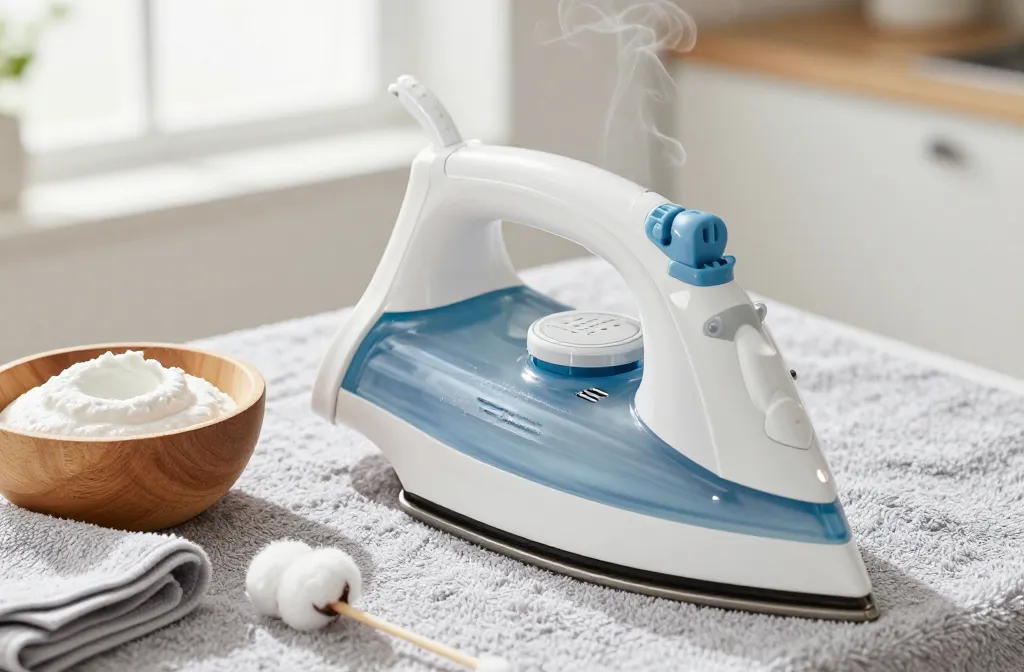
Your iron looks fine… until it glides like a shopping cart with a busted wheel and leaves mystery gunk on your shirt. Let’s fix that. Cleaning an iron doesn’t need fancy tools, just a few basics and some good timing. In 15–20 minutes, you’ll go from snaggy and sticky to smooth, steamy perfection.
Know Your Enemy: What’s Actually Gunking Up the Iron
You don’t clean randomly—you clean strategically. Different messes need different tactics. Here’s what usually messes up irons:
- Burnt starch or fabric: Brown, sticky residue on the soleplate that drags on clothes.
- Mineral buildup: White crust in the steam vents from hard water. It blocks steam and spits crud.
- Oily or waxy smears: From ironing over printing, labels, or fusible interfacing.
- Rust stains: From old water sitting in the tank or a neglected plate.
Quick Safety Prep
Unplug the iron. Let it cool until warm to the touch, not hot. Empty the water tank. Work on a towel you don’t love. Basic, but important.
Clean the Soleplate: Fast Methods That Actually Work
We’ll start with the business end. You want it smooth and non-stick again without scratching it to oblivion.
The Baking Soda Paste (for general grime)
This one does 80% of jobs, IMO.
- Mix 2 tablespoons baking soda with 1 tablespoon water to form a thick paste.
- With the iron warm (NOT hot), spread the paste on the soleplate—avoid the steam holes.
- Gently scrub using a soft cloth or non-scratch sponge. No steel wool unless you enjoy damage.
- Wipe clean with a damp cloth until all residue disappears.
Pro tip: If paste dries, re-wet the cloth and wipe. Paste + steam holes = bad time.
The Vinegar Wipe (for light scorch marks)
- Soak a cloth with white vinegar.
- Rub the soleplate while it’s warm.
- For stubborn spots, sprinkle a little salt on the cloth and rub again.
Do not sprinkle salt directly on the soleplate. You want friction, not scratches.
Magic Eraser Move (for melted gunk)
Dampen a melamine foam eraser slightly. Rub the warm plate in circles. It lifts melted bits without damage. Rinse the plate with a damp cloth after.
Commercial Iron Cleaner (for heavy-duty mess)
When DIY fails, grab a tube made specifically for irons. Follow the package closely. Usually you heat the iron, apply the cleaner, wipe fast, then steam to clear any residue. It smells a little weird—totally normal.
Unclog the Steam Vents (because your iron shouldn’t spit)
When steam vents clog, your iron leaks, spits, or leaves white flakes like tiny snow. Cute? Not on your black shirt.
Vinegar Steam Flush
- Fill the tank halfway with equal parts white vinegar and distilled water.
- Set to the highest steam setting. Let it heat fully.
- Hold the iron over a sink or old towel. Press steam bursts for 1–2 minutes.
- Turn it off. Let it cool. Empty any leftover mix.
- Refill with distilled water and steam again for 1–2 minutes to rinse.
FYI: If your manufacturer says “no vinegar,” skip it and use their recommended descaler.
Targeted Vent Cleaning
If vents still look crusty:
- Dip a cotton swab in vinegar.
- Gently twist inside each vent.
- Wipe the plate clean and run another distilled-water steam cycle.
Fix Special Messes Without Ruining the Finish
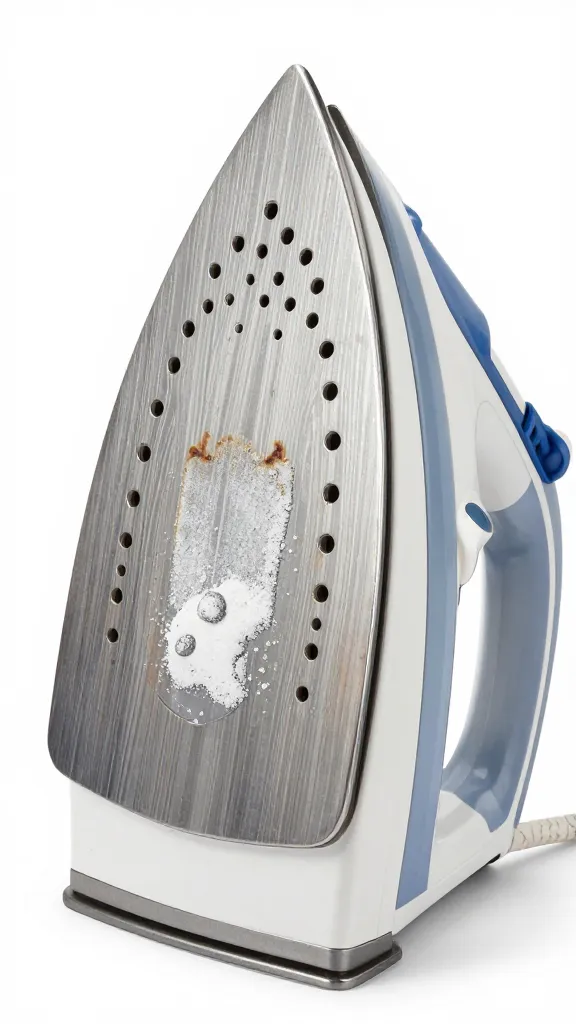
Different coatings need different TLC. Don’t treat ceramic like stainless—unless you enjoy scratches.
Nonstick or Ceramic Soleplates
- Use gentle cleaners only: vinegar wipe, mild dish soap, magic eraser.
- No abrasives, no razor blades, no oven cleaner. The coating matters!
Stainless Steel Soleplates
These tolerate a tiny bit more scrubbing, but still avoid steel wool. A baking soda paste or a drop of dish soap on a damp cloth works great.
Melted Plastic or Fusible Interfacing
Heat the iron to low. Rub a wooden craft stick or credit card edge over the goo—lift, don’t smear. Follow with a vinegar wipe or commercial iron cleaner. Work slowly. You’ll get it.
De-gunk the Water Tank and Prevent Scale
You can’t see inside easily, but buildup forms anyway. Keep it clean and your clothes stay clean.
- Empty the tank after every session. Don’t store water inside—ever.
- Once a month, run the vinegar steam flush if your manufacturer allows it.
- Use distilled or demineralized water if your tap water is hard. Your iron will live longer and spit less.
Self-Clean Button 101
If your iron has a self-clean function, use it quarterly:
- Fill to max line with distilled water.
- Heat fully, unplug, hold over a sink, press and hold self-clean.
- Shake gently as hot water and steam purge the vents.
- Let it cool, wipe the soleplate, then do a few steam bursts with fresh water.
Speed Clean for When You’re Late and the Shirt’s Already on the Board
We’ve all been there. Do this when you need a quick rescue:
- Warm the iron. Rub the soleplate with a damp cloth and a drop of dish soap. Wipe dry.
- Hit the plate with a magic eraser for 30 seconds.
- Run 5–6 steam bursts over the sink with distilled water.
- Test on an old cotton rag before touching your outfit. Always.
Fast, not perfect—but it saves the day.
Care Habits That Keep Your Iron Happy
Small habits beat big cleans. Future you will thank present you.
- Empty the tank after every use. No exceptions.
- Wipe the plate with a damp cloth once it cools. Takes 20 seconds.
- Use a pressing cloth over prints, decals, and delicate fabrics.
- Match heat settings to fabric. Too hot = burnt gunk, sad face.
- Store upright, cord loosely coiled. Don’t park it face-down. Ever.
FAQ
Can I use toothpaste to clean my iron?
You can, but I wouldn’t. Some toothpaste contains abrasives that scratch coatings. If you insist, pick a plain white, non-gel, non-whitening paste and use it very gently. Better options exist: baking soda paste or a magic eraser.
Why does my iron leave brown water on clothes?
That’s usually mineral sludge or rust from the tank and steam vents. Do a vinegar steam flush (if allowed), then rinse with distilled water. Switch to distilled water going forward and empty the tank after each use.
Is it okay to use oven cleaner on the soleplate?
Hard no. Oven cleaners are caustic and will strip coatings, pit metal, and leave residues you don’t want near clothes. Use dedicated iron cleaner or gentle DIY methods instead.
How often should I clean an iron?
Light wipe after each use, deep clean every 1–3 months depending on how much you steam and your water hardness. If the plate drags or the steam sputters, that’s your cue to clean sooner.
What if my iron smells like vinegar after cleaning?
Totally normal right after a flush. Run a full tank of distilled water through a steam cycle and wipe the plate. The smell disappears fast, and your clothes won’t absorb it.
Can I fix scratched soleplates?
You can’t fully un-scratch them, sadly. You can minimize drag with a commercial soleplate polish or a gentle cleaner. Going forward, skip abrasives and use a pressing cloth with tricky materials.
Conclusion
Cleaning an iron isn’t glamorous, but it’s quick, cheap, and wildly satisfying. Attack the plate, flush the vents, and keep water quality in check. Do that, and your iron will glide like new, your clothes will thank you, and you’ll retire the phrase “Why is there a mark on my shirt?” IMO, that’s a solid life upgrade.