Your jewelry doesn’t need a spa day—it needs five minutes, a soft brush, and the tiniest bit of patience. Stop letting lotion, sunscreen, and kitchen grime mute your sparkle. You can clean most pieces at home safely, quickly, and for almost no money. Ready to turn “meh” into “whoa, is that new?”
Know Your Materials Before You Scrub
You wouldn’t wash a cashmere sweater like gym socks, right? Same rules here. Different stones and metals need different care, and a wrong move can scratch, cloud, or straight-up wreck your piece. FYI: the enemy list includes bleach, toothpaste, baking soda on soft stones, and ultrasonic cleaners used blindly.
- Gold (yellow/white/rose): Usually safe with mild dish soap and warm water.
- Platinum: Tough and low-maintenance—cleans up like gold.
- Sterling silver: Tarnishes easily; use silver polish or a specific silver cloth.
- Diamonds, sapphires, rubies: Hard stones—handle a gentle soak and brush well.
- Emeralds, opals, pearls, turquoise, amber: Porous/soft—avoid harsh cleaners, ammonia, and ultrasonics.
Quick test for unknowns
If you don’t know what you’re holding, play it safe. Stick to lukewarm water, a drop of mild soap, and a soft cloth. When in doubt, clean around the stone setting only and avoid soaking.
The Simple At-Home Cleaning Method (That Actually Works)
This covers most gold, platinum, diamonds, and sapphires. It’s the little black dress of jewelry cleaning—classic and reliable.
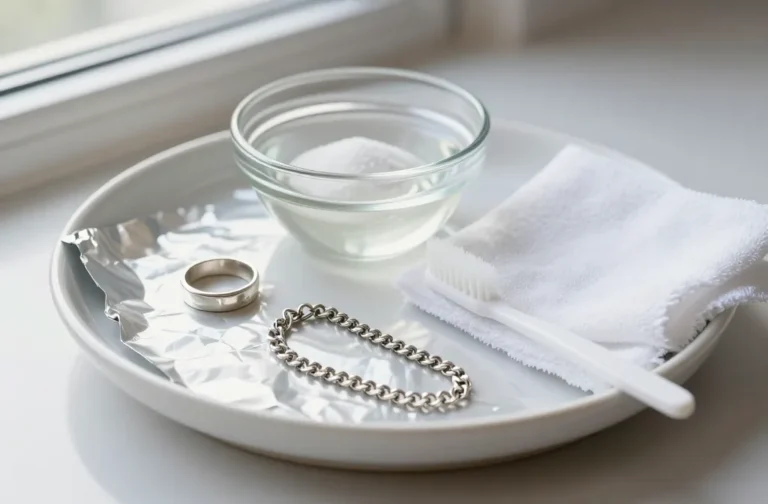
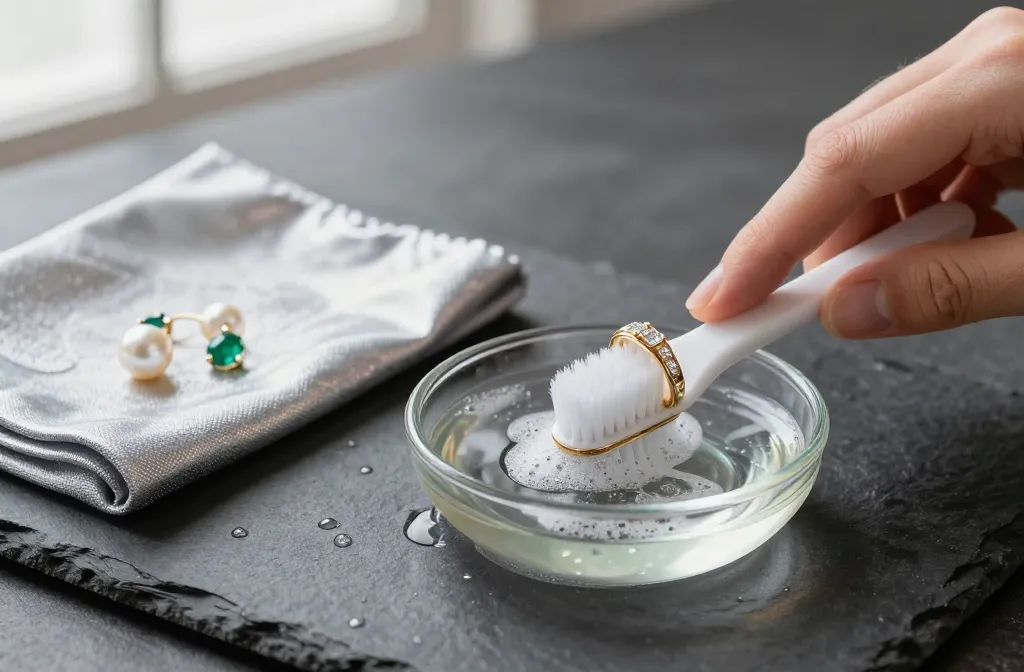
- Mix a bath: Lukewarm water + 1-2 drops of mild dish soap in a small bowl. Not hot—heat can crack some stones and loosen glue.
- Soak: Drop the piece in for 10-15 minutes. Let the suds lift lotion and everyday gunk.
- Brush: Use a soft baby toothbrush and go under the settings, not just the top. That’s where grime hides and kills sparkle.
- Rinse: Use a mesh strainer so you don’t donate your earring to the drain gods. Rinse with cool water.
- Dry and buff: Pat dry with a lint-free cloth. Buff gently for shine.
Pro tips you’ll thank me for
- Brush direction: Brush from multiple angles—front, back, underside—to reach behind prongs.
- Frequency: Clean weekly if you wear it daily. Monthly if occasional.
- Avoid abrasive cloths: Paper towels can scratch metal. Microfiber = your friend.
Special Care: Soft and Porous Stones
This category includes emeralds, opals, pearls, turquoise, onyx, amber, and anything “vintage and mysterious.” They hate harsh anything.
- Pearls: Wipe with a slightly damp soft cloth after each wear. If needed, quick dip in soapy water on a cloth, then dry flat. Never soak a pearl strand—water weakens the silk thread.
- Emeralds: Many are oil-treated. Use a lightly damp cloth and a soft brush around the setting only. No ammonia or ultrasonic.
- Opals and turquoise: Avoid soaking and chemicals. Gentle wipe, minimal moisture.
- Antique pieces: Clean very gently and keep moisture away from old glue or foils behind stones.
What to absolutely avoid
- Ultrasonic cleaners for soft/treated stones (they can crack or shake stones loose).
- Ammonia and vinegar on anything soft or porous.
- Toothpaste and baking soda (scratch city, IMO).
Silver: Stop the Tarnish Spiral
Sterling silver loves to tarnish—rude, but normal. You can fix it fast.
- Light tarnish: Use a dedicated silver polishing cloth. Buff until bright. Easy win.
- Moderate tarnish: Use a silver cream or polish. Apply with a soft cloth, follow the product directions, rinse, and dry.
- Textured pieces: A soft brush helps get polish out of crevices. Don’t leave residue—it looks dull.
What about DIY aluminum foil tricks?
They work on simple, solid silver pieces (no stones). But they can strip intentional oxidization and irritate some finishes. If you love the piece, stick to proper polish.
When You Can Use Ammonia or Alcohol
Used carefully, these can supercharge cleaning. Used recklessly, they can ruin stuff. Choose wisely.
- Ammonia (diluted): For diamonds and gold only. Mix 1 part clear, non-sudsy ammonia to 6 parts water. Brief soak (1-2 minutes), gentle brush, rinse like crazy. Not for soft stones or antique pieces.
- Isopropyl alcohol (70% or 91%): Great for disinfecting solid gold and hard gemstones. Quick dip or wipe. Avoid pearls, opals, and porous stones.
Ultrasonic cleaners: yes or no?
Yes for diamonds, sapphires, rubies set in sturdy metal—if you’ve checked prongs and nothing feels loose. No for anything glued, treated, porous, or delicate. And don’t toss in Grandma’s ring and hope for the best. FYI: they can kick a loose stone right out.
Make It Shine Like New: Finishing Touches
Want that “I just left the jeweler” look? Small habits make a big difference.
- Final buff: Use a clean, dry microfiber or jewelry polishing cloth to bring back that mirror finish.
- Check settings: Look for snagging prongs, gaps, or wiggly stones. If it moves, stop wearing it and take it in.
- Chain kinks: Warm soapy water, gentle fingers, and patience. No pulling—use two straight pins to tease knots apart.
Travel and daily habits
- Put jewelry on last—after lotions, perfume, and hairspray.
- Take rings off for gym, gardening, and cleaning. Bleach and bars can ruin finishes and settings.
- Store pieces separately in soft pouches to avoid scratches.
Storage and Anti-Tarnish Hacks
A little organization keeps you from cleaning the same necklace every other week, which no one has time for.
- Anti-tarnish strips: Toss into your jewelry box; replace every few months.
- Zip bags for silver: Air = tarnish. Squeeze the air out and seal. Not glam, but effective.
- Pearl strands: Lay flat and keep away from dryness and heat. Restring every 1-2 years if worn often.
FAQ
How often should I clean my engagement ring?
Weekly at home if you wear it daily, because hand creams and soap film build up fast. Do a professional check and clean every 6-12 months to make sure prongs stay tight. Think of it like a quick car wash with the occasional tune-up.
Can I use toothpaste to clean jewelry?
Please no. Toothpaste contains abrasives that scratch metals and stones. It’s great for enamel, terrible for emeralds—IMO it’s a hard pass.
Is baking soda safe for silver?
Baking soda can scratch softer finishes and stones, and it can be messy. A proper silver polish or cloth gives better results with less risk. If you must, use it gently on plain silver only—no stones, no plating.
What’s the safest all-around cleaner?
Mild dish soap in lukewarm water plus a soft brush. It covers most metals and many harder stones without drama. Avoid soaking soft stones or anything you can’t identify.
Why does my silver tarnish even when I don’t wear it?
Air and sulfur cause tarnish. Skin oils slow it a bit, but storage matters more. Use anti-tarnish strips, zip bags, and keep pieces clean and dry before storing.
Can I shower with my jewelry on?
You can, but I wouldn’t. Soap film dulls stones, shampoos can leave residue, and hot water can loosen glue in some pieces. Take it off, and your future self will thank you.
Conclusion
Cleaning jewelry shouldn’t feel like defusing a bomb. Know your materials, keep it gentle, and avoid the big no-nos—bleach, abrasives, and guesswork. With a tiny routine and the right tools, your pieces will stay bright, secure, and ready for compliments. Go give that ring a five-minute spa—no cucumber water required.