You know that slightly sticky film on your cabinet doors that laughs at your “quick wipe”? Yeah, that’s not going anywhere with a damp paper towel. The good news: you don’t need fancy products or three hours to get your kitchen cabinets looking fresh again. You just need the right approach, a few tools, and a little strategy. Let’s get in, get it done, and get back to snacks.
Know Your Cabinet Material (So You Don’t Wreck It)
Before you start spraying stuff around like a TikTok cleaning hack, figure out what you’re dealing with. Different finishes react differently, and IMO that’s the difference between a glow-up and a touch-up you’ll regret.
- Painted wood: Gentle cleaners only. Too strong, and you’ll dull or strip the paint.
- Stained/sealed wood: Mild cleaners are fine, but avoid harsh degreasers. Protect that finish.
- Laminate or thermofoil: Easy to clean, but no abrasives. They scratch faster than you think.
- Glass inserts: Glass cleaner works, but don’t let it drip onto wood—wipe as you go.
Quick Test Patch
Always test your cleaner on a hidden spot inside a door. Wait a minute. If the finish looks cloudy or sticky, stop and switch.
Gather Your Cleaning Arsenal
You don’t need a whole aisle of products. Keep it simple and effective.
- Microfiber cloths: At least three—one for cleaning, one for rinsing, one for drying.
- Soft brush or old toothbrush: For corners, crevices, and ornate trim.
- Mild dish soap: Grease-cutting and safe on most finishes.
- White vinegar: Great for deodorizing and cutting light grease on laminate/glass.
- Baking soda: Gentle scouring power for stubborn spots.
- Warm water: Not blazing hot—just warm enough to help dissolve gunk.
- Optional degreaser: Use a kitchen-safe, finish-friendly one for heavy buildup. Read labels.
The Step-by-Step Clean (Fast, Effective, No Drama)
Let’s keep this tidy and satisfying. You’ll work top to bottom so gravity doesn’t troll you.
- Empty the most-used cabinets first. Pantry, plates, mugs—start where grime collects more. Set items on a clean towel.
- Dust and dry-wipe. Use a dry microfiber to remove crumbs, dust, and cobwebs. Sounds boring, saves you time.
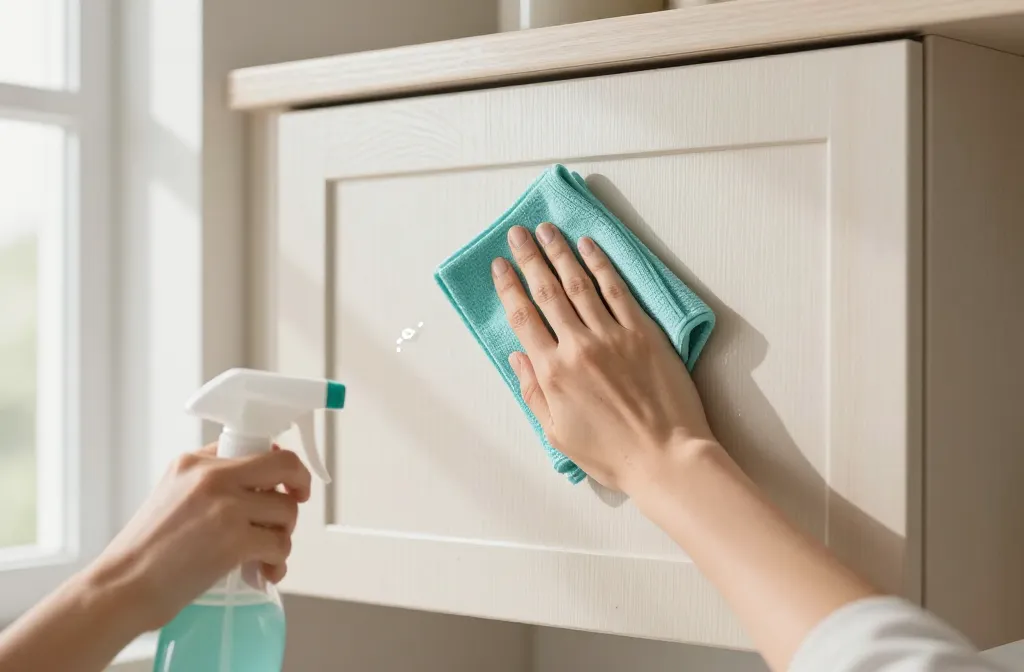
- Mix your cleaner. For general cleaning, use a few drops of dish soap in a bowl of warm water. For laminate or extra grease, add a splash of vinegar. Don’t soak—damp cloth only.
- Wipe exterior doors and drawer fronts. Dampen the cloth, wring it well, and wipe with the grain. Rinse and re-wet the cloth often. Follow with a clean damp cloth to remove residue.
- Detail the handles, edges, and trim. Use a toothbrush with the same solution. That’s where sticky handprints hide. You’re welcome.
- Clean inside cabinets. Wipe shelves and side walls. Catch crumbs with a handheld vac if you have one. Dry thoroughly.
- Dry everything. Finish with a dry microfiber. Moisture + wood = nope.
Dealing With Stubborn Grease
Sometimes dish soap needs a sidekick. Try one of these:
- Baking soda paste: Mix baking soda with a little water, dab on grease spots, wait 5 minutes, and wipe gently. Rinse and dry.
- Targeted degreaser: Spray onto a cloth (not the cabinet), then wipe. Rinse immediately. Avoid daily use.
Special Finishes Need Special Love
Not all cabinets wear the same armor. Treat them right and they’ll keep looking expensive.
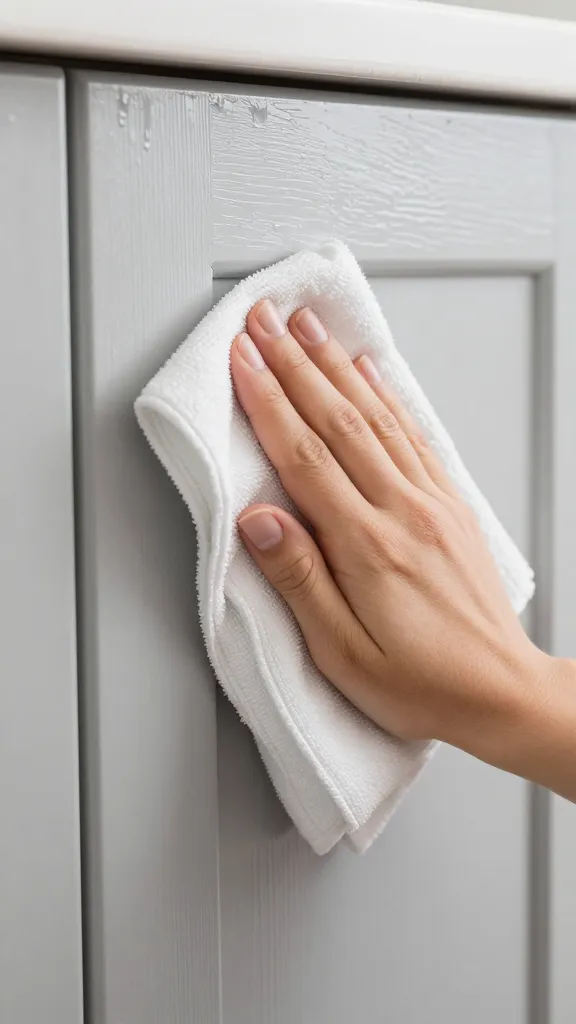
Painted Cabinets
– Use a soapy water mix or a vinegar-water solution (1:4).
– No abrasives, ever. They’ll leave shiny burnish marks or remove paint.
– If paint looks chalky after cleaning, apply a tiny bit of diluted dish soap again and rinse fully—residue can cause dullness.
Stained or Natural Wood
– Clean with mild soap and water. Wipe with the grain.
– Dry immediately and completely.
– Optionally condition every 6–12 months with a cabinet-safe wood polish. Don’t overdo it or you’ll create a dust magnet.
Laminate and Thermofoil
– These clean up easily with dish soap and vinegar-water.
– No abrasive pads. They’ll scuff and stay scuffed.
– Watch heat exposure near ovens or kettles—peeling happens when glue gets sad.
Hardware, Hinges, and Those Annoying Nooks
Handles and pulls collect hand oils and cooking residue. They deserve a little attention.
- Remove hardware once or twice a year for a deeper clean. Soak in warm soapy water, scrub gently, dry thoroughly.
- Polish metal if needed, but check the finish type first (brass, nickel, bronze). Mild is the move.
- Hinges collect grime too. Wipe with a damp cloth. If they squeak, add the tiniest drop of food-safe lubricant on the pin. Wipe off excess.
- Gaskets and bumpers (if any) need a quick wipe to remove stickiness and black marks.
Set Up Easy Maintenance (Future You Will Applaud)
Want to avoid another deep clean for a while? Build a low-effort routine.
- Weekly: Quick wipe of high-touch spots—handles, around handles, corners near the stove.
- After cooking splattery meals: Wipe nearby doors while the residue is fresh. Fresh grease surrenders faster.
- Monthly: Do a door-and-drawer front wipe-down. 10–15 minutes, tops.
- Quarterly: Empty one section, clean shelves, swap damaged shelf liners if you use them.
- Use vent fans. Grease in the air lands on cabinets. Vent = fewer sticky surprises, FYI.
Smart Products That Actually Help
– Shelf liners: Catch spills and crumbs, wipe or replace easily.
– Under-cabinet lighting with diffusers: Less heat on finishes, better visibility.
– Small bins for oils and sauces: Corral drips so they don’t weld to your shelves.
Spot Fixes and Stain Triage
Life happens. Coffee splashes, tomato sauce jumps, little artists with greasy fingers go wild. Here’s how to handle the common stuff.
- Grease halos around handles: Dish soap first. If still shiny, baking soda paste, gentle rub, rinse, dry.
- Food dye or sauce stains (painted/laminate): Try a magic eraser very lightly. Test first. Use soft pressure or you’ll dull the finish.
- Water rings inside cabinets: Dry, then place a bowl of baking soda or coffee grounds overnight to absorb odor. For wood discoloration, you may need refinishing—sorry.
- Adhesive residue from labels: A drop of cooking oil on a cloth loosens it. Wipe clean with soapy water after.
FAQ
Can I use vinegar on all cabinet types?
You can use diluted vinegar on laminate and glass with no problem. On painted or sealed wood, keep it mild and spot-test first. High acidity can dull certain finishes over time, so IMO dish soap and water works best for regular cleaning on wood.
How often should I deep clean my cabinets?
Do a full clean every 3–6 months depending on how much you cook. If you fry often or love simmering sauces, lean closer to 3 months. A quick monthly wipe-down of doors keeps deep cleans way faster.
Are commercial degreasers safe for wood cabinets?
Some are, some aren’t. Read the label and always spray onto your cloth, not directly onto the wood. Rinse with a damp cloth and dry immediately. When in doubt, use dish soap first—it handles more grease than you’d expect.
What’s the safest way to clean intricate trim?
Use a soft brush or toothbrush with soapy water and a light touch. Work in the grooves, then wipe with a damp cloth and dry. Avoid scrubbing pads—they flatten detail and scratch finishes.
Do I need to remove cabinet doors to clean them?
Nope. You can clean them perfectly well in place. Removing doors only makes sense if you’re doing repairs, repainting, or a full refinish. Otherwise, keep it simple and keep them on.
Why do my cabinets still feel tacky after cleaning?
Residue. Either the cleaner wasn’t rinsed off or the grease layer needs a second round. Wipe again with a clean damp cloth, then dry thoroughly. If it still feels sticky, try a mild degreaser on a cloth and rinse right away.
Conclusion
Clean cabinets don’t need to be a whole weekend project. With the right combo of mild soap, warm water, and a little technique, you can kick grease to the curb and protect your finish. Keep a simple routine, target the high-touch spots, and, FYI, don’t skip the drying step. Your kitchen will look sharper, you’ll feel smug every time you reach for a mug, and IMO that’s a win.