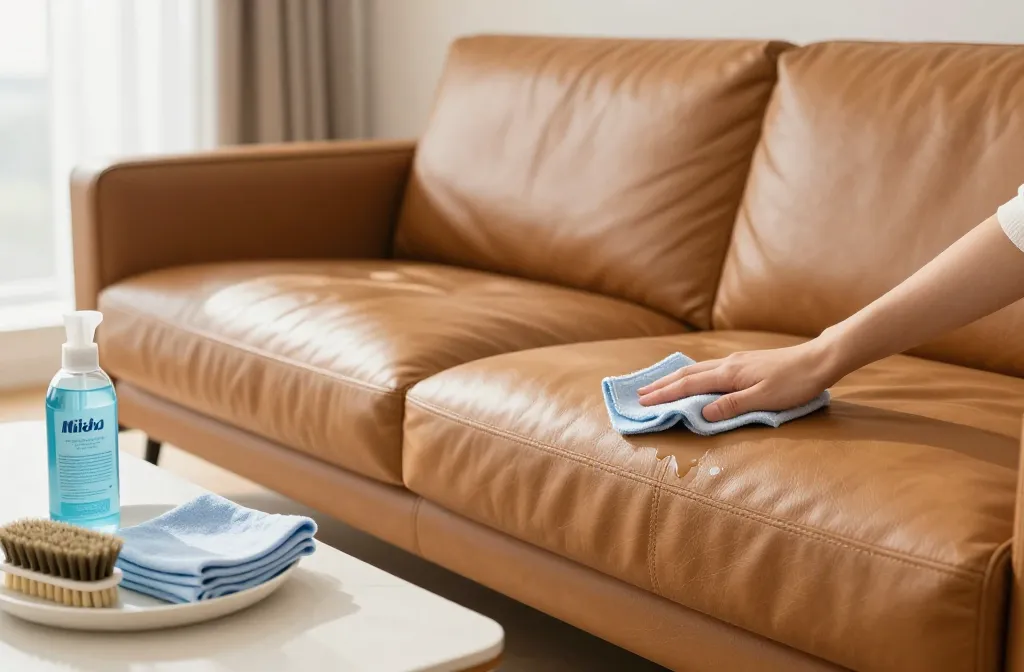
Leather couches look fantastic… until life happens. One minute it’s showroom chic, the next it’s snack crumbs, mystery smudges, and that ominous water ring from someone ignoring coasters. Good news: you can clean leather without stressing or wrecking it. Grab a few basics, follow a simple routine, and you’ll keep your couch supple, shiny, and scandal-free.
Know Your Leather: The 30-Second Check That Saves You Headaches
Before you touch a bottle of cleaner, figure out what leather you’ve got. Not all leather plays nice with water or soap.
- Protected/finished leather (pigmented): Has a clear topcoat; feels smooth and even. Most common and most forgiving.
- Aniline leather: Soft, luxurious, natural look, no protective topcoat. Stains easily. Handle with care.
- Nubuck/suede: Velvety texture. Do not use regular leather cleaners or water. Different playbook entirely.
How to check: Look for the manufacturer’s tag under a cushion or on the frame. If it’s missing, do a small water drop test on an inconspicuous spot. If the water beads up, you likely have protected leather. If it soaks in, treat it like aniline and keep it super gentle.
Gather Your Tools (Nothing Fancy, Promise)
You don’t need a cleaning lab. Just a few mild items and a bit of patience.
- Soft microfiber cloths (at least 3-4)
- Vacuum with brush attachment
- Distilled water (tap water can leave mineral spots)
- Mild, pH-balanced soap (think baby soap or a tiny drop of Castile)
- Leather cleaner and conditioner that matches your leather type
- Soft brush (optional, for creases and stitching)
FYI: Skip vinegar, bleach, all-purpose cleaners, baby wipes, and anything labeled “degreaser.” Those strip oils and invite cracks and sadness.
Do This First: The Quick Dry Clean
You’ll remove a shocking amount of grime before you ever touch water. This step preserves the leather and keeps dirt from turning into a muddy mess later.
- Vacuum gently with the brush attachment. Hit seams, creases, and under cushions.
- Wipe dry with a clean microfiber cloth to lift dust and body oils.
- Spot-check any sticky areas so you know where to focus in the next step.
Pro tip: Deal with crumbs and grit
Use a soft brush or a dry paintbrush to get into stitching and tight spots. Dirt hides there and slowly abrades leather. Not dramatic, just… slow ruin. Let’s not.
The Gentle Clean: Soap, Water, and Minimal Drama
Now you clean the surface without soaking it. Think “damp,” not “wet.”
- Mix a mild solution: 1-2 drops of mild soap in a small bowl of distilled water. You want barely sudsy, not bubbly bath time.
- Dampen a cloth and wring it within an inch of its life. No drips.
- Wipe in sections: Work top to bottom, panel by panel. Circular motions work, but don’t scrub like you’re polishing a car bumper.
- Rinse cloth often and refresh the solution if it looks dirty.
- Immediately dry each section with a clean, dry cloth.
Important: Keep moisture minimal, especially on aniline leather. If in doubt, lighter is safer.
What about store-bought leather cleaner?
Totally fine—often better. Just match it to your leather type, patch-test on a hidden spot, and follow the label. IMO, a good leather cleaner beats DIY soap if you’re unsure.
Stain Situations: Handle the Mess Like a Pro
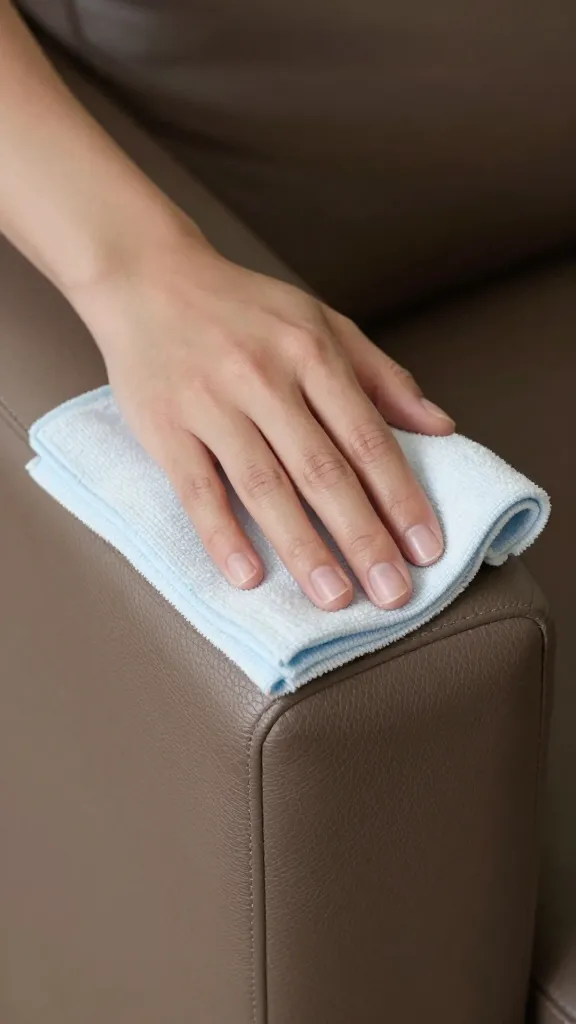
Different stains, different moves. Skip the panic; go targeted instead.
- Water rings: Lightly dampen the whole panel and dry evenly. Sounds weird, but even moisture can blend the edge.
- Grease/oil: Blot immediately with a dry cloth. Sprinkle a tiny bit of cornstarch or talc, leave 2-3 hours, then brush off gently. Repeat if needed. Do not add water.
- Ink: Use a leather ink remover stick or a cotton swab with isopropyl alcohol 70%—very sparingly. Dab, don’t rub. Patch-test first. If it’s old or large, call a pro.
- Dye transfer (jeans): Use a leather cleaner made for dye transfer. These stains dig in fast, so treat sooner rather than later.
- Food and sticky spots: Mild soap solution, gentle wipe, immediate dry. Don’t mash it into the grain.
When to stop and phone a friend
If the stain spreads, the color lifts, or the leather darkens in patches, pause. Professional cleaners exist for a reason. Cheaper than a new couch, IMO.
Conditioning: The Secret to a Soft, Non-Cracky Couch
Leather dries out just like skin. Clean, then condition. Not the other way around.
- Choose the right conditioner for your leather. Avoid anything with heavy waxes or silicone unless the manufacturer recommends it.
- Apply thinly with a soft cloth in small sections. More product does not mean more moisture—just more residue.
- Let it absorb for 30-60 minutes, then buff lightly with a clean cloth.
Frequency: Condition every 3-6 months for protected leather, and every 2-3 months for aniline, depending on climate. Dry air = more frequent.
Do you need “protector” spray?
If your couch sees kids, pets, or denim daily, yes. A leather protector helps block dye transfer and light stains. Just patch-test and reapply as directed.
Daily and Weekly Habits That Keep It Looking New
You don’t need to baby your couch, but a little routine helps a lot.
- Weekly: Quick vacuum and dry wipe. Two minutes, tops.
- Monthly: Light clean with a damp cloth, no soap.
- Quarterly: Full clean and condition.
- Spills: Blot immediately. Liquids and leather don’t vibe.
Placement and care matters
– Keep it out of direct sun to prevent fading and drying.
– Maintain humidity around 40-55% if your air runs dry in winter.
– Rotate cushions and switch “favorite spots” to even out wear. Your corner butt groove will understand.
Common Mistakes You Can Skip (Please and Thank You)
Let’s save you from accidental couch crimes.
- Soaking the leather: Water seeps in, weakens fibers, and leaves blotches.
- Using harsh cleaners: If it strips oils from your hands, it’ll strip your couch.
- Skipping patch tests: Five minutes to test beats a permanent dark spot.
- Over-conditioning: Too much product attracts dirt and makes it sticky.
- Ignoring body oils: Headrests and armrests collect oils. Wipe them more often.
FAQ
Can I use dish soap on my leather couch?
Use a tiny drop of very mild, pH-balanced soap only, and dilute it well. Heavy-duty dish detergents strip oils and cause dryness and cracking. When in doubt, go with a leather-specific cleaner.
What if my leather feels sticky after cleaning?
You used too much product or didn’t buff it off. Wipe with a clean, slightly damp cloth, then dry and buff again. Next time, apply less cleaner or conditioner.
How do I handle pet scratches?
For light surface scuffs, massage gently with a clean finger or a tiny bit of conditioner to redistribute oils. For deeper scratches, use a color-matched leather balm. If you see fibers or tears, call a pro.
Is olive oil a good leather conditioner?
Nope. It can go rancid, attract dirt, and darken leather unevenly. Use a dedicated leather conditioner formulated for upholstery.
Can I steam clean leather?
Hard no. Steam forces moisture and heat into the leather, which leads to warping, discoloration, and damage. Keep it low-moisture and low-drama.
How do I fix a faded patch?
Cleaning and conditioning help a little, but true color loss usually needs a leather recoloring kit or professional refinishing. DIY touch-up works in small areas if you match the color exactly.
Wrap-Up: Clean, Condition, Chill
You don’t need to overthink leather care. Keep it dust-free, clean gently with minimal moisture, and condition on schedule. Treat stains fast, avoid harsh chemicals, and patch-test everything. Do that, and your couch stays gorgeous, comfy, and ready for movie night… with coasters, obviously. FYI.