Your dishwasher works hard, so give it a little spa day. If your “clean” dishes come out with mystery grit, cloudy glasses, or a faint eau de swamp, your machine’s begging for attention. The good news? You can fix most of it with stuff you already have and about 30–45 minutes of light effort. Let’s roll up our sleeves and make that dishwasher sparkle again.
Why Your Dishwasher Gets Gross (And What That Means)
Food bits, grease, soap scum, and hard water minerals build up over time. They clog spray arms, gunk up filters, and leave residue on racks and seals. Then your dishwasher starts working harder and cleaning worse. Not great.
You’ll know it needs a deep clean if you see:
- Smells when you open the door
- Cloudy film on glassware
- Grit left on plates
- Spray arms with plugged holes
FYI, even if everything looks fine, you should still clean it monthly. It’s like flossing. Boring, but it saves you from expensive drama later.
Grab Your Cleaning Kit
You don’t need fancy products. Your kitchen stash works great.
- White vinegar (the cleaning MVP)
- Baking soda
- Dish soap (a few drops only)
- Soft brush or old toothbrush
- Microfiber cloths
- Toothpick or skewer (for spray arm holes)
- Optional: Dishwasher cleaner tablet, citric acid for hard water stains
IMO, start simple. If vinegar and baking soda don’t cut it, bring in the specialty products.
Step-by-Step Deep Clean (30–45 Minutes)
This routine fixes most issues. Do it monthly if you use the dishwasher daily, or every 2–3 months for lighter use.
- Empty the dishwasher completely. Yes, including the utensil basket and bottom rack. You want access to the filter and spray arms.
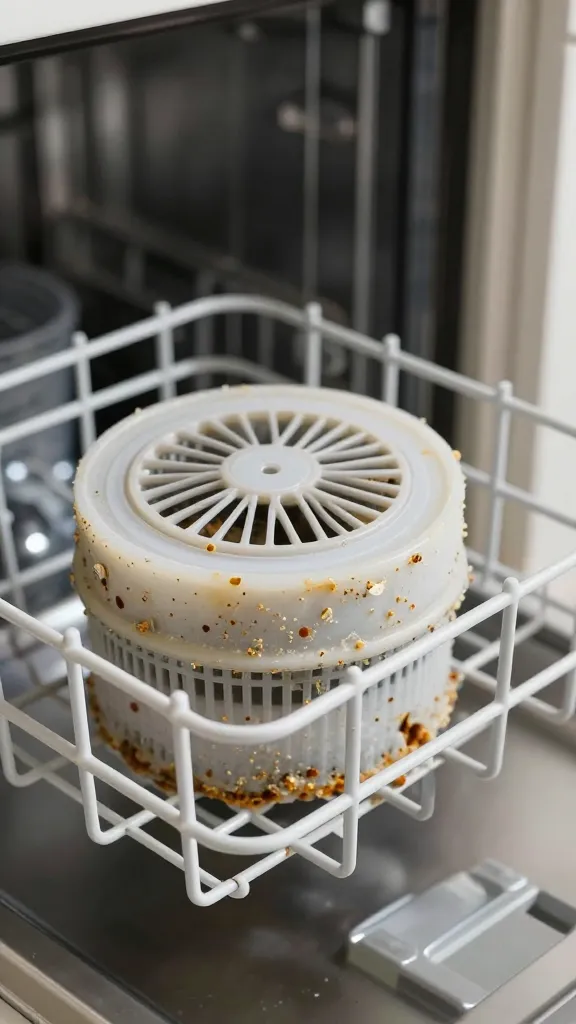
- Clean the filter. Unscrew or unclip the filter from the bottom (check your manual if it’s hiding). Rinse it under warm water and scrub gently with a brush. If it’s slimy, soak it in hot soapy water for 10 minutes. Reinstall it snugly—loose filters let debris recirculate.
- Unclog the spray arms. Pop them off if they’re removable. Rinse them and clear the spray holes using a toothpick. Don’t enlarge the holes—be gentle. If buildup looks chalky, soak the arms in warm vinegar for 15 minutes.
- Wipe the door gasket and edges. That gray rubber seal traps crumbs and funk. Use a damp cloth with a drop of dish soap, then wipe again with plain water. Clean the door edges and the bottom lip too—sneaky grime loves it there.
- De-gunk the racks and utensil holder. Quick scrub in the sink if they’re grimy. Check for any cracked rack tines—those cause rust and chips on dishes. You can cap them with tine covers if needed.
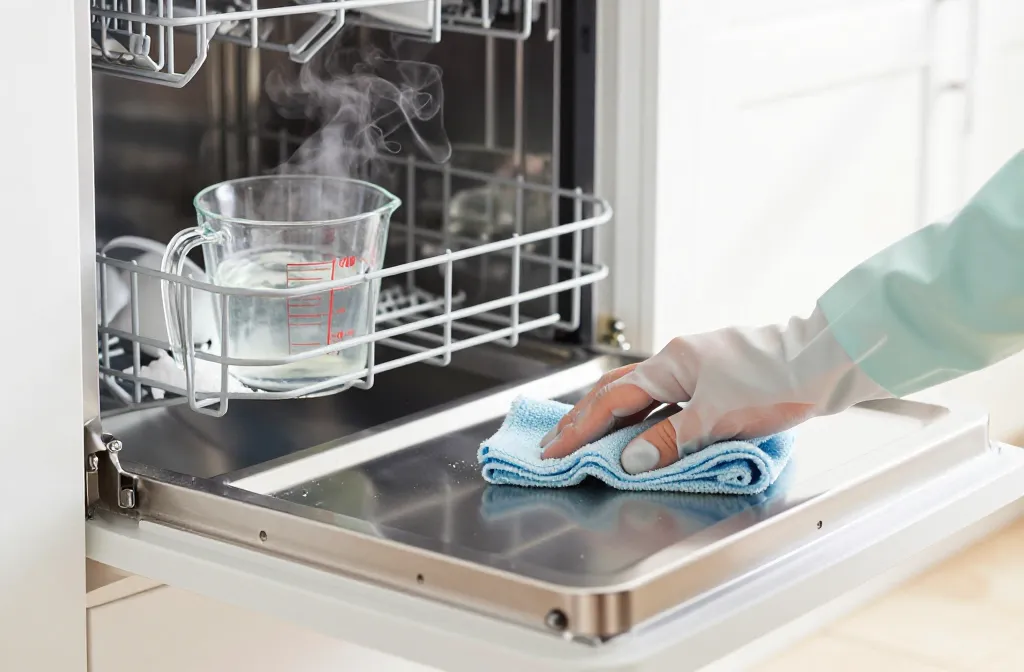
- Run a hot vinegar cycle. Put a dishwasher-safe cup or bowl filled with 1–2 cups of white vinegar on the top rack. Run the hottest, longest cycle. Vinegar dissolves grease and mineral film. Pro tip: Skip the dry cycle to save energy; you don’t need it here.
- Freshen with baking soda. After the vinegar cycle finishes, sprinkle 1/2 cup of baking soda across the bottom and run a short hot cycle. This deodorizes and brightens the interior.
Dealing with Stubborn Hard Water Stains
If your tub still looks cloudy or your glasses still haze up, run a cycle with a dishwasher cleaner or 3–4 tablespoons of citric acid in the detergent cup. It chews through mineral deposits that vinegar can’t handle.
Quick Weekly Touch-Up (5 Minutes)
You don’t need a full spa day every time. This mini-routine keeps things from getting gnarly:
- Wipe the gasket and door edges with a damp cloth.
- Lift out the filter and rinse it—takes one minute.
- Inspect the bottom for glass shards, olive pits, and errant pasta fossils.
Ten out of ten dishwashers recommend it. Okay, I made that up, but your nose will agree.
Load and Run It the Smart Way
You clean better when you use the machine the way it wants. Not the way your roommate wants.
- Don’t prewash dishes squeaky clean. Scrape big bits, but leave a little food residue. Modern detergents need some grime to activate. Yes, really.
- Face the spray. Bowls and cups face down; plates face center. Keep tall items from blocking the spray arms.
- Use rinse aid. It prevents spots and helps drying. Essential for hard water.
- Run hot. Use a high-temp or sanitize cycle occasionally. Heat melts grease and kills funk.
- Don’t smother the detergent. Close the detergent dispenser area; don’t block it with pans or cutting boards.
What Detergent Actually Matters?
– Pods: Convenient and consistent. Great for most homes.
– Powder: Adjustable and effective, but clumpy if humid.
– Gel: Easy to overuse; often weaker cleaning.
If your water’s hard, pair detergent with rinse aid and consider a water softener additive or citric-acid cleaner monthly.
Fix That Smell, Stat
Stinky dishwasher? Attack it from multiple angles.
- Clean the filter (the usual suspect).
- Scrub the gasket and the bottom lip of the door.
- Run vinegar + baking soda cycles as above.
- Check the drain hose under the sink. Make sure it loops upward (a “high loop”) to stop backflow from the sink.
- Leave the door cracked after cycles to let it dry out.
If it still smells, food might sit in the sump. Pull the bottom rack and look for trapped gunk around the filter housing. Gloves help. You’re welcome.
Little Habits That Keep It Clean
Small tweaks deliver big wins over time.
- Run hot water at the sink for 10–15 seconds before starting a cycle. The dishwasher starts with hot water right away.
- Don’t overload. Crowding blocks spray and causes residue.
- Use the right cycle. Quick washes work for lightly soiled dishes only. Heavier loads need normal or heavy cycles.
- Top up rinse aid monthly. It’s cheap magic.
- Check the spray arms every few weeks for clogs.
IMO, drying with the door cracked open after the cycle ends helps a lot with odor and spots—free and effective.
FAQ
Can I use bleach to clean my dishwasher?
Avoid bleach if your dishwasher has a stainless steel interior or rubber parts you care about. Bleach can damage both. Use vinegar or a dishwasher cleaner instead. If you must use bleach for serious mold in a plastic-tub machine, dilute heavily and rinse thoroughly—but I still vote no.
How often should I clean the filter?
Rinse it weekly if you run the dishwasher daily or if you notice smells. Otherwise, every 2–3 weeks works for most homes. A clean filter equals cleaner dishes and a happier pump.
Why are my glasses cloudy even after cleaning the machine?
Cloudiness usually comes from hard water or etching. Try rinse aid, a citric-acid cleaner cycle, and use less detergent. If the film wipes off with vinegar, it’s mineral buildup. If it doesn’t, it might be etching from too-strong detergent or overly hot cycles—dial it back.
Is vinegar safe for my dishwasher?
Yes, in moderation. 1–2 cups in a bowl on the top rack works great. Don’t pour vinegar straight into the detergent dispenser or let it sit on rubber parts for days. Run the cycle and you’re golden.
Do I need those dishwasher cleaner tablets?
They help with heavy mineral buildup and monthly maintenance, especially if you have hard water. Not mandatory if vinegar and baking soda keep things spotless. But if you want a set-it-and-forget-it routine, tablets make life easier.
My dishwasher still smells after cleaning. Now what?
Check the drain hose for a proper high loop, inspect the air gap (if you have one) for clogs, and clean the sump around the filter. Also, run a high-temp sanitize cycle with a cleaner. Persistent odors can also mean trapped debris in the pump area—time to consult your manual or a pro.
Conclusion
A clean dishwasher cleans better, smells better, and lasts longer. Give it a monthly deep clean, a quick weekly refresh, and load it like you mean it. With a little vinegar, some baking soda, and a touch of smug satisfaction, you’ll get sparkling dishes without the drama. Your future self—aka the one sipping from a crystal-clear glass—says thanks.