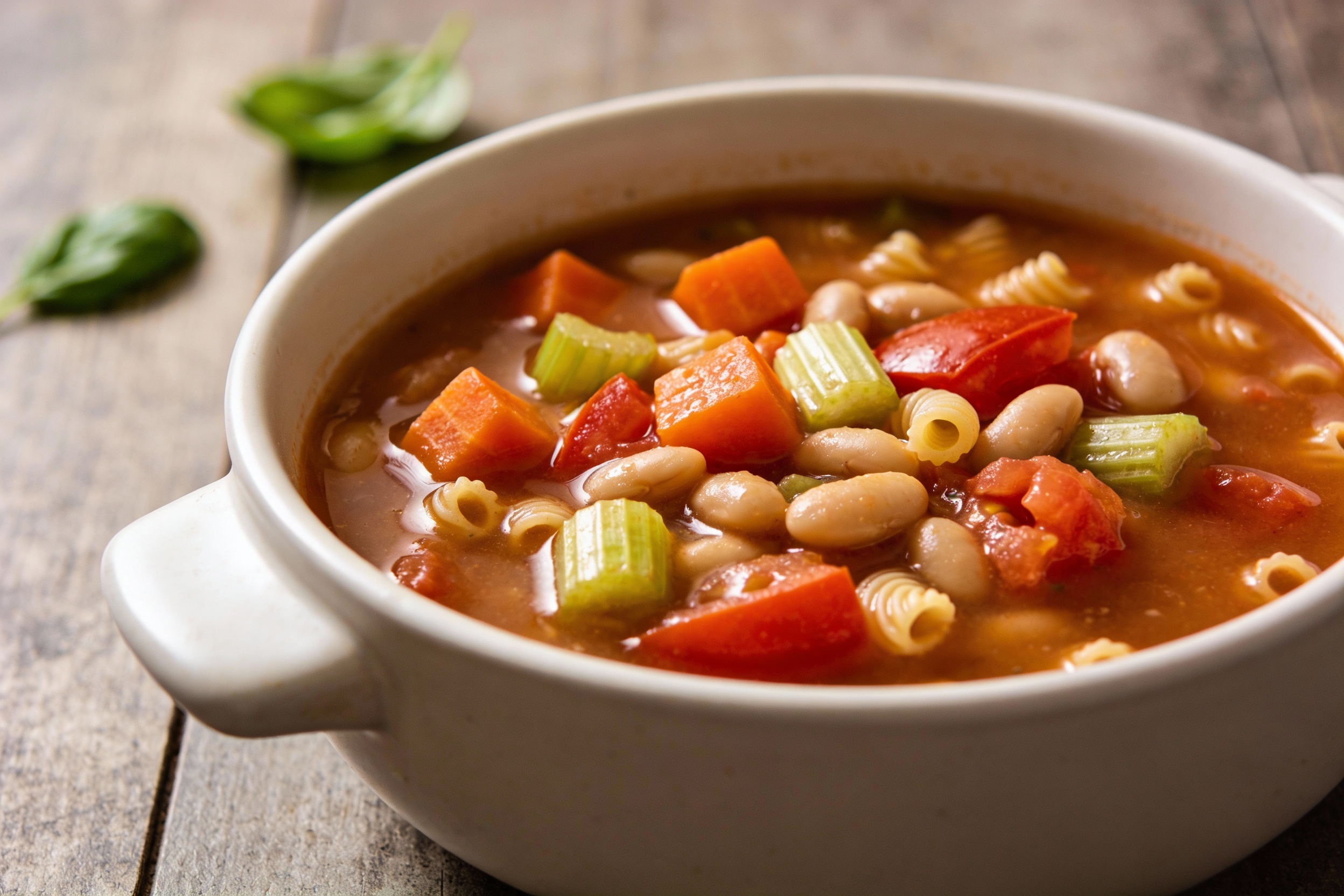
You want the real deal minestrone—Italian comfort in a bowl, but not the sad canned stuff that tastes like regret? Let’s fix that. This minestrone (or “ministroni” if your nonna typed fast) hits all the right notes: hearty, vegetal, a little rustic, and endlessly customizable. We’ll walk through the essentials, the swaps, and the tiny tricks that make it taste like you simmered it all day—even if you didn’t.
What Makes Minestrone, Well, Minestrone?
Minestrone isn’t a strict recipe; it’s a vibe. It’s a vegetable soup that got cozy with beans, pasta or rice, and a tomato base. Each region in Italy tweaks it based on what’s fresh and cheap. That’s the spirit here.
You want layers of flavor, not a vegetable free-for-all. So we start with soffritto, build a rich tomato broth, then add veg in waves. Finish with beans, pasta, and something bright. Boom—Italian grandma energy.
Ingredients: The Core + Smart Swaps
Use what you have, but aim for balance: savory base, bright tomato, hearty carbs, and leafy greens.
Core lineup:
- Olive oil (3 tbsp)
- Onion, carrot, celery—aka soffritto (1 cup each, finely chopped)
- Garlic (3-4 cloves, minced)
- Tomato paste (2 tbsp) for depth
- Crushed tomatoes (1 can, 14-28 oz depending on how tomatoey you like it)
- Vegetable or chicken stock (6 cups)
- Potato (1 medium, diced) or zucchini (1, chopped)—or both
- Green beans (1 cup, chopped)
- Kale or Swiss chard (2 cups, chopped) or spinach
- Cannellini or borlotti beans (1-2 cans, drained and rinsed)
- Short pasta (1 cup): ditalini, small shells, or elbows
- Bay leaf (1), Parmesan rind (optional but powerful)
- Salt, black pepper, and a pinch of red pepper flakes
- Fresh herbs: thyme or rosemary (1 tsp), and basil or parsley for finishing
Swaps and extras (choose your adventure):
- Rice or farro instead of pasta
- Leeks instead of onion for a sweeter base
- Butternut squash for a fall vibe
- Peas, cabbage, or fennel for extra texture
- Pancetta (diced, 3 oz) if you want smoky richness
Step-by-Step: From Soffritto to Slurpable
You’re building flavor in layers. Don’t rush the early steps. Your future self will thank you.
- Sweat the soffritto. Heat olive oil in a large pot over medium. Add onion, carrot, and celery with a pinch of salt. Cook 8-10 minutes until soft and sweet, not browned.
- Bloom the aromatics. Stir in garlic, tomato paste, and red pepper flakes. Cook 1-2 minutes until the paste darkens slightly and smells concentrated. That’s flavor money.
- Build the broth. Add crushed tomatoes, stock, bay leaf, herbs, and Parmesan rind if using. Bring to a gentle simmer.
- Add sturdy veg. Potatoes and green beans go in first. Simmer 10 minutes.
- Add tender veg + beans. Zucchini, kale/chard, and cannellini beans. Simmer another 10-12 minutes until tender.
- Cook the pasta right. Two options:
- In the soup: add the pasta and simmer until al dente (5-8 minutes). Great for same-day serving.
- Separately: cook pasta in salted water, then add to bowls and ladle soup over. Best for leftovers—prevents bloating noodles.
- Finish and adjust. Remove bay leaf and Parmesan rind. Add chopped fresh basil/parsley and a splash of good olive oil. Taste and adjust salt and pepper. A squeeze of lemon? Not traditional, but IMO delicious.
Timing Cheat Sheet
- Soffritto: 8-10 minutes
- Tomato paste bloom: 2 minutes
- Simmer with sturdy veg: 10 minutes
- Simmer with tender veg/beans: 10-12 minutes
- Pasta: 5-8 minutes
The Little Tricks That Make It Taste Authentic
Want restaurant-level flavor without a culinary degree? Here’s the secret sauce (not literally).
- Parmesan rind adds umami. Keep them in your freezer for soups like this. FYI, it’s a game-changer.
- Salt in stages. Veg release water and dilute flavor. Taste after each major step.
- Don’t overboil. Keep it at a friendly simmer so veggies stay tender, not mushy.
- Olive oil finish. A drizzle at the end rounds everything out.
- Acid balance. Tomatoes can get bossy. A tiny squeeze of lemon or splash of red wine vinegar wakes it up.
Herb Strategy
- Woodsy herbs (thyme, rosemary): add early.
- Delicate herbs (basil, parsley): add at the end.
- Skip dried basil—it goes flat. Use fresh or leave it out.
Make It Seasonal (Because Italians Do)
You can play this soup all year. Use what’s best right now and you’ll always win.
Spring
- Asparagus tips, peas, baby spinach, leeks
- Lighter broth, less tomato
Summer
- Zucchini, green beans, fresh tomatoes, basil
- Extra olive oil and herbs to finish
Fall
- Butternut squash, cabbage, carrots, kale
- Go heartier on tomato and add farro
Winter
- Potatoes, canned tomatoes, canned beans, chard
- Pancetta optional for warmth and depth
Serving Ideas That Level It Up
You made soup. Now make it a meal.
- Garnish like you mean it: Fresh basil or parsley, olive oil, black pepper, and grated Parm.
- Crusty bread: Preferably toasted and rubbed with garlic. The dunking potential is elite.
- Spicy swirl: Calabrian chili paste or chili oil if you like heat.
- Protein boost: Add shredded rotisserie chicken or sautéed Italian sausage if you need it more filling.
Storage, Leftovers, and Meal Prep
Minestrone might taste even better the next day. It thickens as it sits—no complaints there.
- Fridge: 4 days in an airtight container.
- Freezer: Up to 3 months. Freeze without the pasta for best texture.
- Reheat: Gently on the stove. Add a splash of stock or water if it’s too thick.
- Batch strategy: Cook pasta separately and add to individual bowls. Your future lunches will thank you, IMO.
FAQ
Can I make minestrone gluten-free?
Absolutely. Use gluten-free pasta, or swap in rice, quinoa, or even diced potatoes for the carb element. Double-check your stock and any add-ins like pancetta or store-bought beans (most are fine). Everything else stays the same.
What beans work best?
Cannellini and borlotti are classic for their creamy texture. Great Northern beans also work. If you only have chickpeas, they’ll add a nuttier bite. Use what you have, but rinse canned beans well to avoid murky flavors.
Do I need the Parmesan rind?
Need? No. Want? Yes. It adds subtle umami and body without making the soup cheesy. If you skip it, consider a splash of soy sauce or a pinch of miso for that savory depth. Not traditional, but effective, FYI.
How do I keep the veggies from turning mushy?
Stagger the cooking. Add hardy vegetables first (potatoes, carrots, green beans), then tender ones (zucchini, greens) later. Keep the soup at a simmer, not a rolling boil. Taste-test texture as you go.
Can I make this in a slow cooker?
Yes, with tweaks. Sauté the soffritto and tomato paste on the stove first, then transfer to the slow cooker with tomatoes, stock, sturdy veg, herbs, and rind. Cook on low 6-7 hours. Add zucchini, greens, and beans in the last hour. Cook pasta separately and add when serving.
What if my soup tastes flat?
Three quick fixes: more salt (likely), a squeeze of lemon or splash of vinegar, and a drizzle of good olive oil. Also check for enough tomato paste and herbs. Blandness rarely survives that combo.
Conclusion
Minestrone thrives on flexibility and good technique. Start with a solid base, layer in veggies smartly, and finish with herbs and a little brightness. Keep it seasonal, keep it fun, and don’t stress the rules—this soup forgives everything except under-salting. Grab a bowl, tear some bread, and call it dinner.