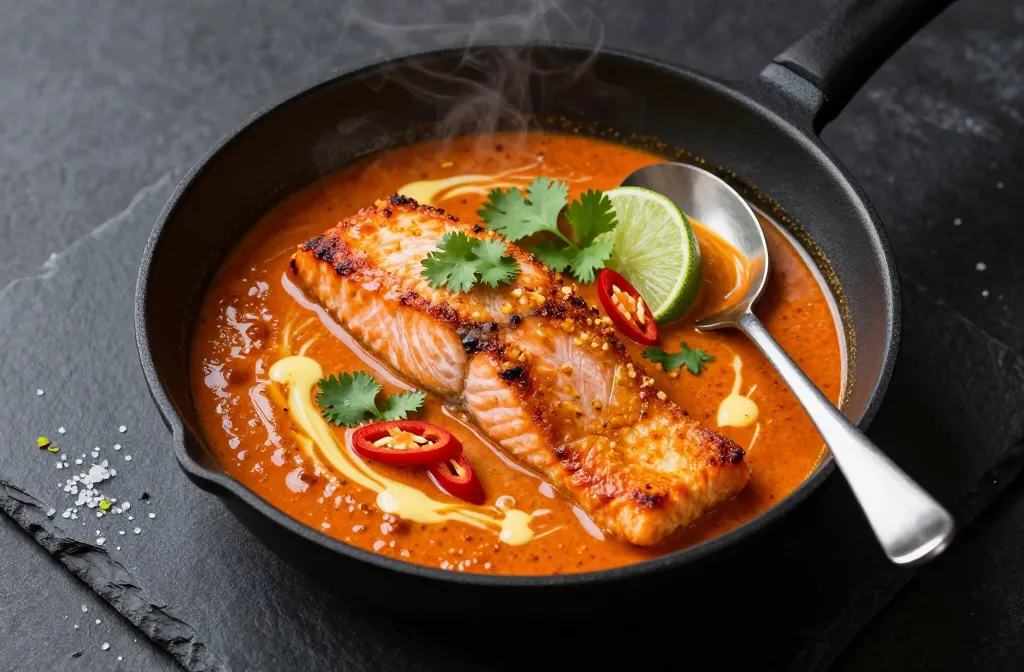
Salmon, coconut milk, and a scandalous amount of garlic butter walk into a pan. Ten minutes later, your kitchen smells like a tropical vacation with a side of steakhouse vibes. This one-pan coconut curry salmon tastes fancy but cooks fast, cleans up easy, and pairs with literally anything. Hungry? Good. Let’s make dinner that actually excites you.
Why This Dish Slaps
You get lush, curry-scented coconut sauce and crispy-edged, tender salmon—no juggling three pots like a culinary octopus. The garlic butter gives the sauce body and that “whoa, what did you put in this?” depth. You can riff with veggies, control the heat, and use pantry staples. Honestly, it’s the kind of weeknight hero that also impresses guests without stress.
The Flavor Blueprint
We’re aiming for rich, bright, and slightly spicy with a silky finish. Here’s how each component pulls its weight:
- Salmon: Fatty and forgiving. It loves high heat and drinks up sauce like a champ.
- Coconut milk: The base. Choose full-fat for a luxurious sauce. Light coconut milk works, but why deprive yourself?
- Red curry paste: Convenience meets complexity. It brings aromatics like lemongrass, galangal, and chiles in one spoonful.
- Garlic butter: Garlic + butter = flavor. It mellows the curry heat and adds rich, glossy magic.
- Lime and fish sauce: Bright and salty. They snap the sweetness into balance.
- Veggies: Bell peppers, snap peas, or spinach—whatever’s hanging out in your crisper.
Pick Your Curry Paste
Different brands hit differently. Some paste runs mild and sweet; others breathe fire. Start with 1 to 2 tablespoons, taste, and adjust. FYI, red paste usually plays nicest with salmon.
What You’ll Need
Keep it simple and flexible. Here’s a sane shopping list:
- 4 salmon fillets (skin-on or skin-off, your call)
- 2 tablespoons butter
- 4 cloves garlic, minced
- 1 can (13.5 oz) full-fat coconut milk
- 1–2 tablespoons red curry paste
- 1 tablespoon fish sauce (or soy sauce if you must)
- 1 tablespoon brown sugar or honey
- Juice of 1 lime, plus wedges
- 1 red bell pepper, thinly sliced
- 2 cups baby spinach or a handful of snap peas
- Fresh cilantro or basil for garnish
- Neutral oil, salt, black pepper, and chili flakes (optional)
Pan Choice: Nonstick vs. Stainless vs. Cast Iron
– Nonstick: Safest for salmon skin and easy cleanup.
– Stainless: Better browning, but use more oil and don’t panic if it sticks at first—it’ll release.
– Cast iron: Great sear, retains heat, but be gentle with acidic ingredients over long cooks.
Step-by-Step: One Pan, Zero Drama
Let’s get you from craving to eating in about 25 minutes.
- Season the salmon. Pat dry, then salt and pepper both sides. Let it sit while you heat the pan.
- Sear the salmon. Heat a slick of oil over medium-high. Place salmon presentation-side down. Cook 3–4 minutes until golden. Flip and cook 2–3 minutes more. Remove to a plate.
- Build the garlic butter. Drop the heat to medium. Add butter and garlic. Stir 30 seconds until fragrant. Don’t let it burn—burnt garlic is a mood killer.
- Bloom the curry paste. Stir the paste into the garlicky butter for 1 minute. It wakes up all the aromatics.
- Pour in coconut milk. Whisk until the paste dissolves. Add fish sauce and sugar. Simmer 2–3 minutes.
- Add veggies. Toss in the bell pepper. Simmer until slightly tender, 2–3 minutes. Stir in spinach to wilt.
- Finish and return salmon. Squeeze in lime juice. Nestle salmon into the sauce. Spoon sauce over the top and simmer 1–2 minutes until just cooked through.
- Taste and tweak. Need salt? Add a splash of fish sauce. Need brightness? More lime. Want more heat? Chili flakes or a dab more curry paste.
Cook Time Reality Check
Aim for medium salmon: opaque on the outside, a rosy center. If you like it fully cooked, give it another minute in the sauce. IMO, slightly under then finishing in the sauce keeps it juicy.
Make It Yours
The best part? You can freestyle without tanking dinner.
- Protein swaps: Cod, halibut, shrimp, or tofu work great. Adjust cooking times—shrimp cooks fast, tofu needs a good sear first.
- Veggie party: Broccoli, zucchini, mushrooms, or frozen peas. If it’s watery (zucchini), sauté it briefly before saucing so your curry doesn’t thin out.
- Dairy-free “butter”: Use a good vegan butter or just olive oil. You’ll lose a little richness, but it still slaps.
- No fish sauce? Soy sauce or tamari can fill in. Add a splash of rice vinegar for extra pop.
- Extra fragrant: Add grated ginger or a few torn kaffir lime leaves while simmering the sauce.
Level Up: Crispy Skin
Skin-on fans, listen up:
– Thoroughly dry the skin and salt it.
– Sear skin-side down 80% of the time over medium-high heat.
– Don’t touch it until the edges look cooked. Flip for a quick finish.
– Serve skin-side up so it stays crisp in the sauce. FYI, soggy skin is a tragedy we can all prevent.
What to Serve With It
You want something that soaks up the sauce like a sponge with ambition.
- Rice: Jasmine or basmati. Coconut rice if you feel cute—swap some water for coconut milk.
- Noodles: Rice noodles or even linguine. Toss with a little sauce first so they don’t clump.
- Veg sides: Cucumber salad with lime and herbs, or roasted carrots with a squeeze of citrus.
- Crunch factor: Toasted peanuts or cashews on top. A handful transforms the experience.
Timing and Meal Prep Tips
Want dinner in 20? Prep smarter, not harder.
- Pre-chop: Slice peppers and mince garlic in the morning. You’ll shave off 5 minutes easy.
- Make the sauce ahead: The curry sauce (without salmon) keeps 3–4 days in the fridge. Reheat and add fresh salmon when ready.
- Leftovers: Store salmon and sauce separately if possible. Reheat gently on the stovetop with a splash of water or coconut milk.
- Freezer note: Coconut milk can split in the freezer. It’s fine, but whisk while reheating to smooth it out.
Common Pitfalls (And Easy Fixes)
– Split sauce? Too high heat. Remove from heat, whisk in a spoon of cold coconut milk or a knob of butter to bring it back together.
– Bland outcome? You probably need more acid and salt. Add lime and fish sauce in small hits until it sings.
– Overcooked salmon? Next time, pull it earlier and finish in sauce. For now, spoon on extra sauce and pretend you planned it. IMO, saucy forgiveness covers lots of sins.
FAQ
Can I use light coconut milk?
You can, but the sauce won’t feel as velvety. Light coconut milk tastes a bit thinner, so simmer a minute longer to reduce, and consider adding an extra teaspoon of butter to compensate.
How spicy is this dish?
That depends on your curry paste and how much you use. Start with 1 tablespoon for mild heat, then add by the teaspoon. Chili flakes or a drizzle of chili oil at the end lets spice lovers customize their bowl without scaring everyone else.
Do I need fish sauce?
It adds that savory, slightly funky depth you can’t quite name. If you’re out, soy sauce or tamari works in a pinch. Add a squeeze of lime and a pinch of sugar to balance.
Skin-on or skin-off salmon?
Either works. Skin-on gives texture and helps prevent overcooking. If you don’t like skin, buy skin-off or just remove it after searing—no judgment.
Can I make this in the oven?
Yes. Sear the salmon, then bake it at 375°F for 6–8 minutes while you build the sauce on the stovetop. Or assemble everything in an oven-safe pan and finish for a few minutes to meld flavors.
What kind of curry paste should I buy?
Look for Thai red curry paste from brands with short ingredient lists. If you see lemongrass, galangal, and kaffir lime on the label, you’re in good hands. Avoid pastes that list sugar first.
Conclusion
One pan, big flavor, minimal chaos—that’s the dream, right? This coconut curry salmon with garlic butter nails it with a sauce you’ll want to drink and a cook time that respects your evening. Next time you’re staring at salmon and wondering what to do, this is your answer. Serve it over rice, toss on some herbs, squeeze that lime, and enjoy your tiny victory dinner.