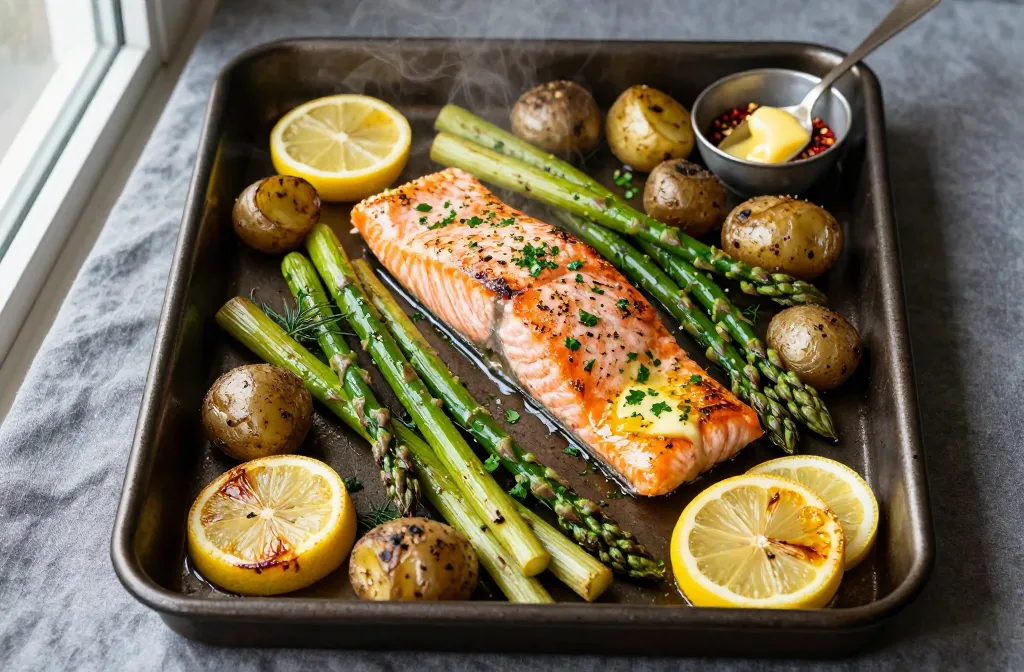
You want dinner that tastes like a weekend but cooks like a Tuesday? Meet sheet pan lemon garlic butter salmon. It’s fast, it’s fancy-ish, and it doesn’t ask you to babysit anything. Toss it all on a tray, slide it in the oven, and boom—restaurant vibes without the snooty music.
Why Sheet Pan Salmon Wins Every Time
Salmon loves big flavors, and lemon-garlic-butter delivers every time. The citrus brightens, the garlic brings the savory punch, and the butter melts into a glossy sauce that makes everything taste “did I just get promoted?” good. Plus, the sheet pan setup means minimal dishes and zero drama.
You can build your entire meal on one pan. Veggies roast while the salmon cooks, and the butter sauce ties it all together like a culinary group hug. FYI, this is a full-on weeknight hero move.
The Flavor Blueprint
Here’s the core flavor combo you want:
- Lemon: Zest for aroma, juice for tang. Use both—zest gives you mega lemon without acidity overload.
- Garlic: Freshly minced hits harder than jarred. Don’t go vampire-level overboard, though.
- Butter: Salted butter melts into a silky sauce. You can mix in a little olive oil to keep it from burning.
- Herbs: Parsley for clean brightness, dill for classic salmon energy. Thyme also plays nice.
- Heat: Red pepper flakes or black pepper for a little edge. Optional, but fun.
Quick Compound Butter (aka Flavor Shortcut)
Mash softened butter with lemon zest, garlic, salt, pepper, and herbs. Spread it over the salmon like frosting. It melts into every nook and cranny and basically does your job for you. IMO, this is the easiest way to win dinner.
Choosing the Right Salmon
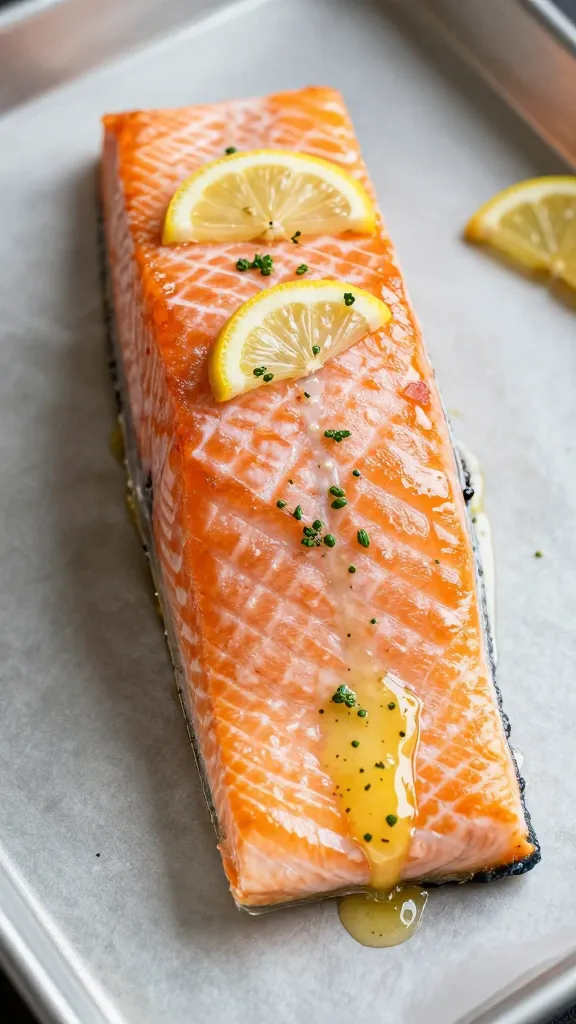
You can’t fake good fish. Start with a decent fillet and you’re already halfway to “wow.”
- Fillet vs. portions: A whole side looks impressive and cooks evenly. Portions work great too—just watch the timing.
- Skin-on: Keep the skin. It protects the fish and makes it easier to lift off the pan.
- Thickness matters: Thicker pieces need a couple more minutes. Thin tail-end pieces cook faster—group them together so they don’t overcook.
- Wild vs. farmed: Wild tastes richer and cooks faster. Farmed tends to be fattier and more forgiving. Choose your own adventure.
Fresh or Frozen?
Frozen salmon works perfectly if you thaw it right. Defrost overnight in the fridge, then pat it dry before seasoning. Don’t cook it icy-cold from the fridge—let it sit out for 10-15 minutes so it cooks evenly.
Sheet Pan Setup (Zero Fuss)
You’ll need:
- 1 to 1.5 lb salmon, skin-on
- 4 tbsp softened butter (or 3 tbsp butter + 1 tbsp olive oil)
- 2-3 cloves garlic, minced
- 1 lemon (zest + juice), plus extra slices for garnish
- 1 tsp kosher salt, 1/2 tsp black pepper
- 2 tbsp chopped parsley or dill
- Veggie options: baby potatoes, asparagus, broccolini, green beans, zucchini, cherry tomatoes
Veggie Strategy
Hard veggies (like potatoes) need a head start. Softer ones (asparagus, beans) can jump in later. This keeps everything tender and not sad.
How to Cook It (The Play-by-Play)
- Preheat: Set the oven to 425°F (220°C). Grab a rimmed sheet pan and line with parchment for easy cleanup.
- Prep the veggies: Toss potatoes with olive oil, salt, and pepper. Roast for 15 minutes first if using. If using quick-cooking veg only, skip ahead.
- Make the butter: Stir softened butter with lemon zest, garlic, herbs, salt, and pepper. Add a squeeze of lemon juice if you like it punchy.
- Assemble: Move potatoes to one side. Add your salmon, skin-side down. Spread the compound butter all over the top. Add other veggies (asparagus, broccolini, etc.) around the salmon. Drizzle with olive oil and season.
- Roast: Cook 10-14 minutes, depending on thickness. Salmon turns opaque and flakes easily with a fork when it’s ready. Aim for 125-130°F in the center for juicy perfection.
- Finish: Squeeze fresh lemon over everything. Sprinkle extra herbs. If you want crispy edges, broil for 1-2 minutes at the end—watch it like a hawk.
Timing Cheat Sheet
- Thin fillet (3/4 inch): 8-10 minutes
- Standard fillet (1 inch): 10-12 minutes
- Thick fillet (1.5 inches): 12-15 minutes
FYI: Overcooked salmon forgives nothing. Pull it a smidge early—it keeps cooking off the heat.
Make It Your Own
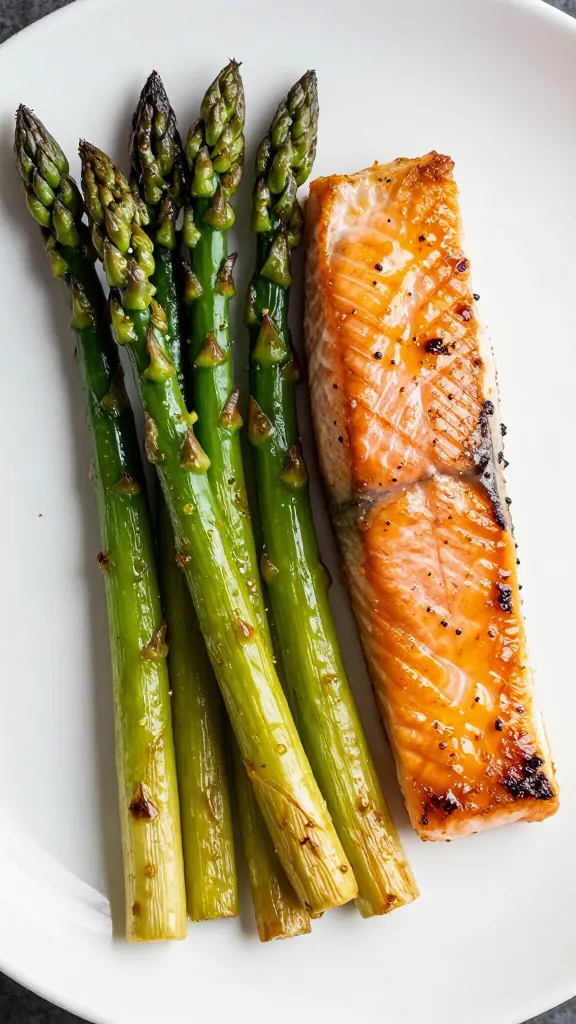
You can’t mess this up if you keep the lemon-garlic-butter core. Everything else? Play.
- Spice it up: Add paprika, cayenne, or a little harissa.
- Citrus swap: Use orange or lime for a different vibe. Lemon still wins, but hey, culinary adventure.
- Herb switch: Basil or tarragon takes it in a Frenchy direction.
- Breadcrumb crunch: Sprinkle panko mixed with olive oil and parsley over the butter for a crispy top.
- Capers: Toss a tablespoon over the salmon before roasting for salty pops of joy.
Vegetable Pairings That Actually Work
- Asparagus: Classic. Toss with olive oil, salt, pepper. Done.
- Green beans: Roast until tender-crisp. They soak up the butter sauce like champs.
- Broccolini: Slight char = happy days.
- Baby potatoes: Roast first, then finish with the salmon so they’re golden and creamy.
- Zucchini + cherry tomatoes: Great for summer. Add in the last 10 minutes.
Serving Tips That Level It Up
Plate the salmon with veggies and spoon that lemony butter from the pan over the top. That’s free sauce—do not waste it. Add extra lemon wedges if you like drama.
Want a little extra? Try:
- Simple yogurt sauce: Greek yogurt, lemon juice, dill, salt. Cool and tangy.
- Garlic rice or couscous: Easy carb that catches the sauce.
- Herb salad: Parsley, dill, mint with olive oil and lemon. Fresh contrast for the rich butter.
Wine Pairing (Because You Deserve It)
Go with a crisp white like Sauvignon Blanc or a lightly oaked Chardonnay. If beer’s your thing, a pilsner or pale ale fits the vibe. Sparkling water with lemon works too—zero judgment.
Common Mistakes (and How to Dodge Them)
- Overcooking the salmon: Use a timer. Check early. Trust the flake test and internal temp.
- Dry garlic burn: Mix garlic into the butter so it doesn’t scorch on the surface.
- Veggies underdone: Pre-roast the hard ones. The pan can’t perform miracles.
- Waterlogged fish: Pat the salmon dry before seasoning. Moisture is the enemy of browning.
FAQ
Can I use frozen salmon without thawing?
You can, but I don’t recommend it here. Frozen fillets release extra moisture and won’t take on the butter sauce well. Thaw overnight in the fridge, then pat dry. Worth the patience, IMO.
How do I know when the salmon is done?
Check for flaky layers and a slightly translucent center. A thermometer reads 125-130°F in the thickest part for medium. It should feel just firm, not stiff. If it smells intensely fishy, it’s probably overcooked.
What if I don’t eat butter?
Use olive oil or ghee. Olive oil gives you a lighter finish; ghee tastes buttery without the milk solids. Add extra lemon zest and herbs to keep the flavor big.
Can I meal prep this?
Yes, but don’t cook it to death. Slightly undercook the salmon, then reheat gently in a low oven (300°F) for 8-10 minutes. Or eat it cold over salad with a lemony vinaigrette. Cold salmon = underrated.
How do I prevent the salmon from sticking?
Use parchment paper or a light oil on the pan. Keep the skin on so it acts like a natural nonstick barrier. Let the salmon release on its own—if it fights you, give it another minute.
What sides go best besides veggies?
Garlic mashed potatoes, herbed rice, quinoa with lemon, or a crusty baguette to mop up the pan sauce. Bread plus butter sauce? Yes, we’re doing that.
Wrap-Up
Sheet pan lemon garlic butter salmon nails that sweet spot between easy and impressive. You’ll throw it together fast, and it tastes like you secretly hired a chef. Keep the lemon-garlic-butter trio strong, don’t overcook, and let the oven do the heavy lifting. Dinner: crushed.