You use your hairbrush almost every day, but when did you last actually clean it? If your answer is “uhhh,” don’t panic—you’re not alone. Brushes trap hair, oil, product gunk, lint, and mystery fluff that did not arrive there by invitation. A quick clean-up session makes your brush work better, keeps your scalp happier, and—bonus—extends the life of your brush. Let’s get in, get it done, and never again pretend that gray fuzz is part of the design.
Why bother cleaning your hairbrush?
Your brush acts like a vacuum for your head. It collects shed hair, scalp oil, dust, and leftover dry shampoo like a little hoarder. Then it drags that grime right back through your clean hair the next morning. Cute.
– Cleaner hair, longer: A gross brush redistributes oil and product, so your fresh blowout falls flat fast.
– Better scalp health: You reduce flakes, itchiness, and clogged follicles.
– Less breakage: Gunked-up bristles tug and snag more.
– Brush lasts longer: You paid for it—might as well make it live a full, meaningful life.
Know your brush: materials matter
Different brushes need slightly different TLC. Two minutes to identify yours saves headaches later.
- Plastic or nylon bristles (paddle, vent, round): Durable, easy to scrub, safe with water.
- Boar bristle (or mixed bristle): Gentle, distributes oils beautifully, hates harsh soaps and soaking.
- Wooden handles or beechwood bases: Avoid full submersions. Water swells wood and loosens glue.
- Cushion or air-filled bases (you’ll see a little air hole): Do not soak; water seeps in and mold says hello.
- Metal core round brushes: Fine to wash, but dry thoroughly to prevent rust.
Quick rule of thumb
If it’s all plastic/nylon, you can soak. If it has wood, boar bristle, or a cushioned pad, you spot-clean and keep things quick.
What you’ll need (no fancy stuff)
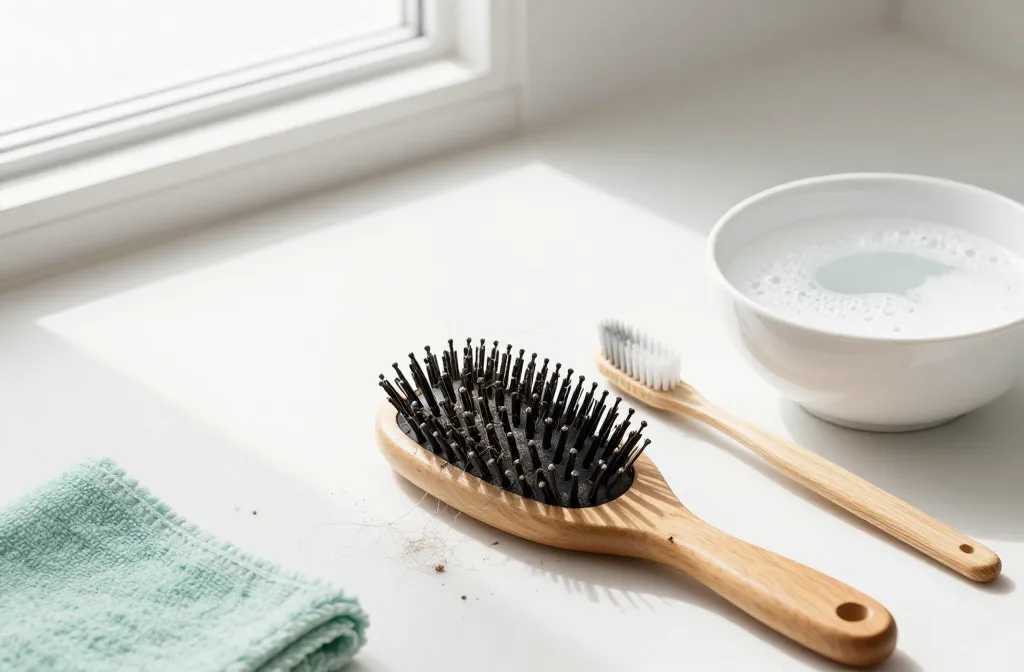
You can clean a brush with items you already own. IMO, no need for a kit unless you’re feeling extra.
- Rat-tail comb or a pen/pencil to lift hair
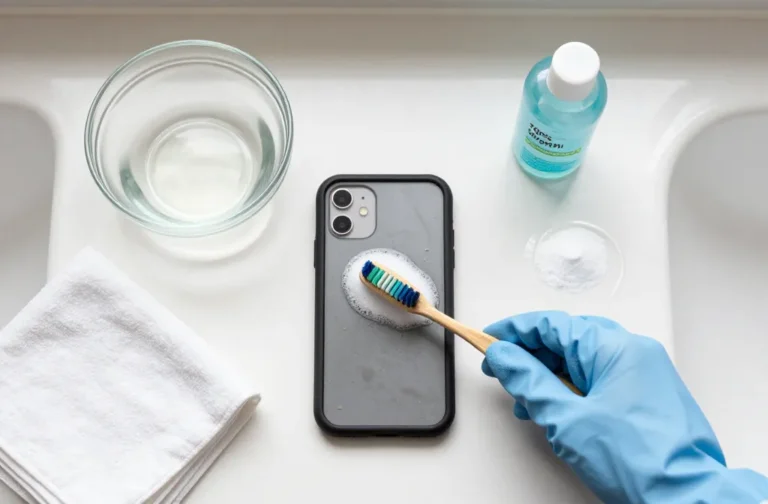
- Old toothbrush for scrubbing
- Scissors (small, sharp) to cut through hair mats
- Mild shampoo or dish soap
- Bowl or sink with warm water
- Rubbing alcohol or 3% hydrogen peroxide for periodic disinfecting
- Towel for drying
Step-by-step: the fast, foolproof method
Let’s clean this thing. You’ll finish before your coffee cools.
- De-hair the bristles
Use a rat-tail comb to lift hair at the base and pull it out in clumps. For dense tangles, snip straight down between bristle rows, then pull. Be gentle—yanking bends bristles. - Make a cleaning solution
Mix warm water with a few drops of shampoo or a pea-sized blob of dish soap. You want slippery, not bubbly chaos. - Clean based on brush type
– All-plastic/nylon brush: Soak 5–10 minutes. Swish. Use a toothbrush to scrub between bristles and along the base. Rinse well.
– Boar bristle or cushioned/wooden brush: Dip your toothbrush into the soapy water and scrub the bristles and base gently. Don’t submerge. Wipe with a damp cloth to remove residue. Rinse the toothbrush, dip in clean water, and go over it again to “rinse” without soaking. - Disinfect (optional but nice)
Spritz or wipe bristles with rubbing alcohol or diluted peroxide (50/50 with water), then let it sit for 2–3 minutes. Rinse quickly for plastic brushes; for wood/boar, wipe with a damp cloth instead of rinsing. FYI: Skip bleach. Overkill and not brush-friendly. - Dry it right
Shake off excess water. Lay the brush bristle-side down on a towel so water drains away from the base. Let it air dry completely before using. No hairdryer blast—heat can warp bristles and loosen glue.
Time-saving hack
Do a 30-second maintenance clean every few days: pull out hair after styling, spritz bristles with a little rubbing alcohol, wipe with a towel. Then do a deeper clean weekly or biweekly.
Different brushes, slightly different moves
Because your round brush and your boar bristle aren’t twins.
Round brush with metal barrel
– Remove hair after each blowout to prevent a “felted sweater” situation.
– Soak 5–10 minutes in soapy water; scrub the barrel holes—they trap lint.
– Rinse well and dry barrel-down so water escapes the core.
Boar bristle brush
– Keep it dry-ish. Use a tiny bit of shampoo in water, dip only the toothbrush, and scrub lightly.
– Rinse by wiping with a damp cloth—no dunking.
– Too much soap strips the natural oils that make boar bristle great, so go easy.
Paddle brush with cushion
– Don’t flood the cushion. Water sneaks in via the air hole and lingers.
– Use a damp cloth and toothbrush only. Press the towel into bristles to absorb extra moisture.
Fixing stubborn gunk and weird smells
Sometimes the brush fights back. You still win.
- Product plaque (that sticky film): Rub a tiny bit of baking soda onto a damp toothbrush and scrub. Rinse thoroughly.
- Funky smell: Wipe with a 1:1 mix of white vinegar and water, then wipe again with plain water. Dry fully. Smells go bye-bye.
- Static and lint: After cleaning, a micro-amount of leave-in conditioner on your fingertips, then lightly glide over bristles. Don’t drench it—just a whisper.
How often should you clean it?
Short answer: more often than you think. Long answer: it depends on your hair and products.
– Heavy product users (dry shampoo, hairspray): Clean weekly.
– Fine or oily hair: Weekly to keep oil transfer low.
– Thick/curly hair with minimal product: Every 2–3 weeks works.
– Boar bristle: Quick de-hair after every use, deeper clean every 2 weeks.
– Salon pros: After every client. At home? You’re good with the above.
Signs it needs a scrub now
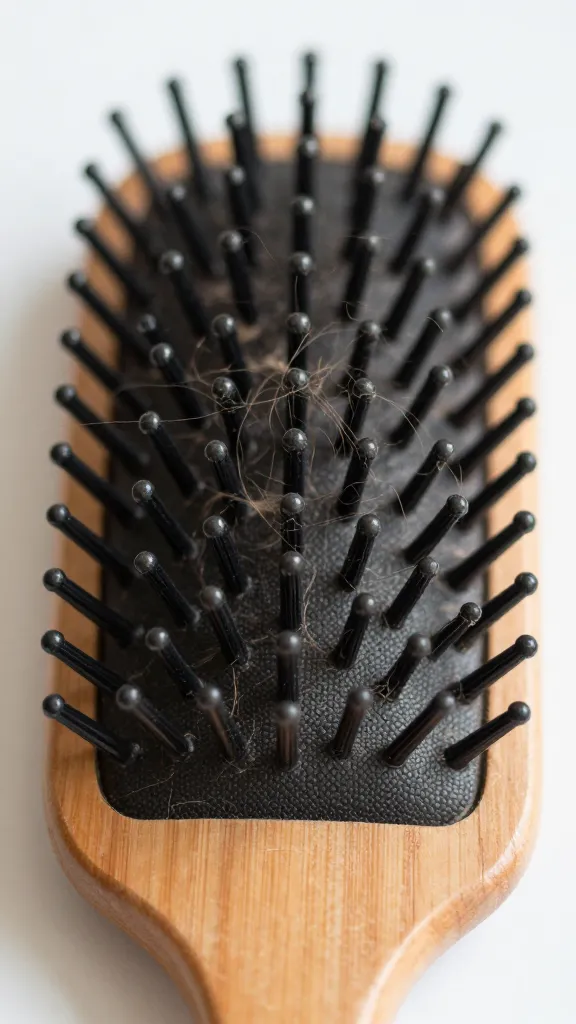
– You see gray fuzz or a filmy base.
– It smells… lived-in.
– Your hair looks greasy faster than usual.
– Brushing feels snaggy or rough.
When to retire your brush (RIP, old friend)
Brushes don’t live forever. Some should fade gracefully into the trash.
– Warped, melted, or splayed bristles: They’ll scratch your scalp and break hair.
– Loose bristle tufts or shedding: No thanks.
– Mold spots in a cushion or around the base: Hard pass, toss it.
– Cracked handle/base: Can trap bacteria and pinch hair.
If you replace, pick something that suits your hair: boar for shine on straight/wavy hair, nylon for detangling and wet work, mixed bristle for a best-of-both-worlds vibe. IMO, a vented brush plus one good round brush covers 90% of needs.
FAQs
Can I throw my brush in the dishwasher?
You can, but should you? Usually no. Heat warps bristles and melts glue, especially on cushioned or wooden brushes. Plastic detanglers might survive, but you’ll shorten their lifespan. A 10-minute hand wash works better and keeps your brush alive longer.
Is shampoo better than dish soap?
Both work. Shampoo excels at breaking down scalp oils without being too harsh. Dish soap nukes heavy product buildup, but use a tiny amount and rinse well. For boar bristle, I vote shampoo—gentler and FYI, less stripping.
How do I clean a comb?
Same idea. De-hair, then soak in warm soapy water for 10 minutes. Scrub between teeth with an old toothbrush, rinse, and dry. For wooden combs, skip soaking—just scrub with soapy water using the toothbrush and wipe clean.
What about lice or scalp infections?
If you deal with lice, soak plastic/metal brushes in hot water (at least 130°F/54°C) for 10 minutes, then scrub. For fungal or bacterial concerns, clean, then disinfect with rubbing alcohol or a 3% hydrogen peroxide wipe. When in doubt, replace brushes with cushions or wood since you can’t soak them safely.
Can I use vinegar instead of alcohol?
Vinegar helps deodorize and dissolve mineral and product film. It doesn’t disinfect as strongly as alcohol. Use vinegar for smell and buildup, and alcohol when you want a true germ-kill moment.
How long does drying take?
Most brushes dry in a few hours. Thick-cushion or boar bristle may need overnight. Always dry bristle-side down so water drains out, not into the base. Patience now prevents mildew later.
Wrap-up: keep it clean, keep it cute
A clean hairbrush makes your hair behave, your scalp chill out, and your morning routine faster. You need five to ten minutes, tops. De-hair, suds, scrub, rinse, dry—done. Make it a tiny habit once a week and your brush won’t turn into a lint museum again. Your future good hair days say thanks.