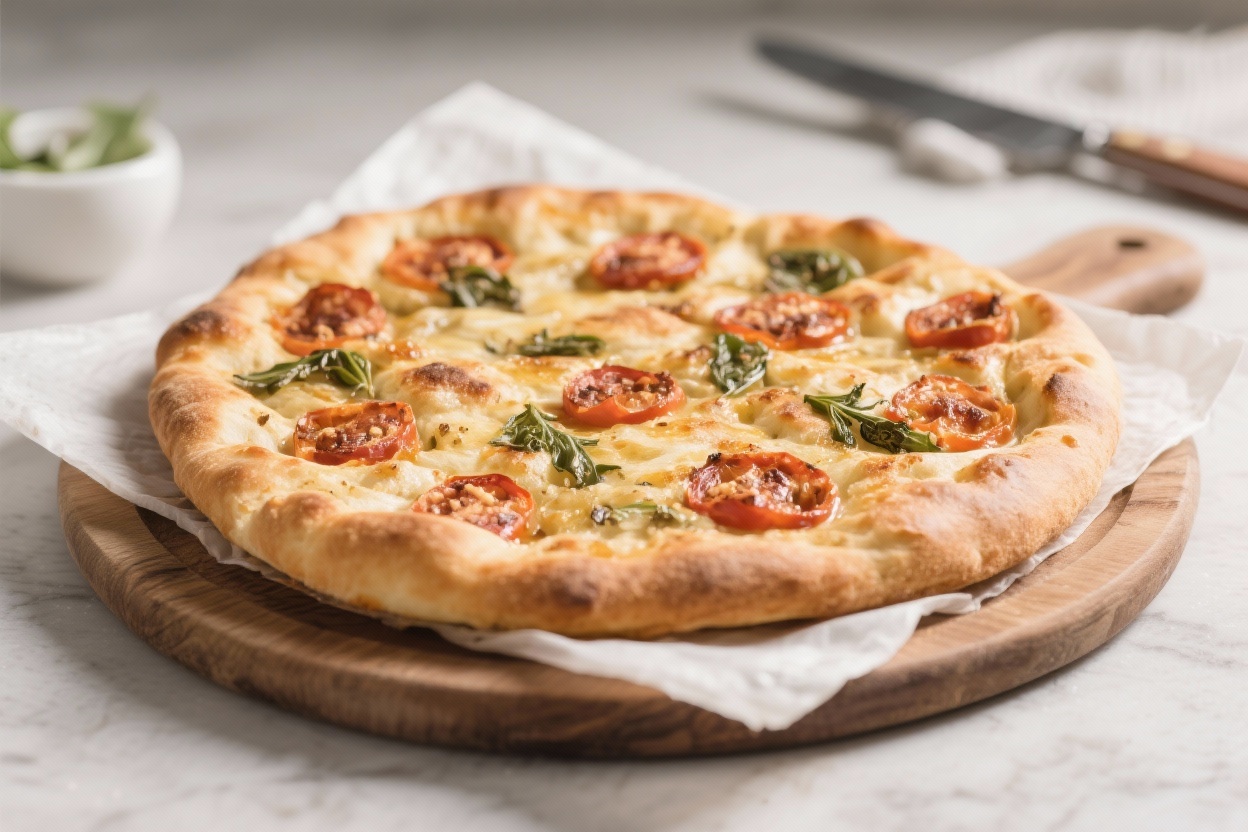
You know that bread that’s so good you end up “tasting” half of it before dinner? That’s focaccia. Crisp edges, cloud-soft middle, olive oil pooling in those glorious dimples—it’s the snack, side, and showstopper all in one.
If you can stir, you can make this. No mixer, no fancy tricks, just time and flavor doing their thing. Ready to become everyone’s favorite “oh, I just whipped this up” person?
What Makes This Recipe So Good
- Ridiculously simple: Minimal kneading.
Most of the magic happens while the dough rests.
- Bakery-level texture: Crispy bottom, chewy crumb, airy interior. Those dimples are flavor pockets.
- Olive oil forward: The dough drinks up quality EVOO for rich, aromatic flavor. Good oil = great focaccia.
- Flexible timing: Same-day or overnight cold rise.
Your schedule, your bread.
- Endlessly customizable: Herbs, olives, tomatoes, onions—whatever’s in the fridge wins.
Ingredients
- 4 cups (500g) bread flour (all-purpose works, but bread flour = better chew)
- 2 teaspoons fine sea salt
- 2 teaspoons sugar or honey
- 2 1/4 teaspoons (7g) instant yeast (or active dry, see notes)
- 1 3/4 cups (415ml) warm water (about 105–110°F/40–43°C)
- 6 tablespoons extra-virgin olive oil, divided (plus more for drizzling)
- Flaky sea salt for topping
- Optional toppings: fresh rosemary, thin-sliced red onion, halved cherry tomatoes, olives, garlic
Let’s Get Cooking – Instructions
- Mix the dough: In a large bowl, whisk flour, salt, and sugar. Add yeast, then pour in warm water and 2 tablespoons olive oil. Stir with a spoon until a shaggy, sticky dough forms.
No need to knead—just combine well.
- Rest and rise (bulk ferment): Cover the bowl tightly and let it rise at room temp 60–90 minutes, until doubled and bubbly. For max flavor, refrigerate 8–24 hours instead (FYI: cold dough = easier handling).
- Prepare the pan: Generously oil a 9×13-inch pan or a large sheet pan with 3 tablespoons olive oil. Yes, it’s a lot.
That’s the secret to a crispy, golden bottom.
- Stretch the dough: Transfer dough to the pan with oiled hands. Gently stretch it toward the edges. If it resists, rest 10 minutes and stretch again.
Don’t fight the gluten; be persuasive.
- Second rise: Cover and let it puff 30–45 minutes at room temp. It should relax and fill the pan more.
- Dimple and dress: Drizzle 1 tablespoon olive oil over the top. With oiled fingers, press deep dimples all over.
Scatter rosemary, onions, tomatoes, or olives. Finish with flaky salt.
- Bake hot: Bake at 450°F (232°C) for 20–25 minutes, until deeply golden with crisp edges. Rotate once for even color if your oven has a “personality.”
- Final flourish: Brush or drizzle a little more olive oil over the hot focaccia.
Cool 10 minutes, then devour warm. Try not to eat it all. (You will.)
How to Store
- Room temp: Wrap loosely in parchment or a clean towel for up to 2 days. Avoid airtight containers—they soften the crust.
- Reheat: 375°F (190°C) for 6–8 minutes to revive the crust.
Toaster oven works like a charm.
- Freeze: Slice, wrap well, and freeze up to 2 months. Reheat from frozen at 400°F (205°C) for 10–12 minutes.
Benefits of This Recipe
- Budget-friendly crowd-pleaser: Flour + water + oil = applause.
- Meal-prep hero: Great for sandwiches, snacks, and sides all week.
- Restaurant vibes at home: Impress guests without breaking a sweat (or your bank account).
- Beginner-proof: High hydration dough is forgiving and flavorful. Win-win.
Avoid These Mistakes
- Skimping on oil: This isn’t a salad.
The oil creates the signature crust and flavor.
- Under-proofing: If the dough isn’t puffy and relaxed, your focaccia will be dense. Give it time.
- Overloading toppings: Keep it balanced. Too much moisture prevents browning.
- Cool water + impatience: If your water is cold and you rush, the yeast won’t perform.
Warm water = reliable rise.
- Baking too low: High heat is critical for a crisp bottom and airy interior. Don’t go shy.
Mix It Up
- Garlic-Rosemary Classic: Fresh rosemary, thin-sliced garlic, and flaky salt.
- Tomato-Basil: Halved cherry tomatoes, basil after baking, and a balsamic drizzle.
- Olive + Onion: Kalamatas and red onion slivers for a savory bite.
- Cheese Pull: Sprinkle grated Parm or pecorino in the last 5 minutes of baking.
- Stuffed Sandwich Upgrade: Split horizontally, layer with mozzarella, roasted peppers, and arugula. IMO, elite lunch.
FAQ
Can I use active dry yeast instead of instant?
Yes.
Bloom it first: mix the warm water with sugar/honey and yeast, let it sit 5–10 minutes until foamy, then add to the dry ingredients. Same amounts, same timing.
Why is my focaccia dense?
Likely under-proofed dough or not enough hydration. Make sure it doubles on the first rise and looks puffy before baking.
Also, don’t skimp on the olive oil—crust texture matters.
What’s the best pan to use?
A heavy, light-colored metal pan or cast-iron yields the crispiest bottom. Dark pans brown faster—watch the bake time.
Can I make it overnight?
Absolutely. After mixing, refrigerate 8–24 hours.
Then bring to room temp, transfer to the oiled pan, stretch, rise again, and bake. Flavor = upgraded.
Do I need bread flour?
No, but it helps. Bread flour gives extra chew and structure.
All-purpose still makes a stellar focaccia—no stress.
How do I prevent soggy toppings?
Use drier add-ins (pat tomatoes/olives dry) and don’t overload. Add delicate herbs and basil after baking to avoid wilting.
My Take
Focaccia is the low-effort, high-reward carb we all deserve. It’s forgiving, flashy, and wildly versatile—like a culinary cheat code.
Keep good olive oil on hand, respect the rise, and you’ll crank out bakery-tier bread on a Tuesday. And if you eat it standing over the pan with “just one more piece” logic? Same.