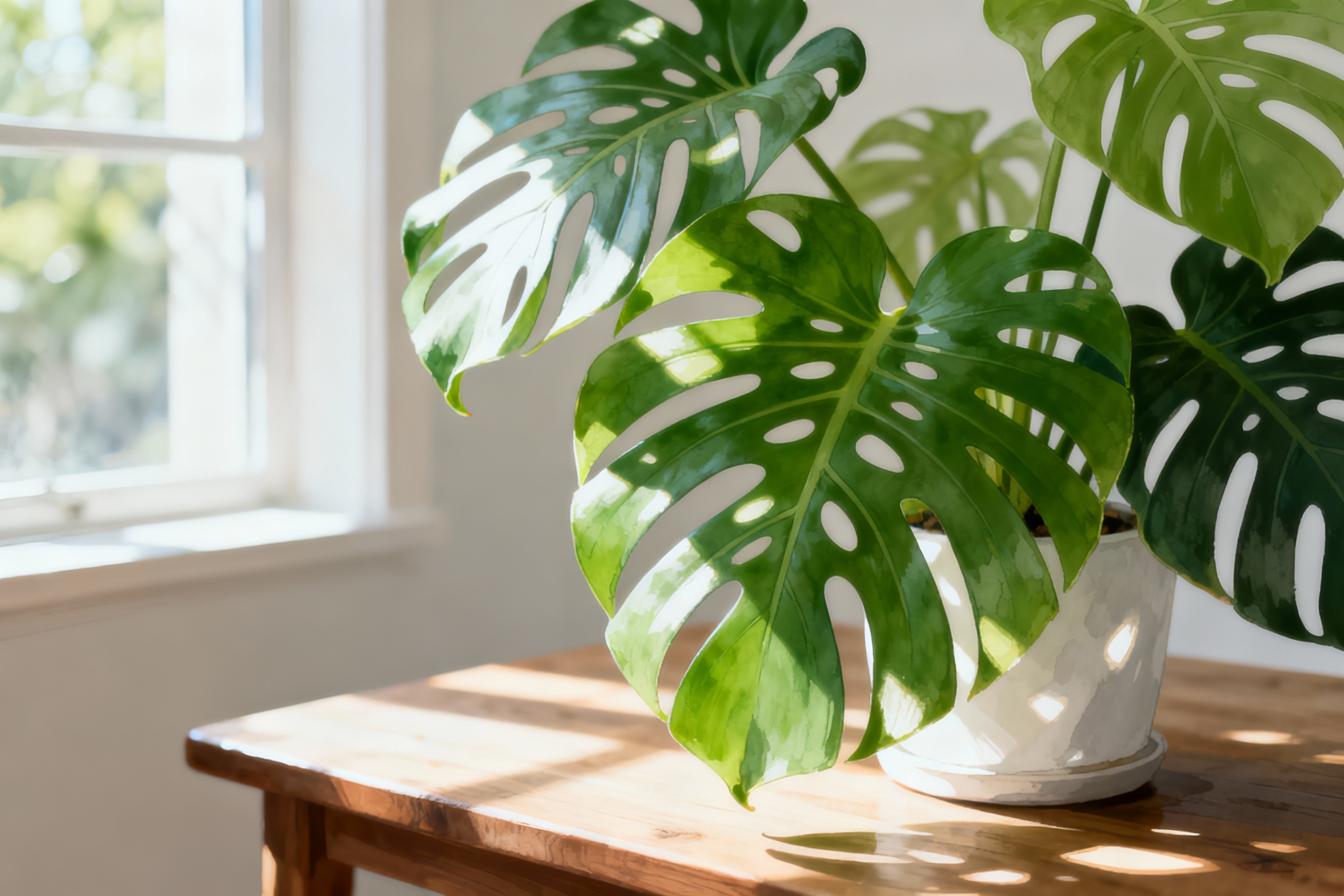
Monstera leaves look like they were designed by a jungle architect with a flair for drama. But those iconic splits and holes don’t appear by magic—they need the right light. Get the light wrong, and your plant sulks.
Nail it, and you’ll get big, glossy leaves that make your living room feel like Costa Rica.
What “Bright, Indirect Light” Actually Means
You see this phrase everywhere, and yes, it’s vague. For Monsteras, it means lots of light but not direct sun roasting the leaves. Think of a spot where you could read comfortably during the day without turning on a lamp. Here’s the quick rule: Place your Monstera near a bright window, but keep the solar death rays off its leaves.
East or north windows work beautifully. South and west windows? Great too—just move it a few feet back or use a sheer curtain.
Light Intensity Cheat Sheet
- Low light: Dim room, no shadows.
Your Monstera survives, but growth crawls and leaves stay smaller.
- Medium light: Bright room, soft shadows. This works fine, but don’t expect giant fenestrations fast.
- Bright, indirect light: Very bright room, defined but blurred shadows. This is the sweet spot.
How Much Light Does a Monstera Need Each Day?
Target 8–10 hours of bright, indirect light daily. Monsteras evolved under jungle canopies, so they love steady, filtered light.
You don’t need sunbeams blasting for hours. Consistency wins. If you use a grow light, aim for 12 hours on a timer.
Keep it 12–24 inches above the plant and don’t cook the leaves. FYI, some grow lights are bright enough to interrogate suspects—angle them, don’t blind your plant.
Reading the Leaves: Signs You’re Getting It Right (or Not)
Plants don’t text you, but Monsteras basically send push notifications with their leaves. Here’s how to decode them:
Too Little Light
- Leggy growth: Long stems, big gaps between leaves.
- Smaller, fewer fenestrations: New leaves come out solid and petite.
- Slow growth: Your plant takes forever to unfurl a leaf.
Too Much Light
- Sunburn: Crispy, brown patches that look bleached, often on the side facing the window.
- Dry edges: Leaves get crunchy and sad, even with proper watering.
- Faded color: Leaves lose their rich green and look washed out.
Just Right
- Steady new growth: New leaves unfurl every few weeks in the growing season.
- Bigger leaves with splits: Mature leaves develop holes and slits (fenestrations) over time.
- Sturdy stems: Shorter internodes, the plant looks full and lush.
Where to Put Your Monstera (By Window Direction)
Let’s get practical.
Window direction matters more than the fancy pot you bought on sale.
- East-facing: Morning sun = chef’s kiss. Put it close to the window, no curtain needed.
- North-facing: Consistent but gentle. Place it right by the window.
Consider a grow light in winter.
- South-facing: Tons of light. Keep it a few feet back or use a sheer curtain to prevent scorch.
- West-facing: Harsh afternoon sun. Back it up 3–6 feet or filter with a sheer curtain.
Room Layout Tips
- Corner bounce: Put it near a corner that catches light from two angles.
Great for even growth.
- Rotate monthly: Give it a quarter turn so it grows evenly and doesn’t lean like it’s whispering secrets to the window.
- Avoid heat blasts: Don’t stick it right in front of hot radiators or AC units. That’s not “light,” that’s “windburn.”
Grow Lights: Your Secret Weapon for Cloudy Homes
Not everyone lives in a sun-drenched loft. If your home feels like a cozy cave, grow lights save the day. What to look for:
- Full spectrum or 4000–6500K: Natural daylight vibe that plants and eyes like.
- Dimmable or multiple settings: Adjust intensity as your plant responds.
- Timer: Set-and-forget 12-hour cycles.
Consistency = strong growth.
Positioning and Distance
- Keep LEDs 12–24 inches above foliage for bright, indirect intensity.
- Angle the light so it covers the whole plant, not just the top leaf.
- Watch for dry air under lights—boost humidity if edges get crispy.
Seasonal Light Shifts (And How to Adapt)
Sun angle changes through the year, and your Monstera notices. You’ll need to shuffle it around like a furniture stylist sometimes.
- Spring/Summer: Stronger sun. Pull back from intense windows or add sheer curtains to prevent burns.
- Fall/Winter: Weaker light and shorter days.
Move it closer to windows or add a grow light.
- Clean the leaves: Dust blocks light. Wipe leaves monthly with a damp cloth so your plant can soak up those rays.
Light + Water + Fertilizer = Team Effort
More light means faster growth, which means the plant drinks more and eats more. Increase watering frequency slightly in bright conditions and feed monthly in spring/summer.
In lower light, slow your roll—less water, less fertilizer. IMO, overwatering in low light causes more problems than any other mistake.
Special Cases: Variegated Monsteras and Juveniles
Variegated Monsteras (like Albo, Thai Constellation): The white parts don’t photosynthesize well, so they need brighter conditions to thrive. Give them the brightest indirect spot you have, and watch for sunburn on the lighter patches. Juvenile plants: Young Monsteras often have solid leaves.
They still love bright, indirect light, but fenestrations appear as the plant matures with good care, a stake or moss pole, and consistent light. Patience, grasshopper.
FAQ
Can I put my Monstera in direct sun?
Short answer: not really. Morning sun for an hour or two is okay, but strong midday or afternoon sun scorches leaves.
Filter with a sheer curtain or pull it back a few feet if you have south or west exposure.
Why doesn’t my Monstera have holes in the leaves?
It likely needs more light, time, or support. Increase light to bright, indirect levels, give it a moss pole so it can climb, and be patient. New leaves fenestrate as the plant matures and gets the energy it needs.
How far from a window should I place it?
As a general guide: 1–3 feet from an east or north window, 3–6 feet from a south or west window with sheer curtains.
Adjust if you see sunburn or leggy growth. Plants don’t read rulers, so watch the leaves.
Do Monsteras grow in low-light rooms?
They survive, but they won’t thrive. Expect slower growth, fewer splits, and longer gaps between leaves.
Add a grow light if your room feels like a moody café.
How long should I use a grow light each day?
Run it for about 12 hours on a timer. Keep the light 12–24 inches above the plant and adjust brightness to avoid leaf scorch or bleaching. FYI, more hours doesn’t always mean better—it can stress the plant.
Will cleaning leaves really help with light?
Yes.
Dust blocks light like tiny sunglasses. Wipe leaves monthly with a damp cloth and support the leaf with your hand. You’ll see shinier foliage and better growth.
Conclusion
Get the light right, and your Monstera becomes a show-off in the best way.
Aim for bright, indirect light, watch the leaves for feedback, and tweak placement with the seasons. Add a grow light if your home needs a boost. Do that, and those big, dramatic leaves will reward you—no jungle expedition required.
IMO, it’s the easiest “level up” you can give your plant.