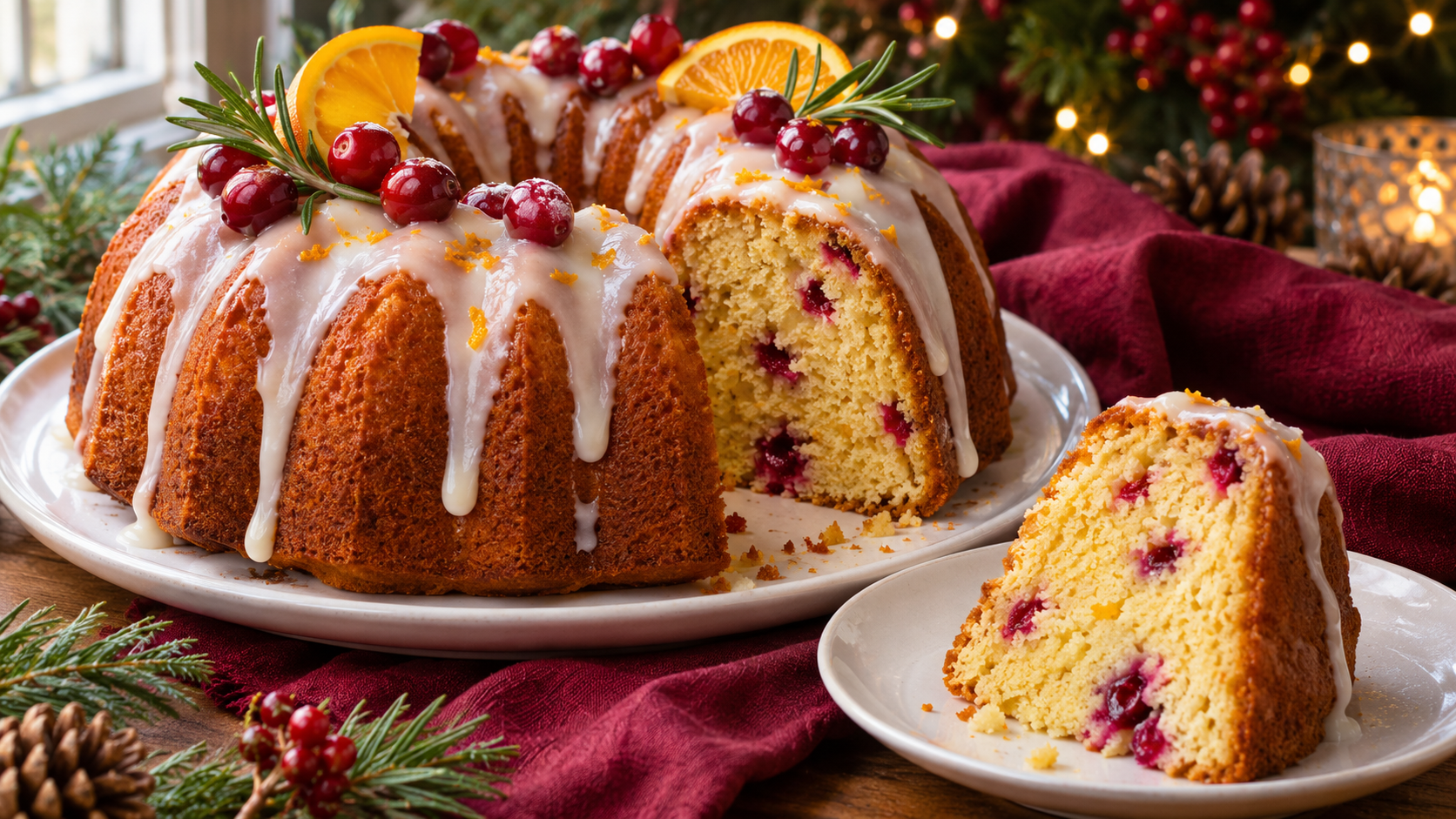
A golden cake with snowy white icing, ruby cranberry pockets, and the fragrance of fresh orange makes a beautiful centerpiece for a Christmas dessert table. This cranberry orange Christmas Bundt cake gets its festive shape from the pan, so there is no stacking, frosting between layers, or elaborate piping to organize.
The cake has a buttery crumb with sour cream for richness, fresh orange zest for a clear citrus flavor, and cranberries that stay pleasantly tart against the sweet glaze. Serve it after Christmas dinner, bring it to a holiday gathering, or cut a few smaller slices for an afternoon coffee break.
What to Expect from This Christmas Cake
Think of a moist butter cake with a close, tender crumb rather than a light sponge. Whole cranberries create little bursts of sharpness throughout each slice. The orange juice contributes flavor, but the zest does most of the aromatic work, so do not skip it or replace it with extra juice.
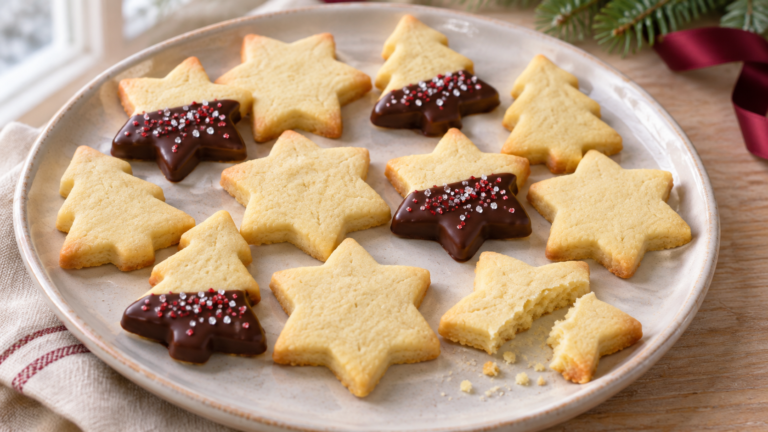
For a mixed holiday dessert platter, pair a few slices with these easy Christmas shortbread cookies. Their crisp, buttery texture gives guests something different alongside the fruit-filled cake.
- Yield: 12 slices.
- Active preparation: about 25 minutes.
- Baking: approximately 55–70 minutes.
- Cooling and finishing: allow about 2 hours.
- Equipment: a 12-cup Bundt pan, electric mixer, mixing bowls, spatula, fine grater, and cooling rack.
Ingredients
US cup measurements are included for convenience; weighing the flour gives a more consistent batter. Use large eggs and full-fat sour cream. Bring the butter, eggs, and sour cream to room temperature before mixing, but leave frozen cranberries frozen.
For the Cranberry Orange Cake
- 1 cup (225 g) unsalted butter, softened.
- 1½ cups (300 g) granulated sugar.
- 2 tablespoons finely grated orange zest, from approximately 2 oranges.
- 4 large eggs, at room temperature.
- 1 teaspoon vanilla extract.
- 3 cups (360 g) all-purpose flour.
- 2 teaspoons baking powder.
- ½ teaspoon fine salt.
- ¾ cup (180 g) full-fat sour cream.
- ¼ cup (60 ml) freshly squeezed orange juice.
- 2 cups (200 g) fresh or frozen cranberries.
- Nonstick baking spray formulated for cake pans, for greasing.
For the Orange Glaze and Optional Garnish
- 1¼ cups (150 g) confectioners’ sugar, sifted.
- 2–3 tablespoons orange juice, added gradually.
- A small handful of fresh cranberries, a few thin orange half-slices, and small culinary rosemary sprigs, optional.
Choose firm fresh cranberries and discard any soft or damaged berries. Wash fresh berries and dry them thoroughly. Frozen berries can go straight into the batter; thawing them first releases extra liquid and makes red streaks more likely.
1. Measure the Ingredients and Mix the Dry Ingredients
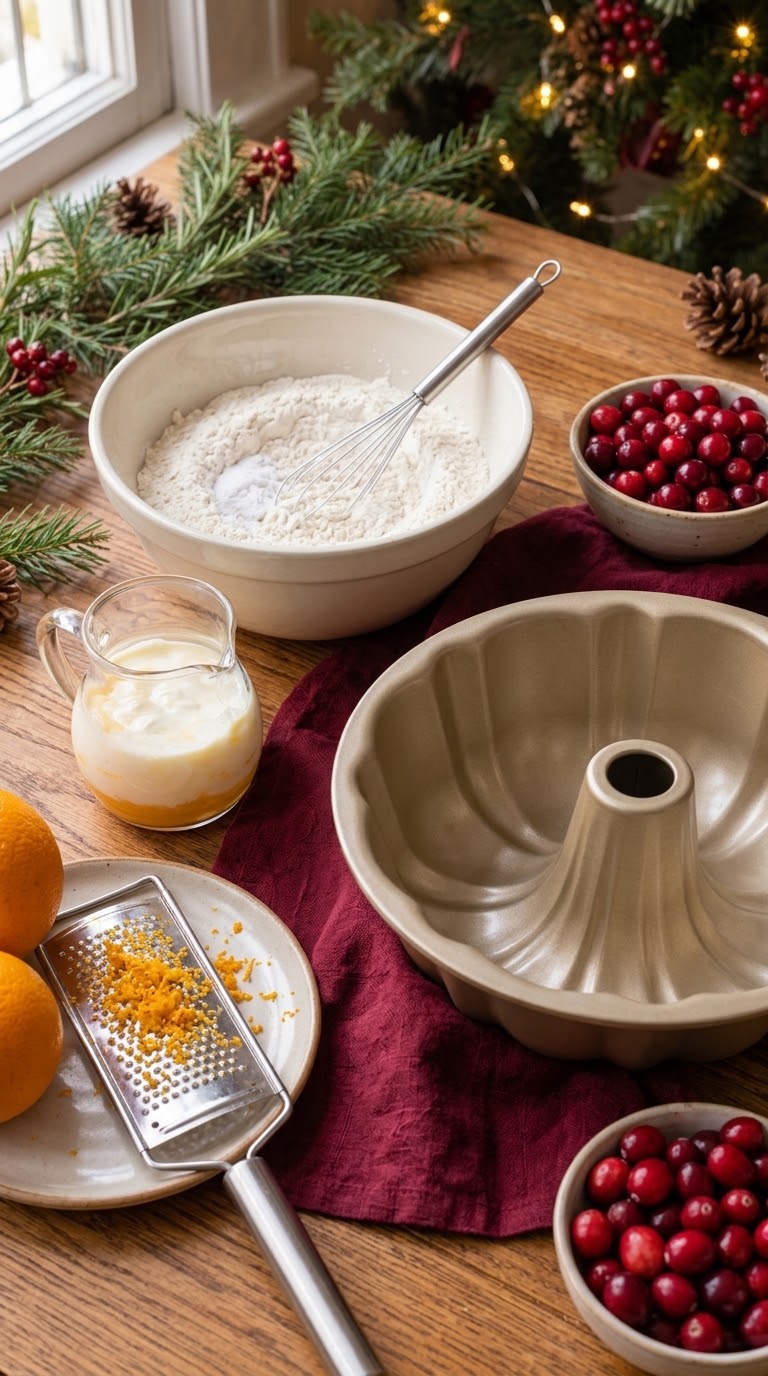
Heat the oven to 350°F (175°C), conventional setting, with a rack in the middle. Check that your Bundt pan has a 12-cup capacity; similar-looking pans can hold surprisingly different amounts. Keep the pan ready, but grease it shortly before filling.
Whisk the flour, baking powder, and salt together in a medium bowl. In a separate small bowl or measuring jug, stir the sour cream and orange juice until combined. Grate only the colored orange peel, leaving the bitter white pith behind. Measuring everything now makes the mixing stage much smoother.
2. Cream the Butter, Sugar, and Orange Zest
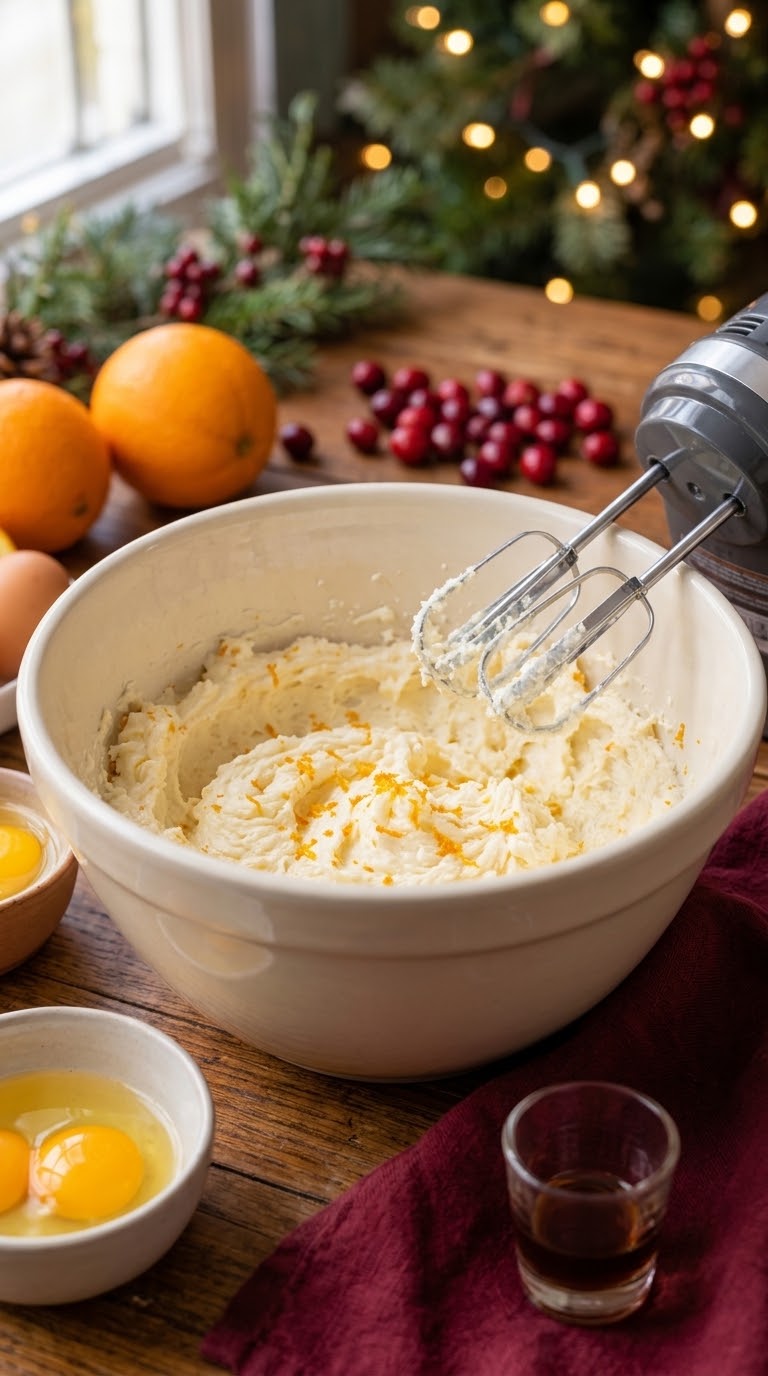
Beat the softened butter, granulated sugar, and orange zest with an electric mixer on medium speed for 3–4 minutes, until paler and fluffy. Stop to scrape the sides and bottom of the bowl. The butter should be soft enough to indent easily, without looking oily or melted.
Add the eggs one at a time, beating briefly after each addition and scraping the bowl as needed. Mix in the vanilla. If the mixture looks slightly curdled, continue with the recipe; it usually becomes more cohesive when the flour is added. Avoid increasing the speed and beating for several extra minutes to force it smooth.
3. Finish the Batter and Fold in the Cranberries
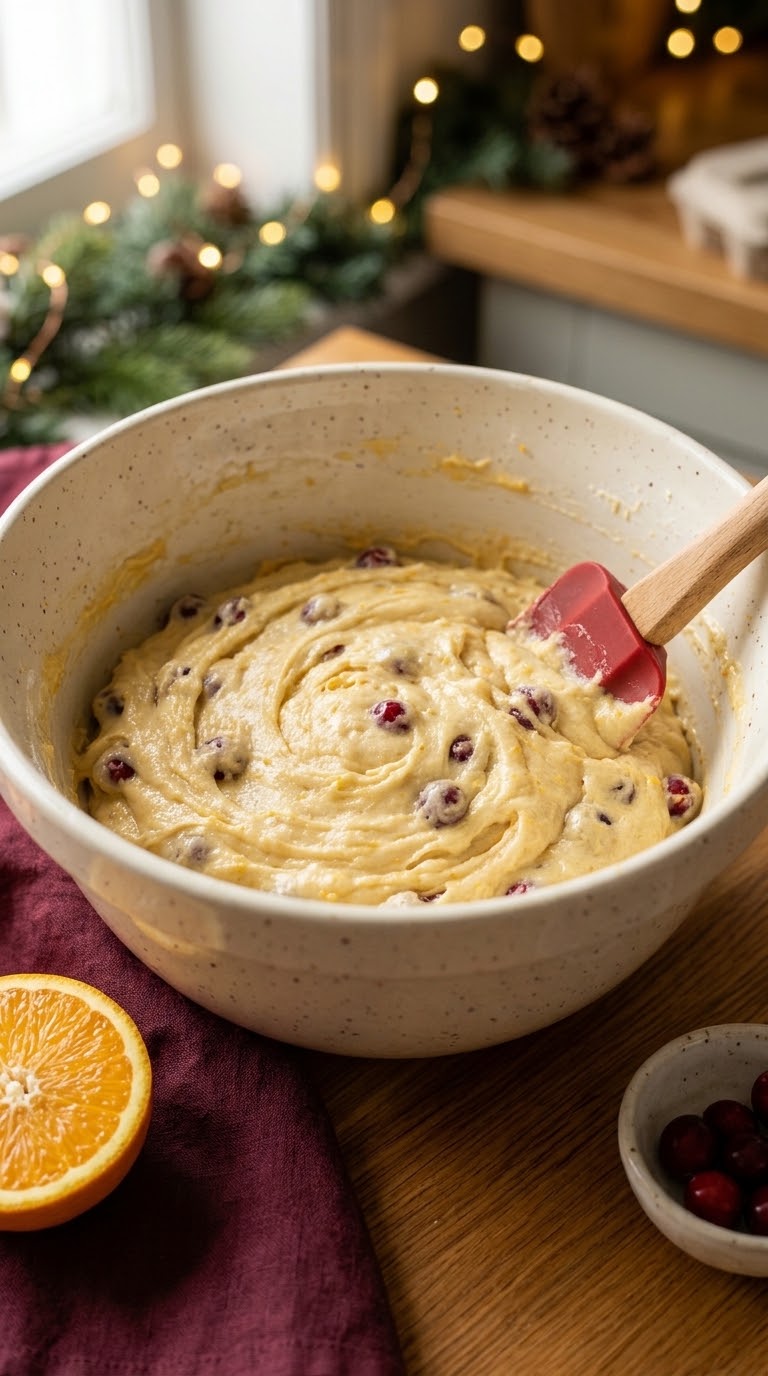
On low speed, add the flour mixture in three additions, alternating with the sour cream mixture in two additions. Begin and end with flour. Mix only until the flour has almost disappeared, then finish with a spatula, checking the bottom of the bowl for unmixed pockets.
Fold in the cranberries gently. The finished batter should be thick and scoopable, with berries distributed throughout. Do not add more orange juice to thin it; a loose batter changes how the cake rises and holds the fruit. With frozen cranberries, work promptly because they will chill and stiffen the batter.
4. Fill the Bundt Pan and Bake
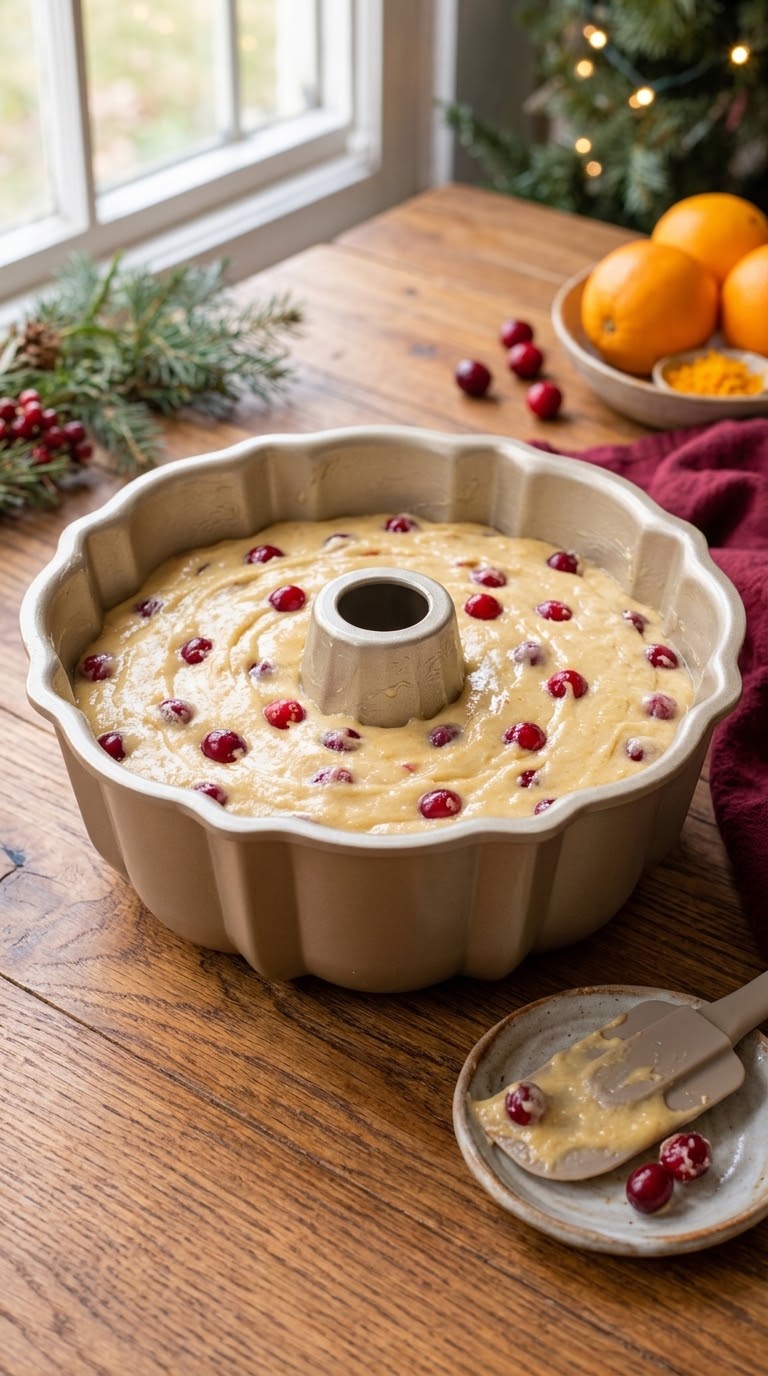
Grease the inside of the pan thoroughly with baking spray suitable for cakes, following its label. Cover every flute and the center tube. Spoon in the batter, distributing it evenly around the ring, and smooth the surface. Do not fill above three-quarters of the pan’s height; bake any excess separately in a prepared muffin cup.
Bake for 55–70 minutes, beginning your first check at 55 minutes. Frozen berries, pan material, and individual ovens can affect timing. The cake is ready when a wooden skewer inserted into a thick section comes out without wet batter; a few moist crumbs are fine. Check a second spot if the skewer passes through a cranberry.
If the exposed surface is getting dark before the center has baked, cover it loosely with foil. Keep baking until the batter is set rather than removing it solely because the outside looks golden.
5. Cool the Cake and Release It from the Pan
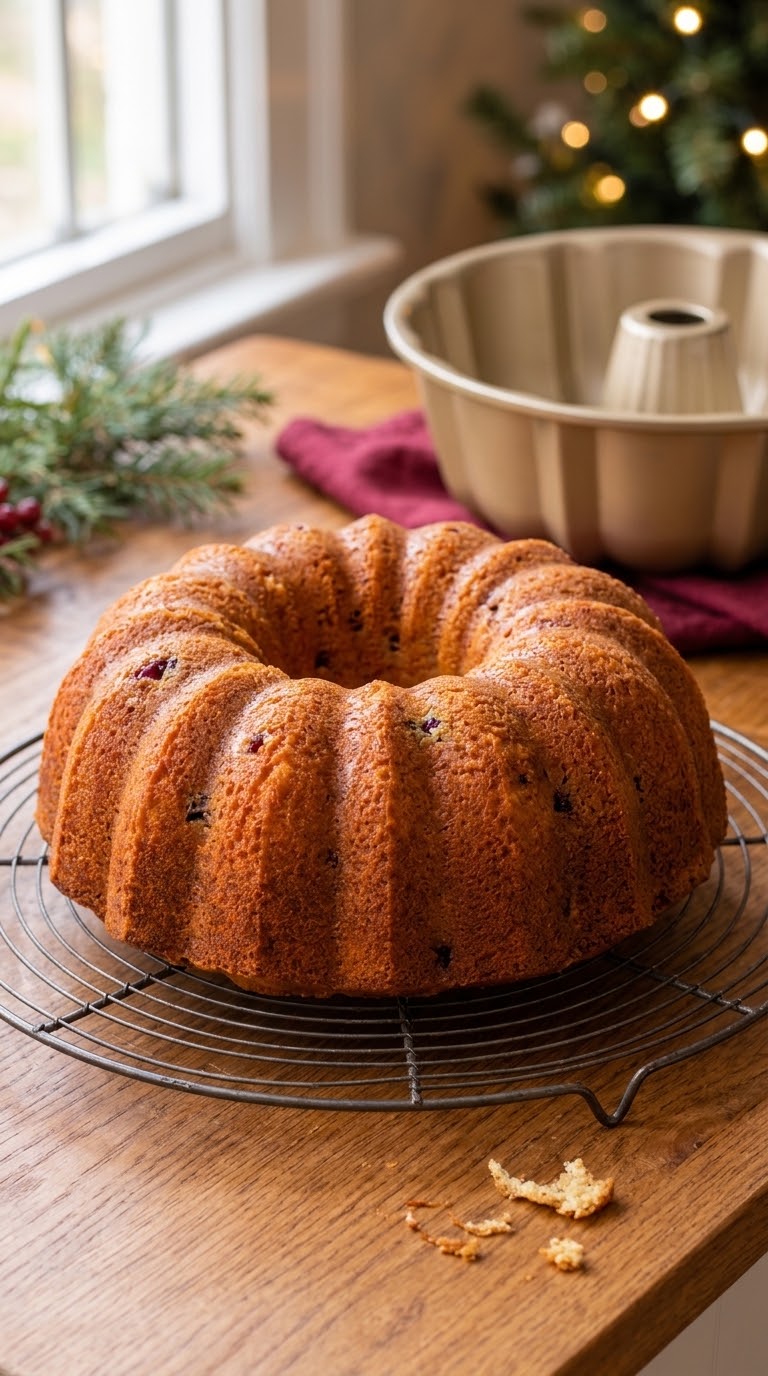
Set the pan on a cooling rack for about 15 minutes. Place the rack over the pan, hold them together securely with oven mitts, and invert carefully. Lift the pan straight up. Follow the pan manufacturer’s release guidance if it specifies a different resting time.
Let the unmolded cake cool completely before glazing, usually another 60–90 minutes or longer in a warm kitchen. A warm cake will melt the icing into a thin, translucent coating. If a small piece sticks, fit it back into place while the cake is still warm; once cooled, a little glaze can cover the join.
6. Make the Orange Glaze and Decorate
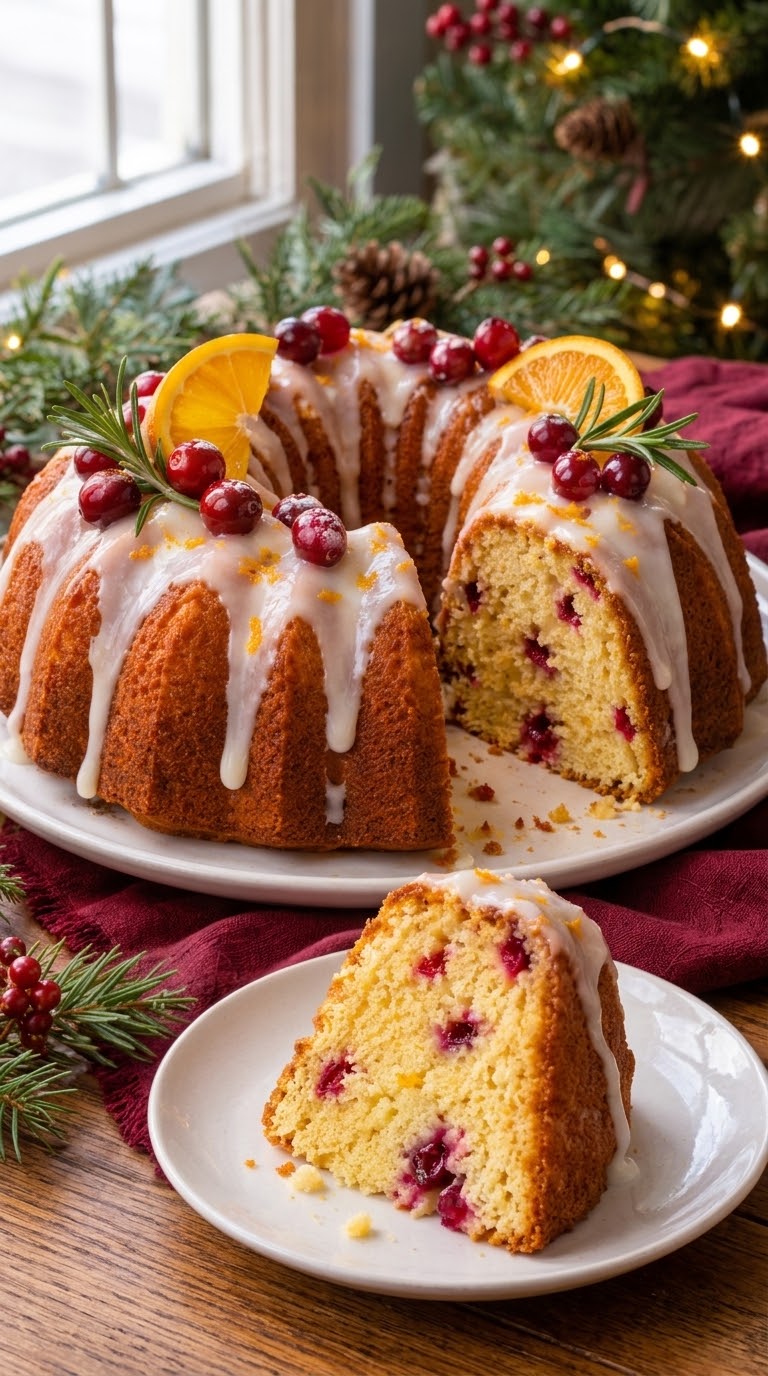
Put the sifted confectioners’ sugar in a bowl and stir in 2 tablespoons of orange juice. Add the remaining juice a teaspoon at a time until the glaze falls from a spoon in a thick ribbon. If it becomes too runny, stir in a little more sifted sugar.
Transfer the cool cake to a serving platter. Spoon the glaze over the crown and let it travel naturally down the ridges. For a snowy finish, leave some of the golden sides visible rather than pouring on enough icing to cover everything.
Add a few fresh cranberries and thin orange half-slices shortly before serving. Small rosemary sprigs give the top a festive green accent; remove them when slicing. Keep the decoration concentrated around part of the crown so the cake’s fluted shape remains visible.
Make-Ahead and Serving Ideas
Bake the cake a day ahead if that suits your holiday schedule. Cool it completely, cover it, and refrigerate it; glaze and add the fresh garnish on serving day. Let the cake lose its refrigerator chill before serving so the butter-rich crumb feels softer.
For a Christmas brunch with the same flavor pairing, prepare these cranberry orange overnight oats in advance and offer the cake in smaller slices alongside coffee. The oats are a separate breakfast option, which makes the menu more flexible.
Store leftover cake covered in the refrigerator, removing the fresh garnish first. Individual unglazed slices can also be wrapped and frozen; thaw them while still wrapped, then add fresh glaze if desired. Avoid covering a cake that is still warm, because trapped condensation makes the surface sticky.
Common Questions
Can I use dried cranberries?
Fresh or frozen cranberries give this cake its tart, juicy pockets. Dried cranberries are sweeter and chewier, so they will produce a different result. For the intended texture, use the fresh or frozen fruit listed rather than swapping in the same volume of dried berries.
Why did my cake turn out dense?
A Bundt butter cake naturally has a closer crumb than a sponge. If it is heavy or gummy, check for excess flour, overmixing after the flour was added, or an underbaked center. Spoon flour lightly into measuring cups and level it, or use the gram measurement. Check that the baking powder is still active.
Can I skip the glaze?
Yes. Serve the cake plain or dust it lightly with confectioners’ sugar just before serving. The glaze adds sweetness to balance the tart cranberries, so expect a sharper fruit flavor without it.
For another festive dessert with a creamy chocolate finish, try Hot Chocolate Lush. It gives your holiday dessert table a chilled option alongside this citrus cake.