You love your laminate floors because they look fancy without the fancy price tag. But they show dust faster than a black shirt at a cat café, and one wrong cleaner can leave streaks for days. Good news: cleaning laminate is easy once you know a few rules. Let’s skip the fluff and get right into what actually works—and what definitely doesn’t.
Know Your Enemy: Moisture and Abrasives
Laminate looks like wood, but it’s not hardwood. It has a photographic layer and a protective topcoat that hates excess water and rough scrubbing. So we keep it simple: light moisture, gentle tools, and products that won’t leave a film.
Golden rule: Avoid soaking the floor. Think “damp,” not “soggy.” Your future self will thank you.
Your No-Drama Daily Routine
You don’t need a 10-step ritual every day. Keep surface grit off, and you’ll prevent scratches and dullness.
- Dry dust first: Use a microfiber dust mop or vacuum with a hard-floor setting. Skip the beater bar—it can scratch.
- Hit the hotspots: Sweep under the kitchen table and by entryways where crumbs and dirt collect.
- Spot clean spills immediately: Wipe with a slightly damp microfiber cloth. No puddles. Ever.
Pro tip for pet owners
Pet hair loves static. A washable microfiber floor mop grabs it fast and doesn’t just push it around. IMO, it beats disposable dusters long-term.
The Right Mop and Cleaner (and Why Your Steam Mop is the Villain)
Let’s talk gear. You only need a few things to nail this.
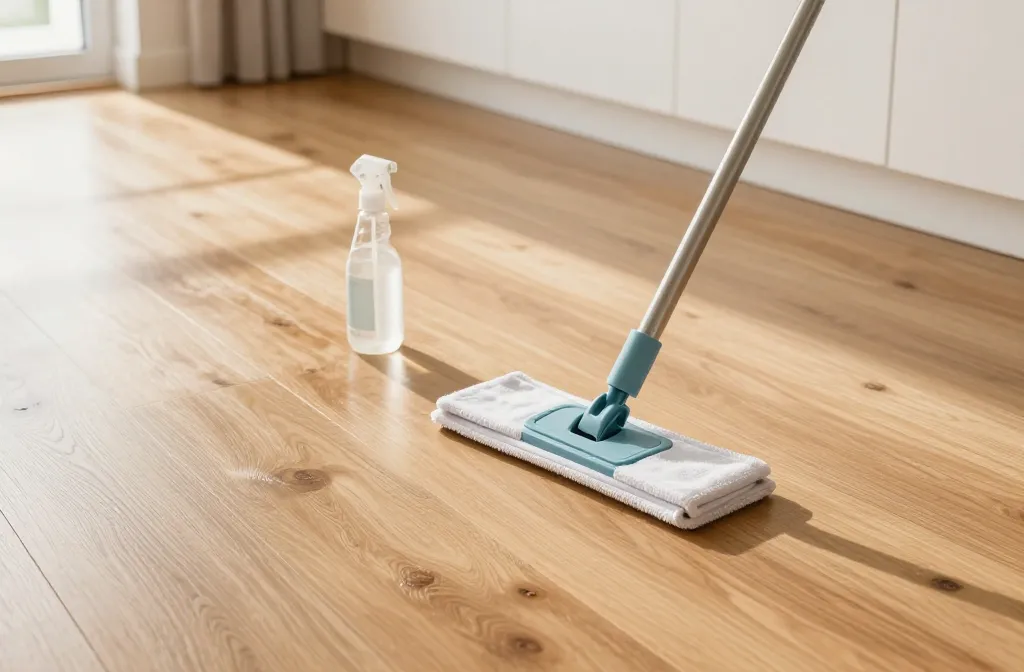
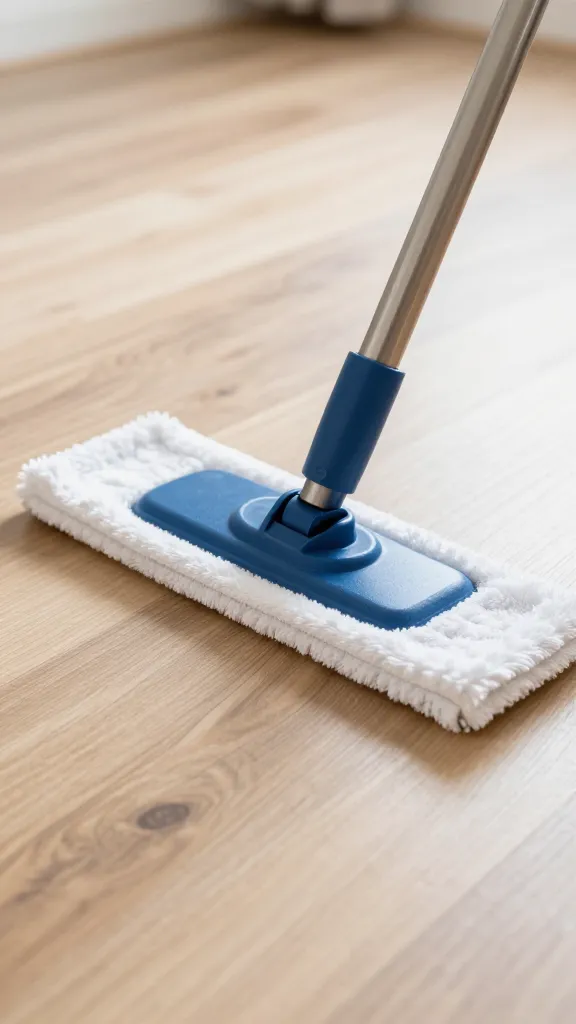
- Microfiber flat mop: Gentle, effective, and easy to wring out.
- Cleaner made for laminate: It should say “laminate” or “hard-surface” and “no rinse.”
- Bucket optional: A spray bottle works better because you control moisture.
Hard no: Steam mops. High heat and moisture can warp planks and destroy the protective layer. FYI, the warranty usually doesn’t cover that.
Can you DIY a cleaner?
Yes, but keep it mild. Mix 1 cup of warm water + a few drops of dish soap in a spray bottle. Mist lightly and mop. Avoid vinegar in high concentration—it can dull the finish over time. Occasional light vinegar use won’t burn the place down, but don’t make it your daily driver.
How to Mop Without Streaks
We’re aiming for squeaky clean, not sticky or streaky. Here’s the method that works every time.
- Vacuum or dry mop first. Remove grit so you don’t grind it in.
- Lightly mist the floor. Spray your cleaner onto the mop pad or directly on the floor in sections.
- Mop in the direction of the planks. This hides streaks and catches debris in seams.
- Rinse or swap pads as needed. A dirty pad just smears gunk around. Keep an extra on deck.
- Dry quickly. If anything looks wet after a minute, towel it off.
Streaks driving you nuts?
If you see haze, you probably used too much cleaner or the wrong kind. Switch to a no-residue laminate cleaner and use less. And wash your mop pads with minimal detergent—fabric softener can cause streaks.
Tackling Sticky Spots, Scuffs, and Mystery Marks
You don’t need harsh chemicals. Targeted tactics work better and keep the finish happy.
- Sticky spills (juice, soda, syrup): Dampen a microfiber cloth with warm water and a drop of dish soap. Wipe, then rinse and dry.
- Heel scuffs: Rub gently with a clean tennis ball or a melamine foam pad (Magic Eraser type). Go easy—light pressure only.
- Grease splatters: Hit with a small amount of laminate-safe cleaner, then buff dry.
- Gum or wax: Harden it with an ice pack, then lift with a plastic scraper held flat. Clean residue and dry.
Never use: Abrasive powders, wax-based products, or oil soaps. They leave residue and attract dirt like a magnet.
Prevent Dam age Before It Starts
A little prevention saves a lot of swearing later.
- Use felt pads under chair and furniture legs. Replace them when they compress or collect grit.
- Doormats are MVPs: One outside, one inside. Trap grit before it scratches up the floor.
- Lift, don’t drag. Slide heavy stuff on a blanket or sliders if you can’t lift it.
- Manage moisture: Wipe spills immediately. Use a tray under pet bowls and plants.
- Keep shoes reasonable: Stilettos and pebbles don’t play nice. House shoes for the win.
Sunlight and fading
Laminate can fade in direct sun. Rotate rugs and furniture occasionally. Close blinds during peak hours if your floor gets roasted daily.
Deeper Clean: Monthly Reset
Do a slightly more thorough clean every 3–4 weeks, or more if your household sees a lot of traffic.
- Move light furniture like chairs and small tables out of the way.
- Vacuum edges and corners with a soft brush attachment.
- Mop with a fresh pad and a laminate-specific cleaner. Work in sections.
- Inspect problem areas for chips or lifted edges. Address minor damage early.
FYI: You can’t sand and refinish laminate like hardwood. That’s why gentle, consistent care matters.
What to Do About Scratches and Chips
Laminate resists scratches well, but life happens. Small nicks? You’ve got options.
- Color-matched repair kits: Use a laminate floor touch-up marker or wax stick that matches your tone. Fill, blend, and buff lightly.
- Deep damage or bubbling: Replace the plank if possible. Many floating floors let you pop out a damaged board from an edge. If not, call a pro.
- Loose transitions or thresholds: Re-secure with the correct hardware. Avoid over-gluing—expansion gaps must stay functional.
FAQ
Can I use vinegar to clean laminate floors?
You can, but keep it dilute and occasional. Strong vinegar solutions can dull the protective finish over time. If you love DIY, use a light mix sparingly and follow with a water-damp pass. For routine cleaning, a laminate-safe commercial cleaner performs better with fewer streaks, IMO.
Is it safe to use a steam mop on laminate?
Nope. Steam forces moisture and heat in to seams and can cause swelling, warping, and edge damage. Manufacturers usually warn against it, and warranties often exclude steam-related issues. Stick with a damp microfiber mop.
How do I get rid of streaks and haze?
Use less product, switch to a no-residue cleaner, and mop with a clean pad. Wash your mop pads without fabric softener and use a small amount of detergent. Work in the direction of the planks and buff dry if needed.
What’s the best vacuum setting for laminate?
Use a hard-floor mode or turn off the beater bar/brush roll. A soft brush attachment helps along edges. If your vacuum can’t disable the brush, use a stick vacuum or a microfiber dust mop instead.
Can I use Murphy’s Oil Soap or wax?
Skip both. Oil soaps and waxes leave a film that attracts dirt and can make the floor dangerously slippery. Laminate doesn’t need “feeding”—it needs gentle cleaning and dry protection.
How often should I mop laminate floors?
Light mopping weekly works for most homes. High-traffic areas or kitchens might need two quick sessions a week. Daily dry dusting keeps grit away and makes mopping faster.
Wrap-Up: Keep It Simple, Keep It Shiny
Laminate floors stay gorgeous when you treat them gently: dry dust often, mop with a barely damp microfiber, and use a cleaner that won’t leave residue. Tackle spills fast, ban the steam mop, and pad your furniture feet. Do that, and your floors will keep fooling guests into thinking you paid hardwood money—no judgment if you let them believe it. IMO, simple beats fussy every time.