Your cast iron stove grates look like they survived a BBQ apocalypse? Good. That means you’ve been cooking. Grease, burnt-on sauce, and mystery gunk will build up no matter how tidy you are. The fix doesn’t require fancy products or a hazmat suit—just a few smart steps, a little patience, and maybe a podcast in the background. Let’s get those grates back to glory.
Know Your Enemy: Grease, Carbon, and Rust
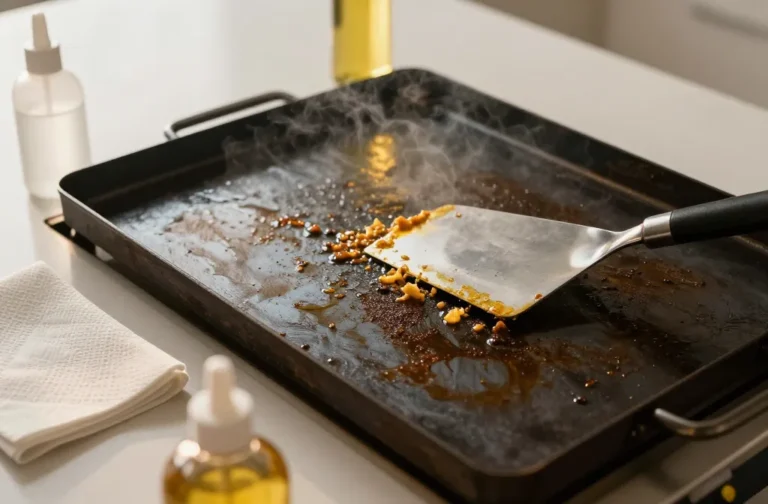
You don’t clean every mess the same way. Grease smears and smokes. Carbonized food bonds to the metal like emotional baggage. Rust shows up if water hangs around too long. Different mess, different move.
Most cast iron stove grates have an enamel coating. Some don’t. Why care? Because you can treat enameled grates a bit more aggressively. Bare cast iron needs gentler cleaning and careful drying to avoid rust. If you’re not sure, check your manual or tap the grate: enamel often feels smooth and slightly glossy.
Quick Daily Clean (So You Never Hate Yourself Later)
If you can spare five minutes after cooking, future-you will write you a thank-you note.
- Let the grates cool until warm, not hot. You want to avoid burns (obviously) and thermal shock.
- Wipe loose crumbs with a dry paper towel.
- Use a damp sponge with a drop of dish soap. Skip steel wool for daily cleans.
- Rinse with a wrung-out sponge and dry thoroughly with a towel.
FYI: Warm grates release grease faster than cold ones. It’s like the difference between cold pizza cheese and fresh-out-of-the-oven melty goodness. You get it.
Deep Clean: The No-Nonsense Method
When everyday wiping doesn’t cut it, go deeper. This routine tackles stubborn, cooked-on grime without wrecking your grates.
- Remove and soak. Fill your sink with hot water and a squirt of grease-cutting dish soap. Submerge the grates for 15–30 minutes. This softens the gunk so you don’t have to fight it.
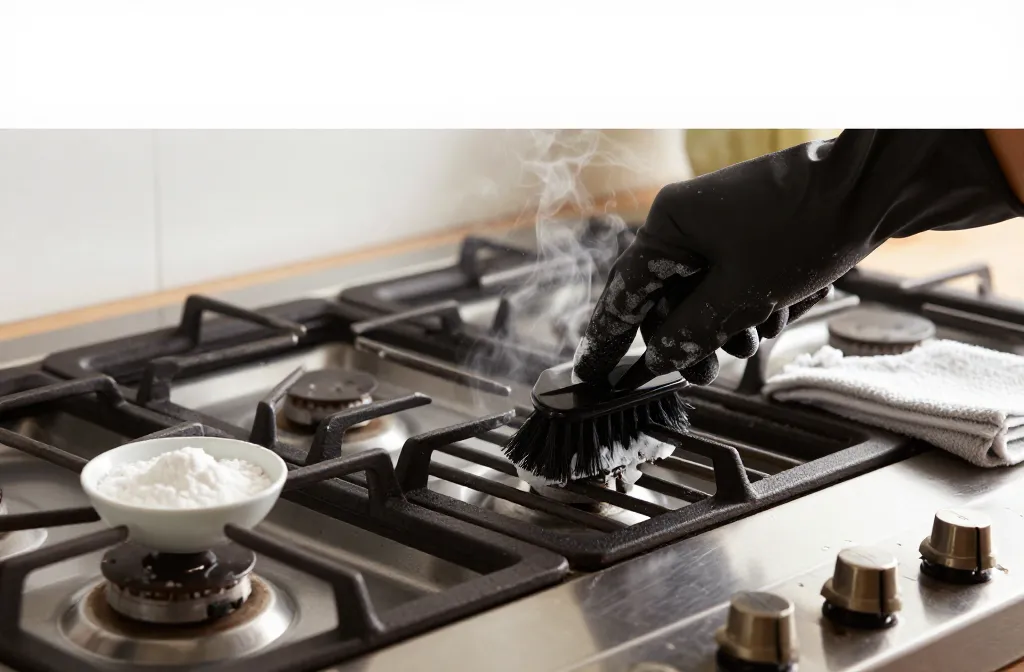
- Scrub smart. Use a non-scratch nylon scrubber or stiff nylon brush. Work the corners and undersides—crud loves to hide there.
- Hit the heavy spots. Sprinkle baking soda on trouble areas and scrub again. Baking soda acts like a gentle abrasive and deodorizer.
- Rinse and inspect. Still crusty? No shame. Repeat the baking soda step or move to the next tactic below.
- Dry completely. Towel-dry, then set grates on a low-warm burner or in a 200°F (93°C) oven for 10 minutes. No lingering moisture = no rust.
For the Seriously Stuck-On Stuff
If you’re battling carbon that laughs at dish soap, escalate—politely.
- Baking soda paste: Mix baking soda with a little water until thick. Spread it on burned areas and let it sit 20–30 minutes. Scrub again.
- Vinegar spritz: Lightly mist white vinegar over baking soda paste to fizz. It helps lift residue. Don’t soak bare cast iron in vinegar for long; it can encourage rust.
- Razor scraper (for enamel only): Hold a flat blade at a very low angle and gently scrape. Keep it controlled. Skip this if your grates aren’t enameled.
The Overnight Power Move: Bag-and-Soak (No, Not in Water)
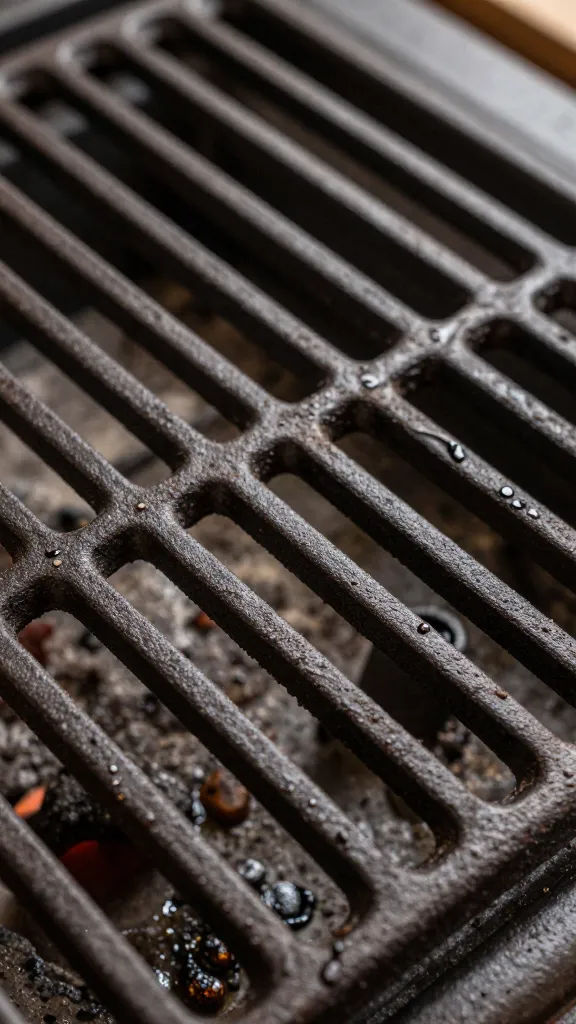
Want minimal scrubbing? The bag trick wins. It dissolves the baked-on grease while you sleep.
Ammonia Bag Method (for Outdoors and Enameled Grates)
Important: Use plain, sudsy ammonia—not scented. Do this outdoors or in a garage with open doors. Ammonia fumes are no joke.
- Place each grate in a heavy-duty zip-top bag or trash bag.
- Add 2–4 tablespoons of ammonia to the bag. You don’t need to submerge—the fumes do the work.
- Seal tightly and let it sit overnight.
- Open bags outdoors, avoid inhaling, and remove grates.
- Rinse thoroughly, then scrub with a nylon brush to remove loosened residue.
- Wash with dish soap, rinse again, and dry completely.
Alternative: Degreaser Spray
Not into ammonia? Use a kitchen-safe degreaser (citrus-based or a heavy-duty but cookware-safe option). Spray, let dwell per label, scrub, rinse, and dry. IMO, ammonia works faster on the gnarly stuff, but a solid degreaser gets you 80% there with less drama.
What Not to Do (Because Regret Is Hard to Scrub Off)
- Don’t run grates through the dishwasher unless the manufacturer says it’s fine. Detergents can dull enamel and encourage rust on bare spots.
- Don’t soak bare cast iron for hours. Short wash, quick scrub, immediate dry.
- No oven self-clean cycle. The extreme heat can crack enamel or warp metal.
- Avoid steel wool on enamel. It scratches. For bare cast iron, very fine steel wool works only if you re-season afterward.
- No bleach. It corrodes metal and stinks up your kitchen for no reason.
If Your Grates Are Bare Cast Iron: Clean, Then Season
Some stove grates come uncoated or with worn enamel. Treat them like a skillet.
- Clean: Use hot water, a drop of soap only if needed, and a stiff brush. Rinse fast.
- Dry immediately: Towel-dry, then heat on low for 5–10 minutes.
- Oil lightly: Rub a very thin film of high-smoke-point oil (canola, grapeseed) over the surface. Wipe off excess—no shine puddles.
- Heat to set: Place grates in a 350–400°F (175–205°C) oven for 45–60 minutes or set them over low burners for 20–30 minutes. This builds a protective layer and reduces sticking.
De-Rusting Bare Cast Iron
Light rust? Scrub with fine steel wool or a chainmail scrubber, rinse, dry, and re-season. Heavy rust? Use a rust eraser or a vinegar-and-water dip (1:1) for 5–10 minutes max, then rinse and season. Don’t overdo the vinegar or you’ll etch the surface.
Speed Hacks for Busy Weeks
Because life happens and marinara splatters.
- Line the drip trays or the cooktop surround with removable, heat-safe liners. Replace when gross.
- Steam assist: Boil a pot of water; the steam softens nearby splatters. Turn off heat, remove grates when safe, and wipe while warm.
- Brush nearby: Keep a dedicated nylon brush under the sink. One-minute scrub post-dinner = fewer deep cleans.
- Spot-scrape immediately if something burns on. A wooden scraper or silicone spatula won’t scratch enamel.
FAQ
Can I use oven cleaner on cast iron stove grates?
You can use oven cleaner on enameled grates if the product label allows it, but I’d keep it as a last resort. It’s harsh, smelly, and can dull finishes. For bare cast iron, skip it—clean, dry, and season instead.
How often should I deep clean the grates?
If you cook daily, aim for a deep clean every 2–4 weeks. Do a quick wipe after most meals and you’ll stretch the time. If you sear steaks every night (jealous), tighten that schedule.
My grates look gray and chalky. Did I ruin them?
Probably not. That chalky look often means soap residue or mineral deposits. Scrub with baking soda and water, rinse well, and dry fully. If they’re bare cast iron, re-season to restore color.
Is it safe to use wire brushes?
Use a nylon or brass brush. Steel wire brushes can scratch enamel and shed metal bits. For bare cast iron, fine steel wool is okay for rust removal if you season afterward.
Do I need to remove burner caps and clean under the grates too?
Yes, please. Food slides everywhere. Lift the grates, then the burner caps, and wipe the cooktop. Clean the burner ports with a dry brush or a paperclip gently—keep liquids out of gas ports.
Can I season enameled grates?
You don’t need to. Enamel doesn’t absorb oil like cast iron. Just keep them clean and dry. If food sticks, it’s usually buildup—time for a deeper scrub, not seasoning.
Wrap-Up: Clean Grates, Happy Cooking
Clean cast iron stove grates don’t just look good—they heat better and smoke less. Start with quick daily wipes, run the deep clean when things get crusty, and bring out the big guns (ammonia bag or degreaser) when necessary. Dry thoroughly every time, and season only if you’ve got bare cast iron. IMO, a little routine beats a marathon scrub any day. Now go make something that actually deserves those grates.