Your wood floors can look jaw-dropping with surprisingly little effort. The trick? Clean smarter, not harder—and definitely not with the same mop water you used on the garage. If you’ve been guessing and hoping for the best, let’s end the streak of streaks. Here’s how to clean wood floors so they shine without turning slippery or sad.
Know Your Finish First (It Matters More Than You Think)
Before you touch a mop, figure out what you’re dealing with. The finish decides your cleaning strategy, not the wood species itself. You don’t need a lab test—just a quick check.
- Sealed/Polyurethane: Most modern floors. They’re water-resistant on the surface. You can use a damp mop, not a wet one.
- Waxed or Oiled: Older or specialty floors. Water can stain. Skip water-based cleaners and use products made for wax/oil finishes.
- Engineered Wood: Similar rules to sealed hardwood, but avoid soaking. The top layer is real wood, and it’ll hate standing water.
Quick Test
Drip a tiny bit of water in a corner. If it beads up, you’ve likely got a sealed finish. If it darkens the wood, treat it like waxed/oiled and avoid water. Simple, right?
The Daily (Okay, Every-Other-Day) Routine
Dust and grit act like microscopic sandpaper. They scratch, dull, and make your floors look tired. Luckily, the fix is easy.
- Dry dust with a microfiber mop. It traps dust better than a broom. IMO, it’s the MVP of floor care.
- Use a vacuum with a hard-floor setting. No beater bar. Those bristles belong on carpet, not your walnut pride and joy.
- Spot-clean sticky spots with a damp cloth. No need to mop the whole floor because of one rogue jelly blob.
The Weekly Clean: Damp, Not Drenched
Once a week (or more if you host crumb-generating gremlins), do a gentle clean. The key word: gentle. No flood zones.
- Choose the right cleaner: Use a wood-floor cleaner specifically made for sealed floors. FYI: “All-purpose” often means “nope.”
- Prep the floor: Vacuum or dust first. You don’t want to scrub grit into the finish.
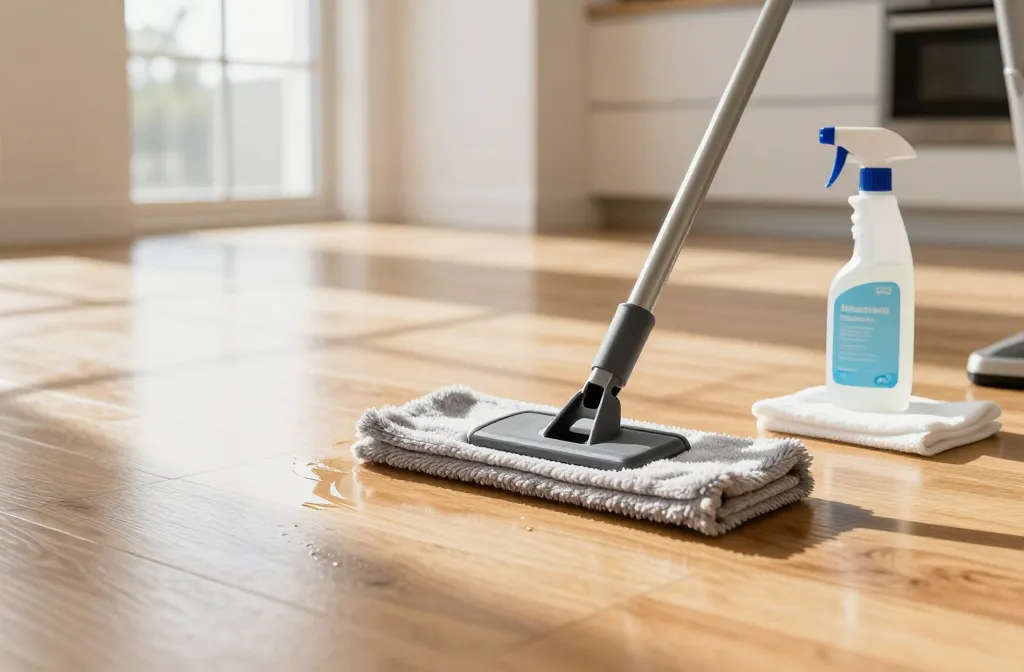
- Lightly dampen a microfiber mop. Wring it out like it owes you money. You want “just barely damp.”
- Mop in the direction of the grain. Work in sections and rinse/wring often.
- Dry as you go with a clean towel or dry mop. Standing water equals dull spots and warping. Hard pass.
What About Vinegar?
People swear by vinegar. Your floors don’t. It’s acidic and can dull finishes over time. Use a pH-balanced cleaner made for wood floors. Your future self will thank you.
Stains, Scuffs, and “Oops”—Fixes That Actually Work
Nobody lives in a museum. Stuff happens. Here’s how to handle it without panic.
- Scuff marks: Rub gently with a tennis ball or a melamine sponge (light pressure). Don’t go full Hulk.
- Sticky residue: A tiny bit of mineral spirits on a soft cloth can lift gunk on sealed floors. Test in a corner first.
- Water spots on sealed floors: Buff with a dry microfiber cloth. If they persist, a small dab of wood-floor polish might help.
- Black stains or rings: These likely penetrated the finish. You’ll need spot-sanding and refinishing. Not fun, but fixable.
Scratches: What’s Worth Fixing?
– Surface scratches: Use a floor polish or scratch concealer stick that matches your tone.
– Deeper scratches: A wood repair marker helps hide them.
– Gouges: Call a pro or accept them as “character.” IMO, a few battle scars look great.
Don’t Do This: The Hall of Fame of Bad Ideas
Strong opinions incoming, because these mistakes wreck floors fast.
- Don’t steam mop. Heat + moisture = sad, cupped boards.
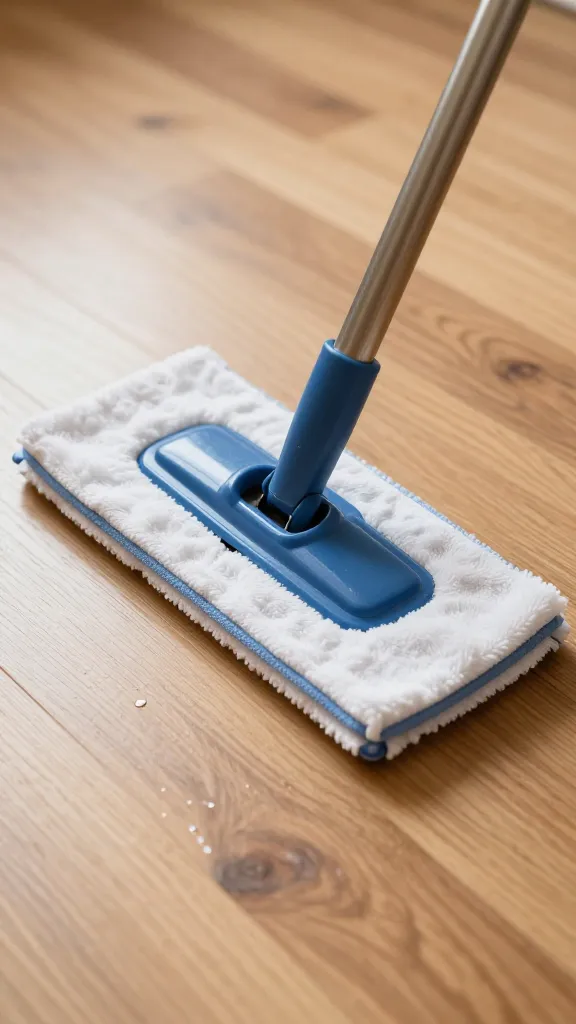
- Don’t soak the floor. Pools of water will find their way into seams and start drama.
- Don’t use wax on polyurethane. It makes a slippery mess and traps dirt.
- Don’t use abrasive powders. Save them for pots and pans, not oak planks.
- Don’t use oil soap on poly. It leaves residue and makes future refinishing a nightmare.
Tools and Products That Make Life Easier
You don’t need a closet full of fancy gear. A small, smart kit keeps your floors glowing.
- Microfiber dust mop: Wide head, washable pad. Use it constantly.
- Hard-floor vacuum: Soft roller or hard-floor setting.
- Spray wood-floor cleaner: pH-balanced, no residue, made for polyurethane.
- Flat microfiber mop: With removable, washable pads. Skip string mops.
- Felt pads: Stick them under every chair and table leg. Every. Single. One.
- Entry mats: Front and back doors. Grit stays out, your sanity stays in.
DIY Cleaner (When You Must)
If you can’t get a proper wood-floor cleaner, mix warm water with a few drops of mild dish soap. That’s it. No vinegar cocktail, no mystery oils. Keep the mop damp, not wet, and dry immediately.
Deep Cleaning Without Ruining Things
Sometimes weekly cleaning won’t cut it—party aftermath, pet tornado, renovation dust. Go deeper, but safely.
- Move furniture carefully. Use sliders or lift. Dragging is how villains move couches.
- Vacuum thoroughly. Baseboards too. Dust hides everywhere.
- Use a concentrated wood-floor cleaner diluted per label. Work in small sections.
- Scrub trouble spots with a soft-bristle brush. Gentle pressure, circular motion.
- Rinse your mop often and dry immediately. Keep airflow going with fans.
When to Recoat or Refinish
– Recoat (new layer of polyurethane) every 3–7 years if the finish looks dull but the wood looks fine.
– Refinish (sand to bare wood + new finish) if you see grey wood, deep scratches, or peeling. It’s a weekend project… for pros.
Preventive Magic: Keep Them Shining Longer
You clean less when you protect more. That’s the real cheat code.
- Shoes off at the door. Especially stilettos and golf spikes. You know why.
- Control humidity: Aim for 35–55%. Wood moves with the seasons; you just reduce the drama.
- Rotate rugs: Sun fades wood. Rugs help, but rotate to avoid weird tan lines.
- Trim pet nails: Your dog doesn’t mean to scratch the floor. But those click-clacks add up.
- Clean spills immediately: Water, wine, salsa—don’t let them linger.
FAQ
Can I use a steam mop on wood floors?
Short answer: no. Steam forces moisture and heat into seams and can cause cupping, warping, and a dull finish. Use a lightly damp microfiber mop and a wood-safe cleaner instead.
How often should I mop wood floors?
Weekly works for most homes. If you have kids, pets, or a constant parade of guests, mop twice a week. Dust or vacuum more often—quick passes keep scratches at bay.
What’s the best cleaner for polyurethane-sealed floors?
Use a pH-balanced wood-floor cleaner designed for polyurethane finishes. It leaves no residue and won’t cloud the surface. FYI, avoid oil soaps and waxes on poly—wrong chemistry.
Do area rugs damage wood floors?
Rugs help, but choose ones with a natural rubber or felt pad. Skip PVC or cheap latex backings—they can discolor finishes. Also, rotate rugs to prevent uneven sun fading.
How do I know if my floors need refinishing?
If you see grey wood, deep scratches through the finish, or peeling, it’s time. If the floor just looks dull or scuffed, a screen-and-recoat (no full sanding) might bring back the glow.
Is vinegar okay in a pinch?
You can dilute it, but over time it can dull finishes. IMO, keep a small bottle of proper wood-floor cleaner around. It lasts ages and saves your finish.
Wrap-Up: Keep It Simple, Keep It Dry
Clean wood floors love minimal water, the right cleaner, and regular dusting. That’s the whole game. Protect with pads and rugs, fix scuffs fast, and recoat before things get dire. Do that, and your floors will keep flexing their natural beauty without demanding a weekend of regrets.