Copper looks amazing when it glows like a tiny sunset. Then it tarnishes and suddenly your chic decor screams “pirate treasure found in a swamp.” The good news? You can bring back that warm shine with simple stuff you already own. No drama, no harsh chemicals (unless you want them), and no need to baby your elbows.
First, know your copper: solid, plated, or lacquered?
You don’t clean all copper the same way. Check if your piece is solid, copper-plated, or lacquered. Why? Because the wrong method can strip plating or scratch a finish faster than you can say “patina.”
- Solid copper: Heavier, usually tarnishes evenly, and a magnet won’t stick.
- Copper-plated: Thin copper layer over another metal. Be gentle—abrasives can reveal the base metal.
- Lacquered: Shiny and even, often on decor. If it looks perfect and never tarnishes, it’s probably coated.
Quick test tips
- Use a magnet. If it sticks, you’ve got plating or a different core.
- Look for chips or edges—plating can show wear at corners.
- Run a thumb over the surface. Lacquer feels a bit “separate” and super smooth.
Rule of thumb: when in doubt, start gentle.
The pantry method: vinegar, salt, and flour (aka the copper classic)
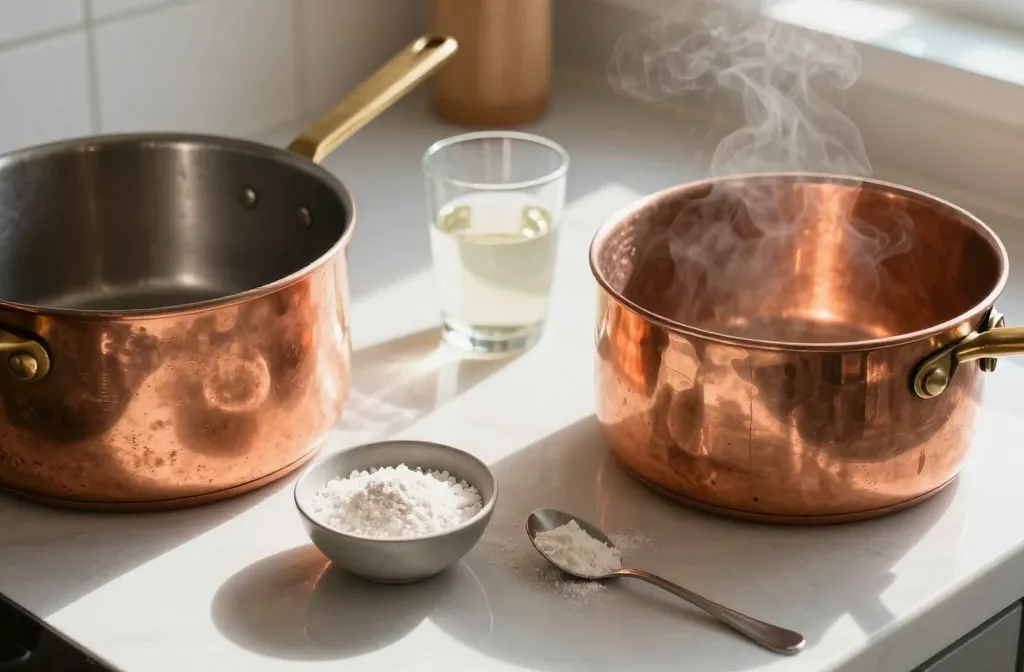
This is the go-to home remedy that works like a charm—and it costs basically nothing. Vinegar’s acid + salt’s abrasiveness + flour’s thickening = a friendly scrub that gets results.
What you need
- White vinegar (or lemon juice)
- Table salt
- All-purpose flour (optional, but helpful)
- Soft cloths or sponges
- Warm water
How to do it
- Mix a paste: 1 tablespoon salt + 1/2 cup vinegar, stir in flour until it’s spreadable.
- Slather it on: Coat the copper evenly. Aim for a thin, complete layer.
- Wait 10–20 minutes: Watch the magic happen. Don’t let it dry out completely—mist it if needed.
- Rub gently: Use a soft cloth or sponge, small circles. No heavy elbow grease.
- Rinse and dry: Warm water, then buff dry with a clean cloth.
FYI: Skip this method on lacquered pieces unless you plan to remove the lacquer first (details below).
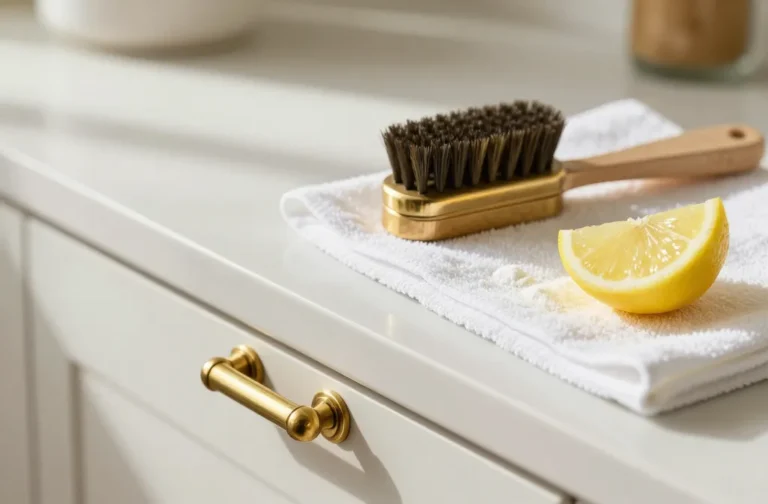
Lemon and salt: the five-minute shine
No vinegar? No problem. Lemon’s acidity loves copper. It’s quick, it smells nice, and you’ll feel like a 1950s TV homemaker in the cutest way.
Fast version
- Cut a lemon in half.
- Dip the cut side in salt.
- Rub the lemon directly onto the copper.
- Rinse with warm water and dry thoroughly.
If stains cling on (rude), repeat once and call it a day. Don’t go nuclear with scrubbing—especially on thin pieces.
When you actually want the patina (and when you don’t)
Patina gives copper that moody, old-soul vibe. You either love it or you don’t. IMO, light patina looks great on decor, but cookware and sinks usually look better bright.
- Keep patina: Clean with mild soap and water only. Dry well. Skip acids.
- Remove patina: Use the vinegar/lemon methods or a commercial copper polish.
Pro tip: protect what you just cleaned
After polishing, apply a thin coat of microcrystalline wax or beeswax. Buff lightly. It creates a barrier against oxygen and fingerprints, so you don’t have to do this again next week.
For heavy tarnish: escalate carefully
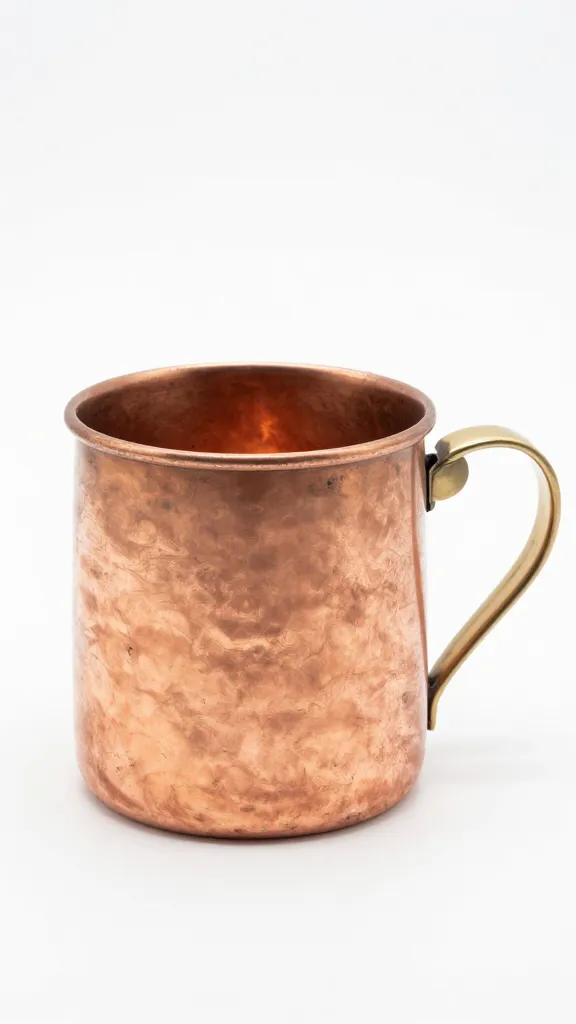
Sometimes tarnish digs in like it pays rent. You have options, but test first.
- Salted vinegar soak: Mix 1 cup white vinegar + 1 tablespoon salt in a non-metal bowl. Submerge small items for 5–15 minutes. Rinse and dry.
- Ketchup trick: Smear ketchup on, wait 10–15 minutes, then rinse and buff. It’s the tomato acids—sneaky but effective.
- Commercial copper cleaner: Use a brand made for copper, follow the label, and wear gloves. Great for badly tarnished cookware.
Avoid steel wool or harsh abrasives unless you like scratches and tears (on your soul and the copper).
What about heat stains on copper cookware?
– Use a non-scratch scrub sponge with a paste of baking soda and water on the outside only.
– For the inside: follow the manufacturer’s guidance. Many copper pans line with tin or stainless steel—treat that surface accordingly.
– Never use acids on tin lining. It’s delicate.
Dealing with lacquer: remove it or work around it
Lacquer keeps copper shiny, but once it chips, it looks patchy. You have two paths:
- Keep the lacquer: Clean with mild soap and water. Dry and buff. Don’t use acids or abrasives.
- Remove the lacquer: Use a lacquer remover or acetone in a ventilated space. Rinse, then polish the bare copper with the vinegar/lemon methods.
Re-lacquering basics
If you want long-term shine:
- Clean the copper until spotless. Any residue will haunt you later.
- Degrease with isopropyl alcohol.
- Apply a clear metal lacquer in thin, even coats. Let it cure fully per label.
FYI: Waxing is easier than lacquer and looks more natural, but it needs occasional refreshes.
Daily care: keep the glow without the grind
You don’t need a full spa day for copper every week. A few habits go a long way.
- Dry immediately after washing—water spots start the tarnish party.
- Handle with clean hands: Finger oils = splotchy tarnish.
- Store in a dry place, away from steamy kitchens if it’s decorative.
- Light buffing with a soft cloth keeps oxidation from settling.
Quick maintenance paste (30 seconds)
Mix a dab of lemon juice with a pinch of baking soda. Rub gently, rinse, and dry. It’s mild, fast, and perfect for touch-ups.
Common mistakes that wreck copper
You can avoid most disasters with a few “don’ts.”
- No dishwasher for copper or copper-bottom cookware. Detergents and heat wreck finishes.
- No bleach or ammonia: They discolor copper and can pit the surface.
- No hard scrubbing pads or powders. Micro-scratches invite more tarnish.
- Don’t soak lacquered items: Water can creep under the coating and lift it.
- Don’t forget the rinse: Acid residue keeps etching if you leave it on.
FAQs
Can I use baking soda alone to clean copper?
You can, but it works best as a mild abrasive paired with an acid like lemon juice. Baking soda by itself removes grime, not deep tarnish. Combine it with lemon, rub gently, rinse, and dry.
Is it safe to clean the inside of copper cookware with vinegar?
Only if the inside is stainless steel. If it’s tin-lined (common in traditional copper pans), skip acids. Clean tin with mild soap, warm water, and a soft sponge. Dry thoroughly to prevent dulling.
How do I know if my copper is lacquered?
Lacquered copper looks evenly glossy and doesn’t tarnish, even in humid rooms. If you see perfect shine with zero patina, it’s probably coated. Lightly scratch an inconspicuous spot with a fingernail—if a film peels, that’s lacquer (don’t go wild).
Why does my copper tarnish so fast after cleaning?
You probably left a bit of acid or moisture on the surface, or you touched it with oily fingers (we all do). Rinse thoroughly, dry completely, and apply a thin layer of wax. That slows oxidation big time, IMO.
Can I restore copper that looks almost black?
Yes, but expect a few rounds. Start with a vinegar-and-salt soak, then move to a commercial polish if needed. Rinse and dry between steps, and protect the finish after. Patience wins here.
What’s the easiest method for jewelry?
Use a soft cloth with a tiny bit of lemon juice and salt, then rinse and dry. Avoid soaking pieces with stones or glue. Finish with a microfiber buff to avoid micro-scratches.
Conclusion
Copper doesn’t demand much—just a little attention and the right touch. Start gentle, escalate only when needed, and protect that fresh shine with wax or lacquer. Do that, and your copper will glow like it owns the room. Honestly, it kind of does.