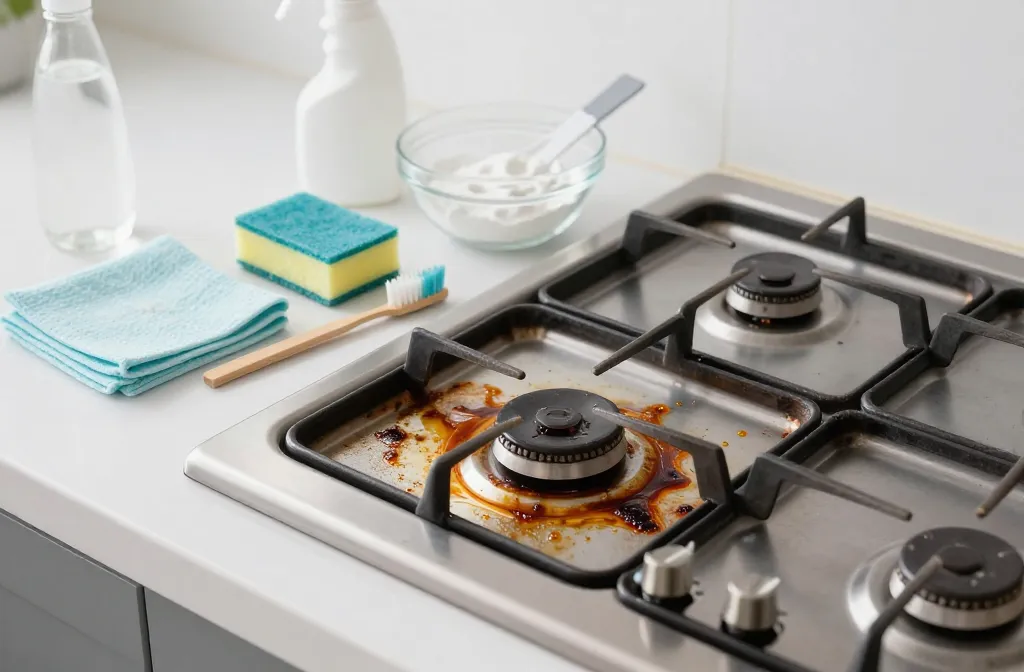
You cooked up a feast, and now your gas stove top looks like it survived a food fight. Burnt-on sauce, greasy grates, mystery splatters that might be from last month—we’ve all been there. The good news? You can get it sparkling again without scrubbing your arms off. Let’s clean it up fast, smart, and with minimal drama.
Get Your Gear Together
You don’t need fancy cleaners or a hazmat suit. Grab a few basics and you’re golden. If you want to go natural, that works too.
- Dish soap (grease-cutting kind)
- Baking soda and white vinegar
- Microfiber cloths and soft sponges (no steel wool on the surface!)
- Old toothbrush or small nylon brush
- Plastic scraper or old gift card
- Rubbing alcohol (for final shine)
- Ammonia or degreaser (optional, for disaster-level grime on grates)
- Paper towels or bar towels
- Q-tips for tiny crevices
FYI: If your stove has a stainless surface, also snag a stainless-safe cleaner to avoid streaks.
Turn It Off, Cool It Down, Disassemble Like a Pro
First things first: turn off the gas and let the stove get completely cool. Don’t scrub hot parts unless you enjoy burns and streaks. Remove grates, burner caps, and knobs (if they pull off easily—most do). Set them aside so you can focus on the main surface.
Snap a quick photo if you’re worried about burner cap placement. It’s not rocket science, but IMO, photos save headaches.
Soak the Grates and Burner Caps
Your grates take the most abuse. Give them a spa day. Fill your sink with hot water and a generous squeeze of dish soap. Submerge the grates and caps for 20–30 minutes.
For Heavy, Crusty Buildup
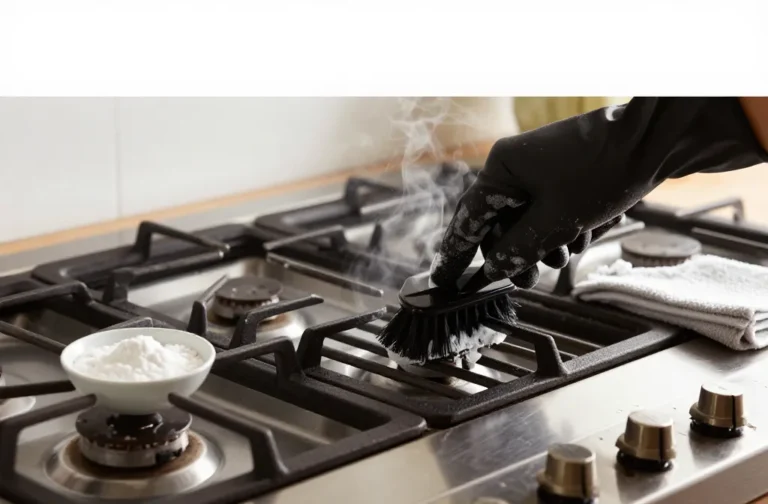
- Baking soda paste: Mix 3 parts baking soda with 1 part water, slather it on, and let it sit 15–20 minutes before scrubbing.
- Ammonia-in-a-bag method: For cast-iron grates only. Place a grate in a sturdy zip-top bag with a few tablespoons of ammonia. Seal and leave it outside overnight. The fumes break down gunk. Rinse thoroughly the next day. Ventilate well—don’t huff it, please.
- No dishwasher for cast iron: It can rust or dull the finish. Hand-wash and dry thoroughly.
Tackle the Stove Surface
Wipe off loose crumbs first. You’ll avoid smearing crunchy bits into scratches. Then spray the surface with warm water and a drop of dish soap, or use a 1:1 mix of vinegar and water. Let it sit a minute so grease starts surrendering.
Break Down the Battle Zones
- Burner base area: Use a damp cloth around the rings. A toothbrush helps around screws and seams. Don’t flood the area—moisture and electronics hate each other.
- Knob area: If the knobs come off, great—soak them briefly in soapy water. Wipe the posts carefully with a damp cloth, not a dripping one.
- Control panel: Light hand only. Use a barely damp cloth and a tiny bit of dish soap. No abrasive pads unless you enjoy missing labels.
Stubborn, Burnt-On Spots
- Baking soda + hot water to make a thick paste. Spread it on the spot for 10–15 minutes.
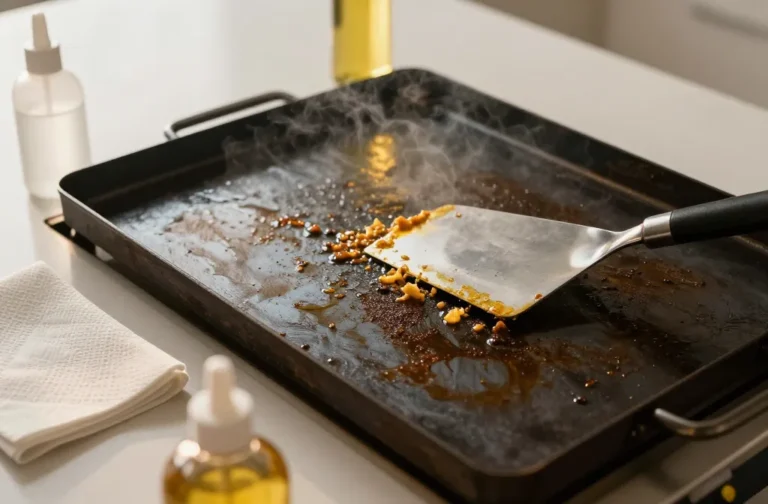
- Gently scrape with a plastic scraper or old gift card. Slow and steady wins here.
- If needed, mist with vinegar to fizz, then wipe. Magic.
Still stuck? A drop of cooking oil on a cloth can soften old grease. Wipe with soapy water after to remove any residue.
Clean the Burners Without Messing Them Up
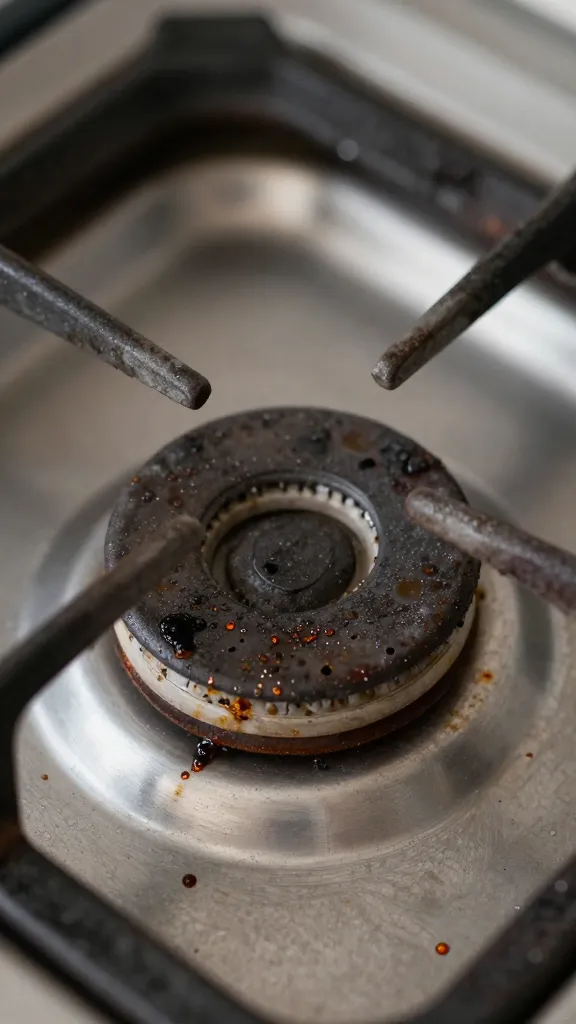
Gas burners work best when holes stay clear. Don’t poke them with needles unless you like uneven flames. Use a brush and warm, soapy water on removable parts only.
Unclogging Ports the Safe Way
- Use a soft brush to clear debris from ports (the tiny holes).
- Toothpicks help dislodge gunk gently. Toss them after—don’t jam them in.
- Dry thoroughly. Moisture makes ignition fussy.
If you removed any burner bases that connect to wires, make sure everything goes back exactly as it was. No freestyle engineering, please.
Rinse, Dry, and Reassemble
Now do a clean-water wipe to remove soap and cleaner residue. Follow with a dry microfiber cloth until the surface looks streak-free. Dry grates and caps completely—heat plus water equals rust, which we don’t love.
Re-seat the burner caps carefully. If they sit crooked, the flame may click forever or light unevenly. Turn a burner on for a second to confirm a strong, even flame once everything’s back together.
Make Stainless Shine (Without the Streaks)
If you’ve got a stainless top or trim, use a stainless-safe cleaner or a tiny bit of mineral oil on a microfiber cloth. Wipe with the grain, not against it. Buff until it gleams like a new toy.
For a quick, squeaky finish everywhere, wipe with a little rubbing alcohol. It evaporates fast and leaves things streak-free. FYI: keep it away from open flames until dry. Obvious, but worth saying.
Quick Maintenance So You Don’t Repeat This Chaos
Want to avoid another deep clean next week? Build a tiny routine. It takes five minutes tops.
- After cooking: Wipe spills while the stove’s warm (not hot). Warm grime lifts easier.
- Weekly: Pop off grates and caps for a fast sink wash. Ten minutes, done.
- Monthly: Do a deeper clean on burners and a polish pass on stainless.
- Pro move: Keep a small spray bottle of vinegar-water on the counter. Two spritzes after dinner, wipe, peace restored.
IMO, small cleanings beat weekend marathons every time.
FAQs
Can I use oven cleaner on my gas stove top?
You can use it on removable cast-iron grates if the label says it’s safe, but avoid spraying it on the main surface or control panel. It can discolor finishes and eat away at markings. Stick to dish soap, baking soda, and vinegar for the top.
What if my burners won’t light after cleaning?
Check that the burner caps sit correctly and the ports look clear. Make sure every part feels dry—moisture can block ignition. If it still clicks without lighting, lift the cap, reposition it, and try again. Worst case, wait an hour for hidden moisture to evaporate.
Is vinegar safe for stainless steel?
Yes, in moderation. Wipe with vinegar, then buff dry with a microfiber cloth. For a flawless finish, follow with a stainless cleaner or a drop of mineral oil. Don’t let vinegar sit for ages—it can dull the shine if you ignore it.
How do I remove melted plastic or sugar spills?
Let the stove cool fully. Use a plastic scraper to lift off the bulk. Then apply a baking soda paste, wait 10 minutes, and scrub gently. Avoid metal scrapers—they scratch, and then you’ll be mad every time the light hits that spot.
Can I put burner caps and grates in the dishwasher?
Grates made of cast iron generally do better with hand washing to avoid rust and dulling. Enameled grates sometimes survive the dishwasher, but check your manual. Burner caps usually handle the dishwasher fine, but dry them thoroughly before reinstalling.
What’s the best cleaner for heavy grease?
A strong degreasing dish soap and hot water combo works great. For truly stubborn grease, use a dedicated degreaser or the ammonia-in-a-bag trick for grates. Always rinse and dry well to avoid residue and smells.
Conclusion
Cleaning a gas stove top doesn’t need elbow-destroying effort or a cart of chemicals. With a soak here, a paste there, and a little smart scraping, you’ll bring back the shine fast. Keep a simple routine and you’ll never face the post-apocalypse grime again. Your future self—and your dinner guests—will thank you.