Your shower head used to blast you awake. Now it kind of… dribbles? No, your water pressure didn’t get shy overnight. Mineral buildup likely clogged those tiny nozzles. The good news: you can fix it today with stuff already in your kitchen. Let’s restore that glorious spray and maybe even retire your “I’ll clean it next week” lie.
Why your shower head turned traitor
Hard water leaves behind minerals like calcium and lime. Those dry in the nozzles and choke the flow. Add a sprinkle of soap scum and maybe some bacteria, and boom: your shower head sprays like a garden hose with a thumb over it. Luckily, you can dissolve that gunk without harsh chemicals or a full bathroom remodel.
What you’ll need (nothing fancy)
Basic supplies:
- White vinegar (the regular cheap stuff works great)
- Baking soda (optional but helpful)
- A plastic bag (quart or gallon size)
- Rubber band or zip tie
- An old toothbrush or soft brush
- Microfiber cloth
- Needle or toothpick (for stubborn nozzles)
- Adjustable wrench (only if you plan to remove the head)
- Plumber’s tape (Teflon tape, if you remove it)
FYI: Skip bleach. It can damage finishes and rubber parts, and it doesn’t dissolve minerals anyway.
The quick fix: Clean it without taking it off
If you want fast results with minimal effort, this is the move. It works on most fixed heads and handhelds you don’t want to detach.
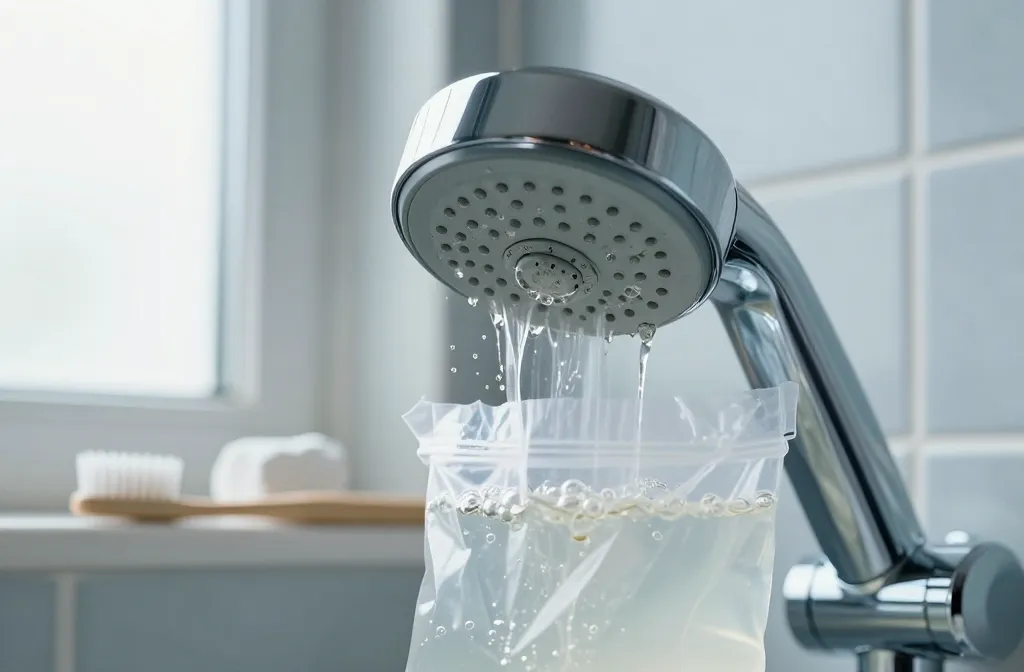
- Fill the bag with vinegar. About halfway. Add a tablespoon of baking soda if you want some fizzy action. It helps loosen grime.
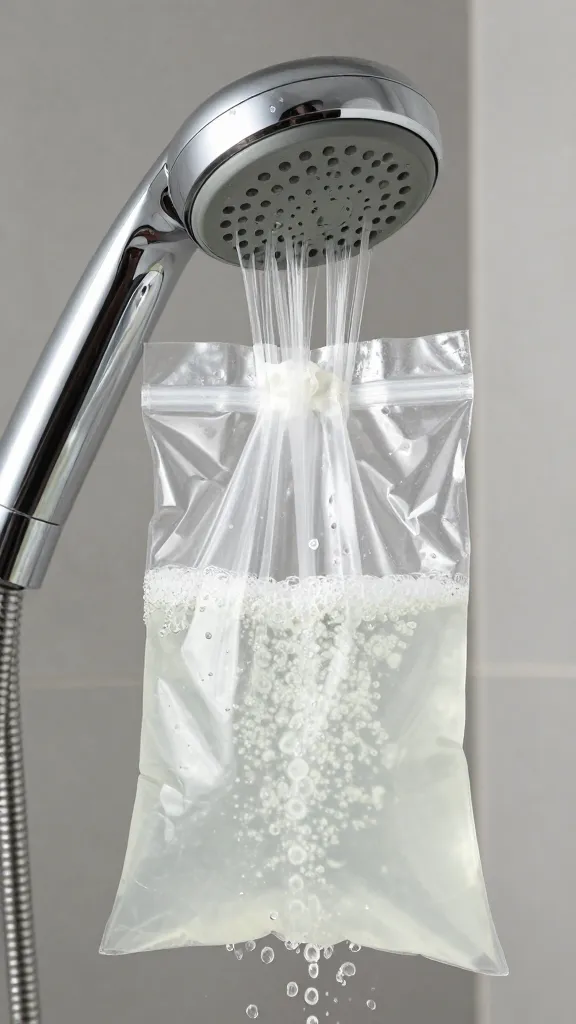
- Submerge the shower head. Slip the bag over so the nozzles sit fully in the vinegar. Secure it with a rubber band or zip tie. Make sure it won’t slip off and create a vinegar crime scene.
- Soak it. Let it sit for 1–2 hours. For very stubborn buildup, go up to 6–8 hours. Don’t go overnight on plated or specialty finishes (nickel, brass) to avoid dulling.
- Scrub and rinse. Remove the bag, scrub the nozzles with a toothbrush, and run hot water for a minute to flush out loosened gunk.
- Poke the stragglers. If some jets still misbehave, gently use a toothpick or a soft plastic bristle in each nozzle. Don’t jam a metal needle into soft silicone nozzles unless you like leaks.
When to use the bag method
Use it when the head doesn’t have an easy filter to access, you rent and don’t want tools out, or you simply want minimal effort. IMO, this fixes 80% of low-flow drama.
The deep clean: Remove and descale like a pro
If the easy route didn’t fully revive it—or you haven’t cleaned it since, uh, “the before times”—do the full reset.
- Turn off the water. You don’t need the main line, just make sure the shower’s off. Place a towel over the drain to catch dropped parts. Trust me.
- Remove the shower head. Hand-loosen first. If it’s stuck, wrap the connection with a cloth and use an adjustable wrench. Grip firmly but don’t Hulk out and scratch the finish.
- Disassemble what you can. Many heads have a faceplate or flow restrictor you can gently pop out. Snap a pic before you pull things apart—future you will thank present you.
- Soak parts in vinegar. Use a bowl or bucket. Submerge metal or plastic parts for 30 minutes to 2 hours. For very stubborn scale, warm the vinegar first or do two rounds. Avoid soaking rubber gaskets too long; wipe those instead.
- Scrub smart. Use the toothbrush on crevices and aerators. For tight mineral rings, make a paste of baking soda + a little water and scrub softly.
- Rinse thoroughly. Flush each piece under hot water until no grit remains. Shake water through the nozzles.
- Reassemble and tape. Wrap plumber’s tape clockwise on the shower arm threads (2–3 wraps). Reattach the head snugly—hand-tight, then a quarter-turn with the wrench if needed.
- Flush the head. Run hot water for a minute to clear any lingering debris. Check for leaks and tighten slightly if you see drips.
Bonus: Replace the washer
If you already removed the head, swap the old rubber washer for a new one. Cheap part, big payoff—no more mystery drips.
Special finishes and filters: Don’t wreck the pretty stuff
Some finishes require a gentler touch. You can still clean them without ruining the vibe.
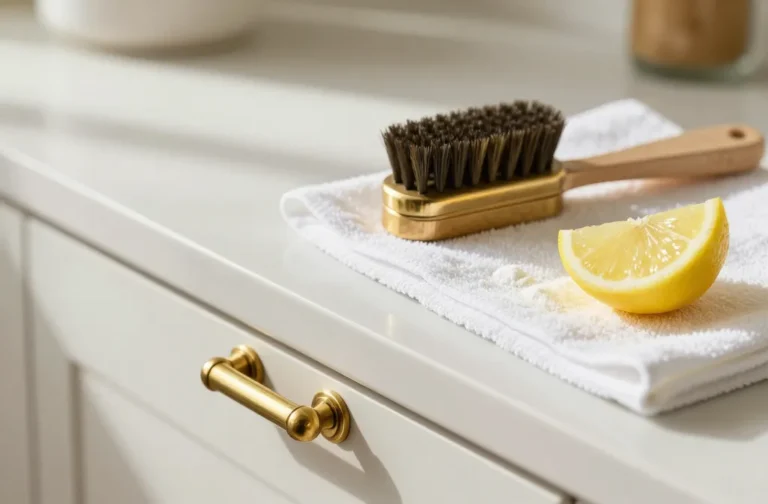
- Brushed nickel, brass, gold, matte black: Do shorter vinegar soaks (30–60 minutes). Wipe immediately with water and dry with a microfiber cloth.
- Silicone nozzles: Many modern heads use soft nozzles. Just rub each nozzle with your finger or a soft brush to break scale. Easy win.
- Built-in filters or cartridges: Check your manual. Rinse filters under water instead of soaking them in vinegar unless the manufacturer says it’s safe.
Prevent buildup so you don’t have to do this again soon
Consistent micro-maintenance beats mega-cleaning every six months. Minimal effort, big payoff.
- Once a month: Run a 15-minute vinegar bag soak. Quick scrub. Done.
- After steamy showers: Wipe the face of the shower head. You’ll reduce soap scum sticking to it.
- Install a sediment filter: If your area sends grit through the lines, a cheap inline filter on the shower arm helps.
- Consider a water softener: If your kettle looks like a geology exhibit, softening saves your fixtures (and your skin). Not cheap, but solid long-term move, FYI.
How often should you deep clean?
Every 3–6 months for hard water. If you see diagonal spray or sputtering, that’s your nudge to clean sooner.
Troubleshooting weird spray patterns
Your shower head still acting moody? Try these rapid fixes.
- Sprays sideways: One blocked nozzle. Poke gently, then run hot water.
- Low pressure everywhere: Check the flow restrictor. Clean or remove only if local regulations allow.
- Drips after shutoff: Replace the washer or tape. Also check the connection for cross-threading.
- Smells funky: Soak longer, then run hot water for 2–3 minutes. You can finish with a 1:3 hydrogen peroxide rinse for odor (keep it brief and rinse thoroughly).
FAQs
Can I use something stronger than vinegar?
You can, but you probably don’t need to. Vinegar dissolves mineral deposits safely for most finishes. Commercial descalers work faster, but read the label carefully and test a small area first. IMO, vinegar hits the sweet spot of cheap, safe, and effective.
Is it safe to clean a shower head with bleach?
Skip bleach. It won’t dissolve mineral buildup, and it can damage finishes, degrade rubber parts, and create nasty fumes if mixed with anything else. Vinegar or a dedicated descaler beats bleach every time for this job.
What if I have a fancy rain shower head?
Treat it gently. Do a bag soak if you can’t remove it easily, or remove and soak the faceplate only. Shorter soaks protect the finish. Massage silicone nozzles with your fingers to clear scale, then flush with hot water.
My shower head still has low pressure after cleaning. Now what?
Check the restrictor, the supply valve, and any inline filters. Sediment can clog those too. If pressure stays low throughout the house, you might have a broader plumbing or municipal supply issue, not just a dirty head.
Can I prevent hard water buildup without a softener?
Yes. Do monthly mini-soaks, wipe the head after showers, and add an inexpensive sediment filter. A softener helps a ton, but basic upkeep still keeps the spray strong.
Does baking soda actually help?
It helps with grime and soap scum, and it boosts the vinegar’s penetration a bit. It won’t dissolve minerals alone, but as a scrub paste or fizz booster, it’s a useful sidekick.
Wrap-up: reclaim the power shower
A clogged shower head doesn’t mean your pipes hate you. It just needs a little vinegar spa day and a scrub. Keep up with quick monthly soaks, and you’ll dodge the sad mist and get back that glorious morning blast. Your coffee will thank you, and so will your shampoo. IMO, this is one of the highest-ROI home fixes you can do in under an hour.