You load your dishwasher to avoid scrubbing… then one day it starts smelling like a swamp and leaving glasses cloudy. Rude. The fix? Vinegar. Cheap, easy, and it works. Give me 20 minutes and a cup of the good sour stuff, and you’ll have a sparkling machine that actually cleans again.
Why Vinegar Works (And When It Doesn’t)
Vinegar cuts through mineral buildup, neutralizes odors, and dissolves greasy gunk. It gets into crevices your sponge can’t reach and leaves stainless steel parts happier. Also, it’s safe for most dishwashers and you already have it in your pantry.
But heads up: use white distilled vinegar only. Skip balsamic (obviously), apple cider (sticky), and cleaning-strength vinegar over 10% acidity (too harsh). And don’t mix vinegar with bleach or detergents—ever. FYI, if your dishwasher has a serious mold situation, you’ll probably need a deeper clean than vinegar alone.
Quick Pre-Clean: Set the Stage
Before you pour anything, do a two-minute prep. You’ll get way better results and avoid redepositing crud everywhere.
- Empty the dishwasher completely. No dishes, no utensils, no surprise Tupperware lids.
- Remove the bottom rack. You need access to the filter and spray arms.
- Check the drain area. Fish out glass shards, labels, or that one mystery bean. Gloves help.
Clean the Filter (Yes, You Have One)
Most dishwashers have a twist-out filter on the bottom. Pop it out and rinse under warm water. Use a soft brush or old toothbrush to scrub off slimy film. Don’t skip this. A clogged filter turns your wash cycle into a gross soup bath.
Unclog the Spray Arms
If you can remove the spray arms, do it. Poke out blocked holes with a toothpick, then rinse. Better water flow = cleaner dishes and fewer “Why is this bowl still dirty?” moments.
The Vinegar Wash: The Main Event
This method deep-cleans the interior, hoses, and hard-to-reach parts. It’s basically a spa day for your dishwasher.
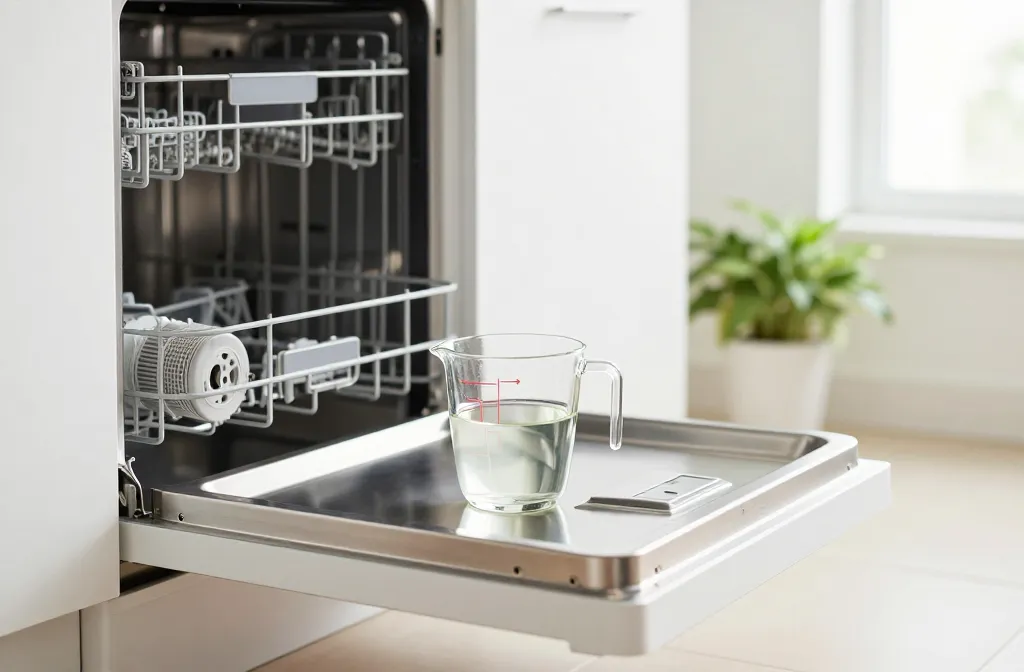
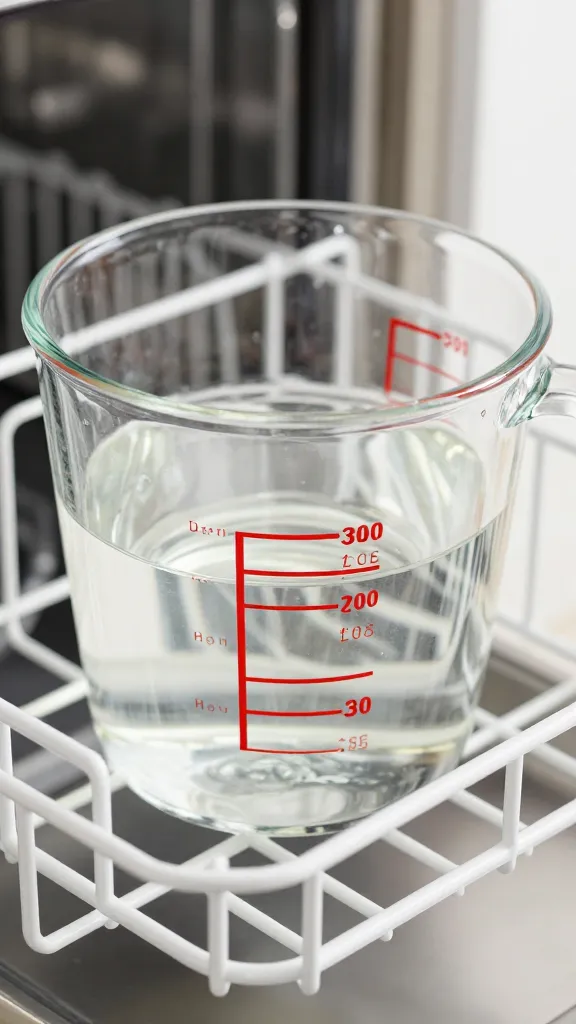
- Put a cup of white distilled vinegar on the top rack. Use a dishwasher-safe bowl or measuring cup. The top rack helps distribute it evenly.
- Run a hot water cycle. Select the hottest normal wash you’ve got. Skip heated dry for now.
- Air it out after. Crack the door for 30 minutes to let steam and smells dissipate.
That’s it. The vinegar breaks down mineral deposits and deodorizes. You might notice the interior already looks brighter. Magic? No. Science? Also yes.
Hard Water? Add This Step
If you get cloudy glasses or chalky buildup, hard water lurks. After the vinegar cycle, do this:
- Sprinkle 1 cup of baking soda on the bottom of the tub.
- Run a short, hot cycle. It polishes stainless and freshens the whole machine.
Baking soda = gentle scrub. Vinegar + baking soda (separate cycles) = squeaky clean. IMO, this combo solves 90% of dishwasher funk.
Targeted Touch-Ups You’ll Thank Yourself For
You cleaned the guts. Now nail the details so it looks and smells new.
- Door gasket: Wipe the rubber seal with a warm, soapy cloth. Mildew loves to hide here. Dry it well.
- Utensil basket: Soak in hot, soapy water if it’s grimy. Toothbrush between the slots.
- Racks and tines: Check for rust. If you see any, use a tine repair kit so it doesn’t chip your dishes.
- Exterior: Glass cleaner or vinegar-water (50/50) on stainless. Wipe with the grain. No streaks, no drama.
Deodorize the Smart Way
Still catching a whiff of eau de mystery? Put a small bowl of vinegar on the bottom rack and leave it overnight with the door cracked. In the morning, your dishwasher will smell like… nothing. Which is the goal.
How Often Should You Do This?
Short answer: it depends on how much you use it and your water quality.
- Weekly: Rinse the filter and check the drain area.
- Monthly: Do the vinegar cycle. Add the baking soda cycle if you have hard water.
- Quarterly: Deep-clean spray arms and the gasket.
If you run your dishwasher daily, bump the vinegar cycle to every 3–4 weeks. If you only use it on weekends, every 6–8 weeks works.
Common Mistakes (And Easy Fixes)
Let’s save you some pain.
- Dumping vinegar straight into the detergent cup: Don’t. It drains too early and does nothing. Use a bowl on the top rack.Advertisement
- Mixing vinegar with bleach or detergent: Hard no. Dangerous fumes and ruined surfaces.
- Overloading the machine: If water can’t reach everything, gunk builds up. Load smarter, not denser.
- Skipping hot water: Heat boosts vinegar’s cleaning power. Run the tap hot first if your dishwasher doesn’t preheat well.
- Using scented vinegar: Cute idea, sticky residue. Stick with plain white.
What If It Still Smells?
Try this sequence:
- Clean the filter and drain again.
- Run the vinegar cycle.
- Run the baking soda cycle.
- Check the garbage disposal. If it connects to the dishwasher line, funky disposal = funky dishwasher. Run disposal with hot water and a few ice cubes.
If the smell returns quickly, you might have a partial clog in the drain hose or a kink that traps water. Quick inspection time.
Bonus: Keep It Cleaner Between Washes
A few tiny habits prevent the return of Slime City.
- Scrape, don’t pre-rinse. Modern detergents need a little food to activate. Wild but true.
- Open the door after cycles. Let moisture escape so mildew doesn’t party.
- Use rinse aid. It helps water sheet off, which reduces spotting and buildup.
- Run hot cycles occasionally. Eco cycles rock, but heat sanitizes and dissolves grease better.
When to Skip Vinegar and Use a Cleaner
If you see heavy white scale that returns fast, or you have orange/rust stains, use a dishwasher descaler or cleaner once, then maintain with vinegar. Also, if your manual specifically says “no vinegar,” listen to it. Rare, but it happens.
FAQ
Can vinegar damage my dishwasher?
Used correctly, no. A cup of white vinegar in a bowl on the top rack once a month won’t hurt seals or hoses. Problems happen when people pour concentrated vinegar directly onto rubber parts or run it daily. Moderation wins.
Do I put detergent in with the vinegar cycle?
Nope. Run the vinegar cycle solo. Detergent and vinegar cancel each other’s strengths. Do your normal dishwashing later once the machine’s clean.
Can I use apple cider vinegar instead?
I wouldn’t. ACV can leave a sticky, faintly sweet residue—exactly what you don’t want. Use plain white distilled vinegar
Will vinegar fix cloudy glasses?
If the cloudiness comes from hard water deposits, yes—vinegar helps a lot. If your glasses look etched (permanent micro-scratches from soft water + too much heat/detergent), vinegar can’t undo that. Try rinse aid and a gentler cycle going forward.
Is baking soda safe for dishwashers?
Yes. Baking soda acts as a gentle abrasive and deodorizer. Sprinkle a cup on the bottom and run a short hot cycle after the vinegar wash. Don’t mix the two in the same cycle unless you enjoy foamy chaos.
How do I clean a stainless-steel interior without streaks?
After the vinegar cycle, wipe the interior with a microfiber cloth. For the outside, use a 50/50 mix of water and vinegar, then buff with the grain. If streaks linger, a tiny dab of dish soap on a damp cloth works wonders. FYI, avoid abrasive pads—they’ll scratch.
Conclusion
A clean dishwasher cleans better—shocker, I know. A cup of white vinegar, a hot cycle, and a quick filter scrub take you from funky to fresh in under half an hour. Do it monthly, toss in baking soda if you’ve got hard water, and keep the door cracked after runs. Easy maintenance, fewer smells, and glasses so clear you’ll question your eyesight. IMO, that’s a win.