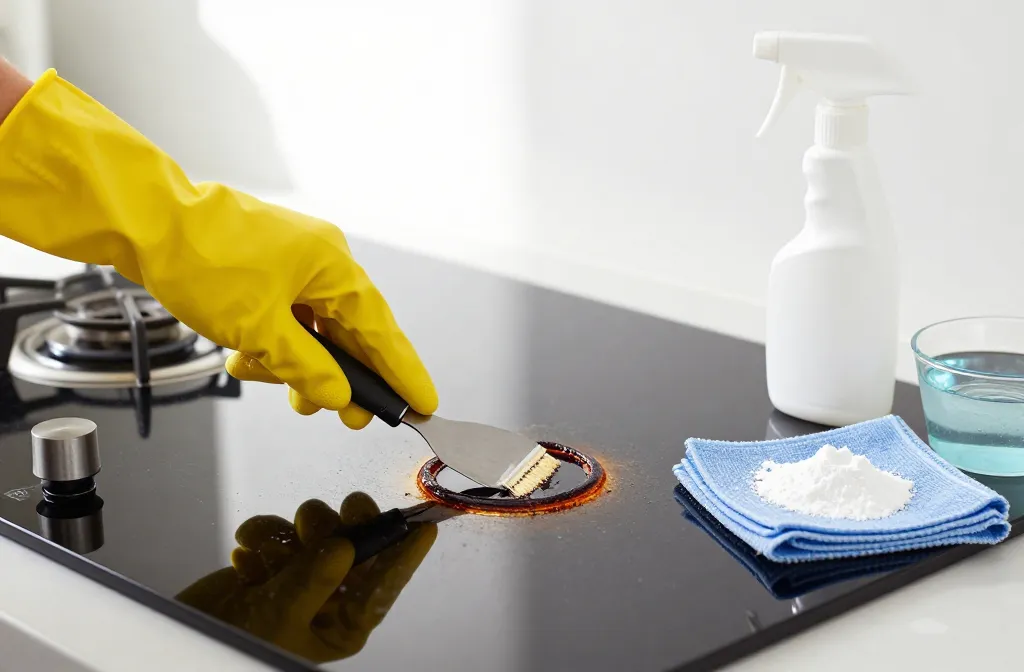
Spills happen. Sauces bubble, pasta water boils over, and suddenly your sleek glass stove top looks like it lost a food fight. The good news? You can bring it back to shiny in less time than it took your soup to scorch. I’ll walk you through exactly what to use, what to avoid, and how to ditch those stubborn rings like a pro.
Know Your Enemy: What’s On That Glass?
You’ve got a few common culprits. Grease splatters, sugary spills (the worst), baked-on sauces, and mineral rings from water. Each type needs a slightly different move, so you don’t just smear it around and call it “clean.”
FYI: burned sugar or syrups can permanently etch glass if you leave them to cook on. If you see a sugary volcano, turn off the burner and wipe ASAP once it cools enough not to burn you.
Gear Up: What You Need (and What to Avoid)
Let’s keep it simple and budget-friendly. You probably own most of this already.
- Microfiber cloths – they grab grime without scratching
- Soft sponge – no abrasive pads
- Razor scraper with a fresh blade – the secret weapon for stuck-on gunk
- White vinegar – cuts grease and mineral spots
- Baking soda – mild, non-scratch scrub
- Dish soap – for everyday spills
- Glass cooktop cleaner – optional but excellent for polishing
Avoid these like they owe you money:
- Steel wool or abrasive scouring pads – they scratch and haze the surface
- Powdered cleansers with grit – too rough
- Oven cleaner or bleach – harsh chemicals, not stove-top friendly
Daily Clean: The 2-Minute Method
You cooked. You ate. Don’t let the mess harden overnight and audition for a fossil exhibit.
- Wait until the cooktop is warm, not hot. Unplug or turn everything off, obviously.
- Spritz with a 50/50 mix of vinegar and water. This melts grease and loosens residue.
- Add a drop of dish soap to a damp sponge and wipe in circles.
- Rinse with a clean, damp cloth to remove soap film.
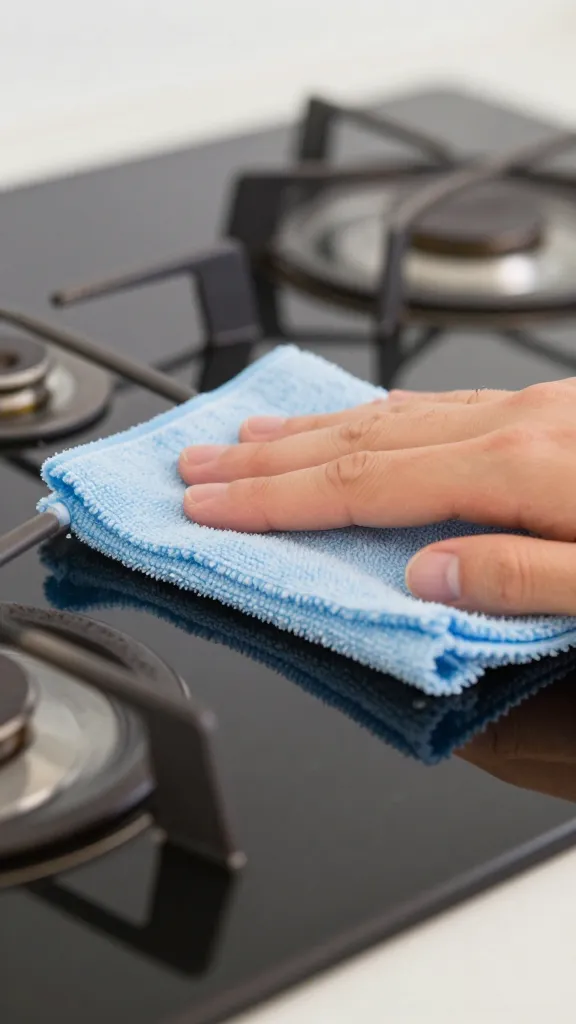
- Dry with microfiber for that smug, streak-free finish.
Pro Tip: Steam Assist
If stuff clings, lay a hot, damp microfiber cloth over the spot for 2–3 minutes. Steam does half the work so your arm doesn’t.
Battle Plan for Baked-On Rings
Those crusty halos around the burners? Totally fixable.
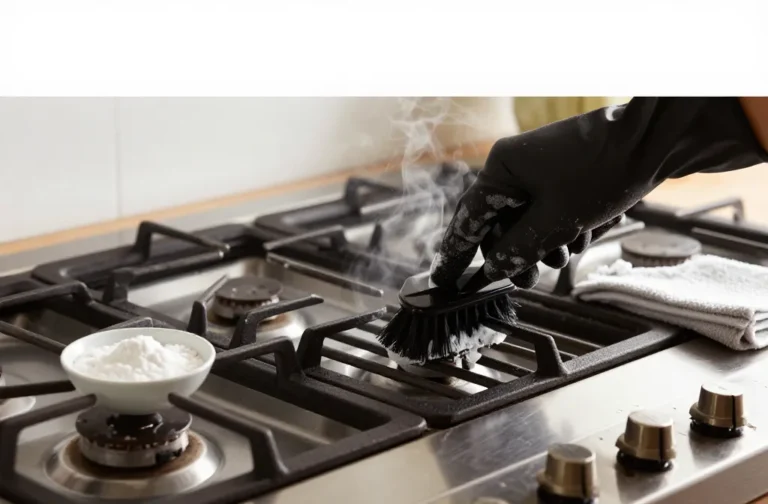
- Make a paste: 2 parts baking soda to 1 part water.
- Spread the paste on the rings and let it sit 10–15 minutes. It softens the crud.
- Gently scrub with a soft sponge. Don’t press like you’re sanding a deck.
- Wipe clean with a damp cloth, then dry.
The Razor Scraper Move
When the paste won’t cut it, bring out the blade—carefully.
- Hold the scraper at a 30–45° angle, blade edge flat against the glass.
- Push in short, light strokes across the residue. Never dig in the tip.
- Keep the area wet with vinegar or water to prevent micro-scratches.
- Swap blades if it snags. A dull blade is more likely to scratch.
IMO, the razor is the difference between “meh” and “wow.” Just respect the angle and you’re golden.
Sugary Spills: Handle With Care
Sugar, caramel, syrups, jellies—these can etch the glass if you let them sit. Not to be dramatic, but act fast.
- Turn off the heat immediately. Safety first.
- While still warm (not scalding), use a scraper to lift the goo.
- Wipe with a damp cloth, then follow with vinegar.
- Finish with a glass cooktop cleaner for protection and shine.
What If It Already Etched?
If you see dull, cloudy spots that won’t polish out, that’s etching. You can minimize the look with a dedicated glass cooktop polish, but you can’t un-etch glass. Prevention beats repair, every time.
Deep Clean + Shine Routine (Weekly or After Big Messes)
Give it the spa treatment once a week, or after That One Dinner.
- Degrease with vinegar spray and a microfiber wipe-down.
- Spot-treat baked-on areas with baking soda paste or scraper.
- Apply a cooktop cleaner (nickel-sized dot per burner area).
- Buff in small circles with a clean, dry microfiber until it squeaks.
- Final polish with a second dry cloth for that mirror finish.
Optional: Water Spot Fix
Hard water leaves ghostly circles. Dab a bit of vinegar directly on them, wait 3 minutes, then buff dry. If your water’s super hard, consider a quick wipe after every boil-over to stop mineral buildup.
Habits That Keep It Looking New
Tiny tasks, big payoff.
- Use flat-bottom pans. Warped pans create hot spots and leave marks.
- Lift, don’t slide cookware to avoid micro-scratches.
- Salt spill? Clean immediately. Salt behaves like micro-sandpaper.
- Boil-overs? Drop the heat sooner. Prevention is cheaper than polishes.
- Keep a microfiber nearby for quick post-cook wipe-downs.
Green Cleaning Mixes That Actually Work
Store-bought cleaners are great, but your pantry can pull weight too.
- Universal Degreaser: 1 cup water + 1 cup vinegar + 1 teaspoon dish soap. Shake, spray, wipe.
- Scrub Paste: Baking soda + enough water to make a spreadable paste. For rings, not for general polishing.
- Shine Spray: 1 cup water + 1/2 cup vinegar. Light mist, then buff dry. Don’t soak seams.
FAQ
Can I use a Magic Eraser on a glass stove top?
Yes, gently. Magic Erasers act like very fine sandpaper. Use light pressure on stains, then rinse and dry. Don’t go ham on one spot or you might dull the finish.
Do I really need a special cooktop cleaner?
Not mandatory, but it makes polishing faster and often leaves a protective film that resists smudges. If you want that like-new glossy look, it’s worth having on hand, IMO.
Is a razor scraper safe on glass?
Used correctly, absolutely. Keep it at a shallow angle, use a new blade, and keep the surface wet. Avoid corners and edges where the glass can chip.
Why does my stove look streaky after cleaning?
Soap film and hard water cause streaks. Rinse with a damp cloth after any soapy wipe, then dry with microfiber. Finish with a tiny dab of cooktop cleaner or a vinegar spritz and buff.
What removes the gray or rainbow tint marks?
Those are usually heat stains or metal transfer from pans. A cooktop cleaner with mild abrasives plus some elbow grease usually clears them. For stubborn metal marks, a dedicated ceramic cooktop cleaner works best.
How do I avoid scratches while cleaning?
Use microfiber, keep gritty debris off the surface, and never use steel wool. Lift pots, don’t slide. When scraping, keep it wet and shallow. Easy.
Wrap-Up: Shine Without the Stress
A glass stove top looks fancy, but it doesn’t demand diva treatment. Tackle the little spills daily, use baking soda and a scraper for the tough stuff, and finish with a quick polish when you want that showroom sparkle. Keep a spray bottle and cloth nearby, and you’ll spend minutes—not hours—keeping it gorgeous. FYI: consistency beats any miracle product. You’ve got this, and your stove’s about to prove it.