Laminate floors look great until they suddenly don’t—smudges, footprints, mystery spots that appear out of nowhere. The good news: you can bring back that just-installed shine without fancy tools or harsh chemicals. I’ll walk you through exactly what to do (and what not to do), so you don’t accidentally turn your floor into a warped, sad pancake. Ready to make those floors gleam again?
Know Your Enemy: What Laminate Can (and Can’t) Handle
Laminate isn’t hardwood. It hates standing water, steam, and abrasive scrubbers. Treat it gently and it’ll love you back.
Here’s the gist:
- No soaking: Excess water can seep into seams and cause swelling.
- No steam mops: That heat/moisture combo = bad news for the core.
- No wax or polish: Laminate already has a factory finish. Wax makes it streaky and weird.
- No harsh cleaners: Skip bleach, ammonia, or anything “heavy-duty.”
Daily Dust-Busting: Keep Grit Off the Floor
Dirt and grit act like sandpaper. You don’t see it right away, but over time it dulls the finish. So your first move? Keep the tiny troublemakers away.
Do this daily or every other day:
- Dry mop or sweep with a microfiber dust mop—light touch, fast results.
- Vacuum on hard-floor mode (brush roll off) to avoid scratches.
- Use mats at entry points and felt pads under furniture legs.
Pro Tip: Door Mats Matter
A good doormat outside + a washable rug inside the door cuts dirt by a lot. IMO, it’s the cheapest “cleaning” upgrade you can make.
Your Go-To Mop Routine (The Safe, Non-Dramatic Way)
When it starts looking a little dull or you see smudges, it’s mop time. We’re not talking bucket sloshing. Think “slightly damp,” not “Disney water ride.”
What you need:
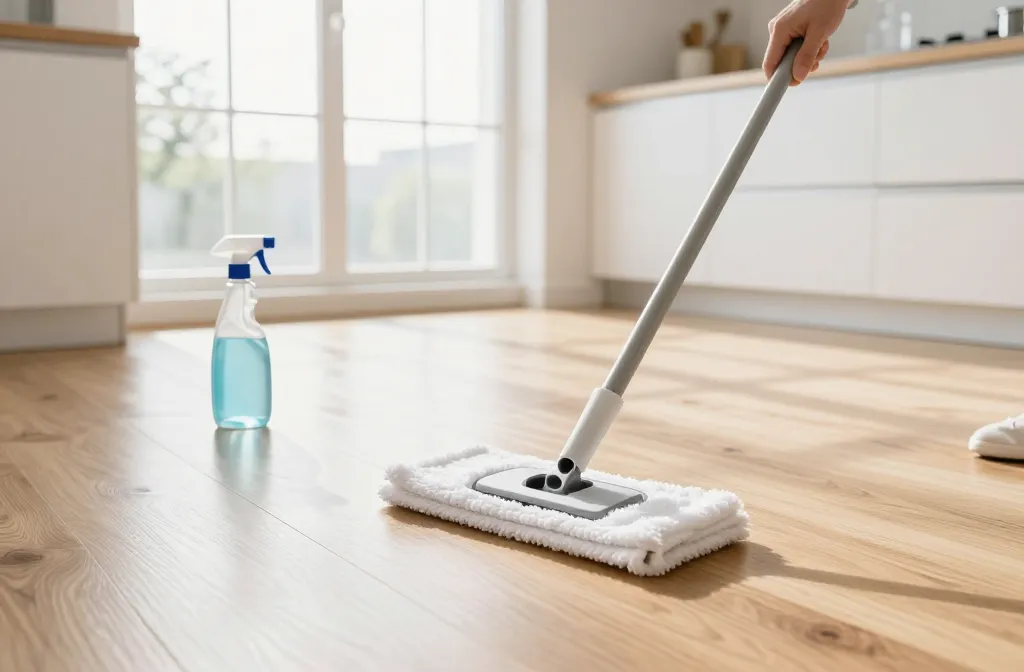
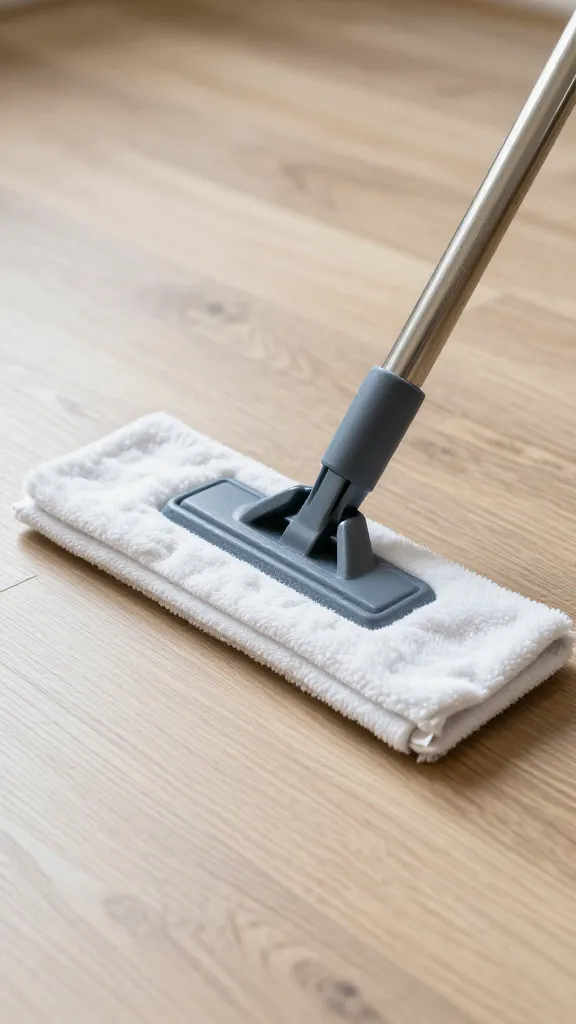
- Microfiber flat mop (reusable pads are great)
- Spray bottle with warm water + a few drops of mild dish soap, or a laminate-safe cleaner
- Soft towels for spot drying
How to do it:
- Dry clean first. Vacuum or dust mop to remove grit.
- Lightly mist the floor. Don’t pour. A fine spray is perfect.
- Mop in sections. Work with the grain to reduce streaks.
- Dry as you go. If you see moisture sitting, wipe it up immediately.
Choosing the Right Cleaner
You’ve got options. A dedicated laminate cleaner keeps things simple. If you DIY, use a tiny amount of mild dish soap in warm water. FYI, less is more—too much soap = build-up and streaks.
Spot-Cleaning Spills, Scuffs, and Sticky Stuff
Life happens. Coffee, dog slobber, jam from a toddler crime scene—deal with it fast and your floors won’t hold a grudge.
For fresh spills:
- Blot immediately with a soft cloth.
- Wipe with damp microfiber and dry the area.
For sticky spots or grease:
- Dab with a little soapy water on microfiber, then rinse-dab with clean water, and dry.
- Don’t scrub hard; let the soapy water sit for 20–30 seconds, then wipe.
For scuffs or heel marks:
- Try a dry magic-eraser pad very gently. Test in a corner first.
- Or a microfiber cloth with a drop of isopropyl alcohol on the mark, then wipe dry.
Sticky Tape, Gum, or Wax Drips
Let it harden with an ice pack, then nudge it off with a plastic scraper or an old credit card. Wipe any residue with a damp cloth, then dry. Easy, no drama.
What Not to Do (Because I Care About Your Floors)
Let’s save you from regret, shall we?
- No steam mops. They force moisture in to seams and can void warranties.
- No soaking with string mops or buckets. You’ll get swelling and edge peaking.
- No abrasive pads or powders. They scratch the wear layer.
- No oil soaps, wax, or polish. They leave a residue and attract dirt.
- No vinegar straight-up. It’s acidic and can dull the finish. If you insist, dilute it heavily (IMO, better to skip it).
Deep-Clean Day: When It Looks Tired
If regular mopping isn’t cutting it, do a careful deep clean. Still gentle, just more thorough.
Step-by-step:
- Move light furniture (use sliders or towels under legs).
- Vacuum thoroughly, especially along baseboards and under edges.
- Use a laminate-safe cleaner and mop in small sections, drying each one as you go.
- Buff with a dry microfiber to nix streaks and bring back luster.
Dealing With Cloudy Build-Up
Residue happens when soap or cleaner piles up. Try this:
- Spray a 1:4 mix of rubbing alcohol and water on a small area.
- Mop with microfiber, then wipe dry.
- Repeat only as needed. Alcohol evaporates quickly and helps remove gunk without soaking.
Preventive TLC: Make Clean Last Longer
A tiny bit of prevention saves a whole lot of scrubbing (and your sanity).
- Add felt pads under chairs and tables. Replace them when they flatten.
- Use rugs in high-traffic zones and at sinks. Choose ones with a non-staining, breathable backing.
- Keep pet nails trimmed. Your floors (and your legs) will thank you.
- Wipe up spills ASAP. Don’t give moisture time to sneak into seams.
- Shoes off at the door. It’s not fussy; it’s just smart.
FAQs
Can I use a steam mop on laminate?
Short answer: no. Steam forces heat and moisture into the seams and can warp the planks or wreck the adhesive. It also risks voiding your warranty. Keep it dry-ish and you’ll be fine.
What’s the best cleaner for laminate floors?
Use a laminate-specific spray or a DIY solution of warm water with a few drops of mild dish soap. Lightly mist and mop—don’t flood. FYI, always test new products in an inconspicuous spot.
Why do my laminate floors look streaky after mopping?
Too much cleaner or soap leaves residue. Switch to a clean microfiber pad, use less product, and buff dry after mopping. If it’s really cloudy, use a diluted alcohol-and-water mix to reset the surface.
Will vinegar damage laminate floors?
Undiluted vinegar can dull the finish over time. If you absolutely must use it, dilute it heavily (like a small splash in a spray bottle of water). IMO, a laminate-safe cleaner works better and streaks less.
How do I handle scratches?
Shallow scuffs often wipe away with a magic-eraser pad or a damp microfiber cloth. Deeper scratches won’t “heal” on laminate, but you can minimize the look with a color-matched repair marker. If a plank is badly damaged, consider replacing that piece.
Is it okay to use a regular mop and bucket?
You can, but wring that mop until it’s just damp. Excess water is the enemy. A microfiber flat mop gives you way more control and fewer streaks.
Conclusion
Laminate floors stay gorgeous when you treat them like the delicate divas they are: keep them dry, clean them gently, and don’t overthink it. Sweep away grit, mist not soak, and buff to finish. Do that, and your floors will keep looking sharp long after everyone forgets what color the walls were. FYI: less cleaner, more microfiber—your new mantra.