Stainless steel pans make food taste great, then stare back at you later like, “Good luck with that fond, pal.” The good news? You don’t need harsh chemicals or an arm workout worthy of a gym video. With a few simple tricks, you can restore that gleam and keep it shining. Let’s get your pans from “battle-scarred” to “brag-worthy” fast.
First Things First: Know Your Stainless
Stainless steel isn’t truly “stain-less,” it just resists stains better than most. Food sugars, fats, and high heat can leave brown or rainbow tints that look scary but clean up easily. You just need the right combo of heat, water, and a few pantry helpers.
FYI: Stainless has layers. You won’t scratch it with a sponge, but you can with steel wool or rough powders. Treat it like a reliable friend: firm, not furious.
Your Daily, No-Drama Cleaning Routine
When the pan’s still warm (not screaming-hot), do this:
- Rinse with hot water. Loosen bits while the gunk stays soft.
- Add a drop of dish soap. Use a soft sponge or brush.
- Wipe in circles. Don’t overthink it—just cover the whole surface.
- Rinse and dry immediately. Water spots? Not on our watch.
If stuff sticks like a stage-five clinger, don’t scrub harder—use heat.
The 60-Second Simmer Trick
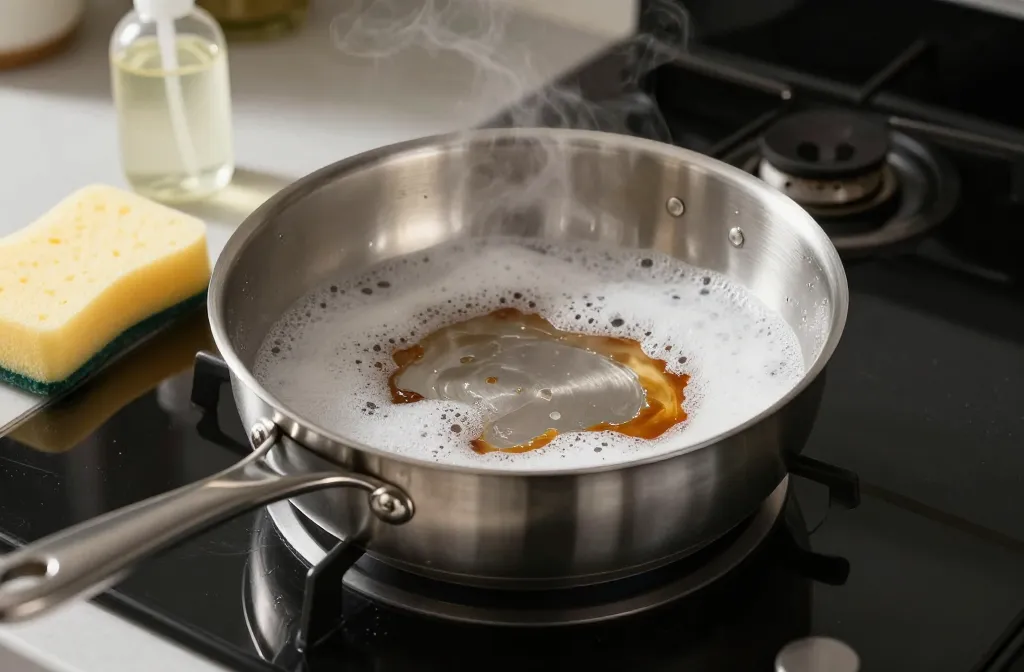
– Add a half inch of water and a small squirt of dish soap.
– Bring it to a simmer for 60–90 seconds.
– Turn off the heat, let it sit a minute, then scrape gently with a silicone or wooden spatula.
– Dump, rinse, and finish with a quick soapy wipe.
Why it works: Heat + water breaks up fats and sugars so you can wipe, not sandblast.
Dealing with Stuck-On Messes (a.k.a. The After-Brunch Special)
Sometimes eggs rebel. Or cheese hardens into a new mineral. Here’s your plan:
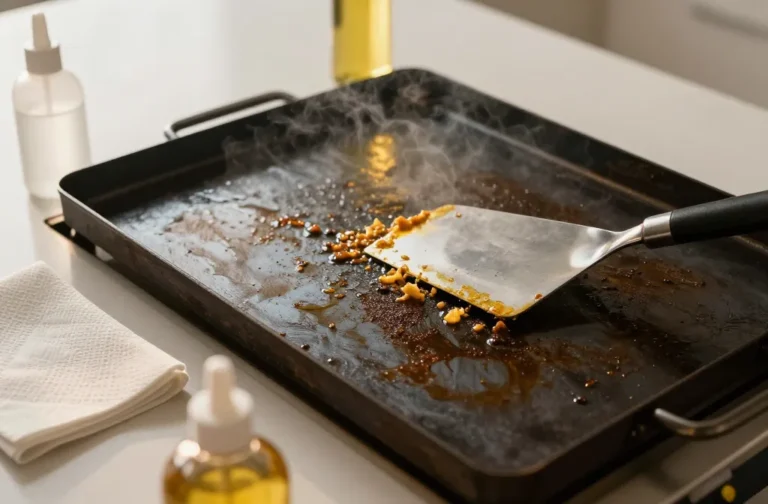
- Deglaze with water. Put the empty pan on medium, add water to cover the stuck bits, and simmer.
- Scrape gently. A wooden spoon works wonders—no scratching.
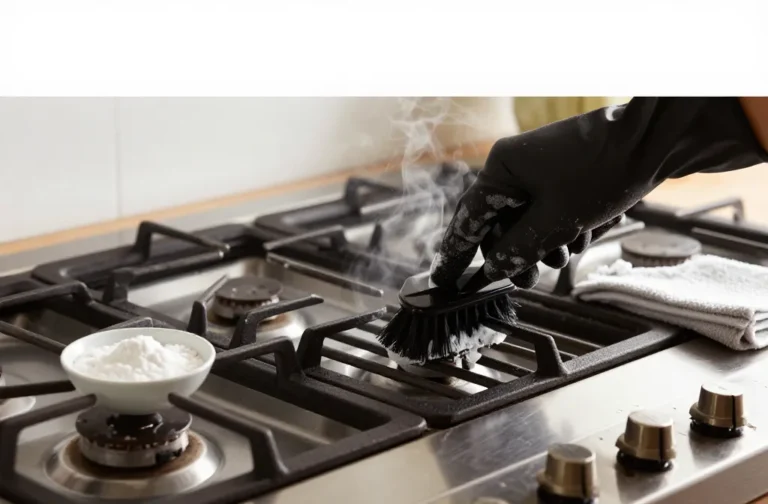
- Sprinkle baking soda. After you pour out the water, add a light dusting to the damp surface and scrub with a soft sponge.
Pro move: For truly stubborn patches, make a paste of baking soda and a few drops of water. Spread it on, wait 10 minutes, then scrub. It’s like a spa mask, but for cookware.
Skip These (Seriously)
- No steel wool. It scratches and creates dull spots.
- No bleach or chlorine cleaners. They can damage stainless over time.
- No oven cleaner. Too harsh and unnecessary.
Banishing Burnt-On Carbon and Brown Stains
Burn marks happen when oil smokes or sugar caramelizes into oblivion. You can fix it without buying a new pan or crying into your spatula.
- Use a stainless-safe cleanser. Bar Keepers Friend or a similar oxalic-acid cleaner removes brown stains fast.
- Wet the pan, sprinkle the cleanser, and rub with a soft sponge.
- Rinse thoroughly and dry to a shine.
IMO: Bar Keepers Friend is the “cheat code” for stainless. Use it once in a while, not daily.
What About the Outside?
The exterior gets grime from flame or drips. Clean it the same way as the inside. For heavy soot marks, use a paste of cleanser and water, then wipe with a damp cloth. Hold the pan by the handle and rotate as you polish—pretend you’re waxing a very bougie car.
That Rainbow Tint: Heat Tint, Not Doom
See blue, purple, or yellow swirls? That’s heat tint—a harmless oxidation effect. It looks fancy but screams, “I cranked the burner to the sun.”
- To remove: Rub with a slurry of Bar Keepers Friend and water, or white vinegar on a soft cloth.
- To prevent: Preheat on medium, add oil after the pan warms, then increase heat if needed.
FYI: The rainbow stuff doesn’t affect performance. It just messes with the mirr or selfie of your omelet.
Grease Film and Cloudy Spots
Sometimes the pan feels clean but looks cloudy. That’s usually mineral deposits or a thin grease film.
- For minerals: Wipe with white vinegar, then rinse and dry.
- For grease film: Wash with hot water and a degreasing dish soap, then do a quick baking soda scrub.
- For water spots: Hand-dry with a microfiber towel immediately.
The Vinegar Rinse Reset
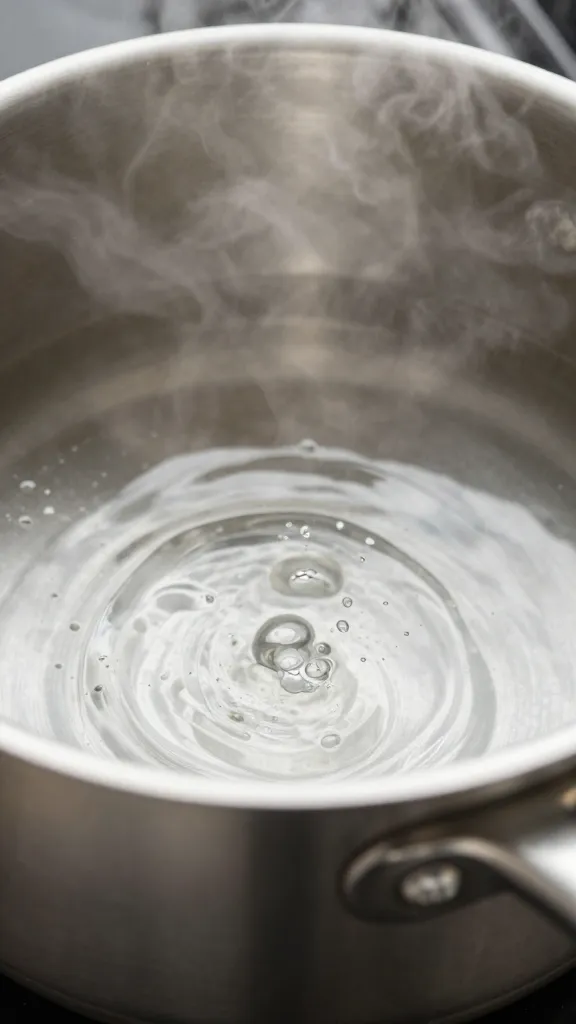
If your pan lost its sparkle, fill it with a 1:3 mix of white vinegar to water. Simmer for 2 minutes, rinse, and dry. It revives shine and removes leftover odors. Your pan will smell like a salad for 30 seconds—totally worth it.
Prevent Problems Before They Start
Let’s keep cleaning easy, not heroic.
- Preheat properly. Heat the pan on medium for 2–3 minutes, then add oil. Food sticks less, cleanup takes seconds.
- Use enough fat. Dry pan + dry food = sticky situation.
- Bring food to room temp. Cold protein sticks more and steams the pan.
- Don’t shock with cold water. Hot pan + cold rinse can warp or stain.
- Hand wash. The dishwasher can dull the finish over time and leave detergent haze.
A Quick Word on Seasoning Stainless
You can create a semi-nonstick layer with oil:
- Heat the clean pan on medium until hot.
- Add 1–2 teaspoons of high-smoke-point oil (grapeseed, avocado).
- Swirl for 1–2 minutes, then cool and wipe out the excess.
It won’t turn into a cast-iron slick, but it helps. Re-do after a deep clean or a scrub with cleanser.
FAQs
Can I use metal utensils on stainless steel?
You can, but go easy. Stainless can handle metal, yet aggressive scraping can leave micro-scratches that dull the finish over time. I prefer wooden or silicone tools for daily cooking and save metal for quick deglazing or flipping something with a crust.
Is baking soda safe for stainless steel?
Yes. Baking soda is mildly abrasive and works great for sticky residue and stains. Just avoid using it with a rough scouring pad. Soft sponge + baking soda = happy pan.
How do I remove white chalky spots?
Those are mineral deposits from water. Wipe with white vinegar, rinse, and dry. If they persist, simmer a vinegar-water mix in the pan for a few minutes, then clean as usual.
Why does food keep sticking to my stainless pan?
Usually heat or timing. Preheat the pan, add oil, wait a few seconds, then add food that isn’t ice-cold. Let proteins release naturally—if they fight you, give them another 30 seconds. Also, don’t overcrowd; overcrowding traps steam and invites stickiness.
Can I put stainless steel pans in the dishwasher?
You can, but I wouldn’t make it a habit. Detergents can dull the finish and leave rainbow film. Hand washing takes two minutes and keeps that mirror shine, IMO.
What’s the best way to clean the rivets and handle base?
Use a stiff nylon brush or an old toothbrush with dish soap or baking soda paste. Work around the rivets in small circles, rinse, and hand-dry. Gunk hides there and causes mystery smells—evict it regularly.
Wrap-Up: Shine Without the Slog
Stainless steel pans want heat, patience, and a little finesse—just like your best recipes. Use hot water, mild soap, and smart simmering for daily cleanup. Bring in baking soda, vinegar, or a stainless cleanser when stains get extra. Keep the heat reasonable, dry fast, and your pans will look showroom-fresh. Clean smart, not hard—and get back to the fun part: cooking.