You cooked a perfect steak. The pan looks like a battlefield. Now what? Relax. Cleaning a cast iron skillet takes less time than scrolling through that recipe thread you ignored. No harsh chemicals, no drama—just a few easy moves that keep your skillet slick, seasoned, and ready for round two.
Know Your Skillet’s Personality
Cast iron isn’t like your nonstick pan. It builds a seasoning—a baked-on layer of oil—that gives it nonstick superpowers and flavor. You don’t scrub that off like a villain. You protect it.
Think of seasoning as a relationship. You show it care (clean gently), it shows you loyalty (nothing sticks, everything browns). Break trust with harsh soap or soaking? Expect drama.
Clean It Right After Cooking (Yes, While It’s Warm)
You finish cooking. Don’t wander off. Clean immediately—warm pans release food easier.
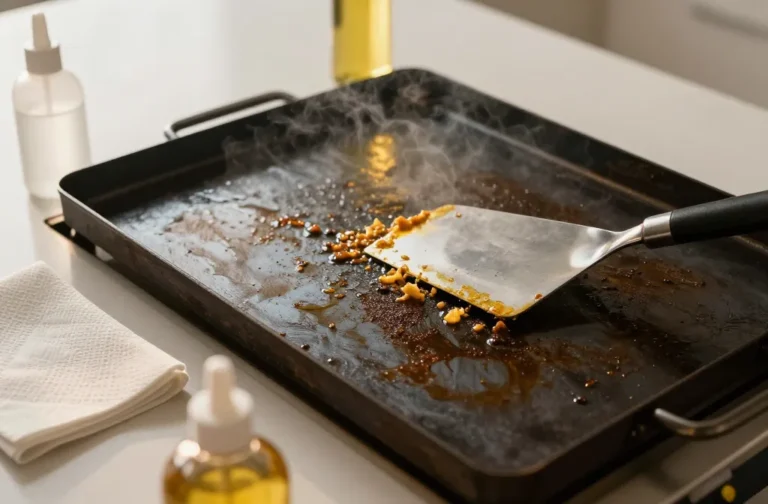
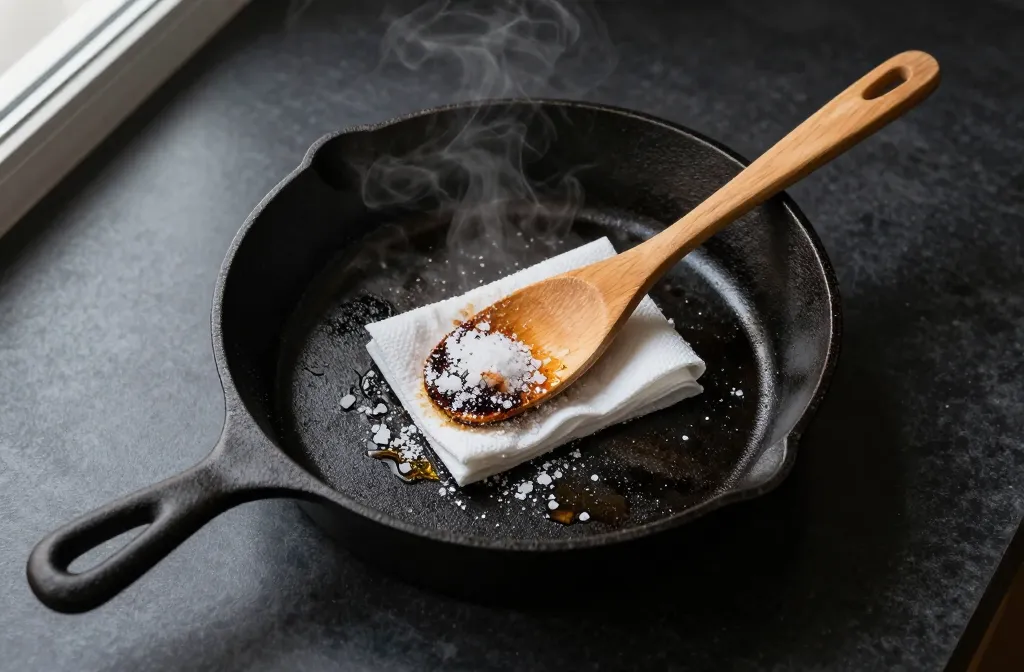
- Step 1: Wipe out leftover oil and bits with a paper towel.
- Step 2: If stuck-on bits remain, add a splash of hot water and gently scrape with a wooden spoon or a non-metal spatula.
- Step 3: For stubborn crud, use coarse kosher salt as a scrub, plus a little water. It’s like tiny exfoliators for your pan.
What About Soap?
Tiny amount? Fine. You won’t nuke the seasoning with one drop of mild soap. But don’t use harsh detergents or soak the pan. Ever. IMO, water + salt usually handles everything.
Dry It Like You Mean It
Water + iron = rust. You know this. So get aggressive with drying.
- Option A: Towel-dry thoroughly, then place the skillet over low heat for a couple minutes to evaporate any moisture.
- Option B: Put it on a warm burner right away and let the heat chase off the water. No moisture left? Perfect.
Rust-Proof With a Light Oil Coat
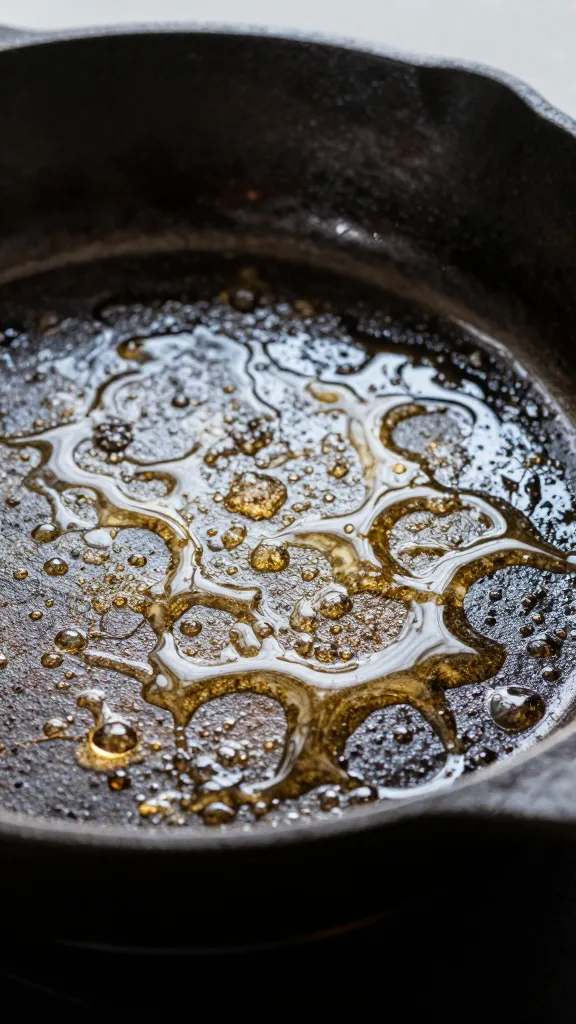
Once it’s bone dry, rub on a very thin layer of oil—grapeseed, canola, or flaxseed work great. Wipe off the excess with a clean towel. You want a satin sheen, not a greasy puddle. If it feels slippery, keep wiping. The pan should look dry-ish, not glossy like a mirror ball.
Tackling Stubborn Stuck-On Stuff
Sometimes cheese fuses to the surface like it signed a lease. Don’t panic.
- Simmering water: Add water, simmer for 2–3 minutes, and scrape gently. Dump, then dry and oil.
- Salt scrub: A handful of coarse salt + a splash of water + a folded towel or scrubber. Rinse, dry, and oil after.
- Chainmail scrubber: If you cook a lot, a stainless-steel chainmail scrubber rocks. Use it with hot water only. No soap needed.
When You Accidentally Yank Off Seasoning
See gray spots? Food sticks more than usual? You probably stripped a patch. No worries. After cleaning and drying, rub in a very thin layer of oil and heat the pan on the stove for 10–15 minutes until it just starts to smoke. That mini-season builds a quick fix. Repeat a couple times if needed.
What NOT To Do (Unless You Like Sad Pans)
Let’s save you some grief. Avoid these common mistakes:
- Don’t soak your skillet. Rust loves hot tubs.
- Don’t air-dry. You’ll get orange freckles (not cute).
- Don’t store it wet or oily-goopy. Goopy oil turns sticky and gross.
- Don’t use the dishwasher. That’s cast iron murder.
- Don’t use metal scouring pads unless you plan to reseason. They can shred seasoning layers.
Deep Cleaning and Reseasoning (When Things Go Off the Rails)
Sometimes your skillet needs a spa day. Maybe it got rusty. Maybe someone washed it with Dawn and vibes. Here’s how to bring it back.
Remove Rust
- Scrub rust with steel wool or a chainmail scrubber under warm water until you hit smooth metal.
- Dry thoroughly over heat.
- Oil lightly.
Full Reseason (The Glow-Up)
If the surface looks patchy or food sticks constantly, give it the full reset:
- Scrub clean. Dry completely in a low oven or on the stove.
- Rub on a very thin coat of high-smoke-point oil (grapeseed, canola, flaxseed). Wipe off most of it.
- Bake upside down at 450–500°F (230–260°C) for 1 hour with foil on a lower rack to catch drips.
- Turn off oven. Let it cool inside.
- Repeat 2–3 times for a durable base layer. FYI, thin coats beat thick goop every time.
Daily Habits That Make Your Skillet Better Over Time
Want that slick, jet-black, heirloom-level surface? It’s a lifestyle, not a one-off.
- Cook fatty foods early on: Bacon, sausages, or fried potatoes help build seasoning. Science and breakfast agree.
- Use enough heat: Preheat gradually. Cast iron holds heat like a champ but hates shock.
- Skip acidic stews at first: Tomatoes and wine can wear down new seasoning. Once it’s well-seasoned, go nuts.
- Oil lightly after each use: The post-wash wipe makes the magic happen over time.
Gear That Makes Life Easier
You don’t need gadgets, but a few tools help.
- Fish spatula: Thin, flexible, perfect for gentle scraping.
- Chainmail scrubber: Lasts forever and cleans without chemicals.
- Silicone handle cover: Because grabbing 500°F iron barehanded once is enough.
- Neutral oil: Grapeseed or canola for seasoning and daily care.
- Coarse kosher salt: Your eco-friendly scouring friend.
FAQ
Can I use soap on cast iron?
Yes, a small amount of mild soap won’t ruin modern seasoning. The real enemies are soaking, harsh detergents, and not drying properly. IMO, try hot water and salt first and keep soap as a backup.
Why does my cast iron feel sticky after oiling?
You used too much oil or didn’t heat it enough. Wipe the pan until it looks almost dry, then heat it to set the oil. Sticky residue usually means pooled oil that never polymerized.
How do I stop rust from coming back?
Dry the pan completely with heat, then finish with a thin oil coat. Store it in a dry spot, and if humidity is high, tuck a paper towel inside to absorb moisture. Use it often—cooking protects it.
Can I cook tomatoes or wine sauces in cast iron?
You can, but wait until the seasoning feels solid and slick. Acid can strip young seasoning. Once seasoned well, occasional acidic dishes won’t wreck it. Just clean, dry, and oil after.
My food sticks—did I ruin the pan?
Probably not. Sticking usually means the pan wasn’t hot enough, didn’t have enough fat, or the seasoning needs a quick boost. Do a mini re-season: clean, dry, thin oil coat, heat to light smoke, cool, repeat once.
Is enamel-coated cast iron the same deal?
Different game. Enamel doesn’t need seasoning, and you can use soap freely. Still avoid metal scouring pads that can scratch the enamel. For bare cast iron, stick with the steps above.
Conclusion
Cleaning a cast iron skillet isn’t a ritual—it’s a quick habit. Wipe, hot water, maybe salt, dry with heat, oil lightly. Done. Treat your skillet right and it’ll pay you back with crispy edges, killer sears, and decades of loyal service. FYI, if your pan could talk, it would say: please stop soaking me.