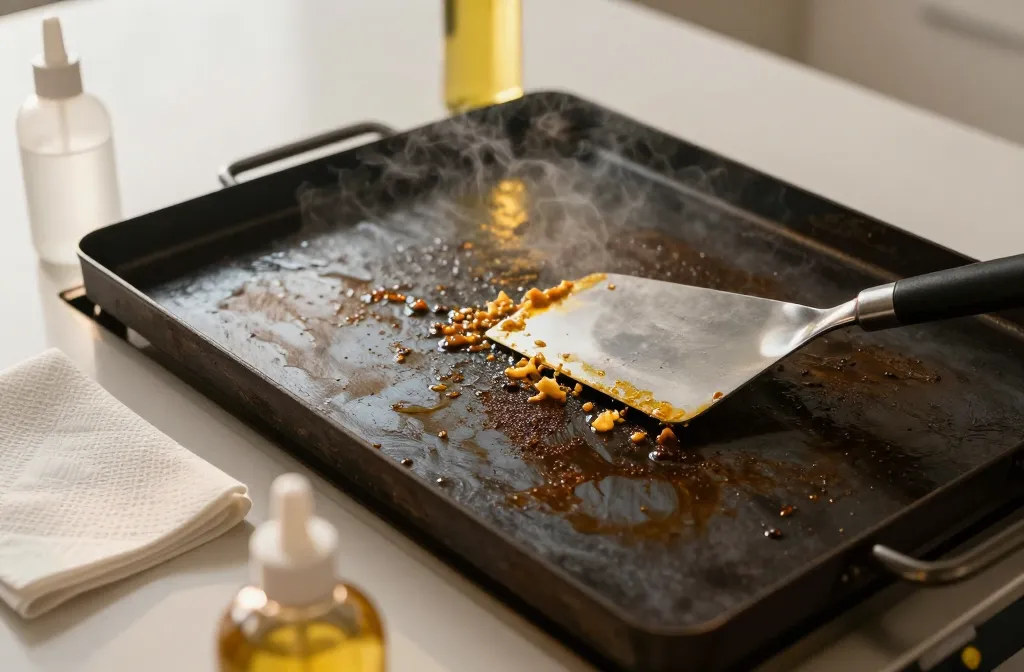
Your Blackstone doesn’t need drama—just a quick, no-nonsense clean so it stays slick, nonstick, and ready for smash burgers on demand. Skip the overcomplicated rituals. I’ll show you the fast routine for after every cook, plus the deep-clean when things get gunky. You’ll spend more time eating and less time scraping, promise.
Know Your Griddle: Seasoning vs. Cleanliness
Seasoning isn’t dirt—it’s your best friend. That dark, shiny layer? That’s polymerized oil that keeps food from sticking and adds flavor. You don’t scrub that off.
You clean off food bits, pooled grease, and burnt residue while protecting the seasoning. Simple. If the top looks dull gray or rusty, that’s when you reset it. Otherwise, treat it like cast iron’s flat cousin.
What You’ll Need (Keep It Simple)
You don’t need a chemistry lab. You need a few basics:
- Sturdy metal scraper (with a straight edge)
- Grill brick or non-metal scouring pad (for stuck-on crud)
- Paper towels or shop towels
- Cooking oil with a high smoke point (canola, avocado, grapeseed)
- Water in a squeeze bottle
- Heat-resistant gloves (unless you like spicy fingertips)
- Optional: Vinegar for odors, tongs for holding towels, Blackstone cleaning kit if you’re fancy
Your After-Cook Routine (5 Minutes, Tops)
Do this every time you finish cooking. It keeps the surface smooth and seasoned. FYI, it also keeps future meals from tasting like last week’s fajitas.
- Kill the burners. Leave the griddle warm, not blazing. Warm metal cleans easier.
- Scrape toward the grease trap. Use the scraper to push food bits and grease into the trap. Keep the blade flat so you don’t gouge the seasoning.
- Deglaze with water. Squirt a little water on stubborn bits. It’ll steam and loosen gunk. Scrape again. No, you don’t need soap here.
- Wipe it down. Fold a few paper towels and wipe across the surface until the towels come away mostly clean.
- Oil and season lightly. Add a teaspoon of oil and spread a thin, even film with a paper towel or cloth. You want sheen, not puddles.
- Let it cool and cover. When it’s cool, throw on the cover to keep dust and weather out.
What If Food Still Sticks?
Use a grill brick or non-metal pad on a warm surface with a tiny splash of water. Light pressure, circular motions. Wipe, then oil. If it still grabs, you need a quick re-season (hang tight, that’s below).
The Deep Clean: When Things Get Extra
Burnt-on sugar from a teriyaki binge? You went hard with cheese? Time for a deeper scrub, but don’t nuke your seasoning unless you must.
- Heat to medium-low. Warm loosens residue without burning you with steam.
- Splash and scrape. Add water or a 50/50 water-vinegar mix. Scrape toward the trap until it looks smoother.
- Scour smart. Use a grill brick or non-metal pad. Go gentle. You want to remove crud, not your hard-earned seasoning.
- Wipe clean. Use several towels until you see a mostly even, dark surface.
- Re-oil generously. Add 1–2 teaspoons of oil, spread thin. Heat for 2–3 minutes to begin polymerizing that layer. Wipe off any excess.
When to Strip and Re-Season Completely
– The top looks patchy silver, rusty, or food clings everywhere.
– You smell rancid oil after heating (gross, IMO).
– You left it outside uncovered through a storm (we’ve all been there).
If that’s you, do the full reset below.
Full Reset: Strip, Season, Smile
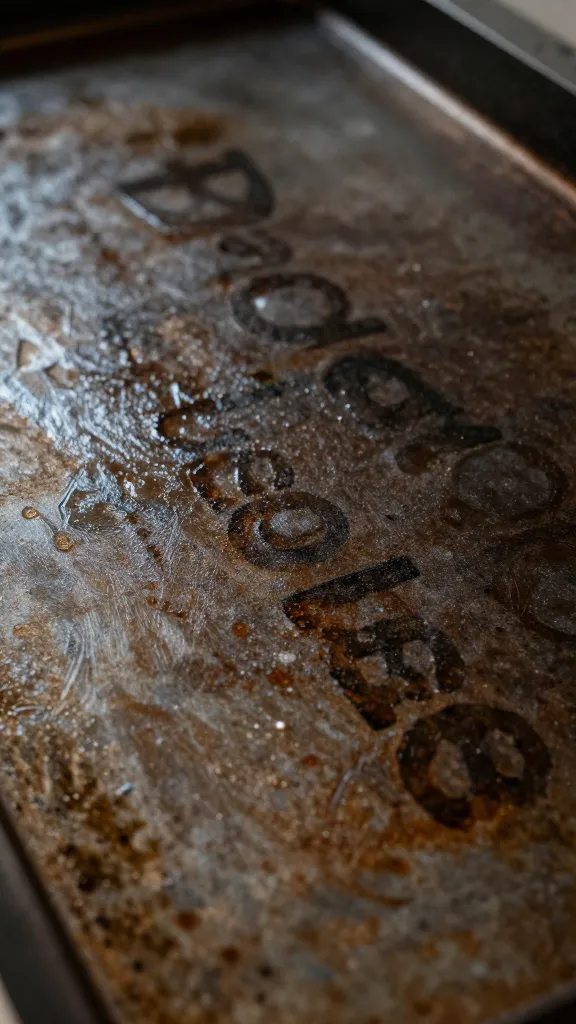
This takes 30–45 minutes but makes your griddle brand new. Do it once or twice a year or after neglect.
- Heat it up. Medium-high for 10 minutes to soften old seasoning.
- Scrub with a grill brick. Add water and scrub evenly across the surface. Wipe the slurry. Repeat until the surface turns more uniform gray.
- Rinse (no soap), dry thoroughly. Water plus heat = rust risk. So dry it on low heat until no moisture remains.
- Apply ultra-thin oil coats. Use high-smoke-point oil. Add 1 teaspoon, spread super thin until it looks almost dry. Thin coats only.
- Heat to smoke. Crank burners to high. Let it smoke for 10–15 minutes until the smoke subsides. That’s the oil bonding to the metal.
- Repeat 3–4 times. Each coat darkens the surface to deep brown/black. Don’t rush it. Too much oil = sticky mess.
- Final cool and wipe. When cool, a light oil wipe for protection. You’re good.
Things to Avoid (Trust Me)
- No soap on the cooking surface for regular cleaning. It breaks down your seasoning.
- No cold water on ripping-hot steel. Thermal shock can warp the plate. Warm surface = okay. Red-hot = chill first.
- No steel wool or metal brushes for routine use. They strip seasoning fast.
- No olive oil for seasoning. Low smoke point. Save it for the salad.
- No puddles of oil during seasoning. Thin layers win. Always.
Rust? Grease? Weird Smells? Fixes Here
You’ll run into stuff. Here’s how you handle it without rage-quitting.
Light Rust
– Heat to warm, splash water, scrub with a grill brick or non-metal pad.
– Wipe dry, then apply two thin seasoning coats. Done.
Heavy Rust
– Scrape loose rust.
– Use a grill brick with water or a mild vinegar/water mix.
– Dry on low heat, then do a full re-season. Expect a couple cooks before it gets silky again.
Grease Build-Up at the Edges
– Heat warm, scrape edges inward, then push to the trap.
– Use a folded paper towel with tongs to run along the rim.
– Finish with a light oil coat.
Rancid Smell
– Burn off on high for 10 minutes.
– Wipe, then lay down 1–2 thin seasoning coats with a neutral oil.
– Keep it covered and dry to prevent repeats.
Smart Habits That Make Life Easier
– Oil after every cook. It’s a 20-second move that prevents 20-minute scrubs.
– Keep it covered. Weather and dust are the enemy.
– Empty the grease trap. Don’t let it overflow like a college sink.
– Use the right tools. Flat scraper > putty knife. Grill brick > wire brush.
– Cook a fatty first after a full re-season—bacon or smash burgers help the surface settle in, IMO.
FAQ
Can I use soap on my Blackstone griddle?
You can during a full strip-down, but not for everyday cleaning. Soap kills your seasoning and makes food stick later. Water, heat, and a scraper do 99% of the work.
What oil should I use to season?
Use high-smoke-point oils: canola, grapeseed, avocado, flaxseed (controversial but works), or vegetable oil. Keep coats ultra thin and build them up with heat cycles.
How often should I deep clean?
When food starts sticking or you see baked-on crud that regular scraping won’t fix. For most folks, that’s every 10–15 cooks. If you cook saucy or sugary foods a lot, you’ll do it more often.
My griddle turned sticky after seasoning. What happened?
You used too much oil or didn’t heat it long enough. Fire it up on high to burn off the tacky layer, wipe, then apply very thin coats and let them fully smoke.
Is rust the end of the world?
Nope. It looks ugly, but you can fix it. Scrub it off, dry thoroughly, and re-season. It’s steel, not a smartphone screen.
Can I clean it cold?
You can, but warm works better. Heat softens grease and releases stuck bits faster, so you’ll spend less elbow grease.
Wrap-Up
Your Blackstone stays happy when you keep it simple: scrape while warm, wipe, and lay down a whisper-thin coat of oil. Deep clean only when needed, and re-season like a pro when life (or weather) happens. Do that, and your griddle will pay you back with nonstick magic, killer sears, and zero drama—exactly how backyard cooking should feel.